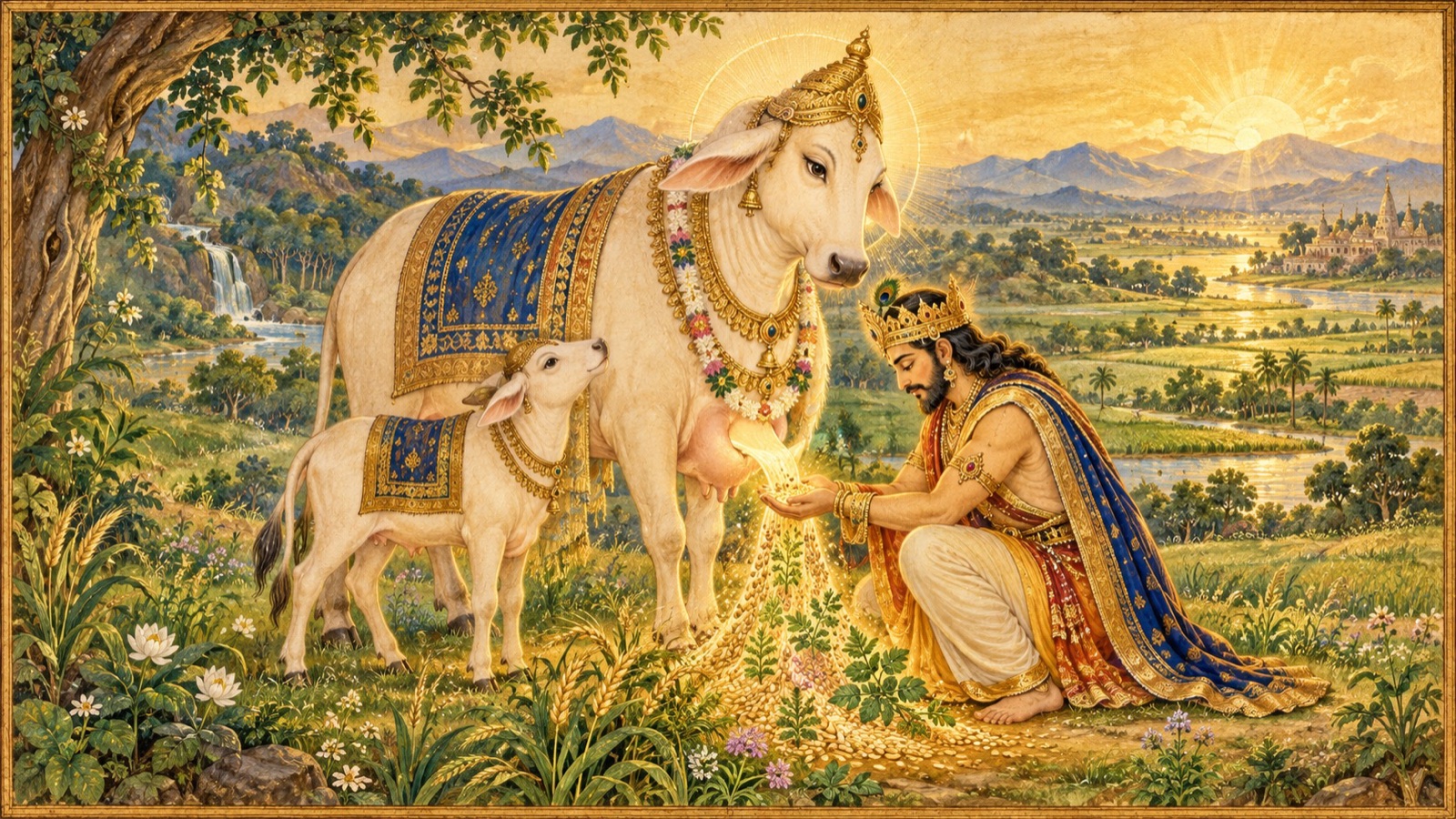
Taking Svayambhuva Manu as the calf and his own cupped hands as the pail, King Prithu draws from Mother Earth — now a gentle cow — the grains and herbs that will nourish every living being.
Om Namo Bhagavate Vasudevaya.
Om Namo Bhagavate Vasudevaya.
Om Namo Bhagavate Vasudevaya.
Welcome to Srimad Bhagavatam Wisdom, a devotional journey through the sacred histories and teachings of the Srimad Bhagavat Mahapurana. In the previous chapter, famine had gripped the land, and King Prithu, taking up his bow, compelled the Goddess Earth — who had withheld her bounty — to submit and pray to him. This eighteenth chapter is the reconciliation and its rich fruit. Steadying herself, the Earth counsels the king wisely: let him not force her, but arrange the proper means — a fitting calf, a vessel, and a milker — and she will gladly yield all that the world needs. Heeding her, Prithu levels the earth’s rough surface for cultivation and dwelling, and then, making Svayambhuva Manu the calf and his own cupped hands the pail, he milks from the Earth-cow the seeds of every herb and grain. In their turn the sages, the gods, the ancestors, the serpents, the mountains, and every class of being milk from her the nourishment proper to each. So plenty returns to the world, and civilization flowers under Prithu’s just rule. It is a chapter about drawing sustenance from the earth by wisdom and right arrangement rather than by force alone.
Chapter Information
- Scripture: Śrīmad Bhāgavata Mahāpurāṇa
- Canto: 4 (Book Four)
- Chapter: 18 (Discourse 18)
- Chapter title: King Prithu Milks Mother Earth in Her Form as a Cow
- Principal speaker: The sage Maitreya, continuing his discourse to Vidura (with the words of the Goddess Earth quoted within)
- Principal listener: Vidura
- Main setting: The kingdom of Prithu, its barren land made fertile again
- Central subject: The Earth’s wise counsel, the milking of the Earth-cow, and the restoration of plenty to the world
- Principal verse range: Canto 4, Chapter 18, verses 1–32
- Primary edition: Gita Press Śrīmad Bhāgavata Mahāpurāṇa
Context from the Previous Chapter
Chapter 17 told how famine came upon Prithu’s kingdom because the Goddess Earth had withdrawn her bounty, and how the king took up his bow against her, until she fled as a cow, then turned, submitted, and prayed to him. This eighteenth chapter opens as the Earth, still trembling before the king’s anger, gathers herself and speaks to him again — this time with wise counsel.
The Earth’s Wise Counsel
Having praised the king, whose lips still quivered with anger, the frightened Earth steadied herself by her own resolve and spoke again, laying before him the reason she had withdrawn her gifts and the way they might be restored.
मैत्रेय उवाच इत्थं पृथुमभिष्टूय रुषा प्रस्फुरिताधरम् । पुनराहावनिर्भीता संस्तभ्यात्मानमात्मना ॥ १ ॥
maitreya uvāca itthaṁ pṛthum abhiṣṭūya ruṣā prasphuritādharam punar āhāvanir bhītā saṁstabhyātmānam ātmanā
Meaning: Maitreya said: Having thus praised Prithu, whose lips still quivered with anger, the frightened Earth, steadying herself by her own resolve, spoke again. (Canto 4, Chapter 18, verse 1)
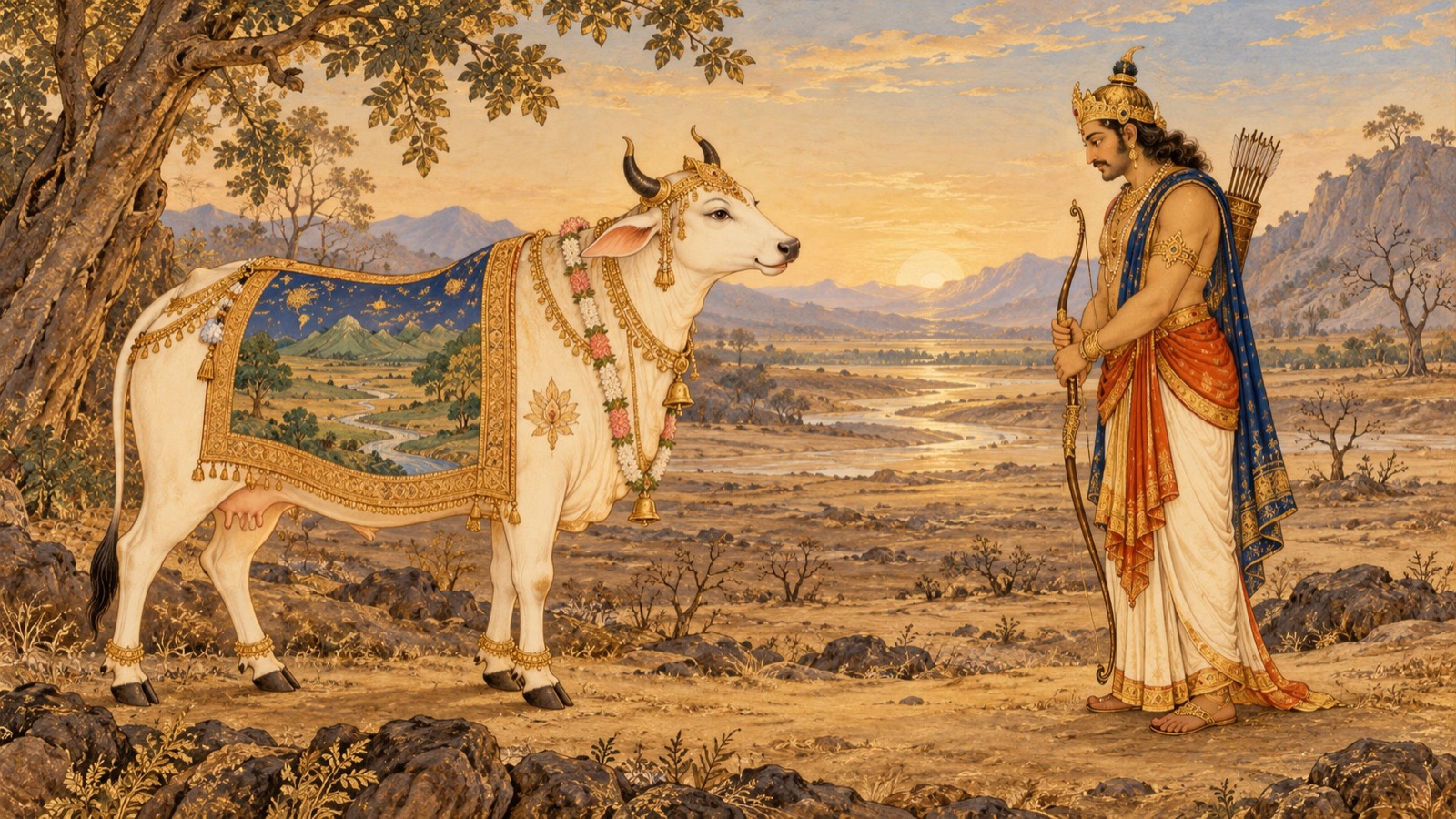
She began with humility, likening herself to a bee that gathers the honey of knowledge from every flower it visits: even the poor, she said, have something to teach one wise enough to listen. For the lasting good of humanity, she reminded the king, the great sages of old had already laid down — in the twin testimonies of śruti and smṛti — the very means by which people prosper, in this life and the next; one who takes up their tested guidance finds life’s aim easily fulfilled (verses 2–4). One who instead scorns their counsel and invents his own devices in its place, she warned, will find his labors collapse again and again.
तान् अनादृत्य योऽविद्वानर्थानारभते स्वयम् । तस्य व्यभिचरन्त्यर्था आरब्धाश्च पुन: पुन: ॥ ५ ॥
tān anādṛtya yo ’vidvān arthān ārabhate svayam tasya vyabhicaranty arthā ārabdhāś ca punaḥ punaḥ
Meaning: (The Earth counseled:) The ignorant one who disregards the directions of the wise and devises his own means finds his undertakings fail him again and again. (Canto 4, Chapter 18, verse 5)
Then she came to the deeper grievance beneath the famine. The seeds and herbs that Lord Brahmā had fashioned for the world, she said, were being consumed by people who spared no thought for the One who provided them — taken for the pleasure of the senses alone, never first offered in sacrifice to the Lord of all sacrifice. Such use, she said, turns an entire people into thieves, claiming what was never truly theirs; and because the rulers of the earth were failing to check this theft, she had hidden away the very seeds meant for yajña rather than let them be squandered (verses 6–8).
अपालितानादृता च भवद्भिर्लोकपालकैः । चोरीभूतेऽथ लोकेऽहं यज्ञार्थेऽग्रसमोषधीः ॥ ७ ॥
apālitānādṛtā ca bhavadbhir loka-pālakaiḥ corī-bhūte ‘tha loke ‘haṁ yajñārthe ‘grasam oṣadhīḥ
Meaning: (The Earth continued:) Unprotected and neglected by her guardian kings, and with the world turned to thievery, I have withheld the very seeds meant for sacrifice. (Canto 4, Chapter 18, verse 7)
Only by the standard, time-tested method taught by the sages and scriptures, she said — not by mere technique or force of will — could those hidden seeds be safely drawn out again.
She then gave the king her practical advice: let him appoint a suitable calf, so that out of affection her milk — the seeds of all plants — would flow; let him provide a vessel and a milker, and level her uneven surface so that the rains might soak in and the crops might grow.
Prithu Levels the Earth and Milks Her
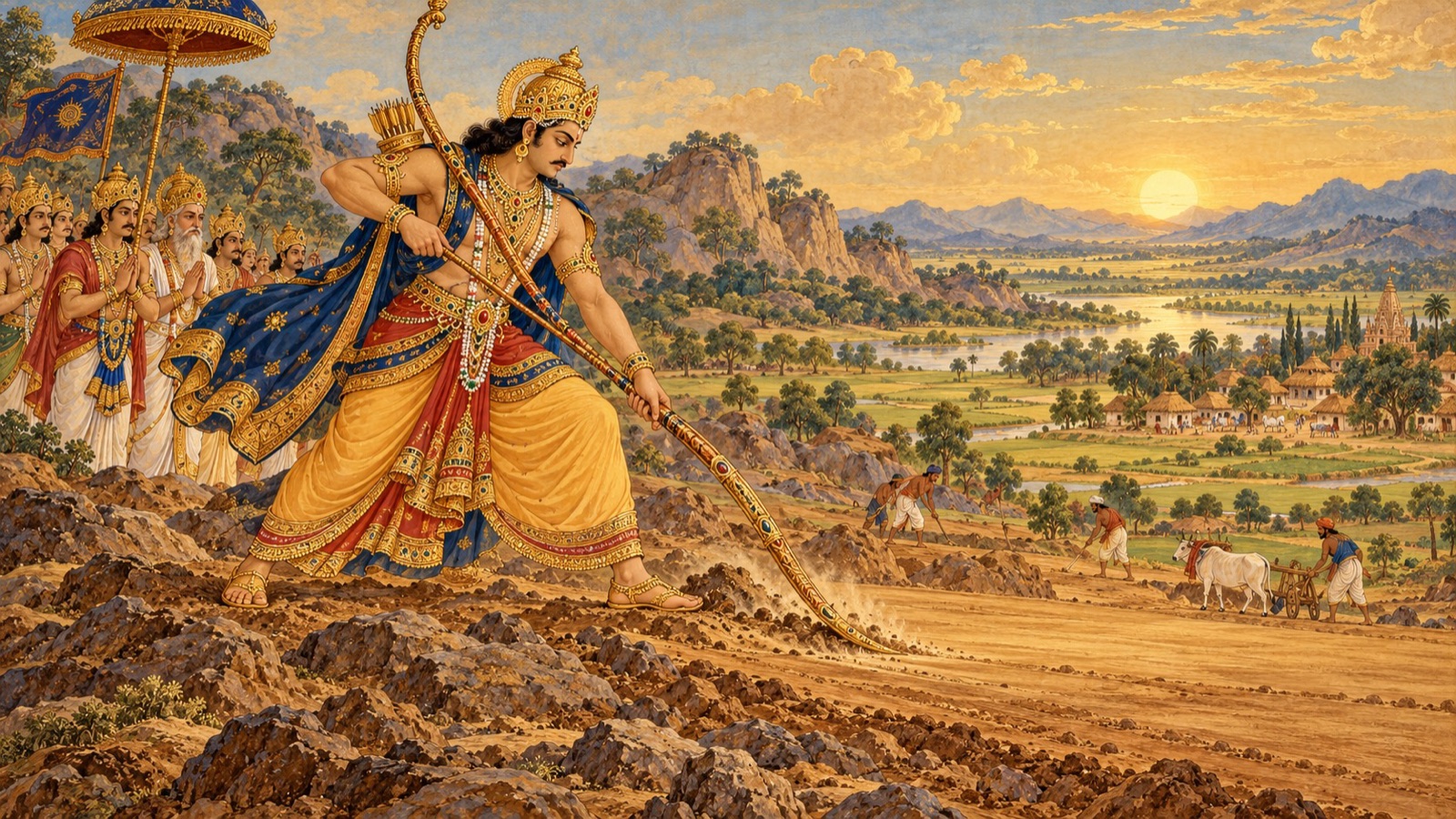
Heeding her counsel, Prithu first levelled the rough, broken surface of the Earth with the tip of his bow, shattering the hills and hollows so that the land became even, fit for cultivation, dwelling, and the gathering of rain. Then, accepting the Earth’s pleasing and beneficial words, he made Svayambhuva Manu the calf, and, cupping his own hands as the pail, he milked from the Earth-cow all the herbs and grains.
इति प्रियं हितं वाक्यं भुव आदाय भूपति: । वत्सं कृत्वा मनुं पाणावदुहत्सकलौषधी: ॥ १२ ॥
iti priyaṁ hitaṁ vākyaṁ bhuva ādāya bhūpatiḥ vatsaṁ kṛtvā manuṁ pāṇāv aduhat sakalauṣadhīḥ
Meaning: Accepting these pleasing and beneficial words of the Earth, the king made Svayambhuva Manu the calf and milked from her, into his own cupped hands, all the herbs and grains. (Canto 4, Chapter 18, verse 12)
All Beings Draw Their Nourishment
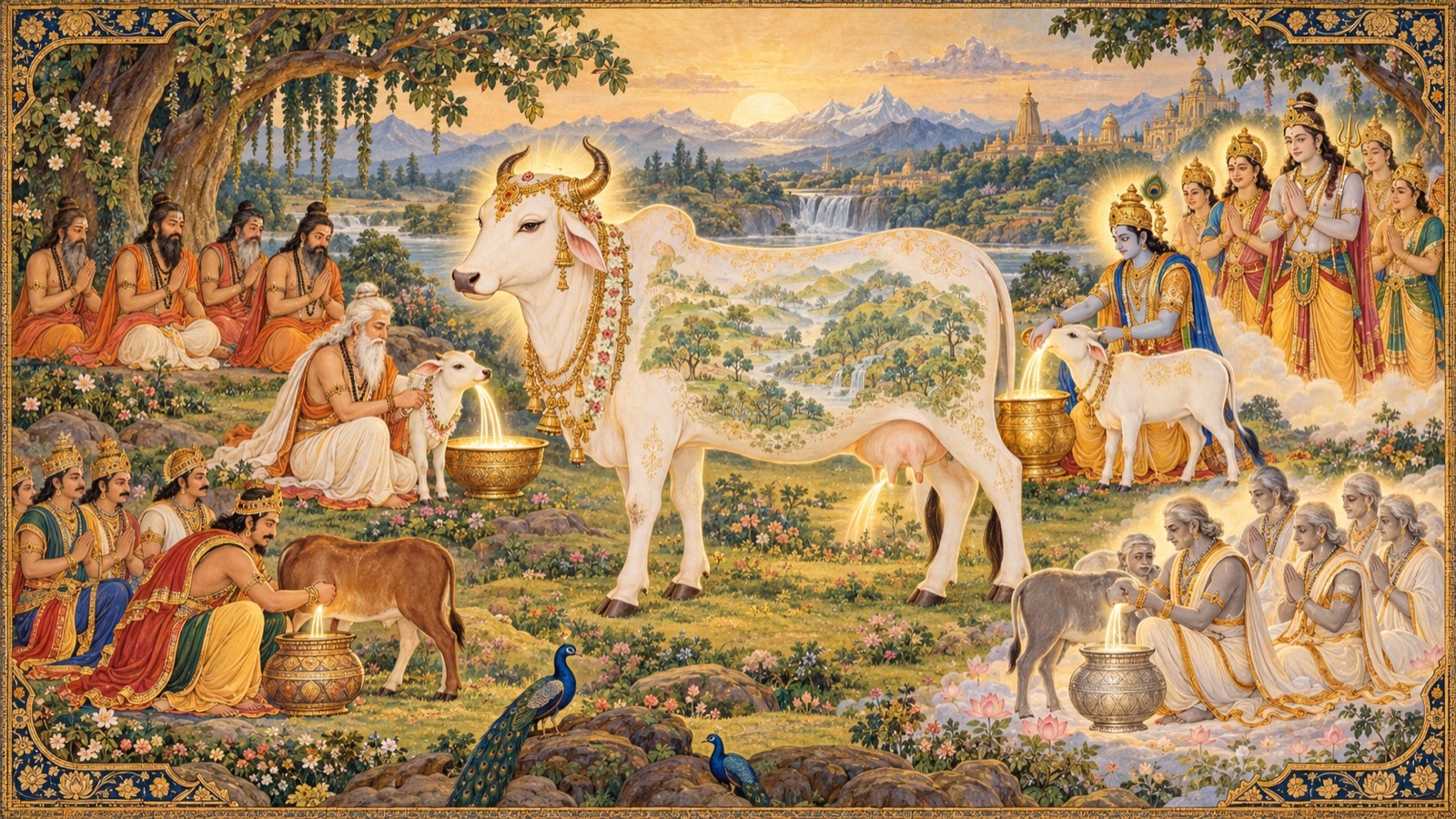
What Prithu did, all the other classes of beings did after him, each in their own way. The sages, taking Brihaspati as their calf, milked from the Earth the Vedas and sacred knowledge; the gods milked nectar and vigour; the ancestors, their offerings; the serpents, their venom and shelter; the beasts and birds, their grasses and grains; the mountains, their minerals and gems — every kind of being, using its own fitting calf and vessel, drew from the one Earth the nourishment proper to itself.
एवं पृथ्वादय: पृथ्वीमन्नादा: स्वन्नमात्मन: । दोहवत्सादिभेदेन क्षीरभेदं कुरूद्वह ॥ २७ ॥
evaṁ pṛthv-ādayaḥ pṛthvīm annādāḥ svannam ātmanaḥ doha-vatsādi-bhedena kṣīra-bhedaṁ kurūdvaha
Meaning: Thus, O chief of the Kurus, Prithu and all the others who live on food, each with their own calf and vessel, milked from the Earth the various nourishments proper to them. (Canto 4, Chapter 18, verse 27)
Plenty Restored
His fatherly care for the Earth was such that she came to be known by his name, as Prithvi, the daughter of Prithu. And under his just and provident rule, plenty returned to a world that had known famine. Where the land had been barren and broken, the king now founded villages, towns, and cities, forts of many kinds, settlements of cowherds and cattle-stations, mines, and farming and mountain villages — ordering the once-wild earth into a home fit for a thriving people.
ग्रामान् पुर: पत्तनानि दुर्गाणि विविधानि च । घोषान् व्रजान् सशिबिरानाकरान् खेटखर्वटान् ॥ ३१ ॥
grāmān puraḥ pattanāni durgāṇi vividhāni ca ghoṣān vrajān sa-śibirān ākarān kheṭa-kharvaṭān
Meaning: The king founded villages, towns, and cities, and forts of many kinds, settlements of cowherds, cattle-stations with their camps, mines, and farming and mountain villages. (Canto 4, Chapter 18, verse 31)
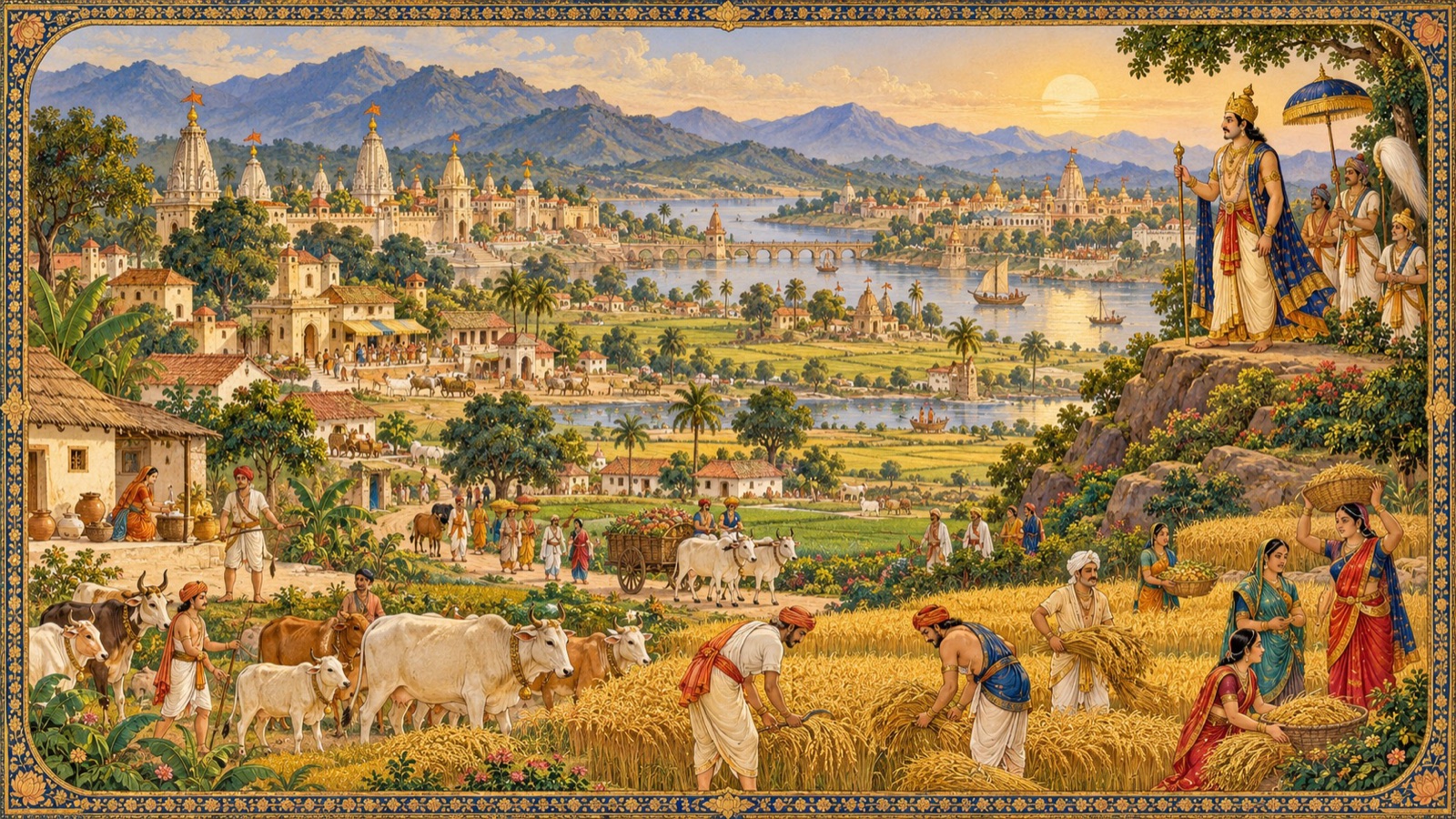
So the eighteenth discourse closes with the world made whole again — the Earth willing, the land fruitful, the people fed, and civilization ordered under a righteous king, ready for the great sacrifices the next chapter will tell.
Principal Teachings of This Chapter
1. What cannot be forced can be won by right arrangement. Prithu could threaten the Earth, but her bounty returned only when he set aside force and accepted her counsel — humbly taking up the tested guidance of the wise instead of devising his own scheme, and supplying what she asked: a calf to draw affection, a vessel to hold the yield, and hands to do the milking. Wisdom achieves what force alone cannot (verses 1-12).
2. Heed the directions of the wise. The Earth warns that one who disregards wise guidance and trusts only his own devices fails again and again. Humility before tested wisdom is the beginning of success (verse 5).
3. Grain belongs first to the Giver, not to the taker. The Earth’s deeper complaint was not mere neglect but theft: those who consume her produce for sense gratification alone, never offering it first in sacrifice to the Lord, turn an entire society into thieves, and she must then hide her seeds away. Prithu’s answer was not machinery or cleverness but yajña, the standard, time-honoured method, followed by levelling and tending the land as one tends a cow, so that she yields willingly once more (verses 6-12).
4. Every being has its proper nourishment from the one source. From the single Earth, each kind of being milks what suits it. The one Lord’s provision is vast enough to feed all, each according to its nature (verse 27).
5. Good rule turns wilderness into a home. Under Prithu, the barren land becomes fields and villages and thriving towns. Righteous authority does not merely defend a people; it builds a world in which they can flourish (verse 31).
A Devotional Reflection
There is a quiet wisdom in the way this chapter follows the last. In Chapter 17 we saw Prithu’s fierce anger for his starving people; here we see that anger give way to something far more fruitful — the patient work of right arrangement. The king’s bow could frighten the Earth, but it could not feed a single child; that took listening, providing a calf and a vessel, levelling the ground, tending the source as one tends a cow. It is a parable, really, about how good is actually accomplished in the world. Passion and even righteous anger have their place — they wake us to a wrong that must be set right — but they do not, by themselves, put grain in an empty hand. That is the work of patient wisdom, of humbly following the directions of those who know, of tending rather than seizing. The image at the heart of the chapter is tender: the mighty emperor, who a moment ago held a drawn bow, now cupping his hands to receive milk from a gentle cow. Strength has bent itself to nurture. And the fruit is a world made whole — a levelled earth, filled granaries, thriving towns. The chapter gently asks us where, in our own lives, we have been trying to force what can only be tended, and invites us to trade the drawn bow for the cupped, receiving hands.
A Daily Devotional Practice
Today, trade force for tending in one corner of your life. Think of some good you have been trying to make happen by pressure or willpower alone — a relationship, a habit, a hope — and ask what “proper means” it truly needs: patience, the counsel of someone wiser, the humble ordering of small things. Take one such step today, and offer it to the Lord with the words “Om Namo Bhagavate Vasudevaya,” trusting that abundance comes not from seizing but from tending. And as you eat your next meal, pause to remember that every grain of it was drawn, in the end, from the one Earth by the Lord’s provision — and offer a moment of grateful thanks to Him who feeds all beings, each according to its need.
Conclusion
The eighteenth discourse of Book Four brings the reconciliation of King Prithu and the Goddess Earth to its rich fruit. Steadying herself before the king’s anger, the Earth counsels him wisely: her bounty is to be drawn not by force but by the proper means, with a fitting calf and vessel, and by levelling her uneven surface. Heeding her, Prithu first breaks up the hills and hollows so the ground lies level and fit for the plough, then, offering Svayambhuva Manu as the calf and cupping his own palms as the vessel, draws out from the Earth-cow every seed of herb and grain. After him the sages, the gods, the ancestors, and every order of being likewise draw out, each by its own fitting means, the sustenance suited to its nature. Plenty returns to a world that had known famine, and the king founds villages and towns and orders the earth into a home for a thriving people. So the chapter teaches that sustenance is drawn from the earth by wisdom and tending, not by force alone — and closes with the world made whole under a righteous king.
May the divine wisdom of Srimad Bhagavatam awaken pure devotion within our hearts.
Om Namo Bhagavate Vasudevaya.
Jay Shree Madhav.
References and Attribution
- Primary edition: Gita Press, Śrīmad Bhāgavata Mahāpurāṇa (English, complete), Book Four, Discourse 18.
- Series: Srimad Bhagavatam Wisdom · Biswa Sanatan Dharma Seva Trust.
- Presented following the spiritual guidance and recommendation of Pandit Dr. Shri Kashinath Mishra.
This is an original, faithful retelling in the writer’s own words, with brief quoted verses shown in Devanāgarī and transliteration and their meanings given as summaries. It is not a reproduction of any single publisher’s continuous translation or commentary. No affiliation with or endorsement by any publisher is implied.
Jay Shree Madhav