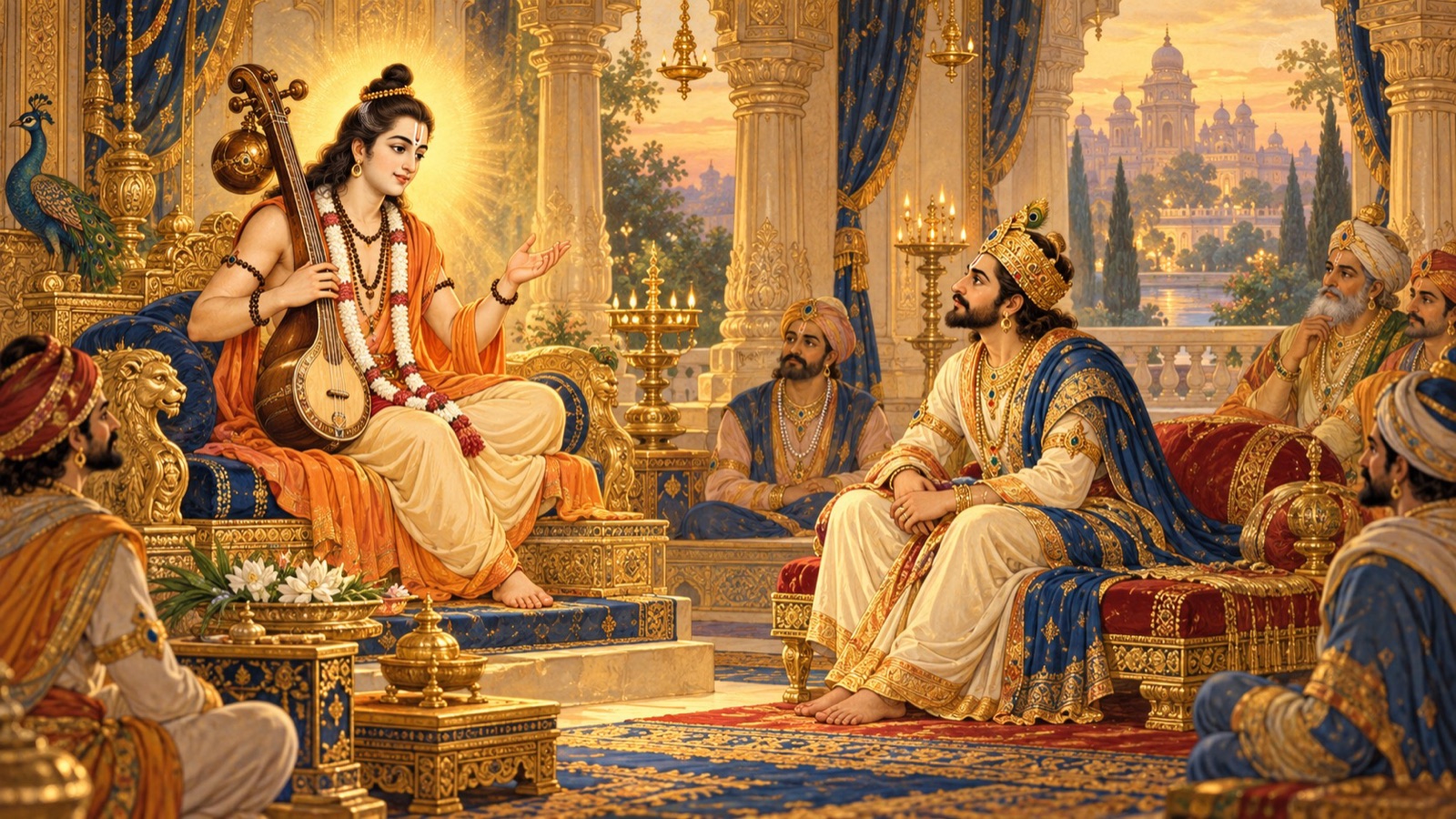
The sage Narada unfolds the hidden meaning of the parable of Puranjana to King Prachinabarhi, turning the king’s heart at last from empty ritual toward the loving worship of the Lord.
Om Namo Bhagavate Vasudevaya.
Om Namo Bhagavate Vasudevaya.
Om Namo Bhagavate Vasudevaya.
Welcome to Srimad Bhagavatam Wisdom, a devotional journey through the sacred histories and teachings of the Srimad Bhagavat Mahapurana. In the previous chapter, the parable of Puranjana came to its close in liberation, as the soul was awakened by the unknown friend within. This twenty-ninth chapter is the tender aftermath of that story. King Prachinabarhi, though he has heard the whole parable, humbly confesses that he still cannot grasp its deeper meaning, for his mind is bewildered by attachment to fruitive ritual. So Narada patiently unveils it: Puranjana is the soul, who fashions for itself body after body; the city of nine gates is the body, its queen the intelligence, its gardens and gates the senses; Chandavega and Kalakanya are the passage of time and old age; and the unknown friend is the Lord seated within as the silent witness. Bondage, Narada teaches, arises from mistaking the body and mind for the self; and freedom comes through self-knowledge and, above all, through the loving worship of the Lord, in whom the whole universe rests. Illumined at last, Prachinabarhi turns from ritualism toward genuine devotion. It is a chapter about how a sacred story, rightly understood, cuts through the deepest doubt — and about the one counsel that answers it all: worship Sri Hari with your whole being.
Chapter Information
- Scripture: Śrīmad Bhāgavata Mahāpurāṇa
- Canto: 4 (Book Four)
- Chapter: 29 (Discourse 29)
- Chapter title: Narada Explains the Parable and Teaches Devotion
- Principal speaker: The sage Narada, addressing King Prachinabarhi (within Maitreya’s discourse to Vidura)
- Principal listener: King Prachinabarhi (and Vidura)
- Main setting: The court of King Prachinabarhi
- Central subject: Narada’s explanation of the parable’s meaning, his teaching on bondage and liberation, and his counsel to worship the Lord
- Principal verse range: Canto 4, Chapter 29, verses 1–85
- Primary edition: Gita Press Śrīmad Bhāgavata Mahāpurāṇa
Context from the Previous Chapter
Chapter 28 completed the parable of Puranjana, showing the soul reborn, grieving, and at last awakened by the unknown friend within to the memory of its true self. This twenty-ninth chapter follows the parable with its explanation, as King Prachinabarhi asks Narada to unfold what he has not yet understood, and Narada teaches him the meaning — and the way beyond it.
The King’s Humble Confession
Having heard the whole parable, King Prachinabarhi did not pretend to understand. Humbly he confessed to Narada that his words were not fully grasped by one like himself — that the wise could take their meaning, but he, bewildered by his long attachment to fruitive ritual, could not.
प्राचीनबर्हिरुवाच भगवंस्ते वचोऽस्माभिर्न सम्यगवगम्यते । कवयस्तद्विजानन्ति न वयं कर्ममोहिता: ॥ १ ॥
prācīnabarhir uvāca bhagavaṁs te vaco ’smābhir na samyag avagamyate kavayas tad vijānanti na vayaṁ karma-mohitāḥ
Meaning: Prachinabarhi said: O Lord, your words are not fully understood by us; the wise grasp them, but we, bewildered by fruitive work, do not. (Canto 4, Chapter 29, verse 1)
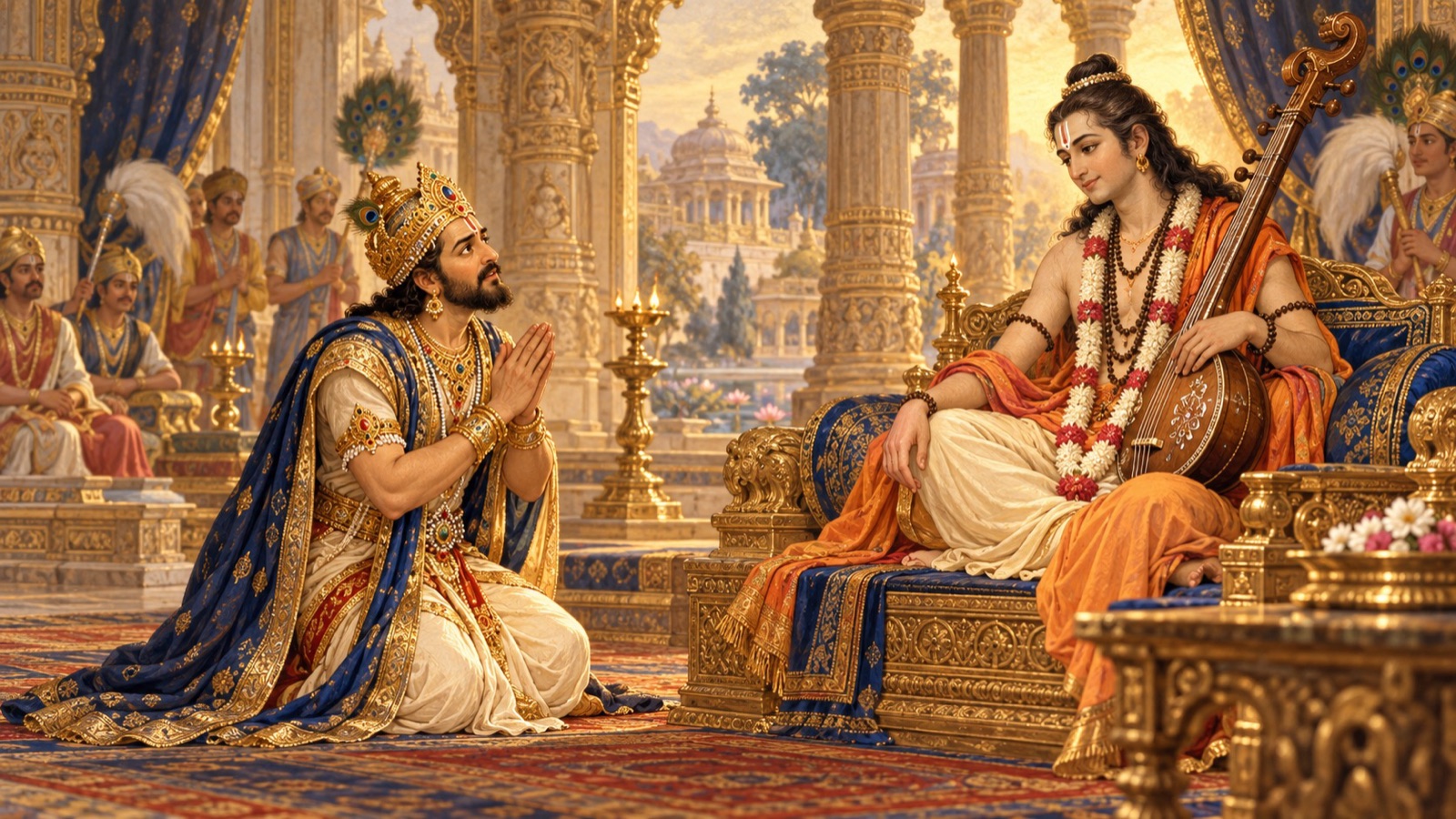
Narada Unveils the Meaning
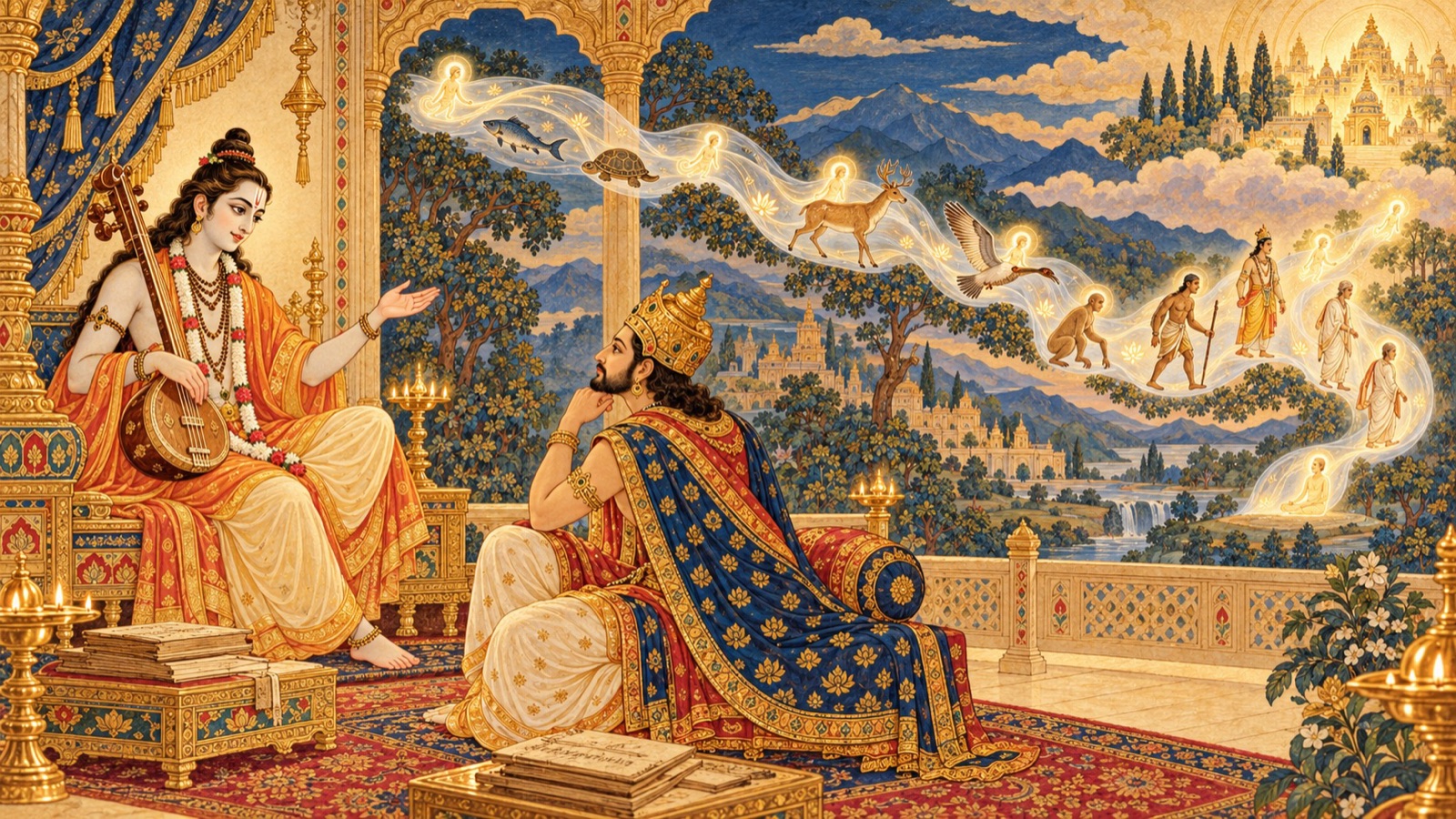
So Narada patiently unfolded the allegory. Know the “person,” Puranjana, he said, to be the soul — the living being that fashions for itself, life after life, a body of one, two, three, four, or many feet, or none at all, across all the species of the world.
नारद उवाच पुरुषं पुरञ्जनं विद्याद्यद् व्यनक्त्यात्मन: पुरम् । एकद्वित्रिचतुष्पादं बहुपादमपादकम् ॥ २ ॥
nārada uvāca puruṣaṁ purañjanaṁ vidyād yad vyanakty ātmanaḥ puram eka-dvi-tri-catuṣ-pādaṁ bahu-pādam apādakam
Meaning: Narada said: Know the “person,” Puranjana, to be the soul, who fashions for itself a body — with one, two, three, four, many, or no feet, across the species. (Canto 4, Chapter 29, verse 2)
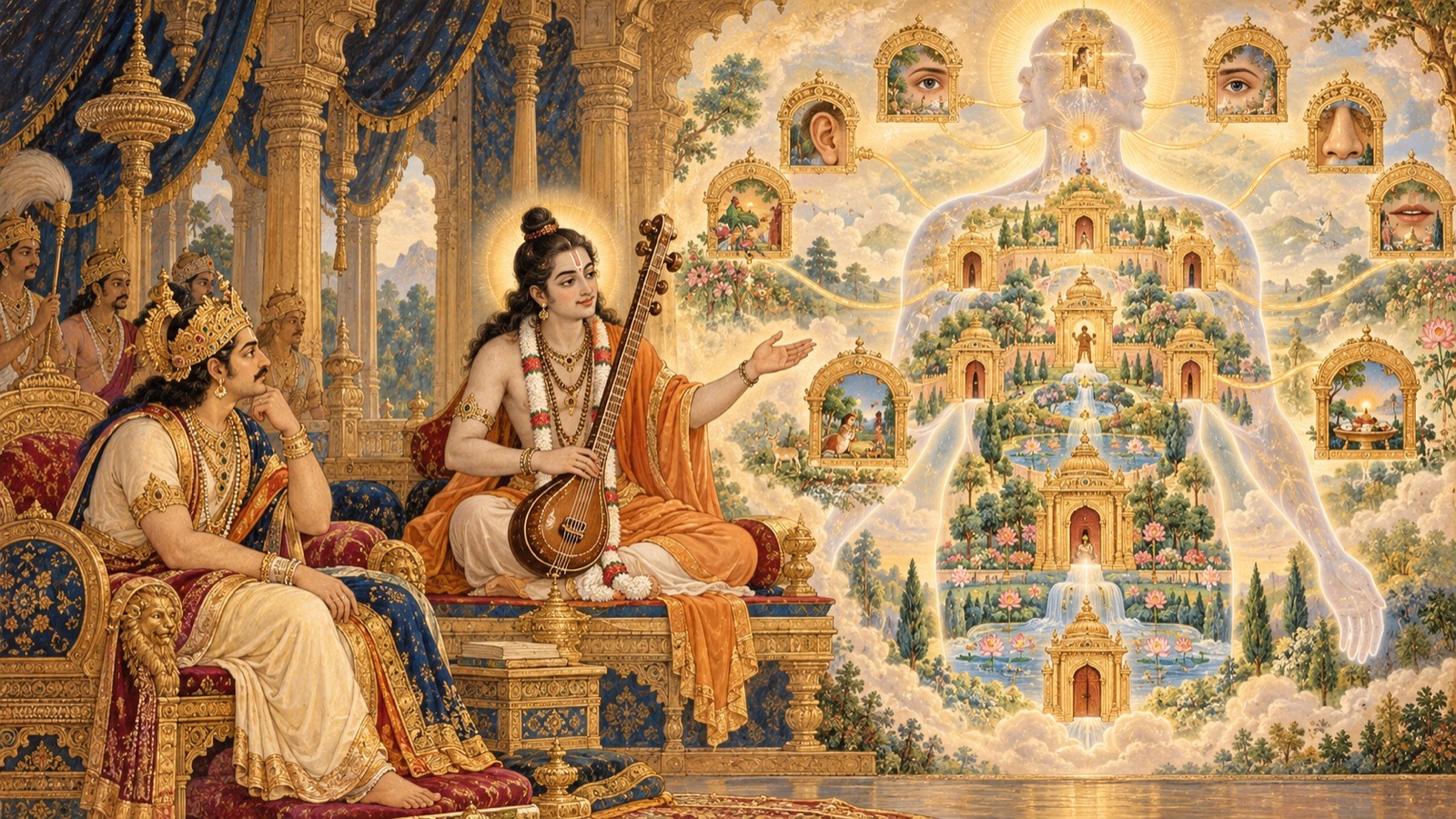
Then he decoded the parable piece by piece: the two gates called Nalini and Nalini are the nostrils; the sense of smell, the taste, the eyes and ears and all the openings each have their place; the queen is the intelligence, the friend within the Supreme Lord. He showed how the soul, forgetting itself, follows the mind and senses wherever they lead, gathering the fruits of its deeds and wandering from birth to birth.
Devotion Alone Grants Freedom
Before turning to the remedy itself, Narada pauses to make a still sharper point. The soul’s true self-interest, he says, is nothing but to end the endless chain of unwanted trouble that material bondage keeps generating — and that chain is severed only by supreme, undivided devotion offered to the Lord through the spiritual master. Vedic ritual, philosophical study, even mystic practice, taken alone, cannot uproot attachment or grant real knowledge of the self. Only bhakti-yoga, fixed steadily on Vasudeva, accomplishes both at once — it alone gives rise to genuine detachment from the world and to unclouded knowledge. This is why Narada, though himself a master of the scriptures, does not prescribe more ritual for the king; he prescribes love.
अथात्मनोऽर्थभूतस्य यतोऽनर्थपरम्परा । संसृतिस्तद्व्यवच्छेदो भक्त्या परमया गुरौ ॥ ३६ ॥ वासुदेवे भगवति भक्तियोगः समाहितः । सध्रीचीनेन वैराग्यं ज्ञानं च जनयिष्यति ॥ ३७ ॥
athātmano ‘rtha-bhūtasya yato ‘nartha-paramparā saṁsṛtis tad-vyavacchedo bhaktyā paramayā gurau
vāsudeve bhagavati bhakti-yogaḥ samāhitaḥ sadhrīcīnena vairāgyaṁ jñānaṁ ca janayiṣyati
Meaning: The soul’s real interest lies only in ending the endless chain of unwanted trouble that bondage produces, and this bondage is cut only by supreme devotion to the Lord offered through the spiritual master; when bhakti-yoga is fixed on Vasudeva, it alone gives rise to true detachment and real knowledge. (Canto 4, Chapter 29, verses 36–37)
Even the Sages Do Not Fully Know Him
Narada then adds a humbling admission of his own. Brahma, the most powerful of creators; Shiva; Manu and the great progenitors of humankind; the celibate sages headed by Sanaka; the seven great rishis; and Narada himself — none of these exalted, liberated souls has, through all their austerity, learning and meditation, ever fully known the Lord they behold (verses 42–44). Vedic rites and the worship of the demigods, however faithfully performed, cannot deliver that knowledge either; it comes only when the Lord, moved by a devotee’s loving service, chooses to reveal it as an unearned gift (verses 45–46). The point is startling: neither austerity nor scholarship, however vast, can command the Lord’s disclosure of Himself. This is precisely why Narada, sage among sages, teaches King Prachinabarhi through story and surrender rather than through argument — the Lord yields to love, not to credentials.
The Mind That Carries Us
Narada then taught the deep truth of how we are carried from life to life. The soul, he said, clothed in its subtle body — the mind with all its accumulated impressions — develops thoughts and images drawn from its former body; and be certain of this, he added: the mind can conceive nothing it has not first experienced. So it is the mind, laden with the memories and desires of our deeds, that bears the soul across the threshold of death and shapes the birth to come.
तेनास्य तादृशं राजँल्लिङ्गिनो देहसम्भवम् । श्रद्धत्स्वाननुभूतोऽर्थो न मन: स्प्रष्टुमर्हति ॥ ६५ ॥
tenāsya tādṛśaṁ rājaḻ liṅgino deha-sambhavam śraddhatsvānanubhūto ’rtho na manaḥ spraṣṭum arhati
Meaning: Therefore, O king, the soul, clothed in its subtle body, carries images born of its former body; be sure of this — the mind cannot conceive anything it has not first experienced. (Canto 4, Chapter 29, verse 65)
The One Remedy: Worship the Lord
Having shown the whole mechanism of bondage — the soul’s forgetting, its identification with body and mind, its wandering driven by desire — Narada now offers the single remedy that undoes it all: give the whole of your heart in loving service to Sri Hari, and learn to see all of creation as His own manifest form — the one source from which it rises, in which it rests, and into which it finally dissolves.
अतस्तदपवादार्थं भज सर्वात्मना हरिम् । पश्यंस्तदात्मकं विश्वं स्थित्युत्पत्त्यप्यया यत: ॥ ७९ ॥
atas tad apavādārthaṁ bhaja sarvātmanā harim paśyaṁs tad-ātmakaṁ viśvaṁ sthity-utpatty-apyayā yataḥ
Meaning: Therefore, to undo that bondage, worship Sri Hari with your whole being, seeing the entire universe as filled with Him, from whom come its creation, maintenance, and dissolution. (Canto 4, Chapter 29, verse 79)
He assured the king that fruitive works, however grand, cannot free the soul, for they only bind it to new results; but that loving devotion to the Lord, and the self-knowledge it brings, cut the root of bondage and carry the soul home.
The Doubt Cut Away
And Narada closed with the fruit of the whole teaching. This wondrous spiritual allegory, veiled in symbol, he had himself received from his own teacher; and whoever understands it, he said, is freed from the bodily conception, and the doubt about the self, and about the life that lies beyond death, is cut clean away.
अध्यात्मपारोक्ष्यमिदं मयाधिगतमद्भुतम् । एवं स्त्रियाश्रम: पुंसश्छिन्नोऽमुत्र च संशय: ॥ ८५ ॥
adhyātma-pārokṣyam idaṁ mayādhigatam adbhutam evaṁ striyāśramaḥ puṁsaś chinno ’mutra ca saṁśayaḥ
Meaning: This wondrous spiritual allegory, veiled in symbol, I have received; by it the doubt about the self and about the life hereafter is cut away. (Canto 4, Chapter 29, verse 85)
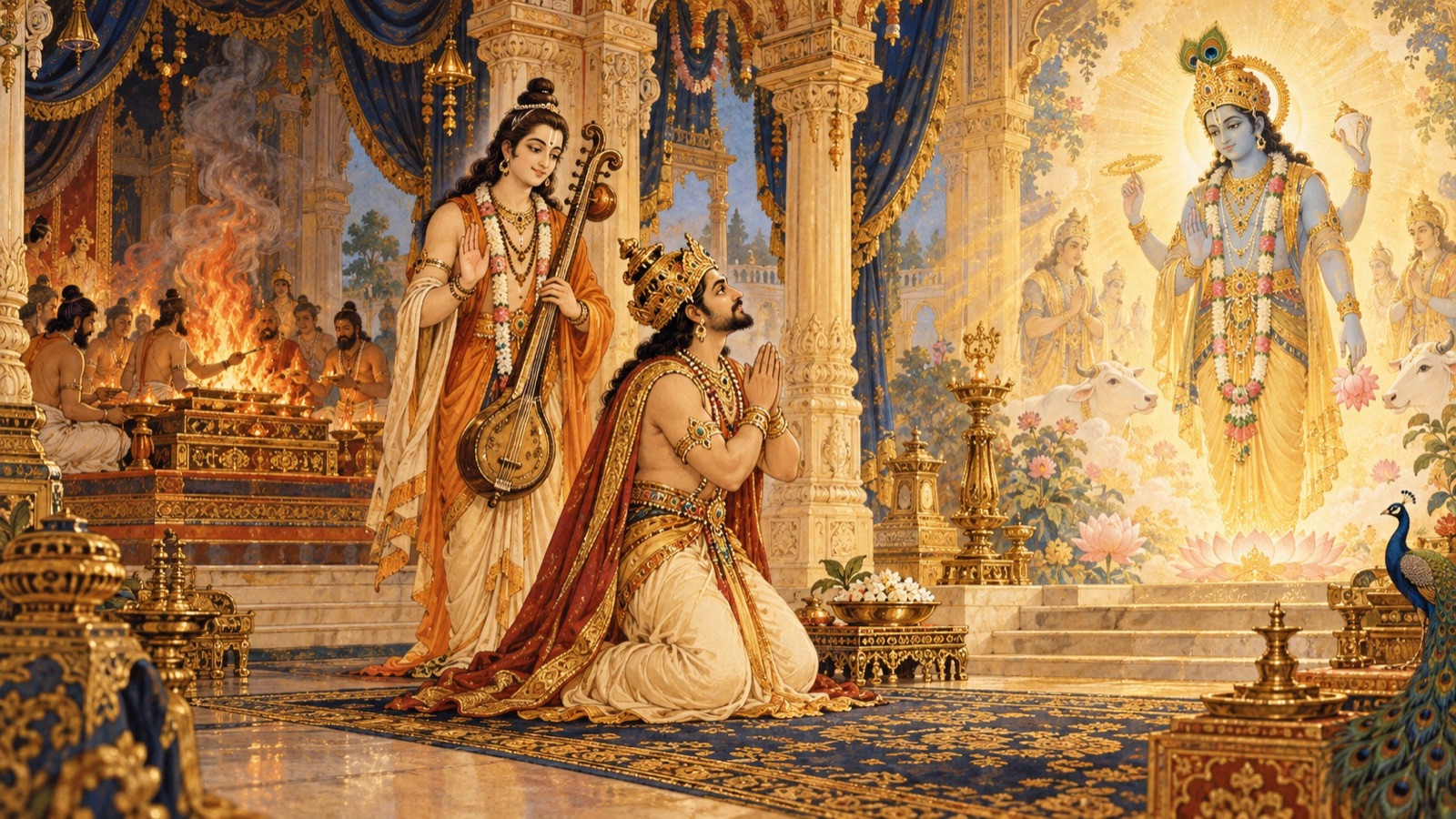
Illumined by this teaching, King Prachinabarhi turned his heart from the endless round of fruitive ritual toward the loving worship of the Lord. So the twenty-ninth discourse closes with the king awakened — poised to leave his sacrifices behind and take up the path of devotion, which the narrative will follow in the chapters to come.
Principal Teachings of This Chapter
1. Humility is the beginning of understanding. Prachinabarhi does not pretend to grasp what he has not; he confesses his confusion and asks. To admit “I do not understand” is the first step toward being taught (verse 1).
2. The soul makes its own dwelling. Puranjana is the soul, fashioning body after body across the species. We are not the house but the dweller, taking up form after form according to our desires (verse 2).
3. The mind carries us across death. The subtle mind, laden with the impressions of our deeds, bears the soul into its next birth. What we fill our minds with now is the seed of what we become (verse 65).
4. Devotion alone grants real detachment and knowledge. Ritual, study and mystic practice, however rigorously pursued, cannot by themselves free the heart; only bhakti-yoga fixed on Vasudeva uproots attachment and unveils genuine self-knowledge (verses 36-37).
5. Loving worship of the Lord is the one remedy. Narada’s entire counsel converges on a single point: surrender to Sri Hari with your whole being and behold all creation as resting in Him. Devotion, and the vision it gives, severs the root of bondage (verse 79).
6. Neither austerity nor scholarship can command the Lord’s disclosure of Himself. The greatest sages — Brahma, Shiva, Manu, Sanaka and his brothers, the seven great rishis — do not fully know Him through penance or learning alone; He reveals Himself only in answer to loving devotion (verses 42-46).
A Devotional Reflection
There is something deeply reassuring in how this chapter treats King Prachinabarhi. He has just heard one of the most beautiful and layered parables in all the scriptures — and he admits, plainly, that he did not fully understand it. And Narada does not scold him or move on; he sits down, so to speak, and explains it again, patiently, symbol by symbol. This is a picture of how the sacred actually works on us: rarely all at once, usually through hearing and re-hearing, through humbly admitting what we have missed and asking to be shown again. Prachinabarhi’s confession — “the wise understand, but we, bewildered by our work, do not” — is one many of us could honestly make, and the chapter’s tenderness is that such an admission is not the end of the road but the beginning of light. And notice where all Narada’s careful explanation finally lands. After decoding every gate and garden of the allegory, after unveiling the whole machinery of the soul’s bondage and the mind that carries it from life to life, his conclusion is not a subtle philosophy to master but a simple act to perform: worship Sri Hari with your whole being. All the analysis serves this one end — to turn the heart, at last, from the endless labour of getting and doing toward the loving remembrance of the Lord in whom everything rests. The chapter tells us that the deepest doubt is cut not by cleverness but by devotion, and that the whole point of understanding is to bring us, humbled and awakened, to our knees before God.
A Daily Devotional Practice
Today, practise Prachinabarhi’s humility and act on Narada’s counsel. First, in some area of your spiritual life where you have been pretending to understand more than you do, quietly admit — as the king did — “I do not fully grasp this,” and ask to be taught, whether through scripture, a wise friend, or prayer. Humility opens the door that pride keeps shut. Then, take Narada’s one remedy and make it concrete: for a few minutes today, “worship Sri Hari with your whole being” — set aside the endless doing, sit before the Lord, and offer Him your whole attention with the words “Om Namo Bhagavate Vasudevaya,” trying, even briefly, to see the whole world as filled with Him. In admitting what you do not know and turning, however simply, to worship, you follow the king from bewildered ritual into the beginning of true devotion.
Conclusion
The twenty-ninth discourse of Book Four is the tender aftermath of the parable of Puranjana. Having heard the whole story, King Prachinabarhi humbly confesses that he cannot yet grasp its deeper meaning, bewildered as he is by attachment to fruitive ritual. Narada therefore walks back through the allegory point by point: within the embodied soul’s own city of nine gates stand its queen the intelligence and its many gardens and doorways the senses, while Chandavega and Kalakanya mark, respectively, time’s advance and encroaching age, and the once-unknown companion proves to be the Lord Himself, ever present as the witnessing Self. He shows that this same subtle covering of mind and impressions is what ferries the soul onward from one body to the next, that not even the great architects of creation know the Lord through austerity or learning alone, and that ritual pursued for its own reward only tightens the very knot it seeks to loosen. The single thread running through it all is devotion: fixing the heart on Vasudeva alone dissolves attachment and unveils true knowledge, and surrendering to Sri Hari as the source, support and end of everything is the one remedy that undoes every bond. By this sacred allegory, Narada declares, the doubt about the self and the life hereafter is cut clean away. Illumined at last, Prachinabarhi turns from ritualism toward genuine devotion — teaching us that the deepest doubt is answered not by cleverness or credentials, but by the loving worship of the Lord.
May the divine wisdom of Srimad Bhagavatam awaken pure devotion within our hearts.
Om Namo Bhagavate Vasudevaya.
Jay Shree Madhav.
References and Attribution
- Primary edition: Gita Press, Śrīmad Bhāgavata Mahāpurāṇa (English, complete), Book Four, Discourse 29.
- Series: Srimad Bhagavatam Wisdom · Biswa Sanatan Dharma Seva Trust.
- Presented following the spiritual guidance and recommendation of Pandit Dr. Shri Kashinath Mishra.
This is an original, faithful retelling in the writer’s own words, with brief quoted verses shown in Devanāgarī and transliteration and their meanings given as summaries. It is not a reproduction of any single publisher’s continuous translation or commentary. No affiliation with or endorsement by any publisher is implied.
Jay Shree Madhav