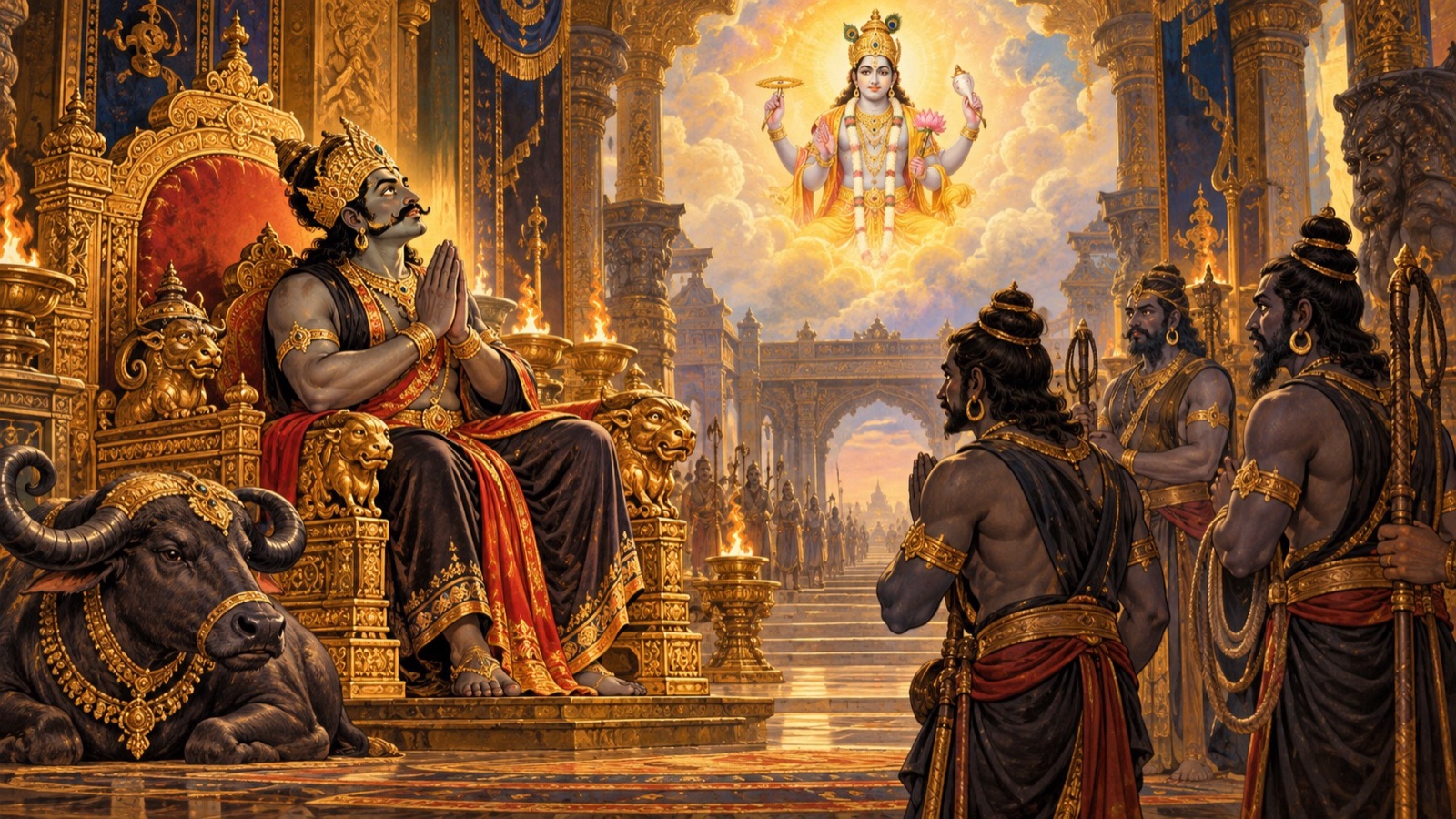
When his own servants return defeated, the lord of death does not rage — he folds his hands, meditates on the feet of the Lord, and teaches the deepest secret of all: that above every law stands loving devotion to God.
Om Namo Bhagavate Vasudevaya.
Om Namo Bhagavate Vasudevaya.
Om Namo Bhagavate Vasudevaya.
Welcome to Srimad Bhagavatam Wisdom, a devotional journey through the sacred histories and teachings of the Srimad Bhagavat Mahapurana. Having heard how the servants of Lord Vishnu overturned the authority of death itself to rescue Ajamila, King Parikshit naturally wonders: what did Yama, the great lord of righteousness, say when his own messengers came back defeated? This third chapter gives the answer — and it is astonishing. Far from being angered, Yama receives the news with delight, meditates upon the feet of the Lord, and delivers to his servants one of the most treasured teachings in the whole Bhagavata. He confesses that he is not the supreme authority; he names the rare knowers of true dharma; he declares that loving devotion, awakened through chanting the Lord’s name, outranks every other duty a soul can perform; and he tenderly instructs his messengers never again to approach those who have taken shelter in the Lord.
Chapter Information
- Scripture: Śrīmad Bhāgavata Mahāpurāṇa
- Canto: 6 (Book Six)
- Chapter: 3 (Discourse 3)
- Chapter title: Yamaraja Instructs His Messengers
- Principal speakers: Yamaraja (instructing his messengers); his messengers (reporting and questioning); and Sukadeva Gosvami, narrating to King Parikshit
- Principal listener: The messengers of Yama; King Parikshit; and the sages of Naimisharanya at the outer frame
- Main setting: Samyamani, the capital city of Yamaraja; the frame remains the bank of the Ganga where Parikshit listens
- Central subject: Yama’s confession of the Lord’s supremacy, his account of the true knowers of dharma, and his instruction that devotion through the holy name is the paramount duty and that devotees must never be approached for punishment
- Principal verse range: Canto 6, Chapter 3, verses 1–35
- Primary edition: Gita Press Śrīmad Bhāgavata Mahāpurāṇa
A Question About the Authority of Death
King Parikshit opens the chapter with the question every listener is already asking. All creation is under Yama’s sway, and his authority had just been openly obstructed — so what did the great lord of retribution say when his servants reported their defeat at the hands of the Lord’s messengers? Such a thing, Parikshit observes, had never been heard of before, and only Sukadeva can resolve the doubt it raises (verses 1-2).
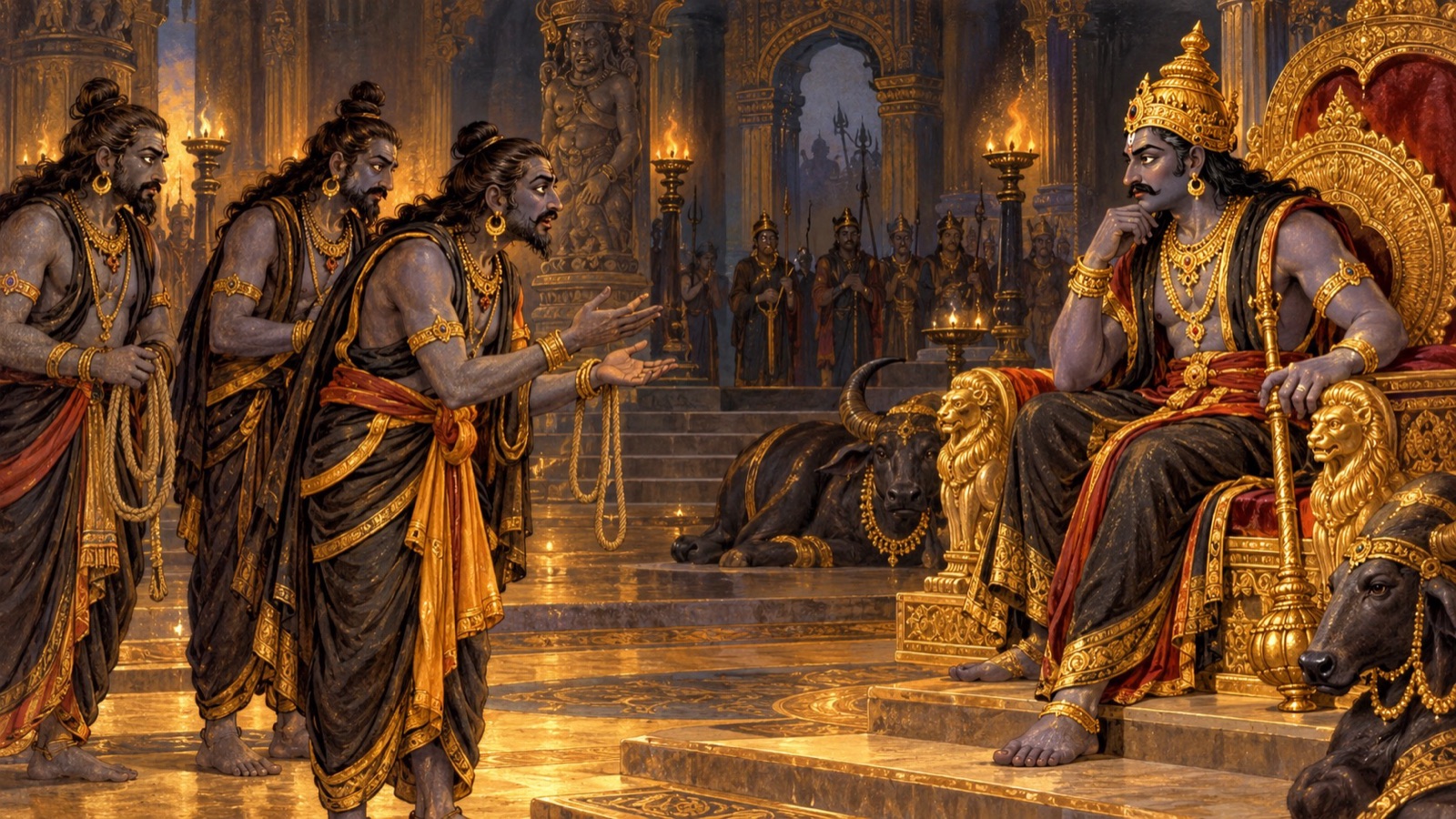
Sukadeva relates that the messengers of Yama, their efforts interrupted, submitted their account to their master in Samyamani (verse 3). They put a searching philosophical question to him. If there are many rulers in the world dispensing the fruits of action, they reasoned, contradictions would arise — one might condemn where another absolves. Therefore, they concluded, Yama himself must be the one supreme ruler of all beings, able to distinguish merit from sin and wielding the rod of punishment (verses 4-7). Yet that very authority, they said, had today been set at naught: four wonderful beings had cut their nooses and forcibly released a sinner the moment he uttered the word “Narayana.” They begged to know who these beings were (verses 8-10).
Yama’s Confession: The One Supreme Lord
Thus questioned, the great Yama — controller of living beings — was delighted, and, contemplating the lotus-feet of Sri Hari, he replied (verse 11). His answer began with a humble confession, spoken in words the tradition has never forgotten:
यम उवाच परो मदन्यो जगतस्तस्थुषश्च ओतं प्रोतं पटवद्यत्र विश्वम् । यदंशतोऽस्य स्थितिजन्मनाशा नस्योतवद्यस्य वशे च लोक: ॥ १२ ॥
yama uvāca paro mad-anyo jagatas tasthuṣaś ca otaṁ protaṁ paṭavad yatra viśvam yad-aṁśato ‘sya sthiti-janma-nāśā nasy otavad yasya vaśe ca lokaḥ
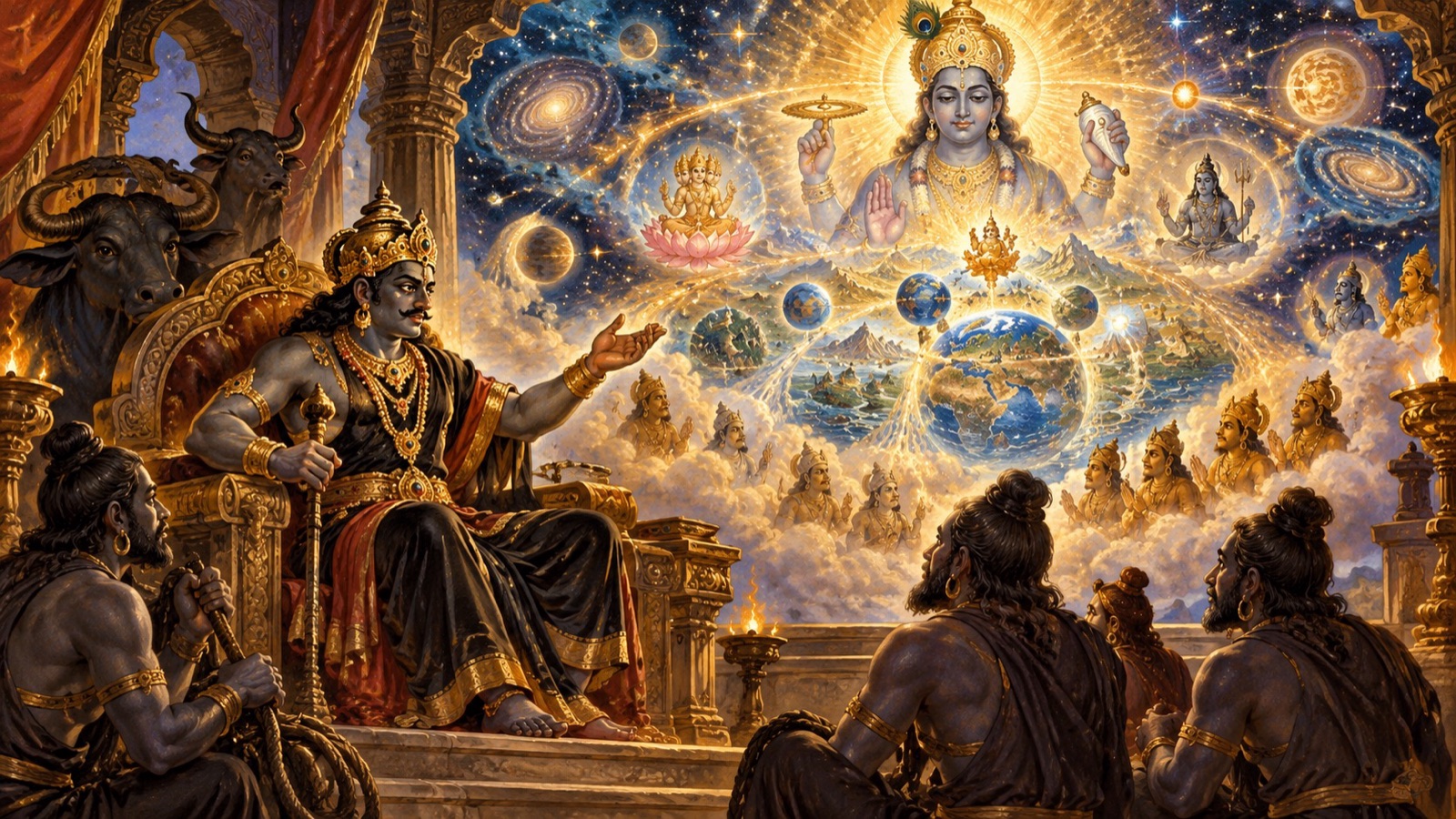
Meaning: Yamaraja said: There exists one Supreme Lord, other than myself and every other guardian of this moving and unmoving creation, in whom the whole universe is woven through and through, like the crossing threads of a single cloth; from a mere fraction of His being come this world’s rising, its continuance, and its end, and every being stands bound under His rule, as an ox stands bound by the rope through its nose. (Canto 6, Chapter 3, verse 12)
As a farmer binds his oxen with cords through their nostrils, Yama continued, the Lord binds every member of human society through the divisions and duties ordained in His own word, the Veda, and in awe of Him each order renders its own appointed offerings (verse 13).
Yama then named the great guardians of the cosmos — himself, Indra, Nirriti, Varuna, the moon-god, the fire-god, Lord Shiva, the wind-god, the sun-god, Brahma, the sons of Aditi, the Vishvedevas, the Vasus, the Sadhyas, the Maruts, the Rudras, the Siddhas, and creators such as Bhrigu — and admitted that even these exalted beings, in whom goodness predominates, cannot know the intention of the Lord, veiled as they are by His Maya (verses 14-15). Just as colours cannot perceive the very faculty of sight that reveals them, so the embodied soul cannot grasp with senses, mind, or speech the One who is the seer of all, dwelling within every heart (verse 16). The charming messengers of the Lord, he explained, move through the world protecting His devotees from enemies, from everyone else — and even from Death himself (verses 17-18).
The Twelve Who Know True Dharma
Yama came then to the heart of his teaching. The true dharma, he said, is established directly by the Lord Himself, and it is so subtle that neither seers nor gods nor the foremost Siddhas can truly know it — how much less demons, humans, or celestial artistes.
धर्मं तु साक्षाद्भगवत्प्रणीतं न वै विदुऋर्षयो नापि देवा: । न सिद्धमुख्या असुरा मनुष्या: कुतो नु विद्याधरचारणादय: ॥ १९ ॥
dharmaṁ tu sākṣād bhagavat-praṇītaṁ na vai vidur ṛṣayo nāpi devāḥ na siddha-mukhyā asurā manuṣyāḥ kuto nu vidyādhara-cāraṇādayaḥ
Meaning: Real dharma is established directly by the Supreme Lord. Not even the sages or the gods, nor the foremost of the Siddhas, truly know it — how, then, could demons, ordinary human beings, or Vidyadharas and Charanas know it? (Canto 6, Chapter 3, verse 19)
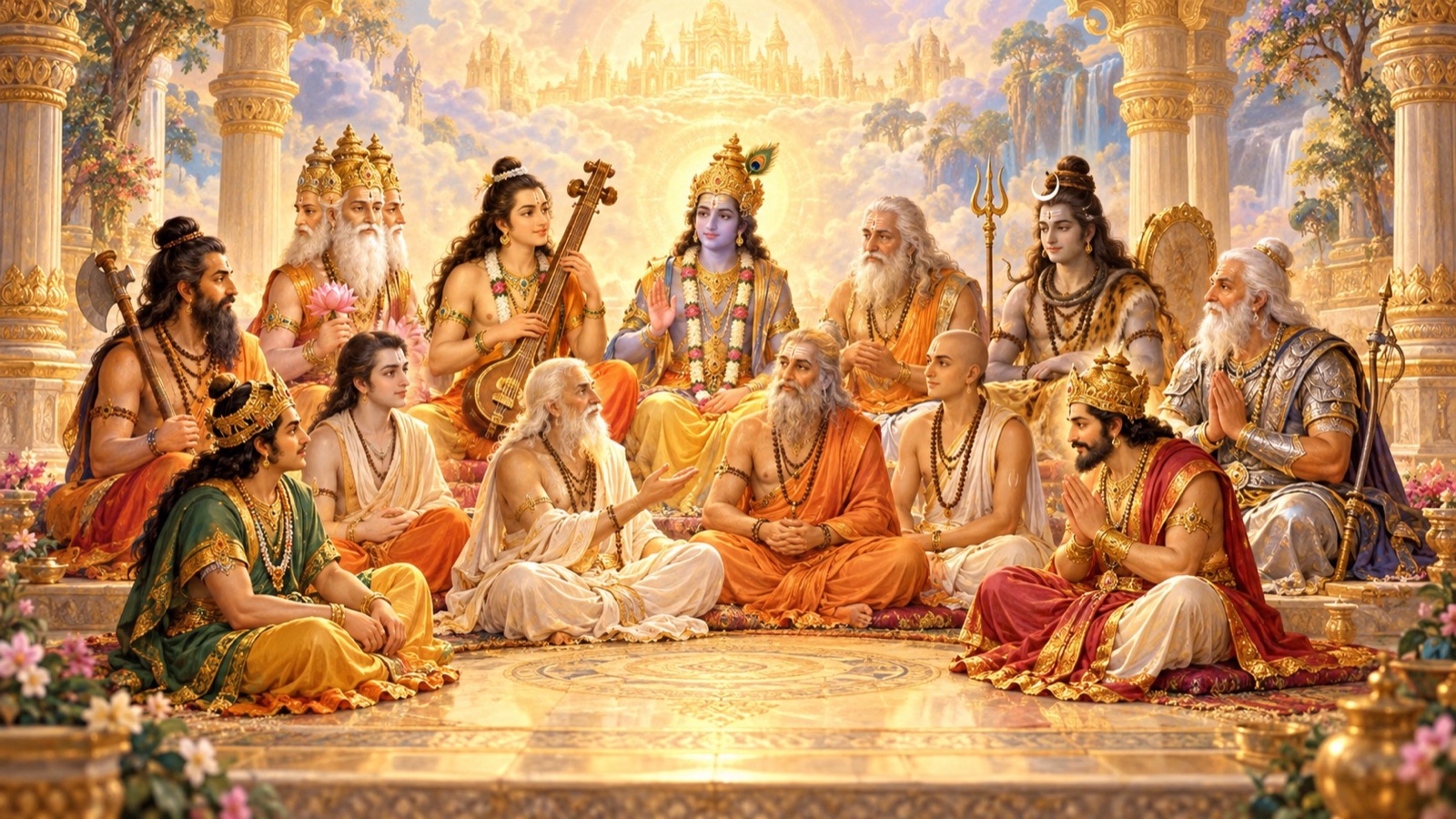
Then Yama named the twelve great authorities who alone understand this confidential dharma — a list revered ever since as the twelve mahajanas, the standard-bearers of devotion.
स्वयम्भूर्नारद: शम्भु: कुमार: कपिलो मनु: । प्रह्लादो जनको भीष्मो बलिर्वैयासकिर्वयम् ॥ २० ॥ द्वादशैते विजानीमो धर्मं भागवतं भटा: । गुह्यं विशुद्धं दुर्बोधं यं ज्ञात्वामृतमश्नुते ॥ २१ ॥
svayambhūr nāradaḥ śambhuḥ kumāraḥ kapilo manuḥ prahlādo janako bhīṣmo balir vaiyāsakir vayam dvādaśaite vijānīmo dharmaṁ bhāgavataṁ bhaṭāḥ guhyaṁ viśuddhaṁ durbodhaṁ yaṁ jñātvāmṛtam aśnute
Meaning: Brahma the self-born, Narada, Lord Shiva, Sanatkumara, Kapila, Manu, Prahlada, Janaka, Bhishma, Bali, Suka (Sukadeva, the son of Vyasa), and myself — we twelve know the confidential, pure, and hard-to-grasp dharma of devotion, by knowing which one attains immortality. (Canto 6, Chapter 3, verses 20-21)
The Highest Duty and the Glory of the Name
From this Yama drew the practical conclusion that crowns the chapter. The paramount duty of all people in this world, he declared, is nothing other than loving devotion to the Lord, expressed through the chanting of His name and the like.
एतावानेव लोकेऽस्मिन् पुंसां धर्म: पर: स्मृत: । भक्तियोगो भगवति तन्नामग्रहणादिभि: ॥ २२ ॥
etāvān eva loke ‘smin puṁsāṁ dharmaḥ paraḥ smṛtaḥ bhakti-yogo bhagavati tan-nāma-grahaṇādibhiḥ
Meaning: This alone is the highest duty of all people in this world: devotional service to the Supreme Lord, practised through the chanting of His holy name and other such means. (Canto 6, Chapter 3, verse 22)
Turning to his messengers with affection — calling them “my boys” — Yama bade them behold the glory of the Lord’s name, by which even Ajamila had been freed from the noose of death.
नामोच्चारणमाहात्म्यं हरे: पश्यत पुत्रका: । अजामिलोऽपि येनैव मृत्युपाशादमुच्यत ॥ २३ ॥
nāmoccāraṇa-māhātmyaṁ hareḥ paśyata putrakāḥ ajāmilo ‘pi yenaiva mṛtyu-pāśād amucyata
Meaning: O my children, behold the glory of uttering the name of Sri Hari, by which even Ajamila was released from the noose of death. (Canto 6, Chapter 3, verse 23)
Even calling out “Narayana” at the pitch of his voice, meaning only his son, and that too when his body and mind were failing at the point of death, had won Ajamila liberation. This one incident, Yama declared, settles the matter for all time:
एतावतालमघनिर्हरणाय पुंसां सङ्कीर्तनं भगवतो गुणकर्मनाम्नाम् । विक्रुश्य पुत्रमघवान् यदजामिलोऽपि नारायणेति म्रियमाण इयाय मुक्तिम् ॥ २४ ॥
etāvatālam agha-nirharaṇāya puṁsāṁ saṅkīrtanaṁ bhagavato guṇa-karma-nāmnām vikruśya putram aghavān yad ajāmilo ‘pi nārāyaṇeti mriyamāṇa iyāya muktim
Meaning: This much alone is enough to strip a person of every sin: the chanting of the Supreme Lord’s holy name, qualities, and deeds. Ajamila, sinner though he was, cried out only for his son — yet dying with the word Narayana on his lips, he attained liberation. (Canto 6, Chapter 3, verse 24)
Sadly, Yama observed, the average scholar, bewildered by Maya and absorbed in the ritual promises of the Vedas, often fails to recognize this glory of the name and remains busy with elaborate sacrifices (verse 25).
Never Approach the Devotees of the Lord
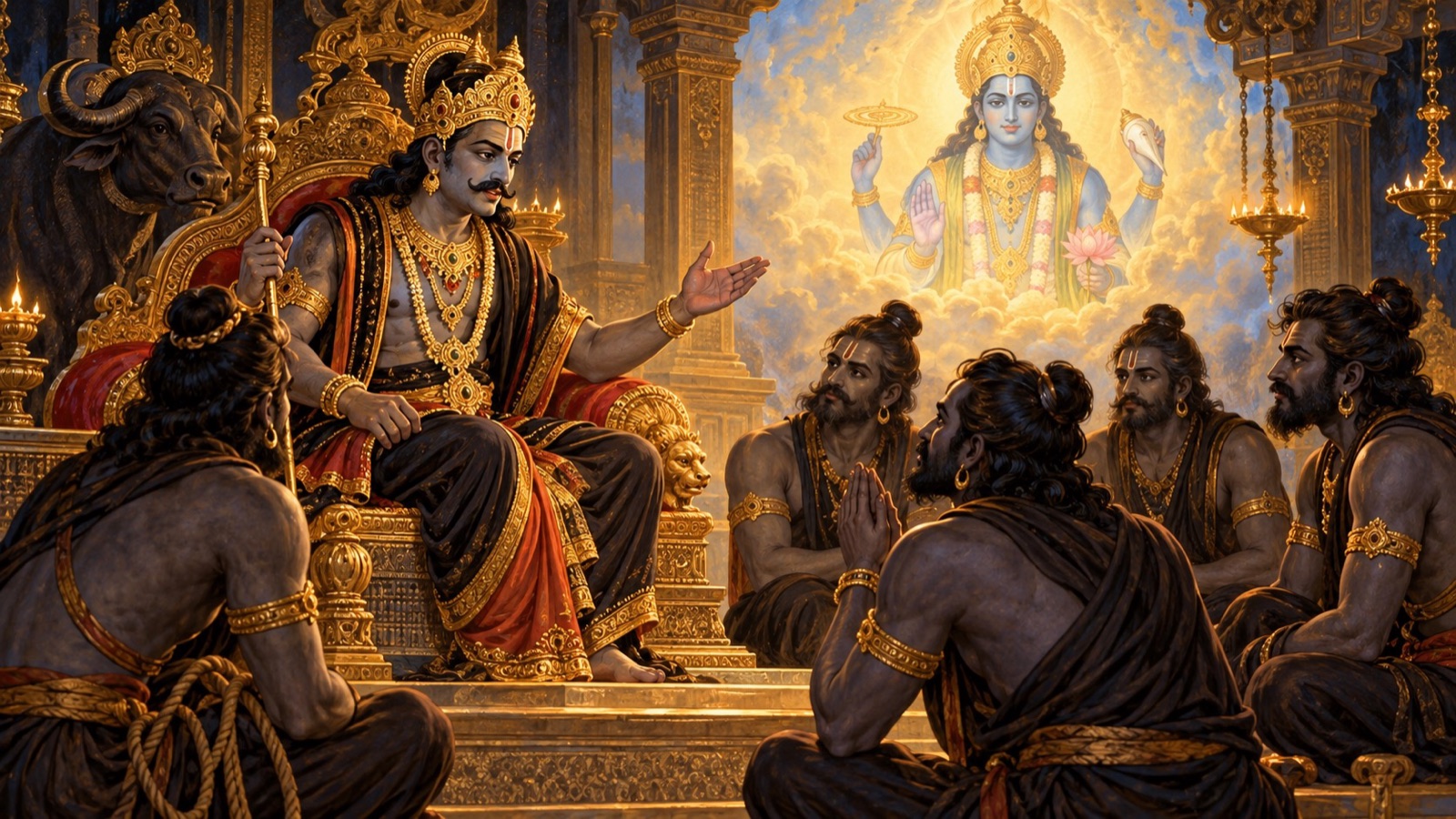
Yama’s final instruction was also his most tender. Bring to me, he said, only those hardened souls who never recount the Lord’s virtues, never utter His name, never bow their heads to Sri Krishna, and never render Him any service — those who have given their hearts wholly to the fleeting pleasures of home while turning away from the sweetness of the Lord’s feet (verses 28-29). But never approach those who have taken shelter in the Lord, Yama commanded, his tone turning to reverence:
ते देवसिद्धपरिगीतपवित्रगाथा ये साधव: समदृशो भगवत्प्रपन्ना: । तान्नोपसीदत हरेर्गदयाभिगुप्तान् नैषां वयं न च वय: प्रभवाम दण्डे ॥ २७ ॥
te deva-siddha-parigīta-pavitra-gāthā ye sādhavaḥ samadṛśo bhagavat-prapannāḥ tān nopasīdata harer gadayābhiguptān naiṣāṁ vayaṁ na ca vayaḥ prabhavāma daṇḍe
Meaning: Do not go near such saintly souls — equal-sighted toward all, wholly surrendered to the Lord, their pure story sung by the demigods and the Siddhas themselves — for Sri Hari’s own mace stands guard over them, and neither I nor Time has any power to touch them with punishment. (Canto 6, Chapter 3, verse 27)
Here is the deepest secret this chapter has to teach. Only a few verses earlier Yama himself had described how the Supreme Lord threads every soul — kings, sages, even the guardian gods — into the fabric of duty and consequence (verses 12-13). Yet the same Yama who administers that universal law now admits he holds no authority whatsoever over the surrendered devotee. Devotion is not one more meritorious act to be weighed on the scale of karma; it is a bond of love that carries the soul beyond the reach of law altogether. That is precisely why Yama, the appointed guardian of dharma, folds his hands and begs pardon rather than asserting any claim over Ajamila — the servant who has surrendered to the Lord answers to love, not to a ledger of sin and merit.
Then, with striking humility, Yama folded his palms and begged Bhagavan Narayana to forgive the offence his ignorant servants had committed against the Lord’s devotee, for forgiveness, he said, becomes the greatest of the great (verse 30).
He sealed his instruction by affirming to his messengers — and through them to all the world — that the chanting of the names and glories of Lord Vishnu is a blessing to the whole world and the complete atonement for even the greatest sins; that the mind is purified not so well by fasting as by the devotion that arises from repeatedly hearing and narrating the Lord’s deeds; and that one who tastes the sweetness of Krishna’s feet no longer craves the pleasures of Maya, while one who does not merely atones by acts that lead back to sin (verses 31-33). Hearing all this, the servants of Yama were filled with reverent fear of the Lord’s devotees, and from that moment they shuddered even to look at them (verse 34). This most secret legend, Sukadeva concludes, was first narrated by the sage Agastya while worshipping Sri Hari upon Mount Malaya (verse 35).

Principal Teachings of This Chapter
1. Even Death bows to the Supreme Lord. Yama openly confesses that he is not the ultimate authority: one Supreme Lord threads through this entire creation the way warp and weft thread through cloth, every guardian deity — Indra, Brahma, Shiva, and the rest — is merely His servant, and even these exalted controllers, seated in the mode of goodness, admit they cannot fathom His hidden purpose (verses 12-18).
2. True dharma is confidential and known to a rare few. The dharma of devotion is established by the Lord Himself and grasped fully only by the twelve great mahajanas, who become the reliable guides for all seekers (verses 19-21).
3. Devotion through the holy name is the paramount duty of all. Above ritual and philosophy stands bhakti-yoga, practised simply through the chanting of the Lord’s name (verse 22).
4. The name liberates even the accidental caller. Yama himself points to Ajamila as living proof that the glory of the name exceeds all ordinary reckoning (verses 23-24).
5. The Lord’s devotees are inviolable. Protected by Sri Hari, they are beyond the reach of Yama and Time; even the lord of death instructs his agents to keep away from them, and humbly begs forgiveness for the offence (verses 27-30, 34).
A Devotional Reflection
There is a quiet grandeur in the fact that this exalted teaching comes from the mouth of Yama, the very lord of death. We might expect the god of punishment to defend his authority, to insist on the letter of the law. Instead, he folds his hands and confesses his own smallness before the Lord, praises the devotees he can never touch, and even apologizes to God for his servants’ zeal. If death itself bows so readily before devotion, what have we to fear? Yama’s teaching reframes the whole moral universe: the highest achievement is not a spotless ledger of merit but a heart turned toward the Lord in love. And the door to that love is astonishingly simple — the chanting of His name, “practised,” as he says, “through the holy name and other such means.” The lord of death has, in effect, handed us the one credential his own agents dare not challenge. To take up the name in earnest is to place ourselves quietly beyond his reach.
A Daily Devotional Practice
Today, take heart from Yama’s own instruction to his messengers and let the holy name be, for you, a place of refuge rather than a duty. Whenever fear or anxiety rises in your mind — about the future, about death, about your own failings — pause and gently repeat: “Om Namo Bhagavate Vasudevaya.” Remember that this is the very name before which the servants of death themselves step back. Carry it with you today not as a task to complete but as a shelter you can enter at any moment.
Conclusion
The third chapter of the Sixth Canto lifts the story of Ajamila from a single miracle into a universal teaching. Through the humble confession and loving instruction of Yama, the lord of death, we learn that a single Supreme Lord governs all, that true dharma is the confidential path of devotion known to the twelve great authorities, and that the chanting of the Lord’s name is the highest duty and surest refuge of every soul. Most movingly, we learn that the Lord’s devotees stand beyond the reach of death and time, guarded by Sri Hari Himself — so completely that Yama instructs his own agents never to approach them and begs the Lord’s forgiveness for having tried. As the Canto continues, we carry with us this radiant assurance from the most unexpected of teachers: that love for God, expressed through His name, is the one power before which even death grows still.
May the divine wisdom of Srimad Bhagavatam awaken pure devotion within our hearts.
Om Namo Bhagavate Vasudevaya.
Jay Shree Madhav.
References and Attribution
- Primary edition: Gita Press, Śrīmad Bhāgavata Mahāpurāṇa (English, complete), Book Six, Discourse 3.
- Series: Srimad Bhagavatam Wisdom · Biswa Sanatan Dharma Seva Trust.
- Presented following the spiritual guidance and recommendation of Pandit Dr. Shri Kashinath Mishra.
This is an original, faithful retelling in the writer’s own words, with brief quoted verses shown in Devanāgarī and transliteration and their meanings given as summaries. It is not a reproduction of any single publisher’s continuous translation or commentary. No affiliation with or endorsement by any publisher is implied.
Jay Shree Madhav