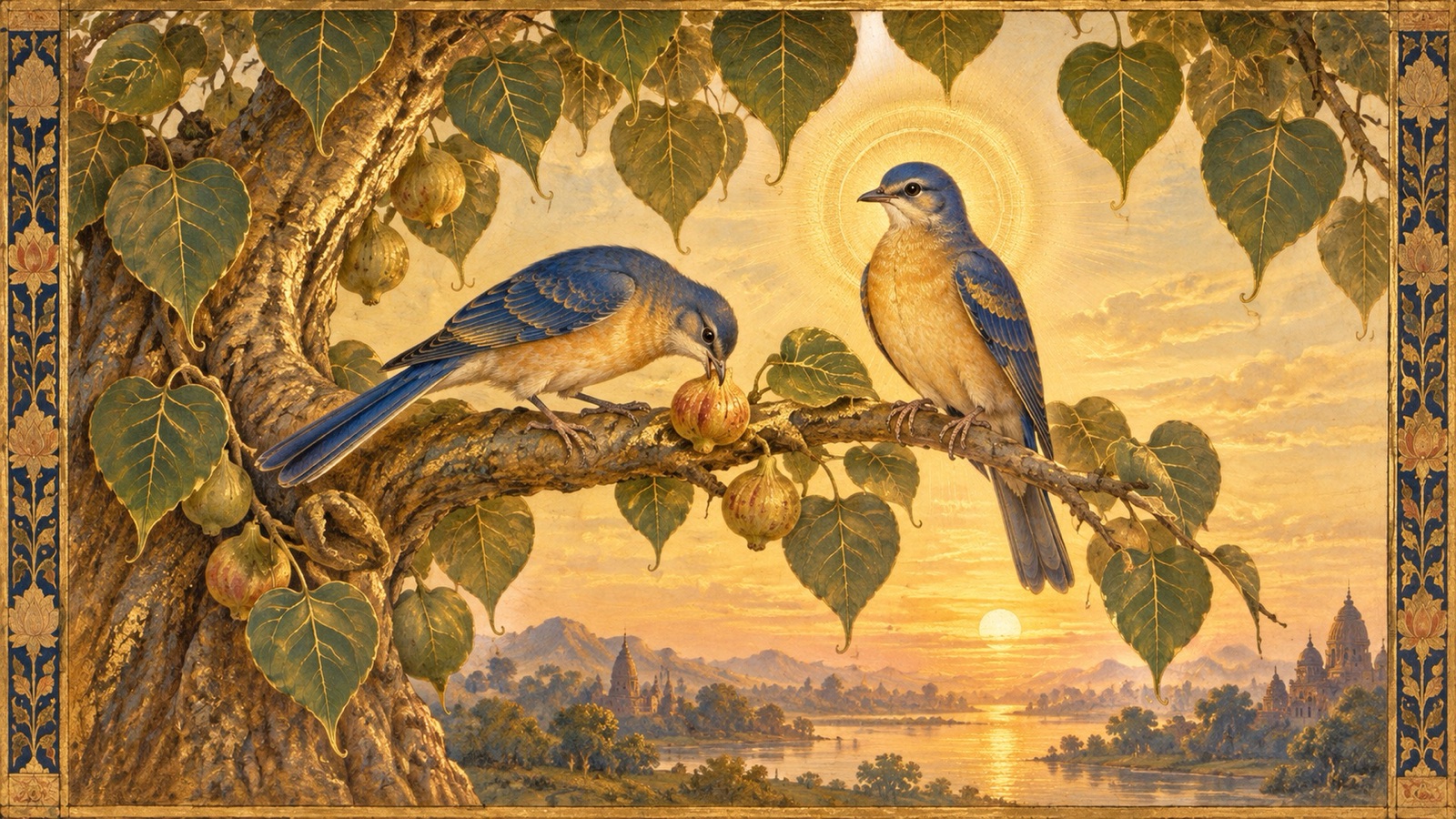
Lord Sri Krishna answers Uddhava’s question about bondage and freedom, showing that neither condition ever touches the soul in its true essence, illustrating the truth with the ancient image of two birds on one tree, and describing the marks of a true saint and the many ways of loving devotion.
Om Namo Bhagavate Vasudevaya.
Om Namo Bhagavate Vasudevaya.
Om Namo Bhagavate Vasudevaya.
Welcome to Srimad Bhagavatam Wisdom, a devotional journey through the sacred histories and teachings of the Srimad Bhagavat Mahapurana. In the previous chapter Uddhava asked how the soul, though truly distinct from the modes of nature, comes to be bound by them. Here the Lord answers with great tenderness and depth. Bondage and liberation, He explains, belong to the soul only through the modes born of His Maya; in His own being there is neither. He gives the timeless image of two birds seated on one tree — one tasting its fruits and bound by them, the other serene and free — to show the difference between the embodied soul and the Lord within. He then describes how the liberated soul lives in the world, untouched as the sky, and how the seeker may reach that freedom by fixing the mind on Him or, failing that, by acting for His sake and hearing and singing His glories. When Uddhava asks what makes a person a true saint and what devotion is dearest to Him, the Lord paints a beautiful portrait of the sadhu and unfolds the many loving forms that devotion may take.
Chapter Information
- Scripture: Śrīmad Bhāgavata Mahāpurāṇa
- Canto: 11 (Book Eleven)
- Chapter: 11 (Discourse 11)
- Chapter title: Bound and Liberated Souls, and the Marks of Devotion
- Principal speaker: Sri Krishna, instructing Uddhava; the whole related by Sukadeva Gosvami to King Parikshit
- Principal listener: Uddhava; and, in the framing narration, King Parikshit
- Main setting: Dwaraka, in the Lord’s dialogue with Uddhava on the eve of His departure
- Central subject: The nature of bondage and liberation, the two birds on one tree, the conduct of the liberated soul, the marks of a true saint, and the many forms of loving devotion
- Principal verse range: Canto 11, Chapter 11, verses 1–49
- Primary edition: Gita Press Śrīmad Bhāgavata Mahāpurāṇa
Context from the Previous Chapter
In Chapter 10, the Lord taught Uddhava to act without desire, to serve a true preceptor, and to know the soul as distinct from the body; and He exposed the emptiness of both earthly and heavenly enjoyments. The chapter closed with Uddhava’s puzzled question — if the soul stands apart from nature’s workings, how does it end up ensnared by them, and by what signs would one recognize the bound soul from the free one? This chapter is the Lord’s loving answer.
Bondage and Freedom Belong to the Modes
The Lord began by revealing that such labels only take hold where nature’s modes are at work, never touching the soul’s real essence; and since those very modes spring from His own Maya, He Himself stands forever beyond both bondage and release.
श्रीभगवानुवाच बद्धो मुक्त इति व्याख्या गुणतो मे न वस्तुत: । गुणस्य मायामूलत्वान्न मे मोक्षो न बन्धनम् ॥ १ ॥
śrī-bhagavān uvāca baddho mukta iti vyākhyā guṇato me na vastutaḥ guṇasya māyā-mūlatvān na me mokṣo na bandhanam
Meaning: The Lord said: “Bound” and “liberated” are terms that apply to the soul only through the modes of nature, not in reality; and since the modes are rooted in My Maya, for Me there is neither bondage nor liberation. (Canto 11, Chapter 11, verse 1)
Like the sorrow and joy of a dream, He said, grief and delight, and the taking on or losing of a body, are only falsely attributed to the Self; even transmigration is not ultimately real, but ascribed to the soul through ignorance alone. Knowledge and ignorance, He revealed, are His two beginningless potencies, born of His Maya — the one making for release, the other for bondage. Bondage has clung to the individual soul from time without beginning through ignorance, and freedom is won by that same soul through knowledge.
The Two Birds on One Tree
To show the difference between the bound soul and the free, the Lord gave one of the most beloved images in all the scriptures — two birds seated together on a single tree.
सुपर्णावेतौ सदृशौ सखायौ यदृच्छयैतौ कृतनीडौ च वृक्षे । एकस्तयो: खादति पिप्पलान्न- मन्यो निरन्नोऽपि बलेन भूयान् ॥ ६ ॥
suparṇāv etau sadṛśau sakhāyau yadṛcchayaitau kṛta-nīḍau ca vṛkṣe ekas tayoḥ khādati pippalānnam anyo niranno ’pi balena bhūyān
Meaning: Two birds, alike and companions, have by chance made their nest together in the same tree; one of them eats the fruit of the tree, while the other, though eating nothing, is the greater in strength. (Canto 11, Chapter 11, verse 6)
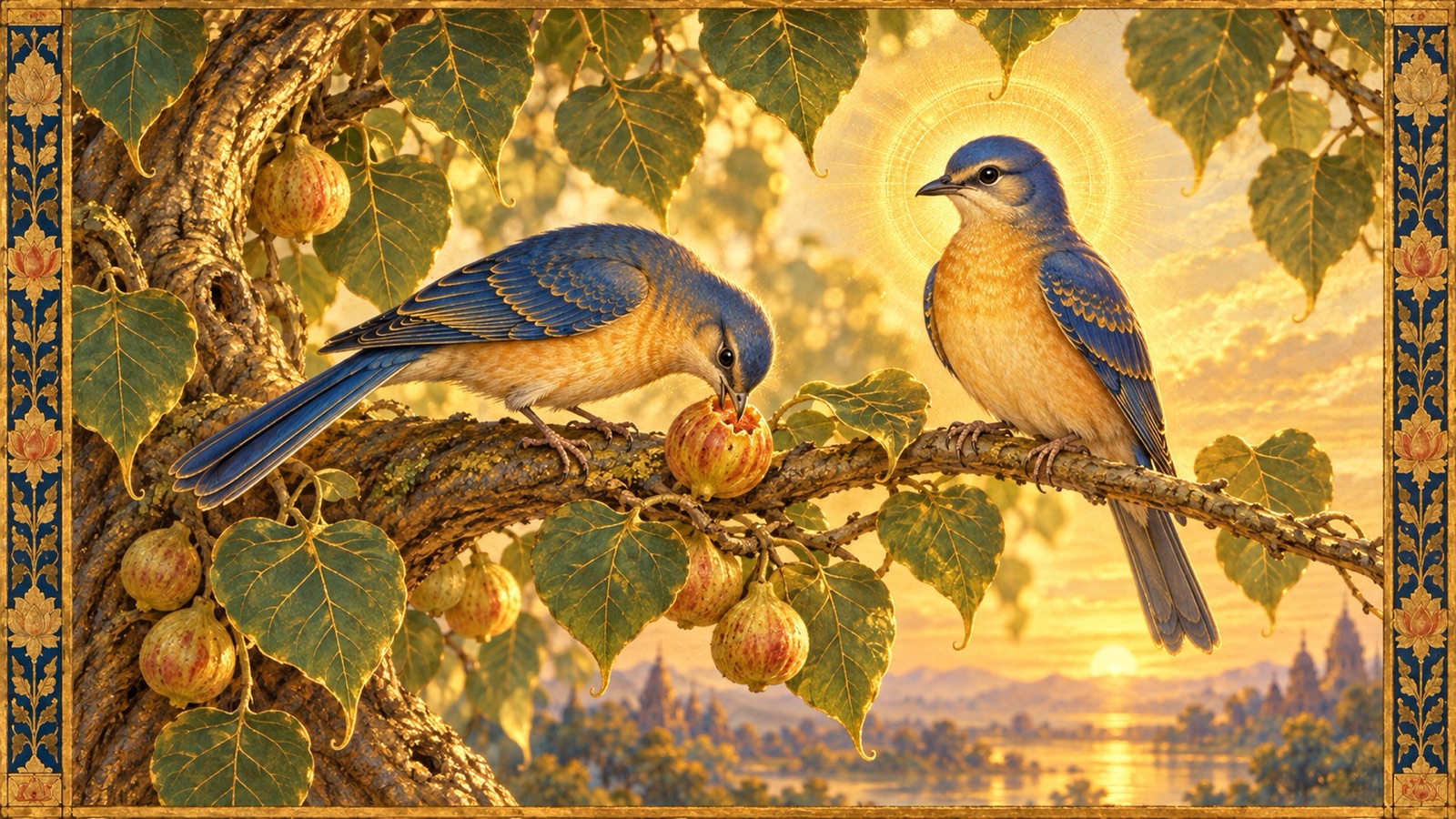
The bird that does not eat the fruit — the Lord within — knows both Himself and His companion; but the one that eats, the individual soul, does not. The first is ever free through knowledge; the second has been bound from eternity through ignorance. Yet the moment the soul awakens, the bondage falls away.
How the Liberated Soul Lives
The enlightened soul, the Lord said, is not tied to the body even while dwelling in it — as one who has awakened from a dream is no longer bound by the dream, though he may still remember it; while the deluded person, identifying with the body, remains as caught in it as a dreamer is caught in his dream.
देहस्थोऽपि न देहस्थो विद्वान् स्वप्नाद् यथोत्थित: । अदेहस्थोऽपि देहस्थ: कुमति: स्वप्नदृग् यथा ॥ ८ ॥
deha-stho ’pi na deha-stho vidvān svapnād yathotthitaḥ adeha-stho ’pi deha-sthaḥ kumatiḥ svapna-dṛg yathā
Meaning: Though dwelling in the body, the wise one is not confined to it, like a person risen from a dream; while the fool, though not truly of the body, feels bound to it, like one lost in a dream. (Canto 11, Chapter 11, verse 8)
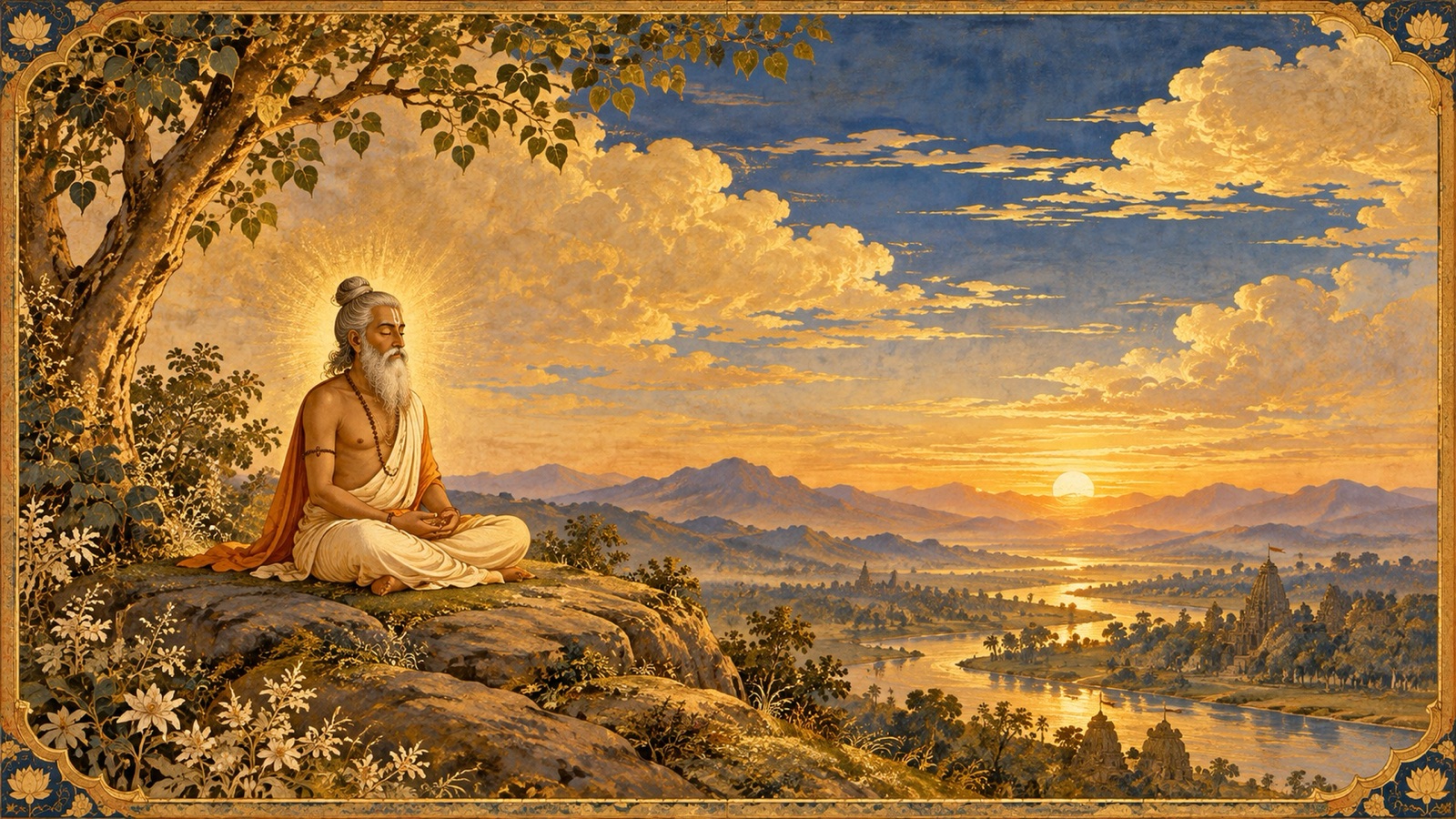
Such a soul lets the senses meet their objects while remaining unmoved, resting, sitting, walking, seeing, eating and hearing without being bound, unattached like the sky, the sun reflected in water, or the ever-moving wind. His doubts cut away by an intellect whetted with detachment, he turns from the illusion of diversity as one turns from a dream on waking. He is unshaken whether tormented by the cruel or honoured by the kind. Seeing all with an equal eye, he neither praises those who act well nor blames those who act ill.
न स्तुवीत न निन्देत कुर्वत: साध्वसाधु वा । वदतो गुणदोषाभ्यां वर्जित: समदृङ्मुनि: ॥ १६ ॥
na stuvīta na nindeta kurvataḥ sādhv asādhu vā vadato guṇa-doṣābhyāṁ varjitaḥ sama-dṛṅ muniḥ
Meaning: The sage of equal vision, free of the sense of virtue and fault, neither praises nor blames those who act or speak, whether well or ill. (Canto 11, Chapter 11, verse 16)
The Path for Those Still Striving
Not everyone can rest the mind unwaveringly in the Supreme; so the Lord gave a gentler path for those still striving. If one cannot hold the mind fixed on Brahman, one should offer all one’s actions to Him, performing every duty well and without selfish motive, for His sake.
यद्यनीशो धारयितुं मनो ब्रह्मणि निश्चलम् । मयि सर्वाणि कर्माणि निरपेक्ष: समाचर ॥ २२ ॥
yady anīśo dhārayituṁ mano brahmaṇi niścalam mayi sarvāṇi karmāṇi nirapekṣaḥ samācara
Meaning: If you are unable to fix the mind unwaveringly on Brahman, then perform all your actions for My sake, free of any selfish expectation. (Canto 11, Chapter 11, verse 22)
Above all, the Lord said, one should immerse the heart in His stories and remembrance.
श्रद्धालुर्मत्कथा: शृण्वन् सुभद्रा लोकपावनी: । गायन्ननुस्मरन् कर्म जन्म चाभिनयन् मुहु: ॥ २३ ॥ मदर्थे धर्मकामार्थानाचरन् मदपाश्रय: । लभते निश्चलां भक्तिं मय्युद्धव सनातने ॥ २४ ॥
śraddhālur mat-kathāḥ śṛṇvan su-bhadrā loka-pāvanīḥ gāyann anusmaran karma janma cābhinayan muhuḥ mad-arthe dharma-kāmārthān ācaran mad-apāśrayaḥ labhate niścalāṁ bhaktiṁ mayy uddhava sanātane
Meaning: Faithfully hearing My auspicious, world-purifying stories, singing them and constantly remembering My deeds and My advent, enacting them again and again, and pursuing duty, enjoyment and gain for My sake while taking refuge in Me — thus, O Uddhava, one attains unswerving devotion to Me, the Eternal. (Canto 11, Chapter 11, verses 23-24)
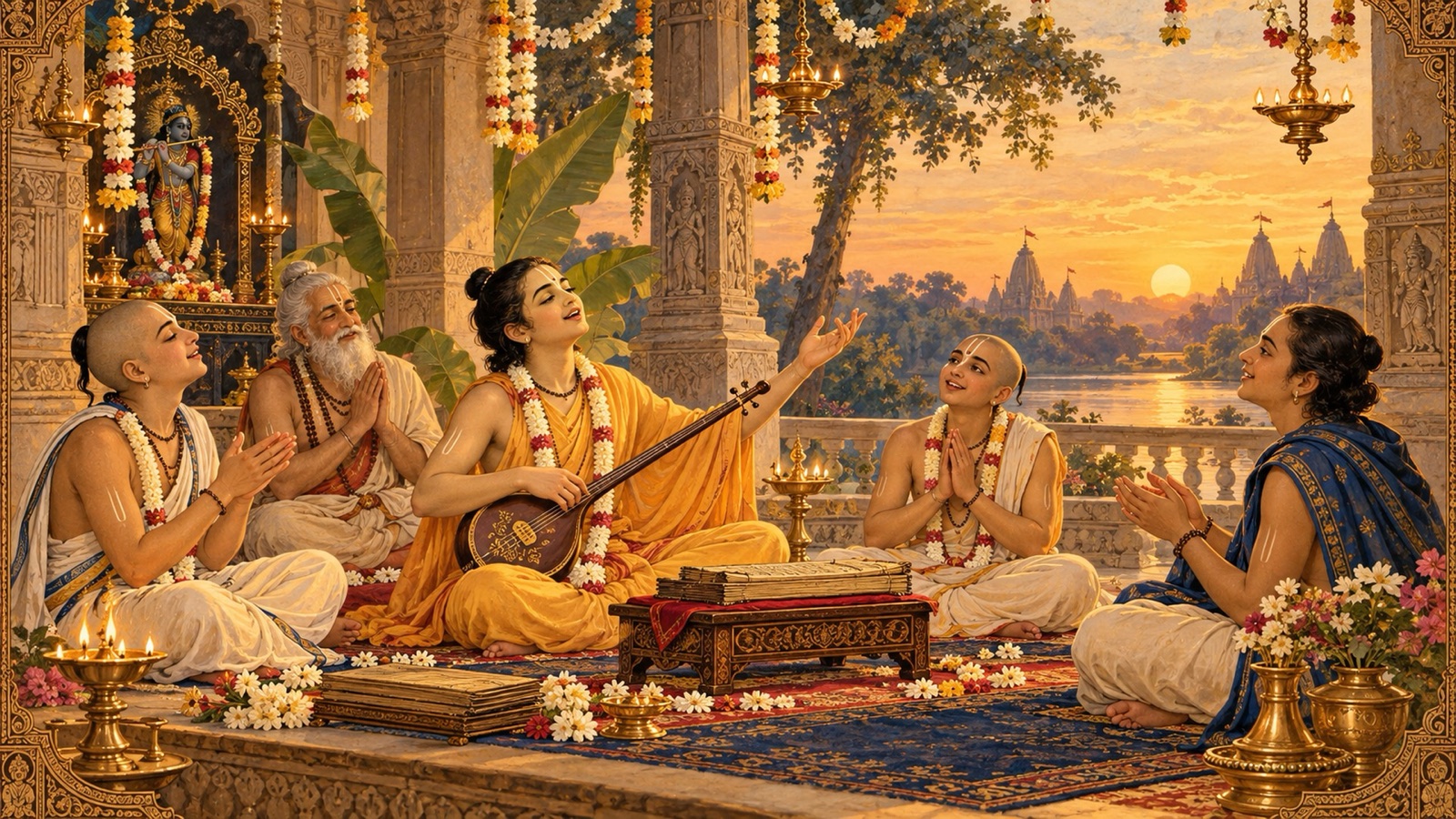
Equipped with devotion nurtured in the fellowship of saints, such a person becomes His worshipper and, with ease, attains His own state.
The Marks of a True Saint
Hearing this, Uddhava asked the Lord what kind of person He counts as a true saint, and what devotion is dearest to Him. The Lord replied with a luminous portrait of the sadhu.
श्रीभगवानुवाच कृपालुरकृतद्रोहस्तितिक्षु: सर्वदेहिनाम् । सत्यसारोऽनवद्यात्मा सम: सर्वोपकारक: ॥ २९ ॥
śrī-bhagavān uvāca kṛpālur akṛta-drohas titikṣuḥ sarva-dehinām satya-sāro ’navadyātmā samaḥ sarvopakārakaḥ
Meaning: The Lord said: A true saint is compassionate and harms no one; he is forbearing toward all beings, has truth for his very strength, is faultless of heart, even-minded, and works for the good of all. (Canto 11, Chapter 11, verse 29)
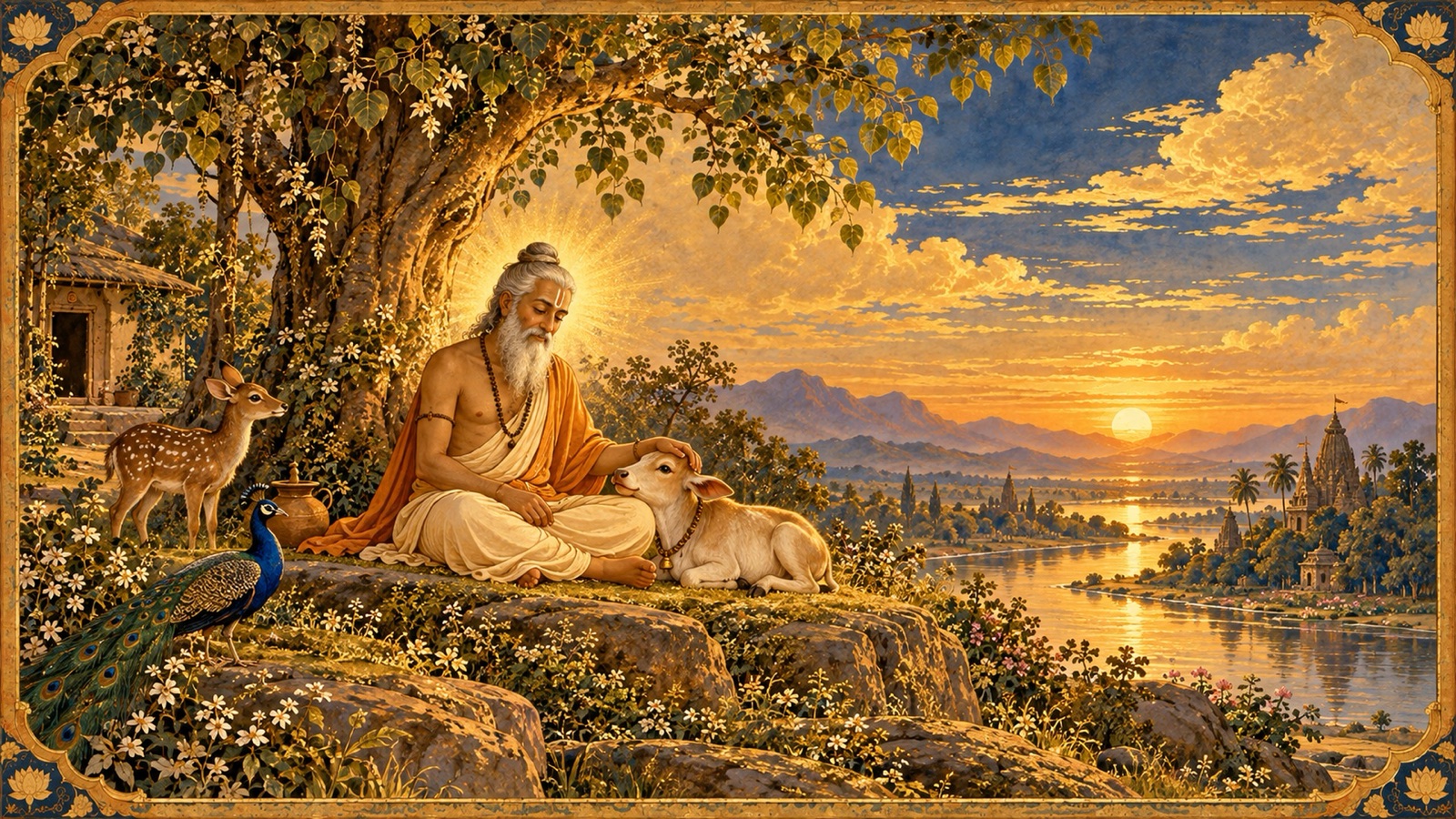
Such a one, He continued, is undisturbed by desires, self-controlled, gentle, pure and free of possessions, effortless and content with little, peaceful, steady, taking refuge in the Lord alone; vigilant, deep of heart, patient, having conquered the six urges of hunger and thirst, cold and heat, greed and infatuation; claiming no honour yet honouring others, kind, compassionate and wise. And the very best of all, the Lord said, is the one who, though knowing well the merit of duties and the fault of neglecting them, sets aside all prescribed duties to worship Him alone; for those who worship Him with exclusive devotion — whether or not they fully grasp His greatness — are dearest to Him of all.
The Many Forms of Loving Devotion
The Lord then described the countless ways love for Him may be expressed: beholding, touching and worshipping His images and His devotees; serving and praising them; bowing down and recounting His qualities and deeds; hearing His stories with faith and meditating upon Him; offering Him all one’s gains and one’s very self in service; celebrating the festivals of His advent with song, dance and music; making pilgrimage; building and tending His temples with humble, sincere hands; and offering Him whatever is dearest in the world and dearest to oneself, for such an offering yields the fruit of immortality. He revealed, too, that He may be worshipped everywhere, in many sacred forms.
सूर्योऽग्निर्ब्राह्मणा गावो वैष्णव: खं मरुज्जलम् । भूरात्मा सर्वभूतानि भद्र पूजापदानि मे ॥ ४२ ॥
sūryo ’gnir brāhmaṇā gāvo vaiṣṇavaḥ khaṁ maruj jalam bhūr ātmā sarva-bhūtāni bhadra pūjā-padāni me
Meaning: The sun, fire, the Brahmanas, the cows, the devotee of Vishnu, the sky, the air, the water, the earth, one’s own self and all living beings — these, O gentle one, are the abodes in which I may be worshipped. (Canto 11, Chapter 11, verse 42)
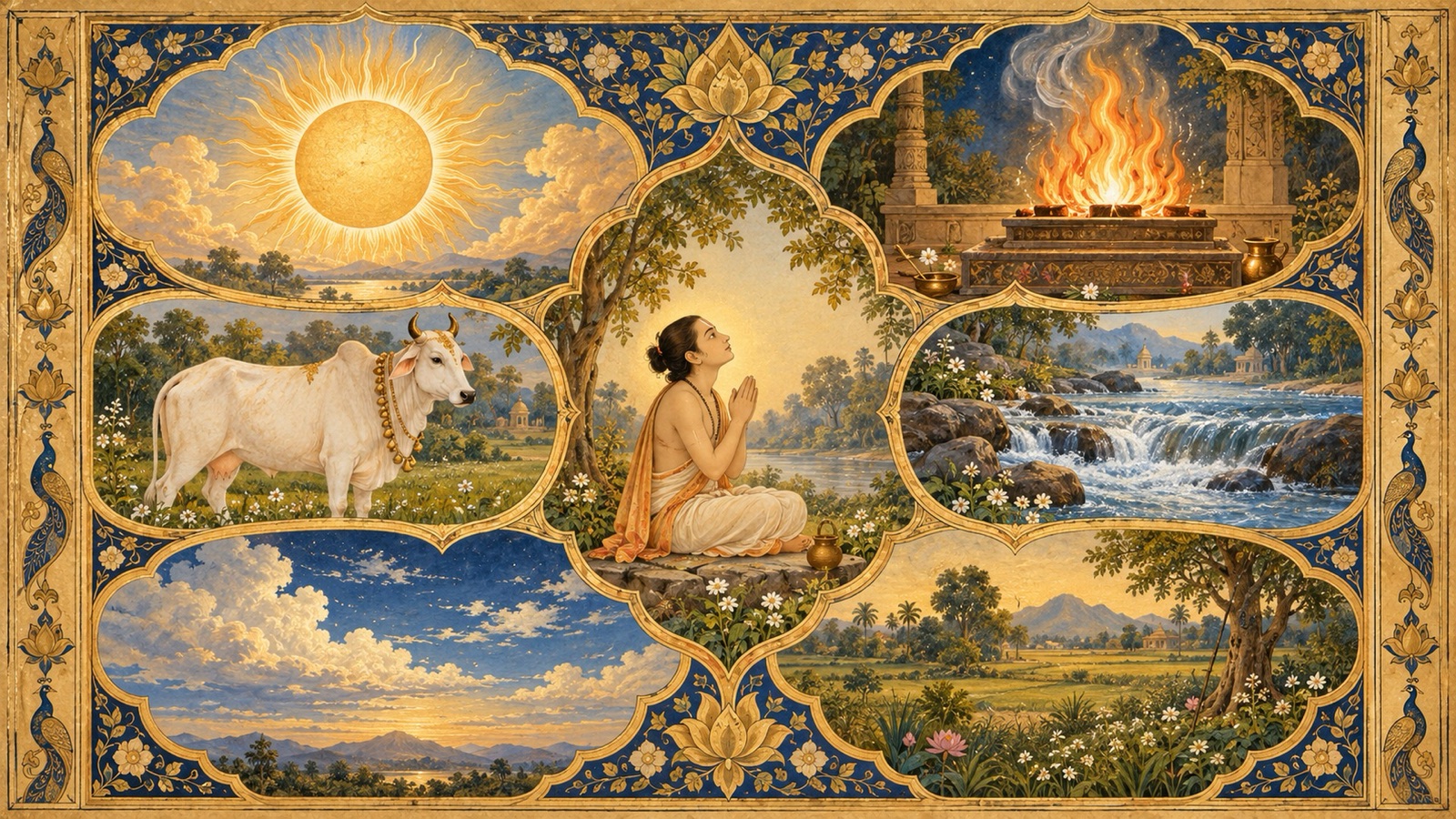
He then taught how He is to be honoured in each: served in the sun through sacred hymns, in fire through oblations, in a worthy Brahmana through hospitality, in cows through fodder, in a devotee of Vishnu through loving attention, within one’s own heart through steady meditation, and in all beings through reverent care — so that the whole of life becomes an offering to Him.
Principal Teachings of This Chapter
1. Bondage and freedom belong to the modes, not to the Self. The soul is called bound or free only through the modes of nature, born of the Lord’s Maya; in truth the Self is untouched (verses 1-5).
2. The two birds on one tree. The embodied soul tastes the fruit of the body and is bound; the Lord within tastes nothing and is ever free — and awakening to Him ends all bondage (verses 6-8).
3. The liberated soul lives untouched in the world. Like the sky, the reflected sun and the wind, the free soul lets the senses meet their objects yet remains unattached and even-minded (verses 9-17).
4. Words that do not glorify the Lord are barren. Speech that does not sing His deeds, like learning without realization, bears no true fruit; the wise fill their words with His glories (verses 18-20).
5. If you cannot still the mind, act and sing for His sake. Offering all one’s duties to the Lord, and hearing, singing and remembering His stories, ripen into unswerving devotion (verses 21-25).
6. The marks of a saint, and the many forms of devotion. The true saint is compassionate, harmless, forbearing and self-controlled; and love for the Lord may be shown in countless ways, for He may be worshipped in all beings (verses 29-49).
A Devotional Reflection
At the heart of this chapter shine the two birds on their single tree — an image so simple a child can picture it, yet deep enough to hold the whole mystery of the soul. We are the little bird, hopping from fruit to fruit, tasting sweetness and bitterness, elated and cast down by turns. And all the while, on the very same branch, sits our silent companion, who eats nothing and needs nothing, serene and strong — the Lord within, closer to us than our own restlessness. The chapter’s promise is that our bondage is not woven into our nature; it is only a long forgetting, and it ends the instant we turn and truly see Him beside us. And the Lord does not leave us straining after a freedom that feels far off. If we cannot yet still the mind, He says, then simply live for His sake, and fill our days with His stories, His name, His praise — and love will grow of itself. Perhaps most moving is His portrait of the saint: not a figure of grim austerity, but one who is kind, harmless, patient and glad to honour others while seeking no honour for himself. It is a picture not only to admire but to grow toward, one gentle quality at a time, until our own small bird grows still and rests at last beside its friend.
A Daily Devotional Practice
Today, sit quietly for a few minutes with the image of the two birds. Picture yourself as the little bird, busy among the fruits of the day’s joys and worries, and then become aware of the Lord seated silently beside you on the same branch — near, patient and free. As you rest in that awareness, gently offer Him one small thing: a task done for His sake, or a few of His stories heard or sung. Softly repeat His holy name: “Om Namo Bhagavate Vasudevaya.” In this simple turning toward the companion who is always near, you follow the very heart of this chapter — letting the restless bird grow still, and beginning to taste the freedom that has been beside you all along.
Conclusion
The eleventh discourse of Book Eleven answers Uddhava’s deep question about bondage and freedom. The Lord teaches that both belong to the soul only through the modes of nature, born of His Maya, and never touch the Self in truth. He gives the timeless image of two birds on one tree — the soul that eats the fruit and is bound, and the Lord within who eats nothing and is ever free — and shows how the liberated soul lives untouched in the world, like the sky. For those still striving, He offers a gentle path: to act for His sake and to hear, sing and remember His glories until devotion grows unshakable. And when Uddhava asks what makes a true saint, the Lord answers with a radiant portrait of compassion, harmlessness and self-control, and unfolds the many loving ways devotion may be shown — for He may be worshipped in the sun and fire, in the cow and the holy, in earth and water and every living being. So the chapter draws us toward the freedom and the love that are always near, awaiting only our turning.
May the divine wisdom of Srimad Bhagavatam awaken pure devotion within our hearts.
Om Namo Bhagavate Vasudevaya.
Jay Shree Madhav.
References and Attribution
- Primary edition: Gita Press, Śrīmad Bhāgavata Mahāpurāṇa (English, complete), Book Eleven, Discourse 11, pages 560–566.
- Series: Srimad Bhagavatam Wisdom · Biswa Sanatan Dharma Seva Trust.
- Presented following the spiritual guidance and recommendation of Pandit Dr. Shri Kashinath Mishra.
This is an original, faithful retelling in the writer’s own words, with brief quoted verses shown in Devanāgarī and transliteration and their meanings given as summaries. It is not a reproduction of any single publisher’s continuous translation or commentary. No affiliation with or endorsement by any publisher is implied.
Jay Shree Madhav