
Lord Sri Krishna reveals to Uddhava the supreme power of holy company — how the fellowship of saints wins Him more surely than any other discipline, how even the Gopis of Vraja reached Him through pure love alone, and how, taking refuge in Him with the whole heart, one becomes free of all fear.
Om Namo Bhagavate Vasudevaya.
Om Namo Bhagavate Vasudevaya.
Om Namo Bhagavate Vasudevaya.
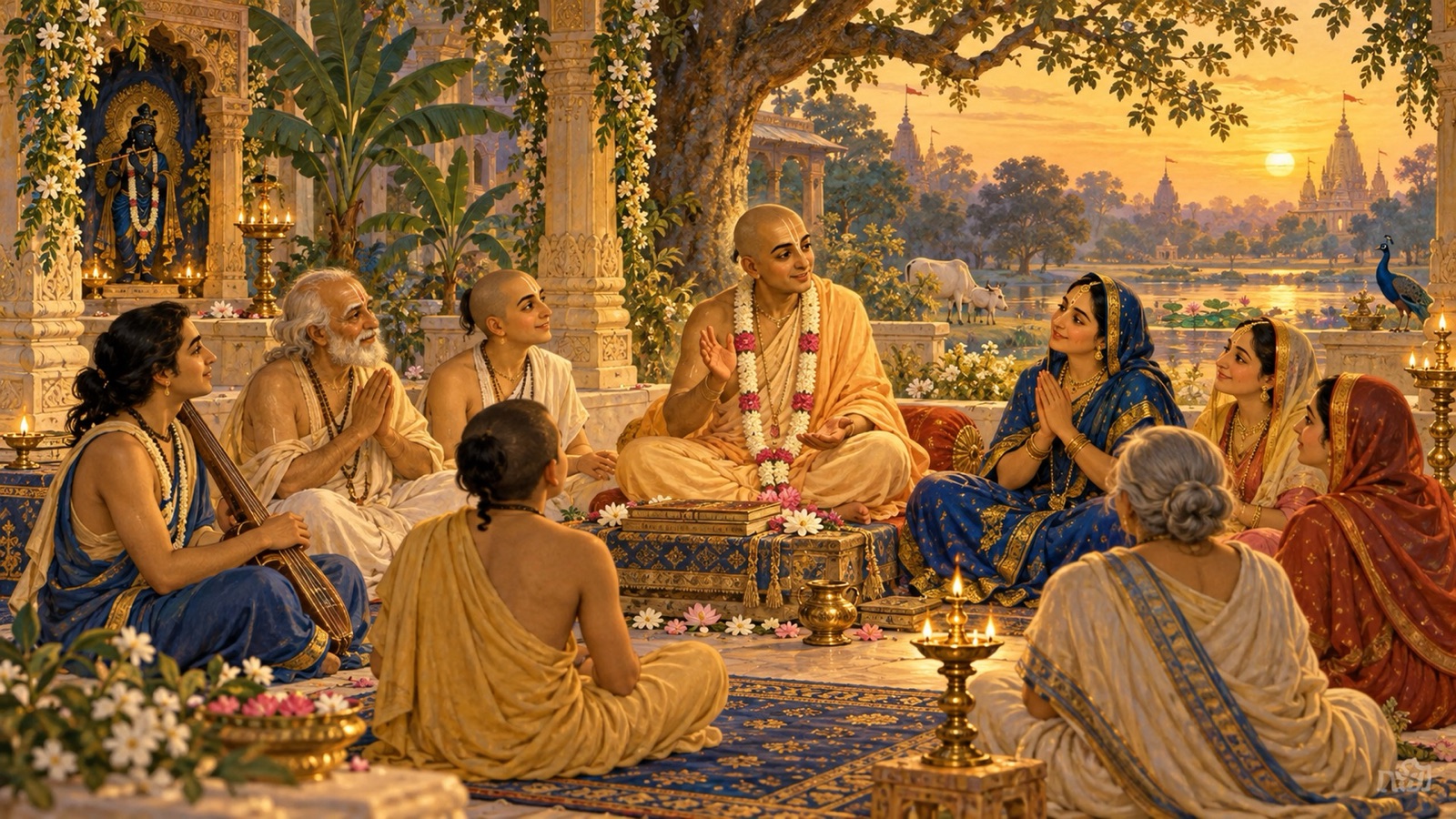
Welcome to Srimad Bhagavatam Wisdom, a devotional journey through the sacred histories and teachings of the Srimad Bhagavat Mahapurana. In the previous chapter the Lord unfolded the marks of a true saint and the many forms of loving devotion. Now He reveals the secret that stands above every technique and discipline: the power of satsanga, the company of the holy. No path of self-effort, He tells Uddhava, draws Him close the way simple, unguarded love among His devotees does. He points to living proof: unlettered cowherd women, the wives of priests, even dumb animals, each pulled into His presence by nothing more than wholehearted affection kindled through good company. He recalls how the Gopis pined for Him after His journey to Mathura, lost entirely to the world in their longing. From there He turns Uddhava toward a single, total surrender — asking him to drop the maze of do’s and don’ts and simply hand over his whole self without reservation. When a last lingering uncertainty surfaces in Uddhava’s mind, the Lord meets it directly, describing how devoted service to a true teacher hones a blade keen enough to finally sever the knot of selfhood.
Chapter Information
- Scripture: Śrīmad Bhāgavata Mahāpurāṇa
- Canto: 11 (Book Eleven)
- Chapter: 12 (Discourse 12)
- Chapter title: The Glory of Holy Company (Satsanga)
- Principal speaker: Sri Krishna, instructing Uddhava; the whole related by Sukadeva Gosvami to King Parikshit
- Principal listener: Uddhava; and, in the framing narration, King Parikshit
- Main setting: Dwaraka, in the Lord’s dialogue with Uddhava on the eve of His departure
- Central subject: The supreme power of the company of the holy, the pure love by which the Gopis reached the Lord, taking refuge in Him alone, and the sword of knowledge that cuts the ego’s bondage
- Principal verse range: Canto 11, Chapter 12, verses 1–24
- Primary edition: Gita Press Śrīmad Bhāgavata Mahāpurāṇa
Context from the Previous Chapter
In Chapter 11, the Lord answered Uddhava’s question about bondage and freedom, gave the image of two birds on one tree, described how the liberated soul lives untouched in the world, painted the marks of a true saint, and unfolded the many forms of loving devotion. He closed by pointing to devotion, preceded by the company of the righteous, as the surest path to Him. This chapter takes up that thread and sings the glory of holy company.
Holy Company Wins the Lord
The Lord began by declaring that no discipline, however great, binds Him to a devotee as the company of the holy does.
श्रीभगवानुवाच न रोधयति मां योगो न साङ्ख्यं धर्म एव च । न स्वाध्यायस्तपस्त्यागो नेष्टापूर्तं न दक्षिणा ॥ १ ॥ व्रतानि यज्ञश्छन्दांसि तीर्थानि नियमा यमा: । यथावरुन्धे सत्सङ्ग: सर्वसङ्गापहो हि माम् ॥ २ ॥
śrī-bhagavān uvāca na rodhayati māṁ yogo na sāṅkhyaṁ dharma eva ca na svādhyāyas tapas tyāgo neṣṭā-pūrtaṁ na dakṣiṇā vratāni yajñaś chandāṁsi tīrthāni niyamā yamāḥ yathāvarundhe sat-saṅgaḥ sarva-saṅgāpaho hi mām
Meaning: The Lord said: Neither yoga nor philosophy, nor duty, nor study of scripture, austerity or renunciation, nor sacrifice or charity, nor vows, offerings, hymns, pilgrimages, or the rules of restraint and observance — none of these wins Me as surely as the company of the holy, which dissolves every other attachment. (Canto 11, Chapter 12, verses 1-2)
Those Who Reached Him Through Fellowship Alone
The Lord then recalled how, in age after age, simple souls with no learning or credentials attained Him through the fellowship of saints alone.
ते नाधीतश्रुतिगणा नोपासितमहत्तमा: । अव्रतातप्ततपस: मत्सङ्गान्मामुपागता: ॥ ७ ॥
te nādhīta-śruti-gaṇā nopāsita-mahattamāḥ avratātapta-tapasaḥ mat-saṅgān mām upāgatāḥ
Meaning: They had not studied the scriptures, nor waited upon the great, nor kept vows or practised austerities; yet through fellowship with My devotees they came to Me. (Canto 11, Chapter 12, verse 7)
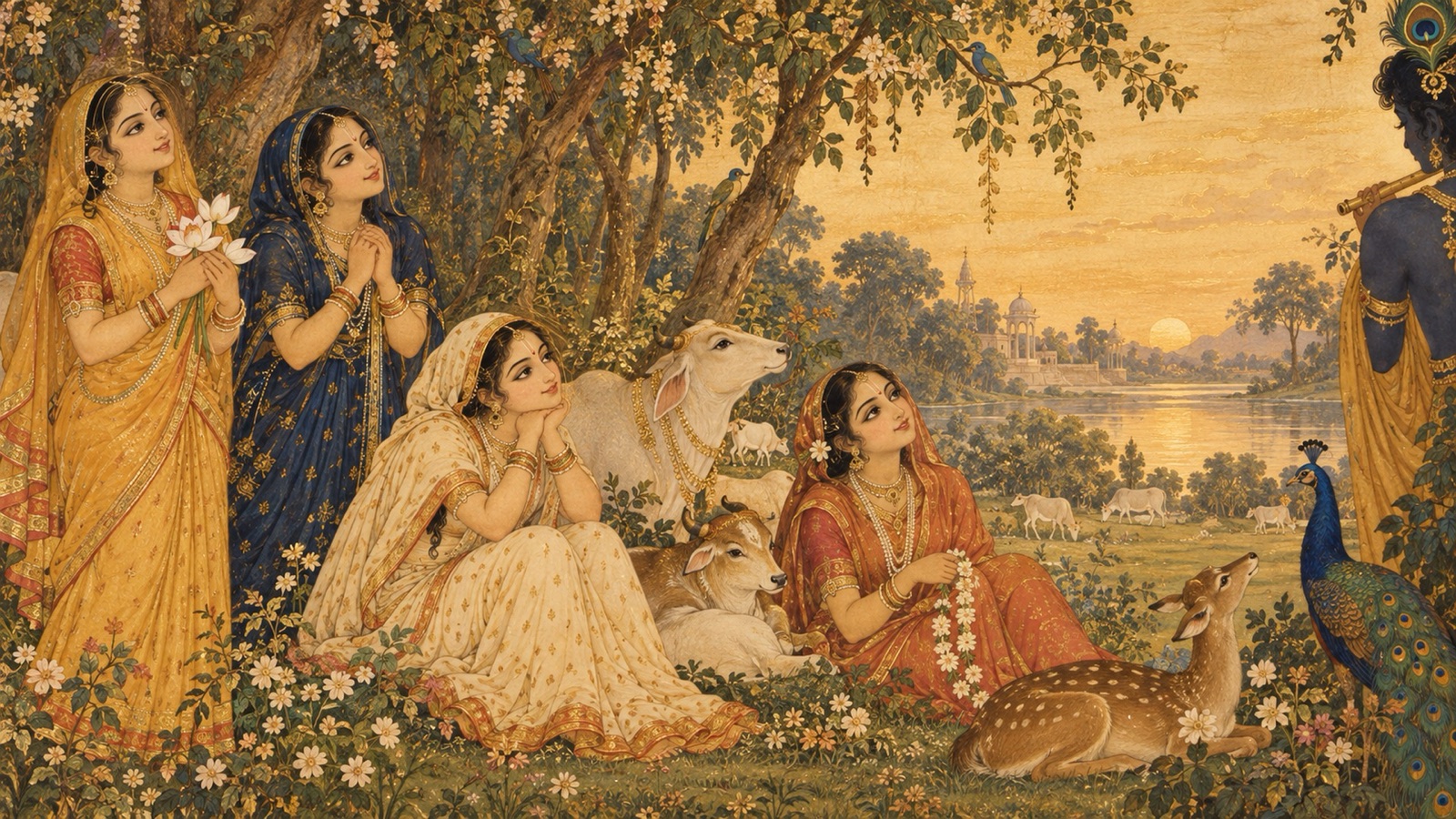
By pure love alone, He said, the Gopis of Vraja, the very cows, the trees and the deer, and other simple beings reached Him with ease.
केवलेन हि भावेन गोप्यो गावो नगा मृगा: । येऽन्ये मूढधियो नागा: सिद्धा मामीयुरञ्जसा ॥ ८ ॥
kevalena hi bhāvena gopyo gāvo nagā mṛgāḥ ye ’nye mūḍha-dhiyo nāgāḥ siddhā mām īyur añjasā
Meaning: By pure love alone the Gopis, the cows, the trees, the deer, and other simple, unlettered creatures readily attained Me. (Canto 11, Chapter 12, verse 8)
The Boundless Love of the Gopis
The Lord remembered with tenderness how, when He was taken to Mathura with Balarama by Akrura, the Gopis were left desolate, their minds so bound to Him in love that the days without Him seemed like ages. So wholly were their hearts absorbed in Him that they lost all awareness of themselves and the world.
ता नाविदन् मय्यनुषङ्गबद्ध- धिय: स्वमात्मानमदस्तथेदम् । यथा समाधौ मुनयोऽब्धितोये नद्य: प्रविष्टा इव नामरूपे ॥ १२ ॥
tā nāvidan mayy anuṣaṅga-baddha- dhiyaḥ svam ātmānam adas tathedam yathā samādhau munayo ’bdhi-toye nadyaḥ praviṣṭā iva nāma-rūpe
Meaning: Their minds bound to Me in love, the Gopis lost all awareness of themselves and of the world — as sages in deep absorption lose awareness of name and form, or as rivers merging into the ocean lose their separateness. (Canto 11, Chapter 12, verse 12)

Full of love for Him, thinking of Him as their dearest, these women attained the highest goal — showing that pure love, however it arises, unites the soul with Him.
Take Refuge in Him Alone
Drawing the lesson home, the Lord called Uddhava to lay aside the whole web of scriptural commands and prohibitions and simply take refuge in Him with his entire being.
तस्मात्त्वमुद्धवोत्सृज्य चोदनां प्रतिचोदनाम् । प्रवृत्तिं च निवृत्तिं च श्रोतव्यं श्रुतमेव च ॥ १४ ॥ मामेकमेव शरणमात्मानं सर्वदेहिनाम् । याहि सर्वात्मभावेन मया स्या ह्यकुतोभय: ॥ १५ ॥
tasmāt tvam uddhavotsṛjya codanāṁ praticodanām pravṛttiṁ ca nivṛttiṁ ca śrotavyaṁ śrutam eva ca mām ekam eva śaraṇam ātmānaṁ sarva-dehinām yāhi sarvātma-bhāvena mayā syā hy akuto-bhayaḥ
Meaning: Therefore, O Uddhava, setting aside injunctions and prohibitions, what is to be done and to be shunned, what is yet to be heard and what has been heard — take refuge in Me alone, the Self of all beings, with your whole heart; and by My grace you shall become free of all fear. (Canto 11, Chapter 12, verses 14-15)
Uddhava’s Lingering Doubt
Even after hearing all this, Uddhava confessed with disarming honesty that a doubt still lingered in his mind and would not depart.
श्रीउद्धव उवाच संशय: शृण्वतो वाचं तव योगेश्वरेश्वर । न निवर्तत आत्मस्थो येन भ्राम्यति मे मन: ॥ १६ ॥
śrī-uddhava uvāca saṁśayaḥ śṛṇvato vācaṁ tava yogeśvareśvara na nivartata ātma-stho yena bhrāmyati me manaḥ
Meaning: Uddhava said: O Lord of all masters of yoga, even as I listen to Your words, a doubt lodged in my heart does not depart, and my mind is left bewildered. (Canto 11, Chapter 12, verse 16)

The Sword of Knowledge
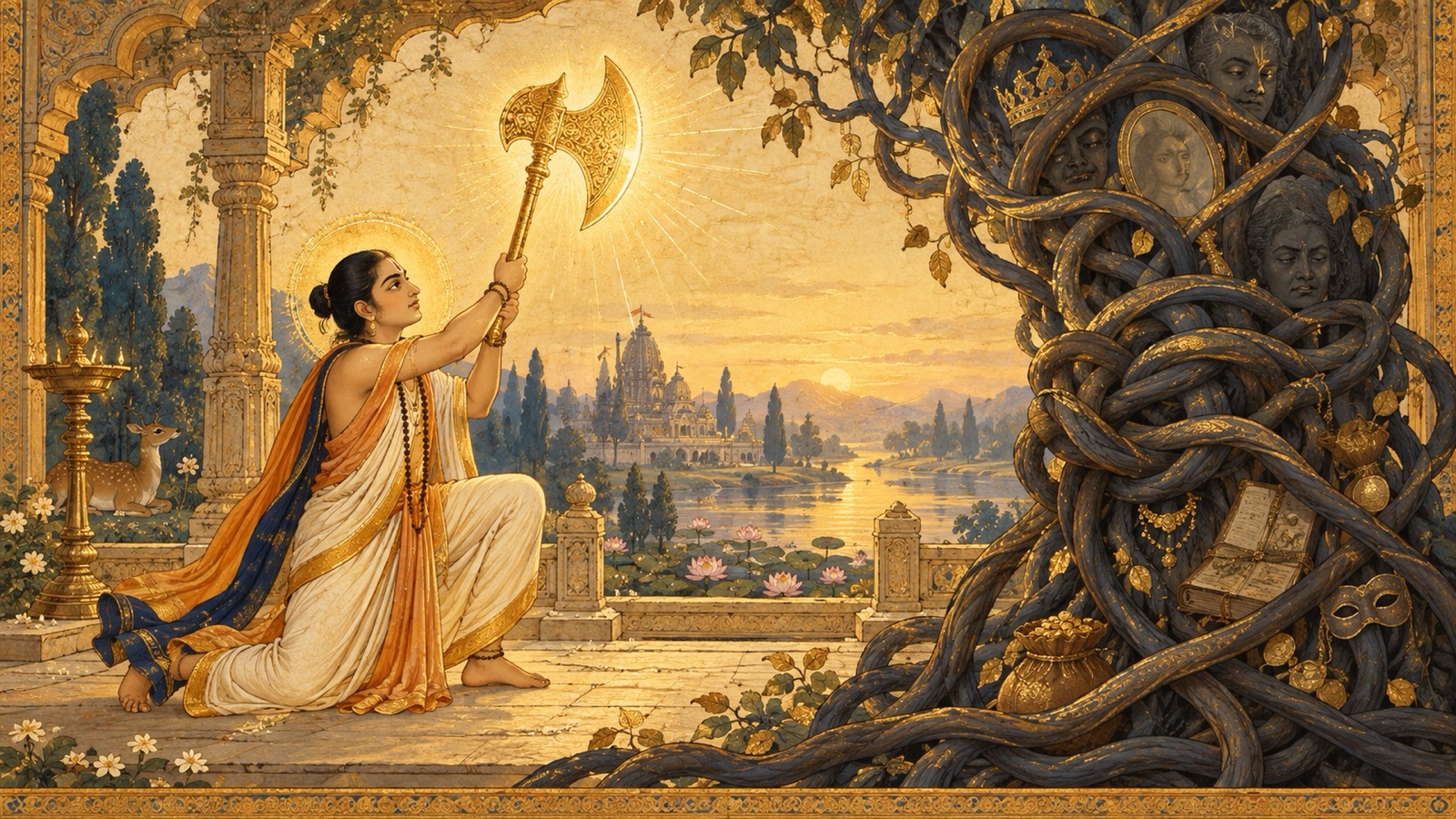
In answer, the Lord unfolded again how the Supreme is the source of all — of speech in its subtle and spoken forms, of the modes and the elements, of the whole universe that rests in Him yet does not confine Him. And He concluded with a stirring call: through devoted service to a teacher and single-hearted devotion, the seeker should take up the sharpened axe of knowledge, cut away the ego’s bondage at its root, realize the Self, and then lay the weapon down.
एवं गुरूपासनयैकभक्त्या विद्याकुठारेण शितेन धीर: । विवृश्च्य जीवाशयमप्रमत्त: सम्पद्य चात्मानमथ त्यजास्त्रम् ॥ २४ ॥
evaṁ gurūpāsanayaika-bhaktyā vidyā-kuṭhāreṇa śitena dhīraḥ vivṛścya jīvāśayam apramattaḥ sampadya cātmānam atha tyajāstram
Meaning: Thus, through service to the teacher and single-hearted devotion, the steadfast one, with the sharpened axe of knowledge, should carefully cut away the ego’s bondage, realize the Self, and then lay the weapon aside. (Canto 11, Chapter 12, verse 24)
Principal Teachings of This Chapter
1. Holy company wins the Lord above all else. No discipline — yoga, study, austerity, sacrifice or vow — binds the Lord to a devotee as surely as the fellowship of the holy, which dissolves every other attachment (verses 1-2).
2. Pure love is the one thing needful. The Gopis, the cows, the trees and the deer reached the Lord through love alone, without learning or austerity — showing that a loving heart is dearer to Him than any credential (verses 7-8).
3. Wholehearted absorption unites us with Him. The Gopis’ minds were so bound to the Lord that they lost all sense of self and world, as rivers merge into the ocean — the very image of the soul’s union in love (verses 10-13).
4. Take refuge in Him alone. Setting aside the endless web of do’s and don’ts, one should surrender to the Lord with the whole heart; in that refuge all fear dissolves (verses 14-15).
5. Honest doubt is welcome before the Lord. Uddhava does not hide his lingering confusion but lays it openly before the Lord, and it is met not with rebuke but with patient teaching (verse 16).
6. Knowledge, kindled by devotion, cuts the ego’s bondage. Served by devotion and the guidance of a teacher, the sharp axe of knowledge severs the root of egoism, and the freed soul rests in the Self (verses 17-24).
A Devotional Reflection
Of all the Lord’s teachings, few are as heartening as this one. Having led Uddhava through the heights of philosophy — the modes of nature, the soul and its bondage, the two birds on the tree — He now sets it all beside one simple, tender truth: that the surest way to Him is not brilliance or austerity, but the company of those who love Him, and a heart that loves Him in return. He points not to sages who mastered the scriptures, but to the Gopis of Vraja, who never studied a line, yet reached Him through the sheer force of their longing. There is deep comfort here for every ordinary devotee. We may feel unlearned, unqualified, incapable of great austerities — and the Lord gently tells us that none of this stands between us and Him. What He asks is a loving heart and good company: to keep the fellowship of those who cherish Him, to hear and sing His name among them, and to let that love carry us as the rivers are carried to the sea. And when, like Uddhava, we find that doubts still linger even as we listen, we are shown that this too is welcome — that we may bring our confusion honestly to Him, and trust Him to sharpen, little by little, the knowledge that sets us free.
A Daily Devotional Practice
Today, honour the glory of holy company. Seek out, even briefly, the fellowship of those who love the Lord — join a gathering of devotees, read the words of a saint, or simply share His name with someone dear. If no company is near, keep it in your heart by hearing or singing His stories, as the Gopis kept Him in theirs. As you do, gently repeat His holy name: “Om Namo Bhagavate Vasudevaya.” In this simple turning toward loving fellowship, you practise the very heart of this chapter — letting the company of the holy and the love it kindles draw you, like a river to the ocean, ever nearer to Him.
Conclusion
The twelfth discourse of Book Eleven sings the glory of holy company. The Lord reveals to Uddhava that no discipline, however lofty, wins Him as surely as the fellowship of His devotees, which dissolves every other attachment. He recalls how simple souls — the Gopis of Vraja, the very cows and trees and deer — reached Him through pure love alone, and how the Gopis’ hearts, absorbed in Him, lost all sense of self and world as rivers merge into the sea. He calls Uddhava to set aside the endless web of injunctions and prohibitions and take refuge in Him alone, with his whole being, becoming free of all fear. And when Uddhava confesses a lingering doubt, the Lord answers with patience, showing how the sharpened axe of knowledge, kindled by devotion and the service of a teacher, cuts away the ego’s bondage so the soul may rest in the Self. So this chapter draws us toward the twin treasures of the devotional path — the company of the holy and a heart full of love.
May the divine wisdom of Srimad Bhagavatam awaken pure devotion within our hearts.
Om Namo Bhagavate Vasudevaya.
Jay Shree Madhav.
References and Attribution
- Primary edition: Gita Press, Śrīmad Bhāgavata Mahāpurāṇa (English, complete), Book Eleven, Discourse 12, pages 566–569.
- Series: Srimad Bhagavatam Wisdom · Biswa Sanatan Dharma Seva Trust.
- Presented following the spiritual guidance and recommendation of Pandit Dr. Shri Kashinath Mishra.
This is an original, faithful retelling in the writer’s own words, with brief quoted verses shown in Devanāgarī and transliteration and their meanings given as summaries. It is not a reproduction of any single publisher’s continuous translation or commentary. No affiliation with or endorsement by any publisher is implied.
Jay Shree Madhav