
Lord Sri Krishna shows Uddhava three roads rising from the troubled earth — knowledge, action and devotion — all of them climbing toward the very same radiant goal, and then reveals the secret that the road of love alone needs no other map.
Om Namo Bhagavate Vasudevaya.
Om Namo Bhagavate Vasudevaya.
Om Namo Bhagavate Vasudevaya.
Welcome to Srimad Bhagavatam Wisdom, a devotional journey through the sacred histories and teachings of the Srimad Bhagavat Mahapurana. Uddhava now brings the Lord a question that has clearly been troubling him: the Veda, which is the Lord’s own word, seems to speak two ways at once — commanding and forbidding in the same breath. In reply, the Lord opens one of the best-loved passages of the Uddhava Gita, laying out the three paths of knowledge, action and devotion and showing, step by step, why loving devotion to Him outshines even knowledge and renunciation.
Chapter Information
- Scripture: Śrīmad Bhāgavata Mahāpurāṇa
- Canto: 11 (Book Eleven)
- Chapter: 20 (Discourse 20)
- Chapter title: Pure Devotional Service Surpasses Knowledge and Detachment
- Principal speaker: Sri Krishna, instructing Uddhava; the whole related by Sukadeva Gosvami to King Parikshit
- Principal listener: Uddhava; and King Parikshit
- Main setting: Dwaraka
- Central subject: The three paths of knowledge, action and devotion; who is suited to each; and why pure devotion to the Lord surpasses even knowledge and detachment
- Principal verse range: Canto 11, Chapter 20, verses 1–37
- Primary edition: Gita Press Śrīmad Bhāgavata Mahāpurāṇa
Context from the Previous Chapter
The nineteenth discourse closed with the Lord completing His teaching to Uddhava on how to tell virtue from vice. Elaborate discussion, He said, settles nothing by itself; true goodness is simply to drop the habit of dwelling on the merits and faults of others. With that quiet word the Lord brought the previous discourse to rest, setting the stage for Uddhava’s deeper question about the Veda itself, and how its many commands could lead a soul to the highest good.
Uddhava’s Question — Does the Veda Truly Show the Way?
Uddhava names something that has clearly been troubling him. The Lord’s own word, in the form of the Veda, he says, is woven entirely of injunction and prohibition, and in this way takes account of the good and evil in every deed.
श्रीउद्धव उवाच विधिश्च प्रतिषेधश्च निगमो हीश्वरस्य ते । अवेक्षतेऽरविन्दाक्ष गुणं दोषं च कर्मणाम् ॥ १ ॥
śrī-uddhava uvāca vidhiś ca pratiṣedhaś ca nigamo hīśvarasya te avekṣate ’raviṇḍākṣa guṇaṁ doṣaṁ ca karmaṇām
Meaning: Uddhava said: O lotus-eyed Lord, Your own word, the Veda, is made of injunction and prohibition together, and in this way it weighs the good and evil of every deed. (Canto 11, Chapter 20, verse 1)
The Veda, Uddhava continues, also marks out the classes and stages of life and what suits a sacrifice, even the existence of heaven and hell. How, then, can a word built on so many distinctions ever carry a soul beyond every distinction — especially when that same Veda, in its deepest portions, seems to erase the very difference it elsewhere teaches? This bewilderment, Uddhava confesses, he brings to the Lord to untangle (verses 2–5).
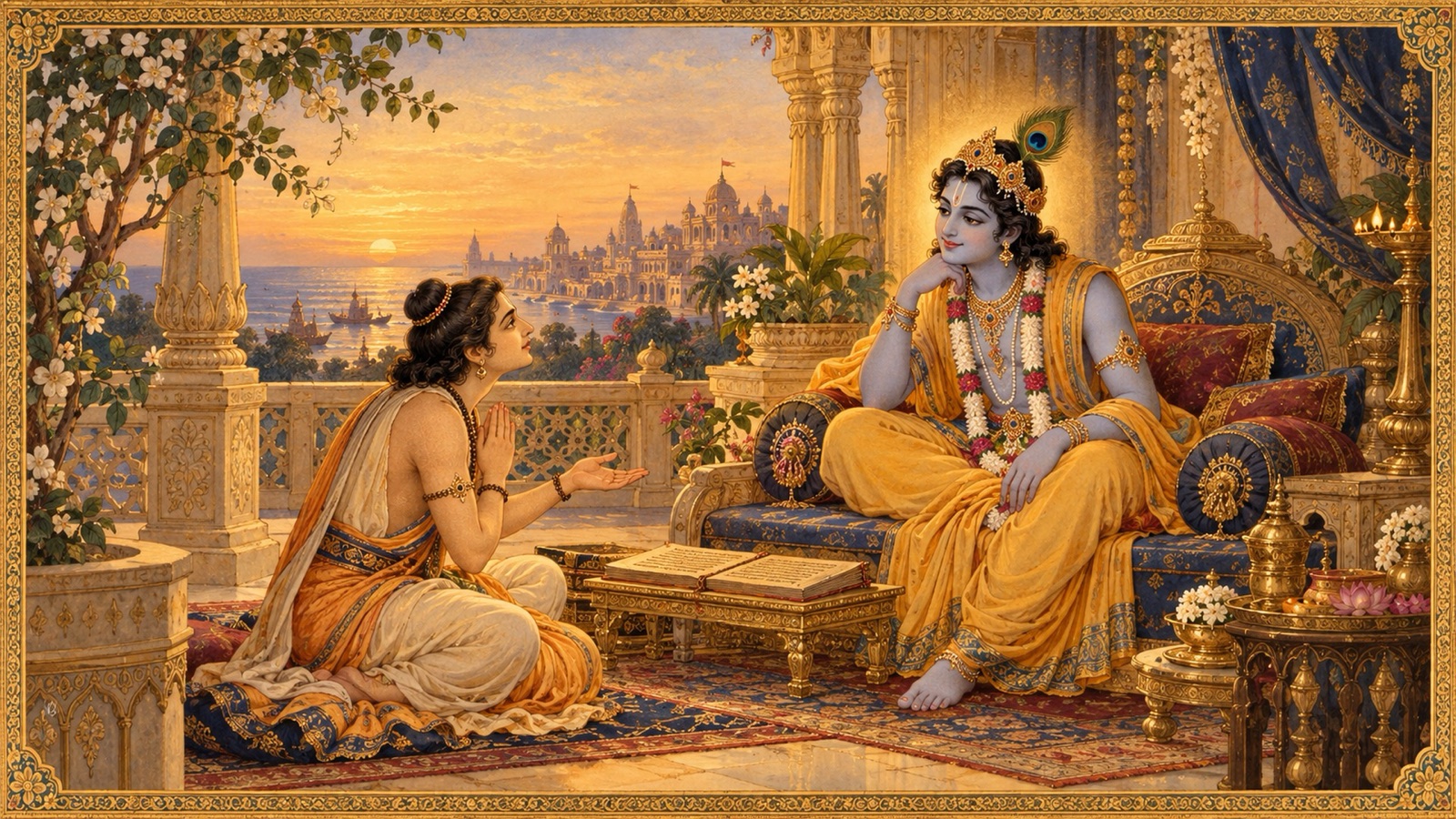
Three Paths, One Lord
The Lord’s reply opens the heart of the discourse. Long ago, He says, He Himself taught three paths for the highest good of every soul, and no fourth way exists anywhere.
श्रीभगवानुवाच योगास्त्रयो मया प्रोक्ता नृणां श्रेयोविधित्सया । ज्ञानं कर्म च भक्तिश्च नोपायोऽन्योऽस्ति कुत्रचित् ॥ ६ ॥
śrī-bhagavān uvāca yogās trayo mayā proktā nṝṇāṁ śreyo-vidhitsayā jñānaṁ karma ca bhaktiś ca nopāyo ’nyo ’sti kutracit
Meaning: The Lord said: Three paths — knowledge, action and devotion — have I taught, wishing for the highest good of all people; no other way exists anywhere. (Canto 11, Chapter 20, verse 6)
Knowledge suits the soul in whom all taste for the fruit of action has already died; action suits the soul who still longs for that fruit and has not yet turned from it (verse 7). But there is a third and most fortunate soul — one in whom, by some unplanned grace, faith has simply sprouted toward hearing and speaking of the Lord’s own glories, neither sick of the world nor tightly bound to it. For this soul, devotion itself grants the highest success.
यदृच्छया मत्कथादौ जातश्रद्धस्तु य: पुमान् । न निर्विण्णो नातिसक्तो भक्तियोगोऽस्य सिद्धिद: ॥ ८ ॥
yadṛcchayā mat-kathādau jāta-śraddhas tu yaḥ pumān na nirviṇṇo nāti-sakto bhakti-yogo ’sya siddhi-daḥ
Meaning: But for the one in whom, by some turn of fortune, faith has sprouted toward hearing My stories and glories — neither weary of the world nor deeply attached to it — the path of devotion alone brings perfection. (Canto 11, Chapter 20, verse 8)
Until such weariness or such faith has fully ripened, the Lord adds gently, a person should simply continue his appointed duties without forcing the pace (verse 9).
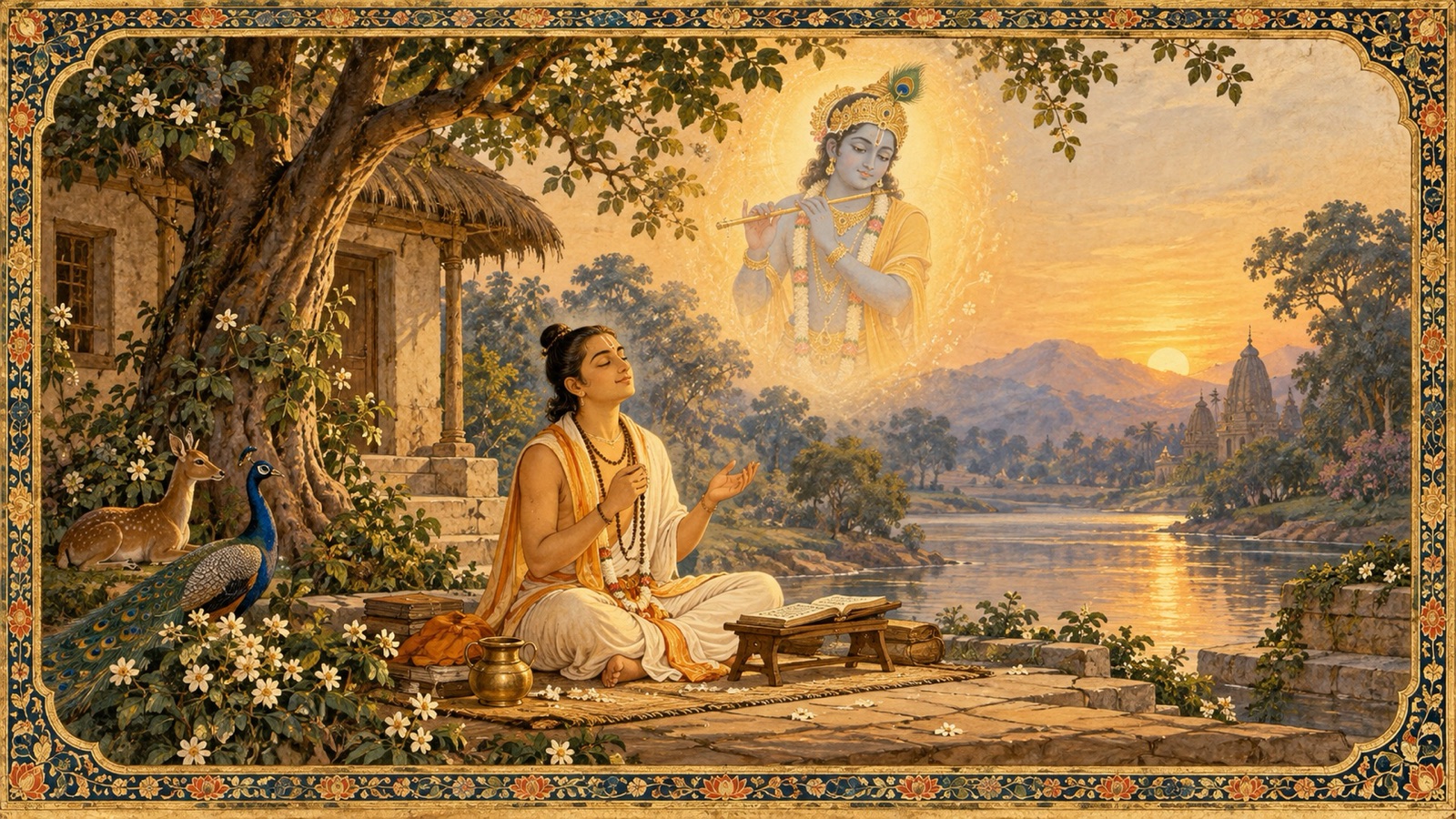
Steady in One’s Own Dharma, the Bird, and the Boat
A person established in his own dharma, offering sacrifice without praying for reward, neither climbs to heaven nor falls to hell unless he strays into a forbidden act; remaining thus, true to his own course, he comes, almost without seeking it, to pure knowledge or, by the Lord’s grace, to devotion (verses 10–11). It is this very human world, the Lord says, that both the dwellers of heaven and of hell secretly long for, since it alone makes knowledge and devotion possible — heaven and hell themselves can grant neither (verse 12). A wise person should therefore crave neither heaven nor hell nor even a renewed life in this world, for attachment to any one body ends in neglecting the soul’s true good; the body is mortal, though it remains the rarest of means to life’s real goal, and one should strive for freedom before death arrives unannounced (verses 13–14).
A bird unattached to its home feels no grief when the tree cradling its nest is felled — it simply lifts into the sky and finds peace elsewhere; one who sees his days and nights steadily felling the tree of his own life trembles for a moment, yet, free of clinging, comes to rest the instant he realizes the Supreme (verses 15–16). Then comes the verse at the very centre of this chapter’s tenderness. The human body, the Lord says, is the first and finest of all vessels — seemingly easy to obtain, yet almost impossible to come by; a boat well fitted for the crossing, steered by the guru as its helmsman, carried forward by the Lord Himself as the favouring wind at its back.
नृदेहमाद्यं सुलभं सुदुर्लभं प्लवं सुकल्पं गुरुकर्णधारम् । मयानुकूलेन नभस्वतेरितं पुमान् भवाब्धिं न तरेत् स आत्महा ॥ १७ ॥
nṛ-deham ādyaṁ su-labhaṁ su-durlabhaṁ plavaṁ su-kalpaṁ guru-karṇadhāram mayānukūlena nabhasvateritaṁ pumān bhavābdhiṁ na taret sa ātma-hā
Meaning: The human body is the first and best of vessels — seemingly easy to obtain, yet exceedingly rare; a well-made boat with the guru as its helmsman, driven on by Myself as a favourable wind. Whoever fails to cross the ocean of birth and death in such a boat has truly slain his own soul. (Canto 11, Chapter 20, verse 17)

Steadying the Wandering Mind
For the soul walking the path of knowledge, the Lord now gives the practical art of taming the mind. One weary of beginning new undertakings, senses reined in, should patiently hold the mind still through repeated practice; when it darts off again, he should draw it back with the same gentle persistence used in taming a horse not yet broken, mastering breath and senses through an intellect ripened in goodness — this patient, repeated winning-over of the mind, the Lord says, is itself the highest Yoga (verses 18–21).
By insight into the unfolding and folding-back of creation, the mind at last grows still; dwelling again and again on the guru’s teaching, it sheds its own waywardness. Such a mind should be fixed only on the Supreme — through self-mastery, through inquiry into the oneness of self and Supreme, or through loving worship of the Lord’s sacred form, never by other means. Should the seeker, through some lapse, commit a reproachful act, he should burn away that fault through yoga alone; for steady faithfulness to one’s own path is itself the very meaning of virtue (verses 22–26).
The Devotion of One Who Cannot Yet Let Go
The Lord now turns with special tenderness to a soul every devotee will recognize — one in whom faith has arisen for His stories, who has genuinely wearied of mere ritual, who sees clearly that desire is woven out of sorrow, and yet still cannot quite put it down.
जातश्रद्धो मत्कथासु निर्विण्ण: सर्वकर्मसु । वेद दु:खात्मकान् कामान् परित्यागेऽप्यनीश्वर: ॥ २७ ॥ ततो भजेत मां प्रीत: श्रद्धालुर्दृढनिश्चय: । जुषमाणश्च तान् कामान् दु:खोदर्कांश्च गर्हयन् ॥ २८ ॥
jāta-śraddho mat-kathāsu nirviṇṇaḥ sarva-karmasu veda duḥkhātmakān kāmān parityāge ’py anīśvaraḥ tato bhajeta māṁ prītaḥ śraddhālur dṛḍha-niścayaḥ juṣamāṇaś ca tān kāmān duḥkhodarkāṁś ca garhayan
Meaning: One in whom faith has arisen for My stories, who is weary of all mere ritual activity, who knows that the objects of desire are themselves made of sorrow, yet who has not the strength to renounce them — such a one should, for that very reason, worship Me with love, full of faith and firm resolve, still tasting those pleasures even as he condemns them as the seeds of future grief. (Canto 11, Chapter 20, verses 27–28)
There is no scolding here, only an open door. The Lord does not ask such a soul to fake a renunciation not yet earned; He asks only that it keep turning lovingly toward Him with whatever faith it has, even while finishing its unfinished business with desire. For the sage who worships Him in just this way, every craving hidden in the heart quietly withers, for the Lord Himself has come to dwell there; the knot of the heart — the false sense of a separate self — is cut, every doubt dissolves, and the whole weight of karma is spent the moment the Soul of all things is truly seen (verses 29–30).
Why Pure Devotion Surpasses Knowledge and Detachment
Here the Lord speaks the verse that gives this whole discourse its name and its glory.
तस्मान्मद्भक्तियुक्तस्य योगिनो वै मदात्मन: । न ज्ञानं न च वैराग्यं प्राय: श्रेयो भवेदिह ॥ ३१ ॥
tasmān mad-bhakti-yuktasya yogino vai mad-ātmanaḥ na jñānaṁ na ca vairāgyaṁ prāyaḥ śreyo bhaved iha
Meaning: Therefore, for the yogi who is joined to Me in devotion, whose very heart has become one with Mine, neither knowledge nor even dispassion, as a rule, is in itself the highest good in this world. (Canto 11, Chapter 20, verse 31)
This verse does not say knowledge and detachment are worthless — the Lord has just spent many verses honouring the patient path of knowledge. It says something gentler: once the heart has truly merged with the Lord in loving devotion, that devotion already carries within it everything knowledge and detachment were meant to achieve, so it need not be pursued as a separate goal. Devotion is not a shortcut around wisdom; it is wisdom’s own fulfilment, arriving by the sweetest of all doors. That is why the Lord says His devotee, through this same bhakti-yoga, easily obtains all that others labour for through rites, austerity, knowledge, dispassion or charity — heaven, liberation, or residence in His own abode — should such a devotee happen to want any of it at all (verses 32–33).
The Devotee Who Desires Nothing — Not Even Liberation
And here the Lord reveals the most astonishing secret of all His devotees.
न किञ्चित् साधवो धीरा भक्ता ह्येकान्तिनो मम । वाञ्छन्त्यपि मया दत्तं कैवल्यमपुनर्भवम् ॥ ३४ ॥
na kiñcit sādhavo dhīrā bhaktā hy ekāntino mama vāñchanty api mayā dattaṁ kaivalyam apunar-bhavam
Meaning: Yet My saintly, steady devotees, devoted to Me alone, desire nothing at all — not even liberation itself, that freedom from rebirth, though I Myself should offer it to them. (Canto 11, Chapter 20, verse 34)
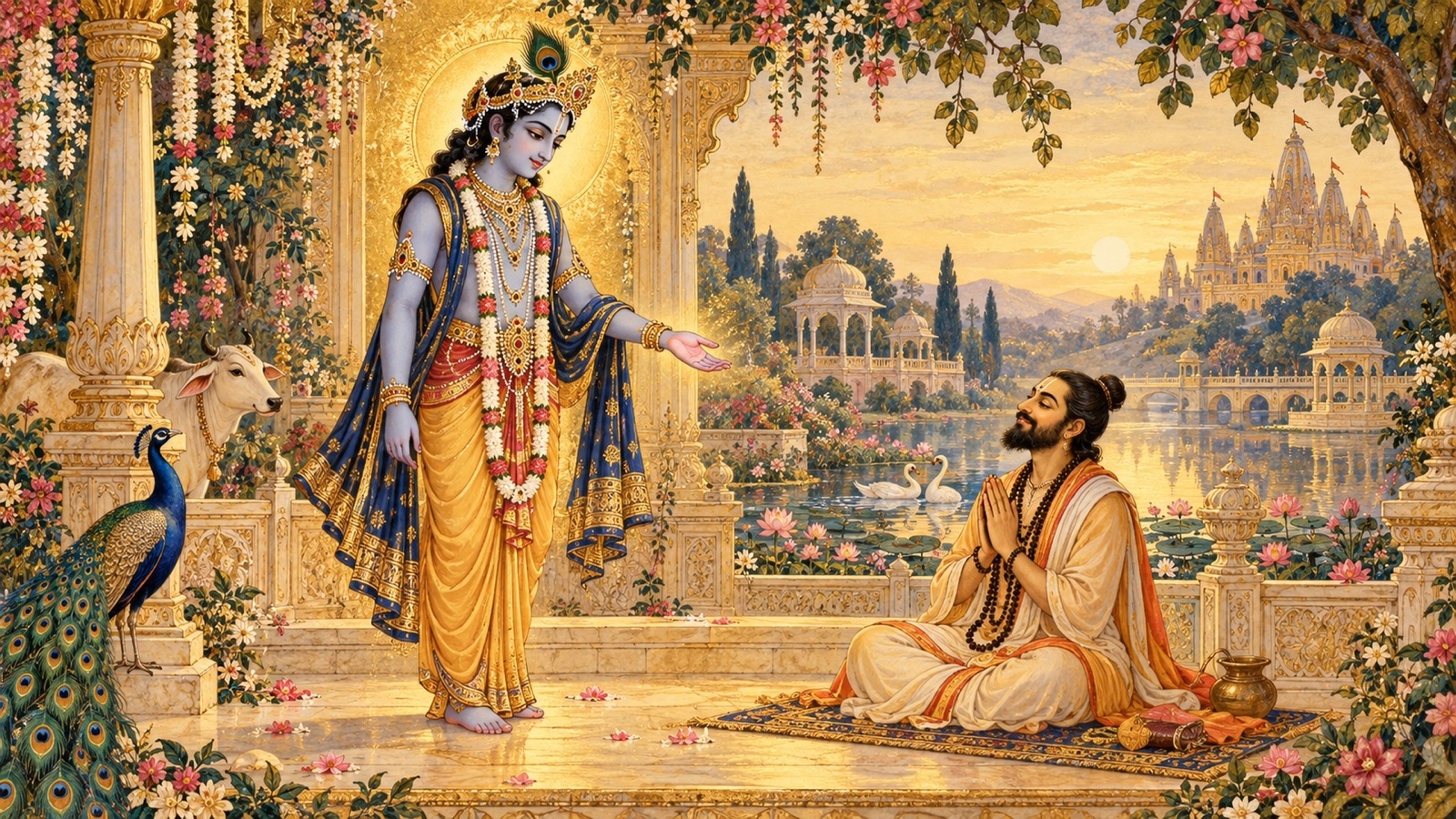
Such souls have grasped a truth the wise everywhere praise above every other attainment: desirelessness itself is the greatest and most complete good, and so true devotion belongs only to the one who is free of desire and seeks nothing in return (verse 35). Virtue and sin cannot touch these even-minded souls, wholly given to the Lord alone, who have passed beyond the reach of ordinary calculation (verse 36). And so the Lord closes with a promise to every sincere traveller on any of these three roads: whoever walks it faithfully reaches the one same destination He has shown — a fearless dwelling that is His very own.
एवमेतान् मया दिष्टाननुतिष्ठन्ति मे पथ: । क्षेमं विन्दन्ति मत्स्थानं यद् ब्रह्म परमं विदु: ॥ ३७ ॥
evam etān mayā diṣṭān anutiṣṭhanti me pathaḥ kṣemaṁ vindanti mat-sthānaṁ yad brahma paramaṁ viduḥ
Meaning: Those who thus faithfully follow these paths I have shown, which lead surely to Me, attain that fearless abode which is My own, and come to know it as the Supreme Brahman itself. (Canto 11, Chapter 20, verse 37)
Principal Teachings of This Chapter
1. Three paths, one goal. Knowledge, action and devotion are the only three ways the Lord has taught for the soul’s highest good; each suits a different stage of the heart’s readiness (verses 6–9).
2. The human body is a rare and precious boat. Easily overlooked yet exceedingly hard to obtain, it can carry a soul across the ocean of birth and death only with the guru as helmsman and the Lord as the favouring wind — to waste it is to harm one’s own soul (verses 14–17).
3. Devotion welcomes the heart that cannot yet let go. One who has faith in the Lord’s glories but still feels the pull of desire is not asked to fake a renunciation he has not earned — only to worship with love while that desire slowly burns itself out (verses 27–30).
4. Pure devotion surpasses knowledge and detachment. For the soul whose heart has merged in loving devotion, knowledge and dispassion are no longer separate goals to chase, for devotion already carries their fruit within it (verse 31).
5. The true devotee desires nothing, not even liberation. Having found the Lord, His saintly devotees want for nothing further — not even the freedom from rebirth He Himself is ready to grant (verses 34–35).
6. Walking any of these paths faithfully leads home. Whoever sincerely follows knowledge, action or devotion as the Lord has shown reaches His fearless abode and comes to know the Supreme Brahman (verse 37).
A Devotional Reflection
What lingers after this chapter is not a rule but a kindness. Uddhava comes genuinely troubled by how the Veda seems to argue against its own distinctions, and the Lord does not merely correct him — He widens the horizon, offering three honest roads instead of one impossible demand. Then, almost in passing, He lets slip the tenderest secret in the whole Bhagavatam: the soul that still tastes the world’s pleasures, that has not yet managed to let go, is not shut out of His love. It need only keep turning toward Him with whatever faith it has, worshipping even while its unfinished business with desire plays itself out. There is no contempt in this, only patience — the patience of a Lord who would rather carry an unfinished devotee across the ocean Himself than wait for a perfection that may never come on its own. Perhaps that is the real reason devotion is said to surpass even knowledge and detachment: it does not wait for us to become worthy before it begins its work.
A Daily Devotional Practice
Today, remember the boat the Lord describes — the rare body you already carry, steered by whatever guidance you have received and moved only by His grace. Set aside a few quiet minutes simply to be grateful for this boat rather than take it for granted, and offer one sincere prayer that you may not let it drift unused upon the shore. If some desire still pulls at your heart, do not fight it with force; instead, speak the Lord’s own name gently into that very desire, trusting that love will do what willpower alone cannot. Let your lips move with “Om Namo Bhagavate Vasudevaya” and let that be enough for today.
Conclusion
The twentieth discourse of Book Eleven answers Uddhava’s honest confusion about the Veda by opening three paths to the one Lord — knowledge for the soul weary of action, action for the soul still bound to its fruit, and devotion for the soul in whom faith has simply awakened. The Lord likens the rare human body to a boat that must cross the ocean of birth and death before death fells the tree of its days, and shows the patient art of gathering home a wandering mind. Most tenderly, He opens devotion’s door even to the soul that cannot yet renounce its desires, and declares that such devotion, once it fills the heart, already holds everything knowledge and detachment were meant to give — so that His true devotees, wanting nothing more, come at last to His own fearless abode.
May the divine wisdom of Srimad Bhagavatam awaken pure devotion within our hearts.
Om Namo Bhagavate Vasudevaya.
Jay Shree Madhav.
References and Attribution
- Primary edition: Gita Press, Śrīmad Bhāgavata Mahāpurāṇa (English, complete), Book Eleven, Discourse 20, pages 606–610.
- Series: Srimad Bhagavatam Wisdom · Biswa Sanatan Dharma Seva Trust.
- Presented following the spiritual guidance and recommendation of Pandit Dr. Shri Kashinath Mishra.
This is an original, faithful retelling in the writer’s own words, with brief quoted verses shown in Devanāgarī and transliteration and their meanings given as summaries. It is not a reproduction of any single publisher’s continuous translation or commentary. No affiliation with or endorsement by any publisher is implied.
Jay Shree Madhav