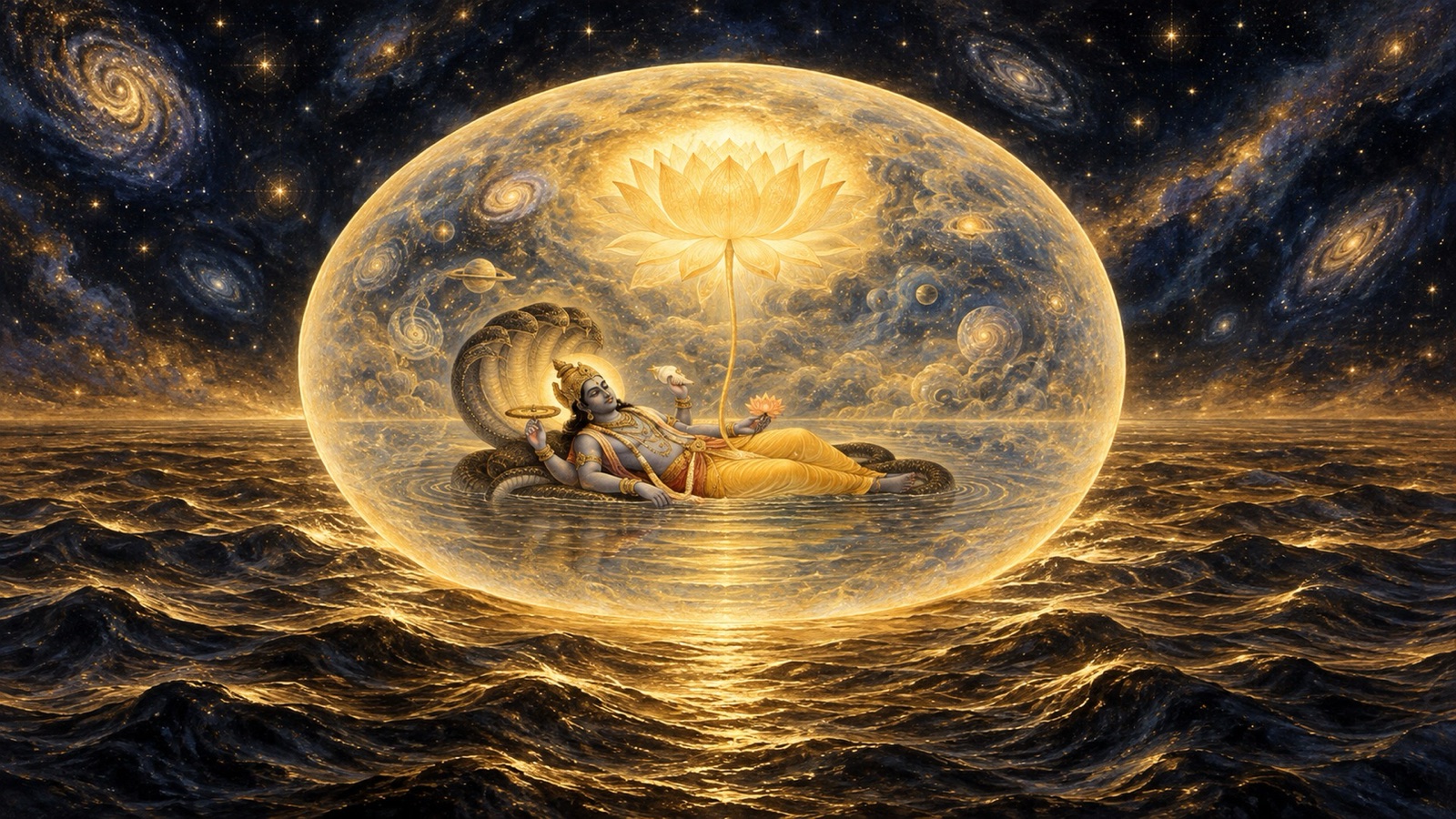
Lord Sri Krishna unfolds for Uddhava the ancient wisdom of Sankhya — how the one undivided Self appeared as Prakriti and Purusha, how the cosmic egg and its worlds arose from that unfolding, and how, at dissolution, the whole chain quietly folds back into the Self alone.
Om Namo Bhagavate Vasudevaya.
Om Namo Bhagavate Vasudevaya.
Om Namo Bhagavate Vasudevaya.
Welcome to Srimad Bhagavatam Wisdom, a devotional journey through the sacred histories and teachings of the Srimad Bhagavat Mahapurana. Having finished His song of the wandering ascetic in the previous discourse, the Lord now turns, of His own accord, to a deeper unveiling: the ancient doctrine of Sankhya, cherished by the great seers headed by Kapila. To know this teaching, He tells Uddhava, is to be freed at once from the root confusion — the notion that one thing stands apart from another. He traces creation’s lineage: subject and object dawning from a single ground, mind and matter rising to the cosmic egg and Brahma on his lotus, and, when dissolution comes, that same ladder folding quietly back into the one Self.
Chapter Information
- Scripture: Śrīmad Bhāgavata Mahāpurāṇa
- Canto: 11 (Book Eleven)
- Chapter: 24 (Discourse 24)
- Chapter title: The Philosophy of Sankhya
- Principal speaker: Sri Krishna, instructing Uddhava; the whole related by Sukadeva Gosvami to King Parikshit
- Principal listener: Uddhava; and King Parikshit
- Main setting: Dwaraka, in the Lord’s continuing dialogue with Uddhava
- Central subject: The Sankhya philosophy of creation and dissolution — Prakriti and Purusha unfolding into the tattvas, the cosmic egg and the three worlds, and their return, in reverse order, to the one Self
- Principal verse range: Canto 11, Chapter 24, verses 1–29
- Primary edition: Gita Press Śrīmad Bhāgavata Mahāpurāṇa
Context from the Previous Chapter
In Chapter 23, the Lord sang to Uddhava the song once chanted by a wandering ascetic brahmana of Avanti, who, stripped of his wealth and ill-treated by the kinsmen he had tried to please, found in that very loss the seed of his detachment. The song ended in surrender at Krishna’s feet, and the Lord said that whoever hears, repeats or remembers it with a focused mind is never again overpowered by the pairs of opposites. This chapter continues that resolve to steady the mind, now laying bare its philosophical foundation in Sankhya.
The Lord Begins to Teach Sankhya
Once again the glorious Lord began to speak. He would now, He told Uddhava, fully expound the truth of Sankhya as it had been ascertained of old by the great seers headed by Kapila — a truth which, once known, sheds at once the delusion born of imagining one thing to be different from another.
श्रीभगवानुवाच अथ ते सम्प्रवक्ष्यामि साङ्ख्यं पूर्वैर्विनिश्चितम् । यद् विज्ञाय पुमान् सद्यो जह्याद् वैकल्पिकं भ्रमम् ॥ १ ॥
śrī-bhagavān uvāca atha te sampravakṣyāmi sāṅkhyaṁ pūrvair viniścitam yad vijñāya pumān sadyo jahyād vaikalpikaṁ bhramam
Meaning: The Lord said: I shall now fully declare to you the Sankhya as ascertained of old by the ancient seers, knowing which a person at once gives up the delusion born of the notion of difference. (verse 1)
One Undivided Reality Becomes Two
At the hour of final dissolution, the Lord continued, and again at the dawn of creation in the first Satya Yuga, and even now for one of clear understanding, the seer and all that is seen were one undifferentiated reality — Brahman, beyond speech and mind. That single reality became as if two: Maya, the objective existence, and the soul reflected within it. One portion of this duality is the well-known Prakriti, carrying both cause and effect; the other is pure consciousness alone, called Purusha, the Spirit.
तयोरेकतरो ह्यर्थः प्रकृतिः सोभयात्मिका । ज्ञानं त्वन्यतमो भावः पुरुषः सोऽभिधीयते ॥ ४ ॥
tayor ekataro hy arthaḥ prakṛtiḥ sobhayātmikā jñānaṁ tv anyatamo bhāvaḥ puruṣaḥ so ‘bhidhīyate
Meaning: Of these two, one is indeed the well-known Prakriti, which contains within itself both cause and effect; the other reality is consciousness alone, and that is called Purusha, the Spirit. (verse 4)
The Gunas, the Cosmic Intelligence and the Ego
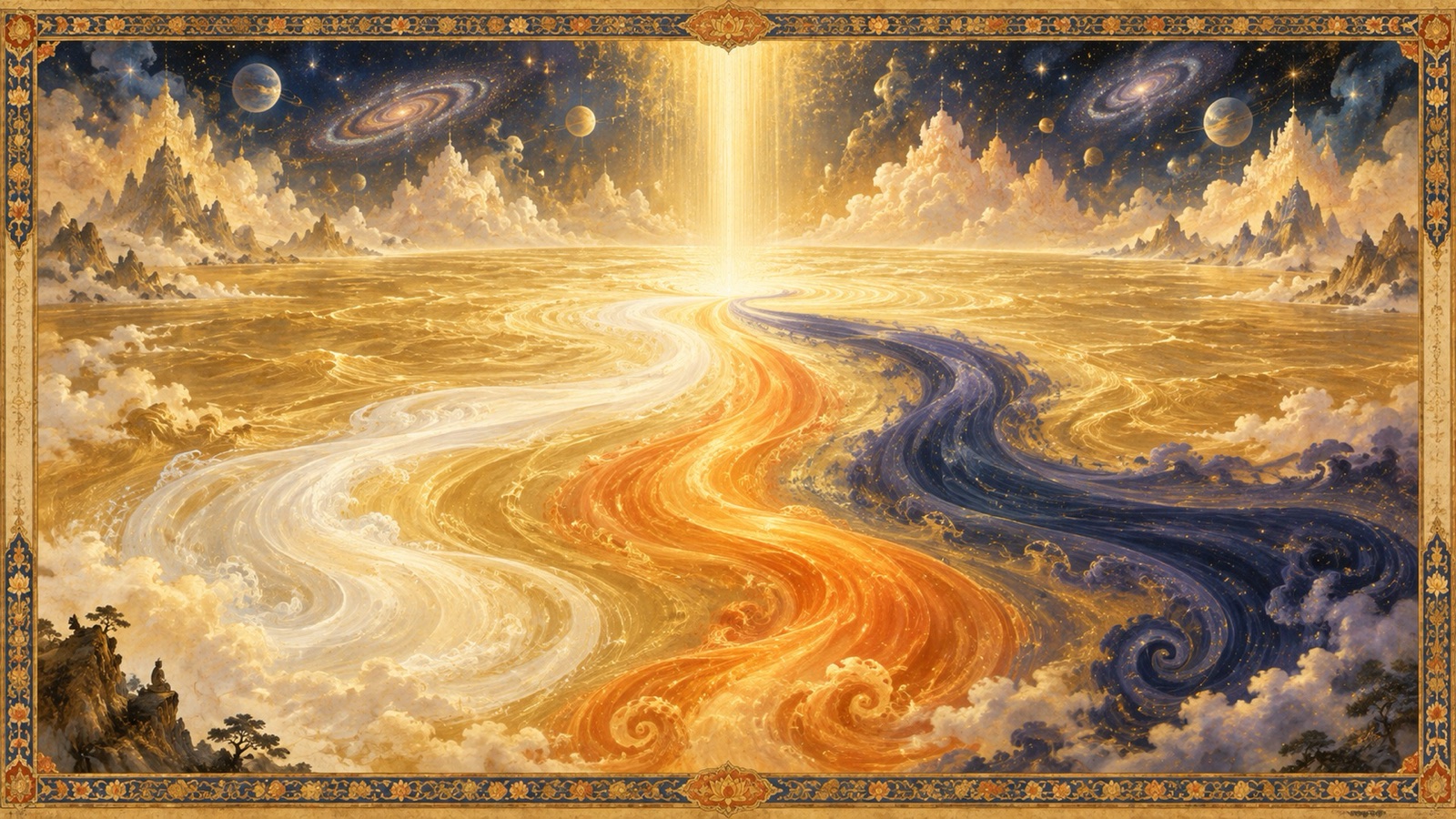
From that Prakriti — its stillness disturbed by the Lord Himself as Time, moved by the accumulated karma of countless souls — arose the three gunas: tamas, rajas and sattva. From the gunas came Mahat, the cosmic intelligence, and from Mahat arose Ahankara, the cosmic sense of “I,” binding the soul to the notion that it is the body. This threefold Ahankara — sattvika, rajasika and tamasika — in turn produced the subtle elements, the senses, and the mind: the gross elements from its tamasika aspect, the organs of sense and action from its rajasika aspect, and the presiding deities with the mind from its sattvika aspect (verses 5–8).
The Cosmic Egg and the Birth of Brahma
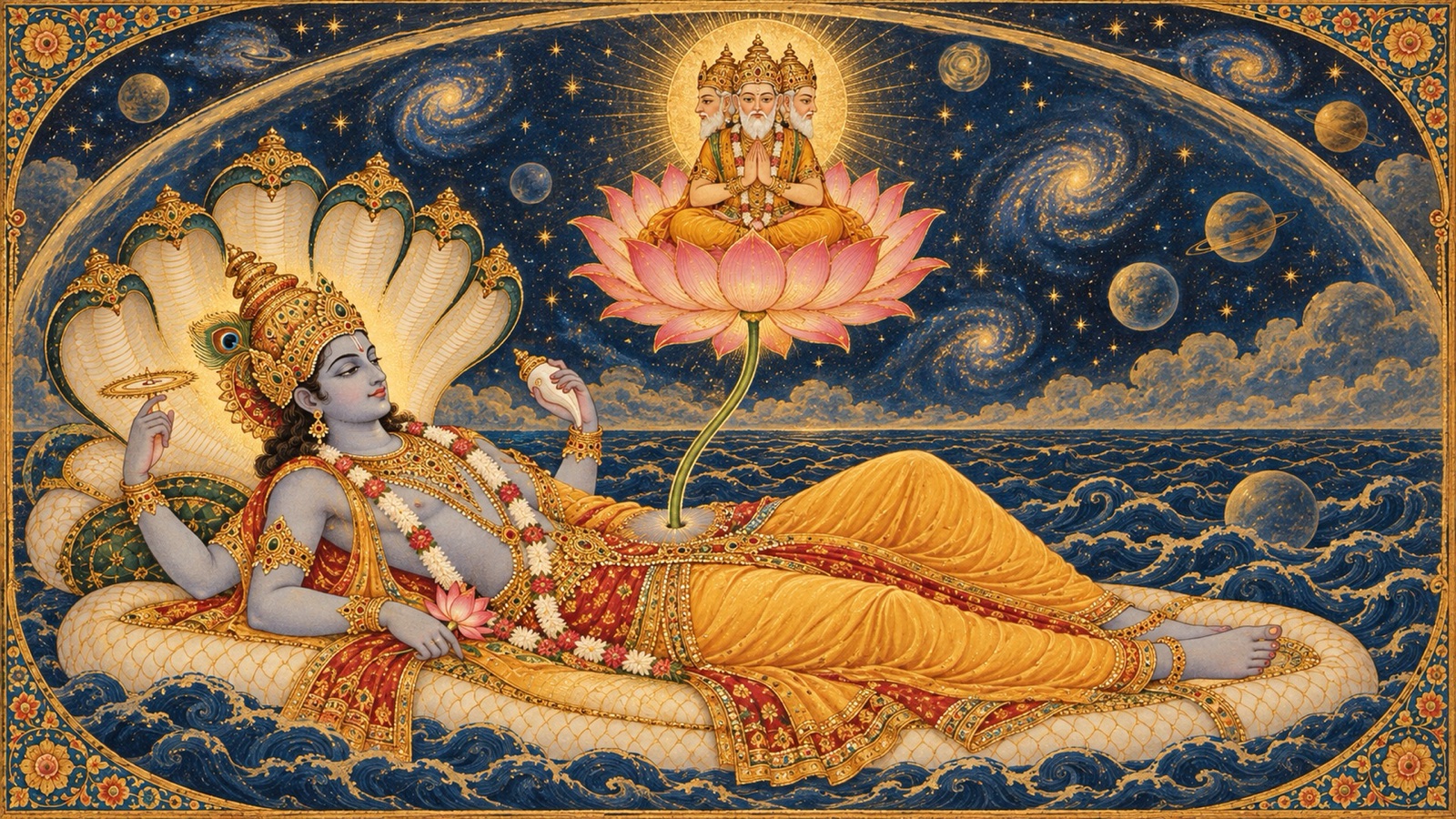
Impelled by the Lord, all these categories combined to bring forth the cosmic egg — His own sporting-ground, which He entered as its Indweller. Resting upon the causal waters within it, He appeared as Garbhodasayi Narayana. From His navel sprang a lotus bearing the very name of the universe, and upon it appeared Brahma, the self-born, four-faced lord of creation.
मया सञ्चोदिता भावाः सर्वे संहत्यकारिणः । अण्डमुत्पादयामासुर्ममायतनमुत्तमम् ॥ ९ ॥ तस्मिन्नहं समभवमण्डे सलिलसंस्थितौ । मम नाभ्यामभूत् पद्मं विश्वाख्यं तत्र चात्मभूः ॥ १० ॥
mayā sañcoditā bhāvāḥ sarve saṁhatya-kāriṇaḥ aṇḍam utpādayām āsur mamāyatanam uttamam
tasminn ahaṁ samabhavam aṇḍe salila-saṁsthitau mama nābhyām abhūt padmaṁ viśvākhyaṁ tatra cātma-bhūḥ
Meaning: Impelled by Me, all these elements combined and brought forth the cosmic egg, My own excellent abode. Within it, resting upon the causal waters, I appeared; from My navel arose a lotus bearing the name of the universe, and upon it the self-born Brahma came into being. (verses 9–10)
The Three Worlds, and the One Goal Beyond Them
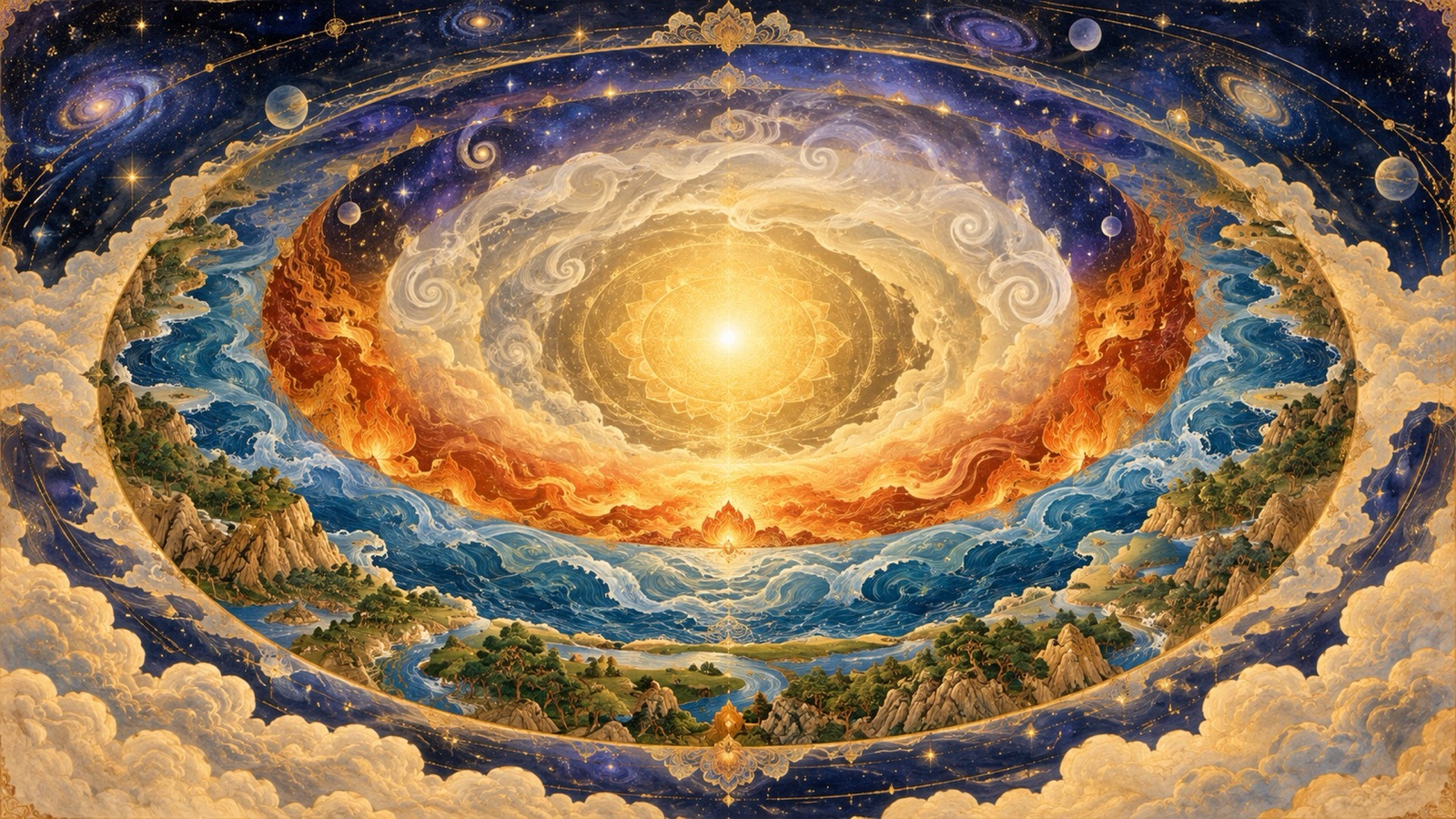
Endowed with activity and strengthened by his own austerity, Brahma then fashioned, by the Lord’s grace, the three spheres — Bhurloka the earth, Bhuvarloka the middle region, and Swarloka the heavens — the homes respectively of men, spirits and gods; beyond the three lies the realm of the perfected Siddhas, and beneath the earth, the homes of the Asuras and Nagas. Within these worlds unfold the destinies shaped by the three gunas and their karma. Higher still stand Maharloka, Janaloka, Tapoloka and Satyaloka, pure goals reached through yoga, austerity and renunciation. But His own realm, the Lord said plainly, is reached by one path alone — bhakti-yoga, loving devotion (verses 11–14).
Krishna Himself Is the Cause, the Spirit and the Time
With the Lord Himself as Time, the dispenser of every action’s fruit, creation rises and falls within the ceaseless stream of the gunas. Whatever has come into being, vast or minute, is pervaded by both Prakriti and Purusha together; and that alone is truly real which remains the same at a thing’s beginning, middle and end — its passing modifications, as of gold shaped into ornaments, are only of practical use. Then the Lord declared the heart of the teaching.
प्रकृतिर्यस्योपादानमाधारः पुरुषः परः । सतोऽभिव्यञ्जकः कालो ब्रह्म तत्त्रितयं त्वहम् ॥ १९ ॥
prakṛtir yasyopādānam ādhāraḥ puruṣaḥ paraḥ sato ‘bhivyañjakaḥ kālo brahma tat tritayaṁ tv aham
Meaning: Prakriti, the material cause out of which this universe is shaped; Purusha, the Supreme Person who is its indwelling support; and Kala, Time, which manifests what already exists — these three, the Infinite Brahman, are nothing other than Myself. (verse 19)
Here lies the centre of what the Lord teaches Uddhava. He does not merely explain how the universe is built, as a cosmology to admire from a distance; He reveals that He Himself is every term of the explanation — the matter it is fashioned from, the Spirit who witnesses it, and the Time that brings it forth and withdraws it. Sankhya, rightly understood, does not end in some impersonal truth beyond name and form; it ends, as the Lord had already shown at the close of the previous discourse, in surrender at His own feet. The chain of creation, traced to its root, is not a ladder away from the Lord but one leading back into His hands.
Creation, He added, unfolds in due succession until, by His will alone, the universe comes again to rest (verses 15–20).
The Hour of Dissolution
Then, the Lord said, when the cosmic egg and its worlds are touched by His own gaze as the Time-Spirit, they grow ripe for dissolving into the five elements, in exact reverse of the order by which they arose. The mortal body withdraws into food, food into seed, seed into earth, and earth into odour; odour into water, water into taste, taste into fire, fire into form, form into air, air into touch, and touch into ether, which subsides into sound. The senses return to their presiding deities, the deities merge into the mind, and the mind dissolves into the ego from which it sprang (verses 22–25). So the chain draws to its climax:
स लीयते महान् स्वेषु गुणेषु गुणवत्तमः । तेऽव्यक्ते सम्प्रलीयन्ते तत् काले लीयतेऽव्यये ॥ २६ ॥ कालो मायामये जीवे जीव आत्मनि मय्यजे । आत्मा केवल आत्मस्थो विकल्पापायलक्षणः ॥ २७ ॥
sa līyate mahān sveṣu guṇeṣu guṇa-vattamaḥ te ‘vyakte sampralīyante tat kāle līyate ‘vyaye kālo māyā-maye jīve jīva ātmani mayy aje ātmā kevala ātma-stho vikalpāpāya-lakṣaṇaḥ
Meaning: The threefold ego dissolves into Mahat, the cosmic intelligence; Mahat subsides into the gunas, the gunas into the Unmanifest, and the Unmanifest into Time, now stilled. Time merges into the Cosmic Person, the Lord of Maya; and that Person, at last, into Me, the birthless Spirit — who, being absolute, stands by Myself alone, inferred only through the coming and going of creation and dissolution. (verses 26–27)
No Delusion Can Remain
For one who thus contemplates this whole process clearly, the Lord asked, how could the old delusion of difference still linger in the mind — any more than darkness in the sky once the sun has risen?
एवमन्वीक्षमाणस्य कथं वैकल्पिको भ्रमः । मनसो हृदि तिष्ठेत व्योम्नीवार्कोदये तमः ॥ २८ ॥
evam anvīkṣamāṇasya kathaṁ vaikalpiko bhramaḥ manaso hṛdi tiṣṭheta vyomnīvārkodaye tamaḥ
Meaning: For one who has thus examined the truth, how could the delusion of difference remain any longer in the mind — any more than darkness can remain in the sky at the rising of the sun? (verse 28)
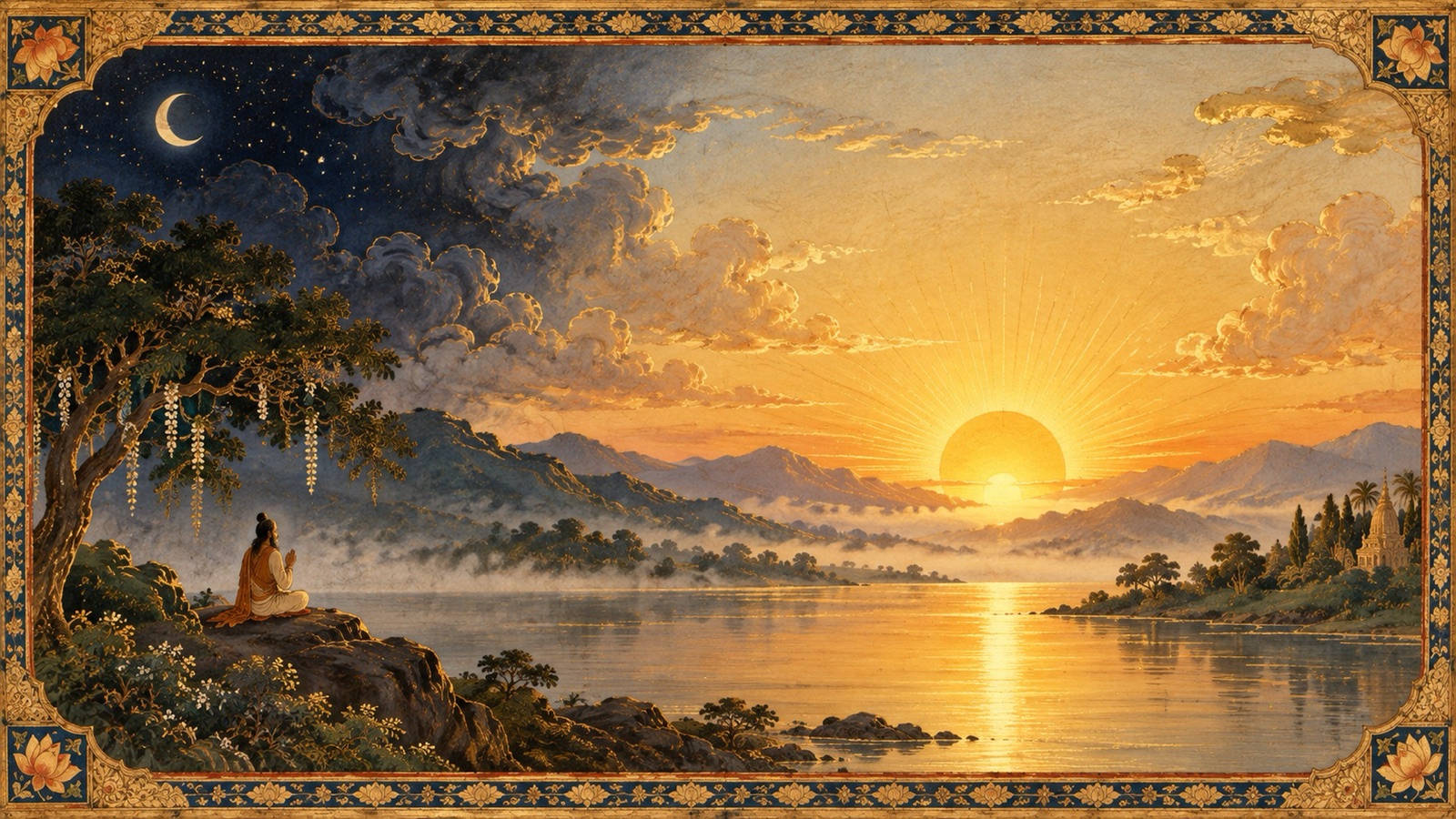
This, He said, is the very method of Sankhya that cuts through the knot of doubt.
एष साङ्ख्यविधिः प्रोक्तः संशयग्रन्थिभेदनः । प्रतिलोमानुलोमाभ्यां परावरदृशा मया ॥ २९ ॥
eṣa sāṅkhya-vidhiḥ proktaḥ saṁśaya-granthi-bhedanaḥ pratilomānulomābhyāṁ parāvara-dṛśā mayā
Meaning: This Sankhya, declared by Me who behold both the higher and the lower truth, is the method that cuts the very knot of doubt, taught here through the two paths of involution and evolution. (verse 29)
Thus the discourse draws to its close, and Krishna prepares next to show Uddhava how the three gunas shape the character and destiny of every living being.
Principal Teachings of This Chapter
1. Before creation, all was one. At dissolution, at the dawn of a new creation, and for one of clear vision even now, the seer and the seen are a single undivided reality, only afterward appearing as Prakriti and Purusha (verses 2–4).
2. The whole universe is Krishna’s own unfolding. Every category of mind and matter arises in due order from Prakriti, moved by the Lord as Time — nothing in creation stands apart from Him (verses 5–10).
3. Krishna is the cause, the Spirit and the Time together. He is not merely the maker of the universe from without; He is the material it is made of, the Witness within it, and the Time that manifests and withdraws it (verse 19).
4. Dissolution is creation told in reverse. Element merges into element, mind into ego, ego into Mahat, and Mahat at last into the Unmanifest, until only the one Self remains (verses 21–27).
5. To see this truth ends the delusion of difference. Once the mind has traced creation to its source, separateness can no more remain than darkness once the sun has risen (verse 28).
6. This Sankhya is given to cut the knot of doubt. The Lord offers it not as abstract philosophy but as a remedy for the doubt that binds the restless mind to apparent differences (verse 29).
A Devotional Reflection
There is something quietly overwhelming about being told, by the very Lord one loves as a friend, exactly how the stars, the seasons and one’s own mind came to be — and in the same breath, that He Himself is the clay, the potter and the wheel. It is tempting to imagine such teaching as cold, a diagram of categories and causes. But notice where it leads: not to indifference, but to the discovery that nothing, from the subtlest breath of air to the farthest heaven, has ever stood outside the Lord’s own being. To watch a cosmic egg form upon dark waters, and Brahma rise from a lotus at Narayana’s navel, is to be shown, in the grandest picture, the same truth whispered in the quietest prayer: everything comes from Him, and returns to Him. That is not a thought to master once, but one to rest inside, as one rests in a familiar room long after the lamp has been lit.
A Daily Devotional Practice
Today, practise the Lord’s own path of return. Sit quietly and let your mind settle. As each thought or sensation arises, do not chase it outward; gently trace it backward — from the thought to the one who notices it, from the senses to the mind that gathers them, from the mind to the silent witness within the heart. Close by softly repeating His holy name, “Om Namo Bhagavate Vasudevaya,” resting, even briefly, in the remembrance that the Self you seek is never separate from the Lord who seeks you.
Conclusion
In this twenty-fourth discourse, Sri Krishna unfolds for Uddhava the ancient philosophy of Sankhya, by which the root delusion of difference is shed at once. He shows how the one undivided reality first appeared as Prakriti and Purusha; how the gunas, the cosmic intelligence, the ego and the elements arose from their meeting; how the cosmic egg came to be, with Garbhodasayi Narayana within it and Brahma born upon the lotus of His navel; and how Brahma fashioned the three worlds, each a field for destinies shaped by the gunas. Declaring that He Himself is the cause, the indwelling Spirit and the Time of creation, the Lord then traces this chain in reverse, until only the one Self remains. Whoever sees this clearly, He promises, can no longer be troubled by separateness, any more than darkness can linger once the sun has risen. This is Sankhya as He has taught it — given to cut the knot of doubt and lead the seeker home.
May the divine wisdom of Srimad Bhagavatam awaken pure devotion within our hearts.
Om Namo Bhagavate Vasudevaya.
Jay Shree Madhav.
References and Attribution
- Primary edition: Gita Press, Śrīmad Bhāgavata Mahāpurāṇa (English, complete), Book Eleven, Discourse 24, pages 631–634.
- Series: Srimad Bhagavatam Wisdom · Biswa Sanatan Dharma Seva Trust.
- Presented following the spiritual guidance and recommendation of Pandit Dr. Shri Kashinath Mishra.
This is an original, faithful retelling in the writer’s own words, with brief quoted verses shown in Devanāgarī and transliteration and their meanings given as summaries. It is not a reproduction of any single publisher’s continuous translation or commentary. No affiliation with or endorsement by any publisher is implied.
Jay Shree Madhav