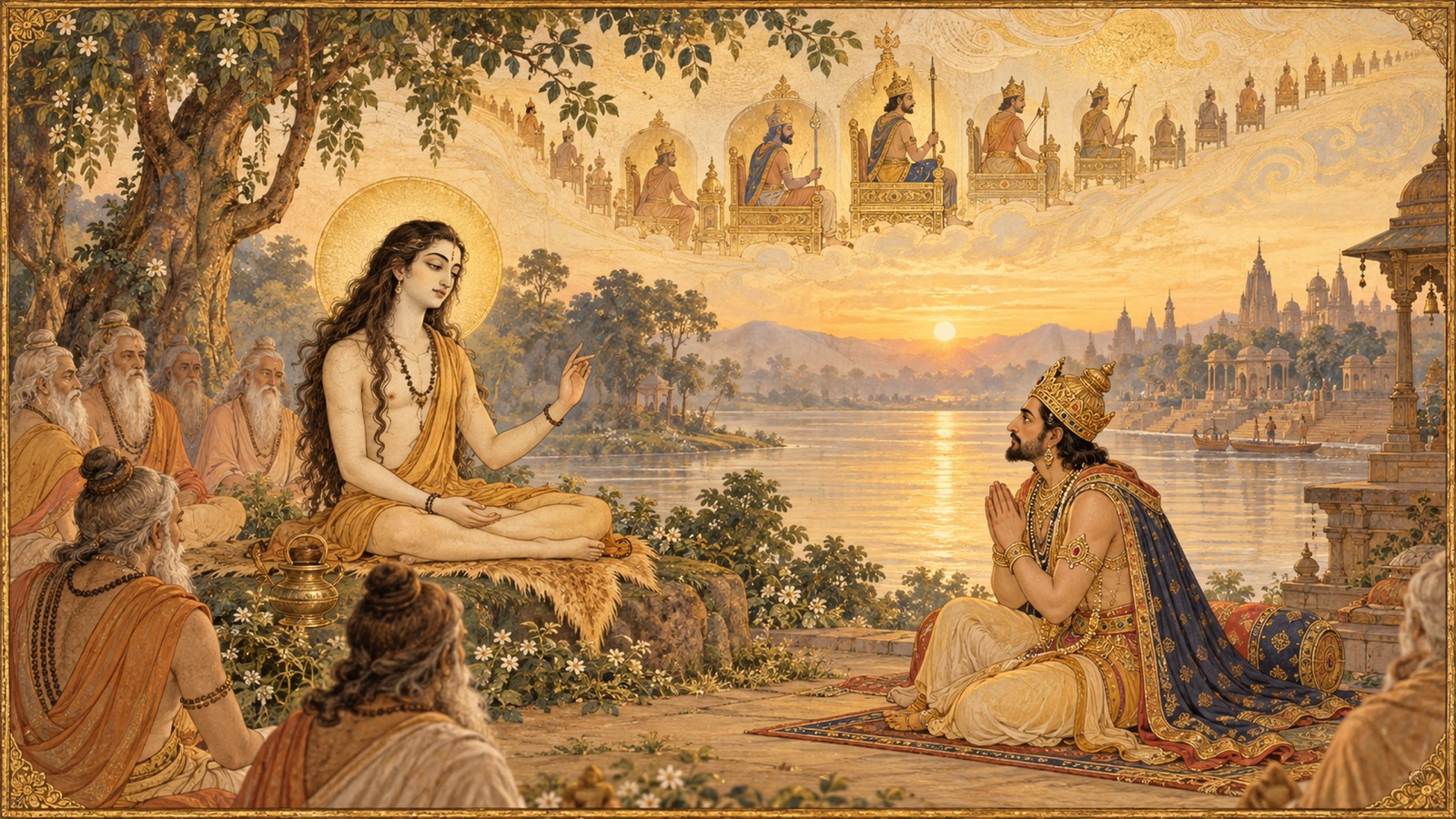
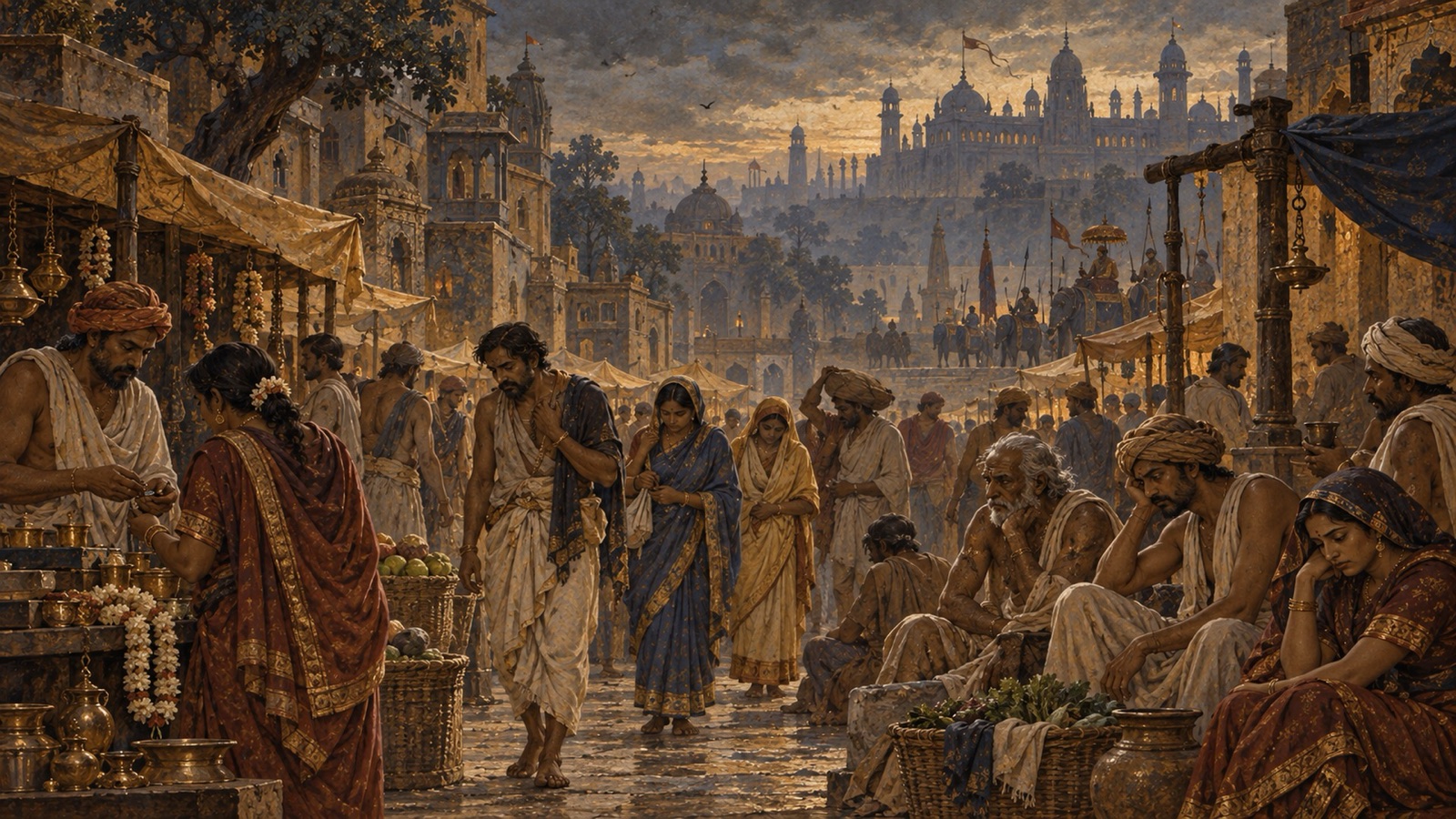
After Sri Krishna departs for His own abode, King Parikshit asks who will rule the earth — and Sukadeva Gosvami unrolls before him the whole long procession of the kings of Kali, dynasty after dynasty, rising and falling like waves, until only mleccha rulers remain and righteousness itself grows thin.
Om Namo Bhagavate Vasudevaya.
Om Namo Bhagavate Vasudevaya.
Om Namo Bhagavate Vasudevaya.
Welcome to Srimad Bhagavatam Wisdom, a devotional journey through the sacred histories and teachings of the Srimad Bhagavat Mahapurana. We come now to the very first chapter of the Twelfth and final Canto — the canto in which the great scripture gathers up its remaining threads and draws them toward a close. Sukadeva Gosvami, still seated before King Parikshit on the bank of the Ganga, now turns his prophetic gaze forward in time. Having already described the divine descents of the Lord and the histories of countless kings and sages, he answers a simple question with a sweeping vision: who, after Sri Krishna returns to His own realm, will hold this earth? The answer is a long roll-call of dynasties yet unborn — the Pradyotanas, the Shishunagas, the Nandas, the Mauryas, the Shungas, the Kanvas, the Andhras and many more — a river of crowns passing from hand to hand, each reign shorter and darker than the last, until the chapter closes with an unflinching portrait of the mleccha kings of Kali. It is history told before it happens, and its purpose is not idle prophecy but a mirror: to show the soul how fragile every earthly throne truly is.
Chapter Information
- Scripture: Śrīmad Bhāgavata Mahāpurāṇa
- Canto: 12 (Book Twelve — the final Canto)
- Chapter: 1 (Discourse I)
- Chapter title: The Degraded Dynasties of Kali-yuga
- Principal speaker: Sri Sukadeva Gosvami, addressing King Parikshit; the outer frame remains Suta Gosvami narrating to the sage Saunaka and the assembly at Naimisharanya
- Principal listener: King Parikshit; and the sages of Naimisharanya hearing it from Suta
- Main setting: The bank of the Ganga, where Parikshit awaits his death in seven days, framed within the forest hermitage of Naimisharanya
- Central subject: A prophetic genealogy of the royal dynasties that will rule the earth throughout the age of Kali, and the moral decline of kingship as the age deepens
- Principal verse range: Canto 12, Chapter 1, verses 1–41
- Primary edition: Gita Press Śrīmad Bhāgavata Mahāpurāṇa
The Question: Who Will Rule When Krishna Has Gone?
King Parikshit, who has listened without eating or sleeping to the whole of the Bhagavata, now asks a question that quietly carries the weight of the entire coming age. When Sri Krishna, the jewel of the Yadu line, had departed for His own realm in heaven, whose dynasty, he asks, came to rule over the earth?
श्रीशुक उवाच योऽन्त्य: पुरञ्जयो नाम भविष्यो बारहद्रथ: । तस्यामात्यस्तु शुनको हत्वा स्वामिनमात्मजम् ॥ १ ॥
śrī-śuka uvāca yo ’ntyaḥ purañjayo nāma bhaviṣyo bārahadrathaḥ tasyāmātyas tu śunako hatvā svāminam ātma-jam
Meaning: Sri Suka replied: The last of the Barhadratha line will be a king named Purañjaya; his own minister, Shunaka, will assassinate his master and install his own son as king. (Canto 12, Chapter 1, verse 1)
Sukadeva does not merely name a successor. He begins to unroll, dynasty by dynasty, the entire future of kingship in the land — a prophecy that reads like a scroll of names, each king begetting the next, each line rising and then giving way. The very first note struck is one of treachery: a trusted minister murdering his master. It is a fitting overture for the age of Kali, in which ambition so often overpowers loyalty.
The First Dynasties: Pradyotanas and Shishunagas
From that first act of betrayal springs the Pradyotana dynasty — five kings beginning with Pradyota, who will rule the earth for a hundred and thirty-eight years. After them come the Shishunagas: Shishunaga and his descendants Kakavarna, Kshemadharma, Kshetrajna, Vidhisara, Ajatashatru, Darbhaka, Ajaya, Nandivardhana, and Mahanandi — ten kings who will hold the earth for three hundred and sixty years.
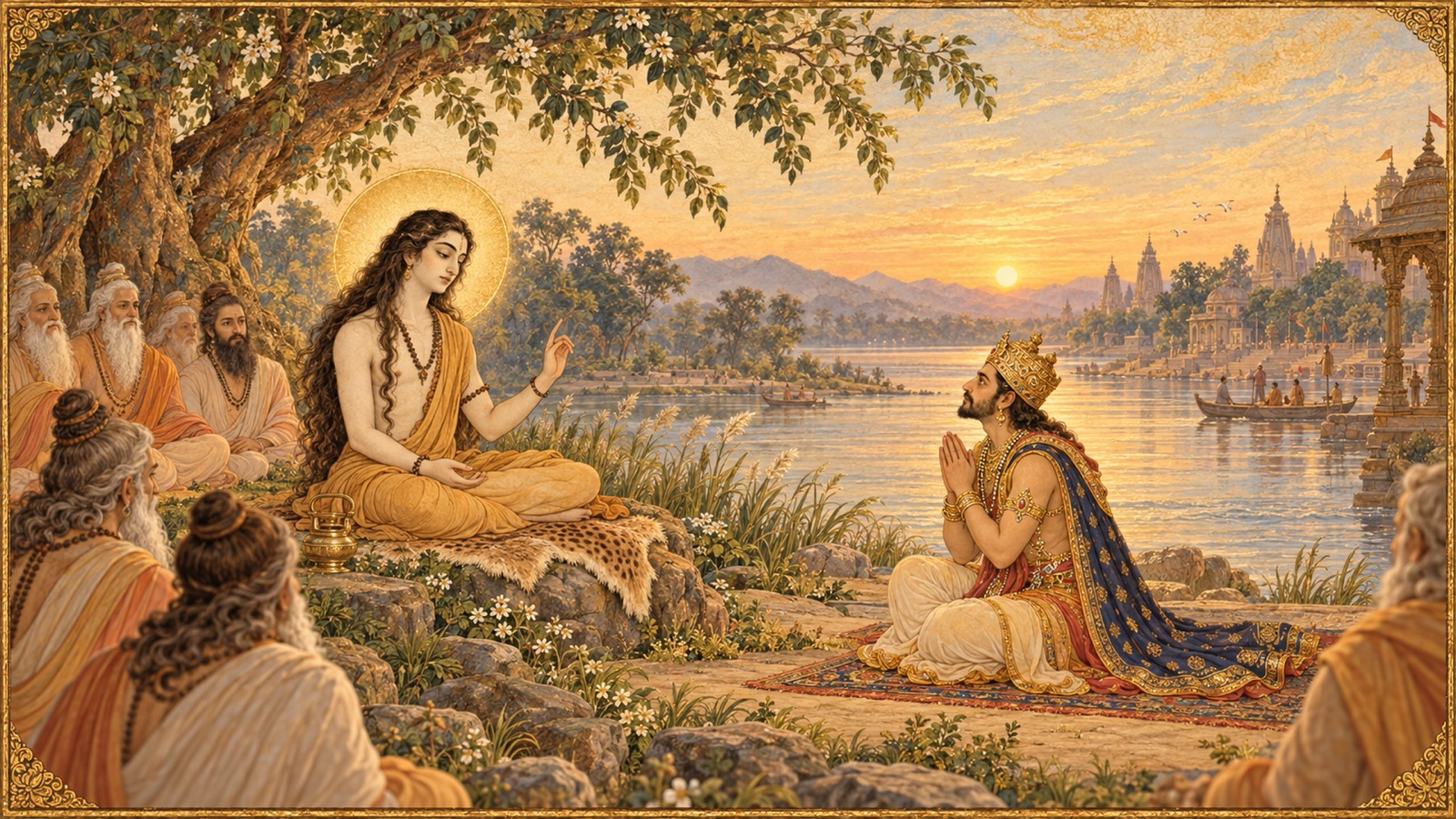
Then Sukadeva speaks of Mahanandi’s son, born of a Shudra woman, a certain Nanda who will command a huge army and untold riches. This is Mahapadma Nanda, and with him the character of kingship shifts. From this point onward, Sukadeva says plainly, the rulers of men will be mostly of the Shudra class and largely unrighteous — a quiet marker that the sanctified Kshatriya order is beginning to dissolve.
The Nandas, the Mauryas, and the Long Procession of Crowns
Like a second Parashurama, Mahapadma will bring the whole globe under a single sceptre, and none will dare defy his commands. He and his eight sons — the nine Nandas — will rule for about a hundred years. Then a certain Brahmana, remembered as Chanakya, will uproot all nine Nandas and place Chandragupta upon the throne. So begins the Maurya line: Chandragupta, his son, then Ashokavardhana and his descendants — ten Maurya kings who will rule for a hundred and thirty-seven years.
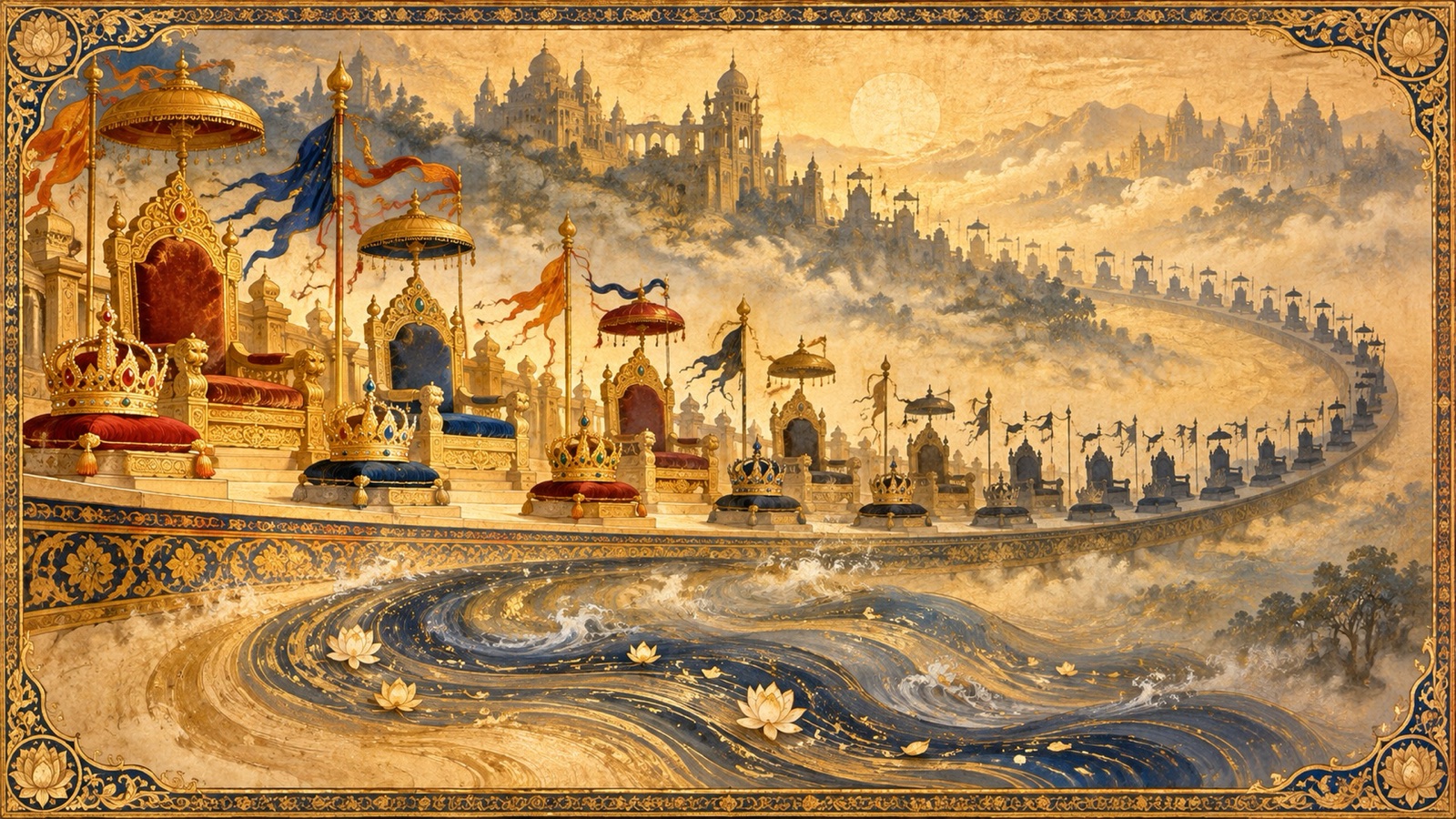
The procession continues without pause. A Maurya commander named Pushyamitra of the Shunga clan will assassinate the last Maurya and seize power himself; ten Shungas will rule for more than a century. Then the earth passes to the Kanva kings — Vasudeva of the Kanva line and his successors — who will reign for three hundred and forty-five years. A servant of the last Kanva, a Shudra of the Andhra race named Bali, will in turn seize the throne, and thirty princes of the Andhra dynasty will rule for four hundred and fifty-six years. After them Sukadeva names still more: seven Abhiras, ten Gardabhis, sixteen Kankas, eight Yavanas, fourteen Turushkas, ten Gurundas, and eleven Maulas — foreign and mixed rulers who will hold the earth for many centuries between them, followed by the kings of Kilikila and the thirteen Bahlikas, all reigning at the same time over their scattered territories.
When Kings Become Mlecchas
Sukadeva’s tone darkens as the prophecy reaches its end, for the deeper the age of Kali sinks, the more kingship itself decays. He describes rulers who will be no better than mlecchas — men who have abandoned every sanctifying rite, given over to falsehood, cruelty, and rage.
स्त्रीबालगोद्विजघ्नाश्च परदारधनादृता: । उदितास्तमितप्राया अल्पसत्त्वाल्पकायुष: ॥ ३९ ॥
strī-bāla-go-dvija-ghnāś ca para-dāra-dhanādṛtāḥ uditāsta-mita-prāyā alpa-sattvālpakāyuṣaḥ
Meaning: They will slay women, children, cows, and Brahmanas, and covet the wives and wealth of others; their fortunes will rise and set in quick succession, and they will be of little strength and short-lived. (Canto 12, Chapter 1, verse 39)
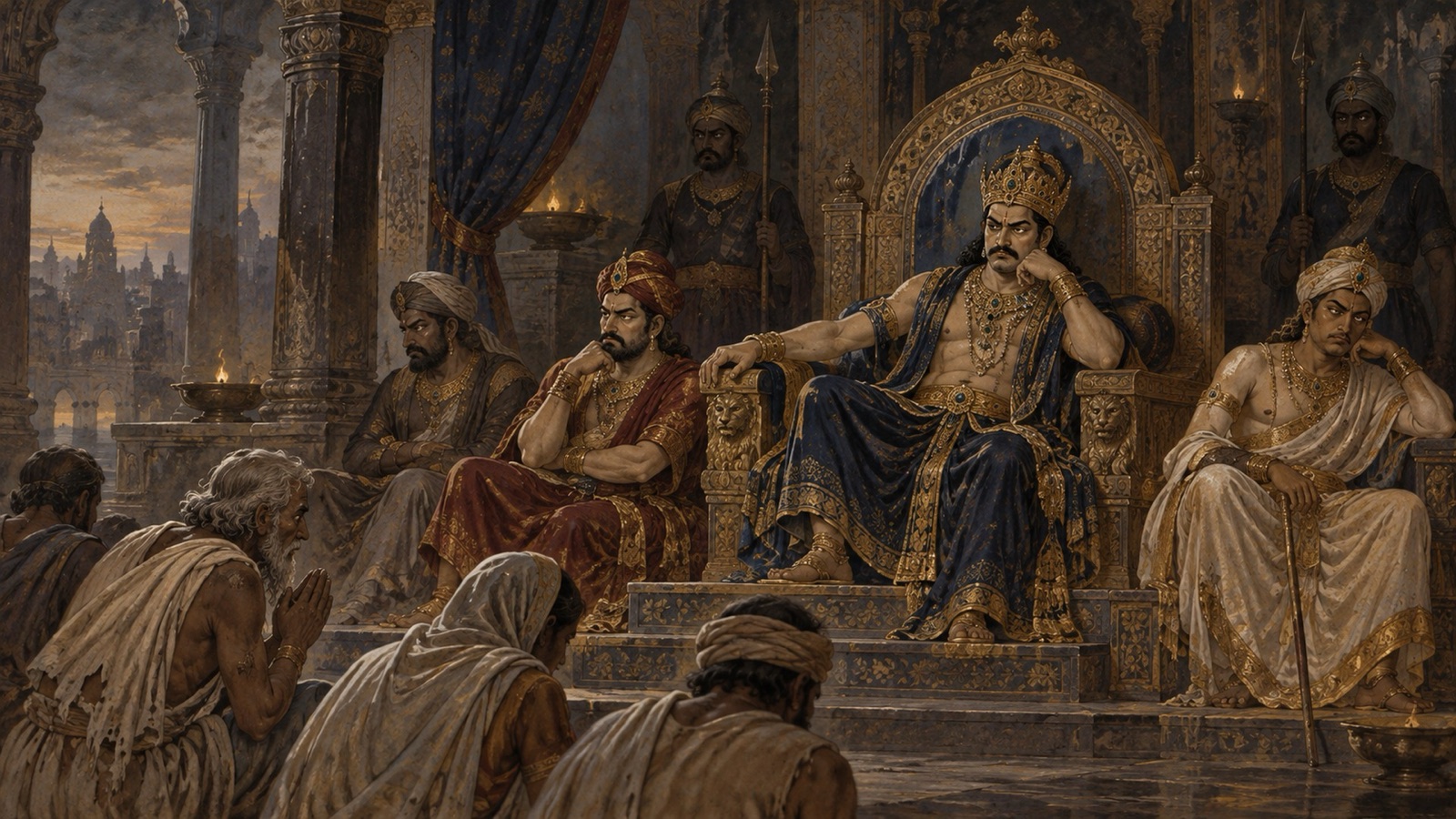
These kings, Sukadeva says, mlecchas in the mere garb of Kshatriyas, will devour their own subjects. And most sorrowful of all is the last note of the chapter: the people themselves, ruled by such men, will begin to imitate their rulers’ habits, manners, and speech, and — oppressed by one another and by their kings alike — will slide together into ruin.
तन्नाथास्ते जनपदास्तच्छीलाचारवादिन: । अन्योन्यतो राजभिश्च क्षयं यास्यन्ति पीडिता: ॥ ४१ ॥
tan-nāthās te janapadās tac-chīlācāra-vādinaḥ anyonyato rājabhiś ca kṣayaṁ yāsyanti pīḍitāḥ
Meaning: The people ruled by such kings will take on their character, conduct, and speech, and — afflicted by one another and by their rulers — will go to their ruin. (Canto 12, Chapter 1, verse 41)
Principal Teachings of This Chapter
1. Every earthly throne is temporary. The entire chapter is a meditation on impermanence: dynasty after mighty dynasty rises, rules its allotted span, and vanishes. What seems permanent to those who hold it is, from the sage’s higher vantage, only a passing wave (verses 1-35).
2. The character of leaders shapes the character of a people. Sukadeva’s closing verses make plain that when rulers abandon righteousness, their subjects follow, until the whole of society decays together. Leadership is never a private matter (verses 40-41).
3. Kali-yuga’s decline is gradual, not sudden. The prophecy traces a slow slide — from noble Kshatriyas, to Shudra kings, to mixed and foreign rulers, to men who are mlecchas in all but name. Recognizing the pattern is itself a spiritual protection (verses 8-42).
4. Even prophecy serves detachment. Sukadeva does not recite this genealogy to satisfy curiosity but to loosen Parikshit’s — and our — attachment to the shifting world of power and possession, turning the heart toward what alone endures (whole chapter).
A Devotional Reflection
There is something quietly humbling in reading a list of kings whose empires once seemed to fill the earth, and who are now scarcely remembered names in a sage’s prophecy. Each of them, in his own hour, must have believed his reign would last; each was certain his throne was solid ground. And yet Sukadeva names them the way one might name the beads on a string — one after another, none lingering. For a king facing death in seven days, this vision is strangely liberating. It says: you are not being singled out by mortality; the whole procession of the mighty walks the same road you now walk. The difference is only whether one walks it clinging to a crown that is already slipping, or walking it with the Name of the Lord upon the lips. The dynasties rise and fall; the shelter of Krishna alone does not move. That is the still point around which this whole turning wheel of kings revolves, and it is the point to which the final Canto will steadily lead us.
A Daily Devotional Practice
Today, call to mind one thing you have quietly been treating as permanent — a position, a possession, a plan for the future. Without anxiety, simply acknowledge that it too belongs to the passing procession of things that rise and set. Then turn, as Parikshit did, toward what does not pass: sit for a few minutes and repeat slowly, with attention, “Om Namo Bhagavate Vasudevaya.” Let the impermanence of the world become, not a source of fear, but a gentle push toward the one shelter that no dynasty and no age can shake.
Conclusion
The first chapter of the Twelfth Canto opens the Bhagavatam’s final movement with a prophecy that is also a teaching. In answering Parikshit’s simple question about who will rule after Krishna’s departure, Sukadeva lays bare the whole future of worldly power — a long, unbroken chain of dynasties, each rising in ambition and dissolving in time, until kingship itself grows dark in the depths of Kali. Yet the sage’s purpose is not to frighten but to free. By showing how utterly transient every crown truly is, he turns the dying king’s heart — and ours — away from the shifting sands of the world and toward the changeless refuge of the Lord. As this final Canto begins, we are quietly reminded that history’s grandest thrones are but foam upon the water, while the Name of Krishna is the shore that does not move.
May the divine wisdom of Srimad Bhagavatam awaken pure devotion within our hearts.
Om Namo Bhagavate Vasudevaya.
Jay Shree Madhav.
References and Attribution
- Primary edition: Gita Press, Śrīmad Bhāgavata Mahāpurāṇa (English, complete), Book Twelve, Discourse 1.
- Series: Srimad Bhagavatam Wisdom · Biswa Sanatan Dharma Seva Trust.
- Presented following the spiritual guidance and recommendation of Pandit Dr. Shri Kashinath Mishra.
This is an original, faithful retelling in the writer’s own words, with brief quoted verses shown in Devanāgarī and transliteration and their meanings given as summaries. It is not a reproduction of any single publisher’s continuous translation or commentary. No affiliation with or endorsement by any publisher is implied.
Jay Shree Madhav