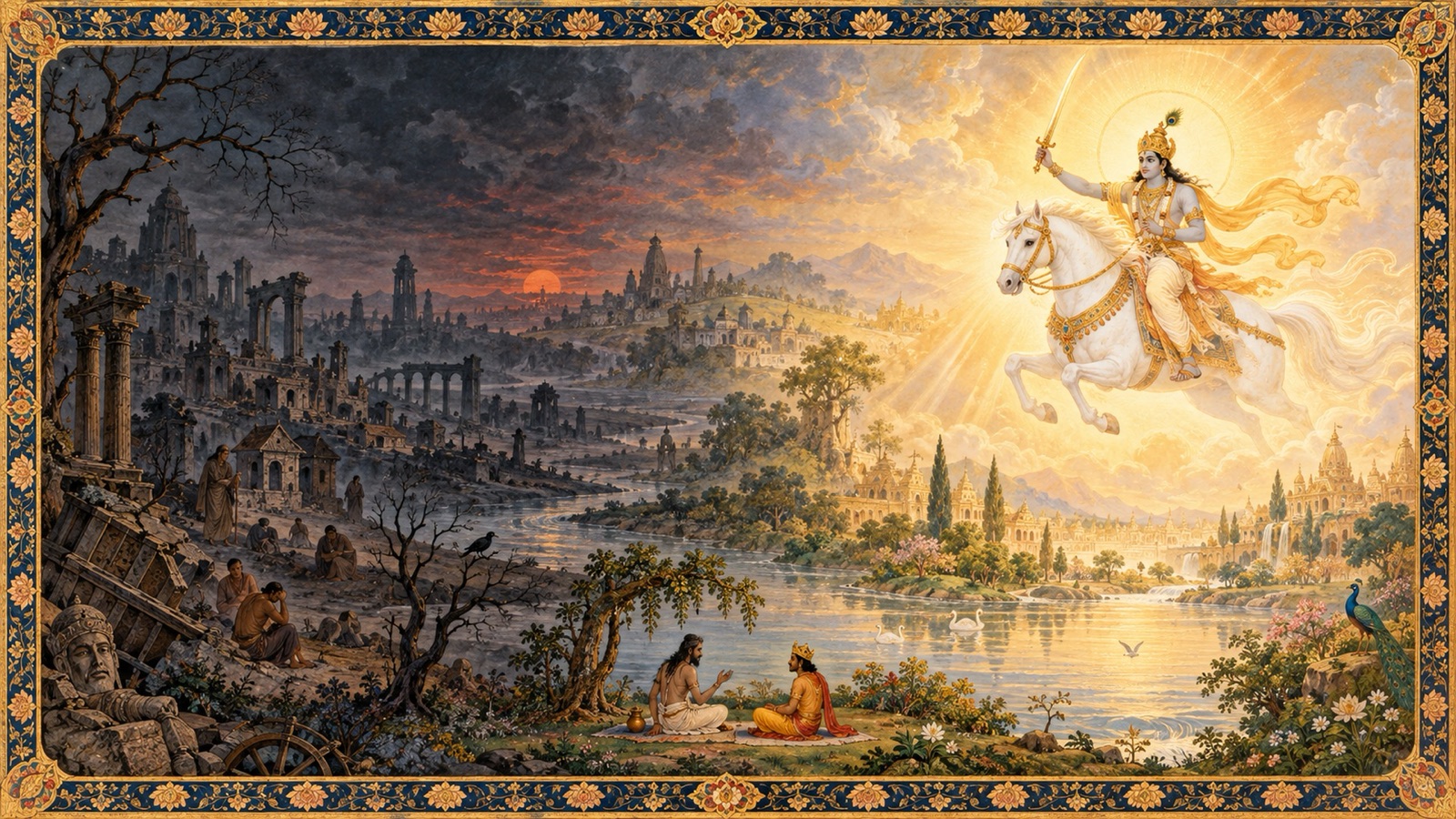
Sukadeva Gosvami describes how, as the age of Kali advances, every virtue steadily wanes and the world falls under the sway of the wicked — until, at the age’s end, the Lord Himself appears as Kalki to restore righteousness and usher in a new Satya-yuga.
Om Namo Bhagavate Vasudevaya.
Om Namo Bhagavate Vasudevaya.
Om Namo Bhagavate Vasudevaya.
Welcome to Srimad Bhagavatam Wisdom, a devotional journey through the sacred histories and teachings of the Srimad Bhagavat Mahapurana. Having traced in the previous chapter the long succession of Kali’s kings, Sukadeva Gosvami now turns from the outward history of dynasties to the inward condition of the age itself. This second chapter of the Twelfth Canto is among the most quoted passages in the entire scripture, for in it the sage lays bare, symptom by symptom, exactly how human society will change as the age of Kali deepens: how truth, mercy, cleanliness, and strength of memory will all quietly fade, how wealth will become the measure of every worth, and how the whole earth will at last be overrun by the greedy and the cruel. Yet the chapter does not end in darkness. Sukadeva looks past the age’s lowest hour to the promised advent of the Lord as Kalki, who will cleanse the world and restore the golden age of Satya-yuga. It is a portrait of decline framed by an unbreakable promise of renewal — a mirror held up to our own times, and a lamp held out beyond them.
Chapter Information
- Scripture: Śrīmad Bhāgavata Mahāpurāṇa
- Canto: 12 (Book Twelve — the final Canto)
- Chapter: 2 (Discourse II)
- Chapter title: The Symptoms of Kali-yuga
- Principal speaker: Sri Sukadeva Gosvami, addressing King Parikshit; framed within Suta Gosvami’s narration to the sages of Naimisharanya
- Principal listener: King Parikshit; and the sages of Naimisharanya
- Main setting: The bank of the Ganga, where Parikshit awaits his death, within the forest hermitage of Naimisharanya
- Central subject: The progressive decline of virtue in the age of Kali, the degradation of human society, the advent of the Lord as Kalki, and the return of Satya-yuga; followed by the reckoning of the ages
- Principal verse range: Canto 12, Chapter 2, verses 1–44
- Primary edition: Gita Press Śrīmad Bhāgavata Mahāpurāṇa
The Slow Fading of Every Virtue
Sukadeva begins with a quiet, sorrowful catalogue. Day after day, he says, by the force of all-powerful Time, the great virtues of humanity will steadily wane — righteousness, truthfulness, purity of mind and body, forgiveness, compassion, length of life, bodily strength, and keenness of memory will all decline together.
श्रीशुक उवाच ततश्चानुदिनं धर्म: सत्यं शौचं क्षमा दया । कालेन बलिना राजन् नङ्क्ष्यत्यायुर्बलं स्मृति: ॥ १ ॥
śrī-śuka uvāca tataś cānu-dinaṁ dharmaḥ satyaṁ śaucaṁ kṣamā dayā kālena balinā rājan naṅkṣyaty āyur balaṁ smṛtiḥ
Meaning: Sri Suka said: Then, day by day, O king, by the force of powerful Time, righteousness, truthfulness, cleanliness, forgiveness, mercy, length of life, bodily strength, and memory will all decline. (Canto 12, Chapter 2, verse 1)
It is a striking way to begin. Sukadeva does not name any villain, any tyrant, any single cause; he names Time itself as the quiet, irresistible force under which these treasures slip away. The tragedy of Kali is not a sudden catastrophe but a slow forgetting.
The Marks of the Age
Sukadeva then paints, in a series of sharp strokes, the values by which the people of Kali will live. Wealth alone, he says, will be taken as the sign of good birth, good conduct, and good qualities; and might alone will decide what is called just and fair.
वित्तमेव कलौ नृणां जन्माचारगुणोदय: । धर्मन्यायव्यवस्थायां कारणं बलमेव हि ॥ २ ॥
vittam eva kalau nṝṇāṁ janmācāra-guṇodayaḥ dharma-nyāya-vyavasthāyāṁ kāraṇaṁ balam eva hi
Meaning: In the age of Kali, wealth alone will be considered the sign of a person’s good birth, proper behaviour, and fine qualities; and might alone will be the deciding factor of law and justice. (Canto 12, Chapter 2, verse 2)
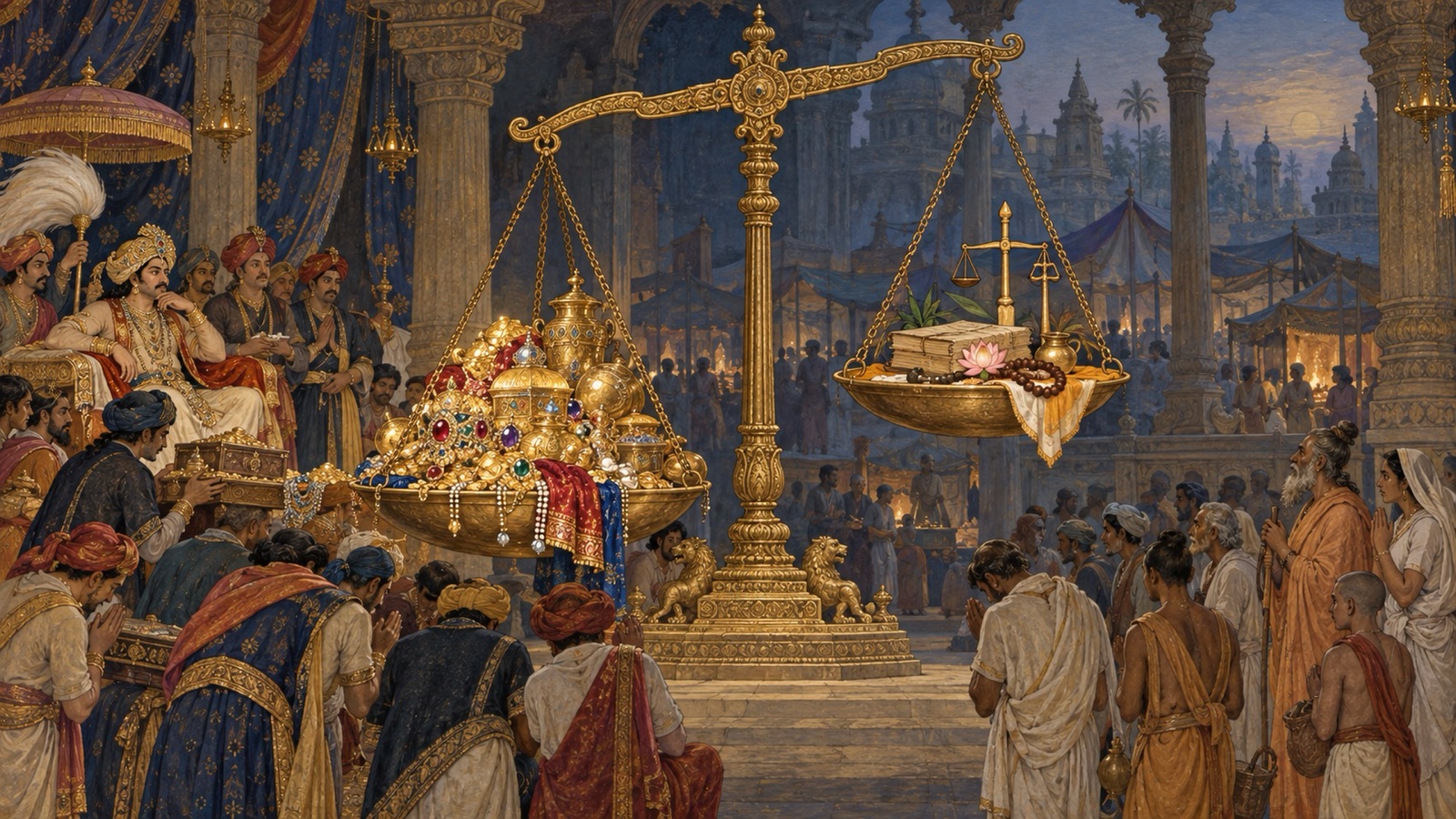
The list continues, unflinching and precise. Marriage will be based on mere mutual consent; success in business will rest on deception. Sacred thread and outward marks will be taken for true religion; a distant bath will be thought as good as a pilgrimage. Volubility of speech will pass for scholarship, poverty will be taken as proof of wickedness, and hypocrisy will be mistaken for virtue. Filling one’s own belly will become the whole aim of life, and boldness of tongue will pass for honesty. Reading these verses across the centuries, one feels the sage is holding up a mirror not only to some distant future but to the enduring temptations of every human heart.
A World Overrun
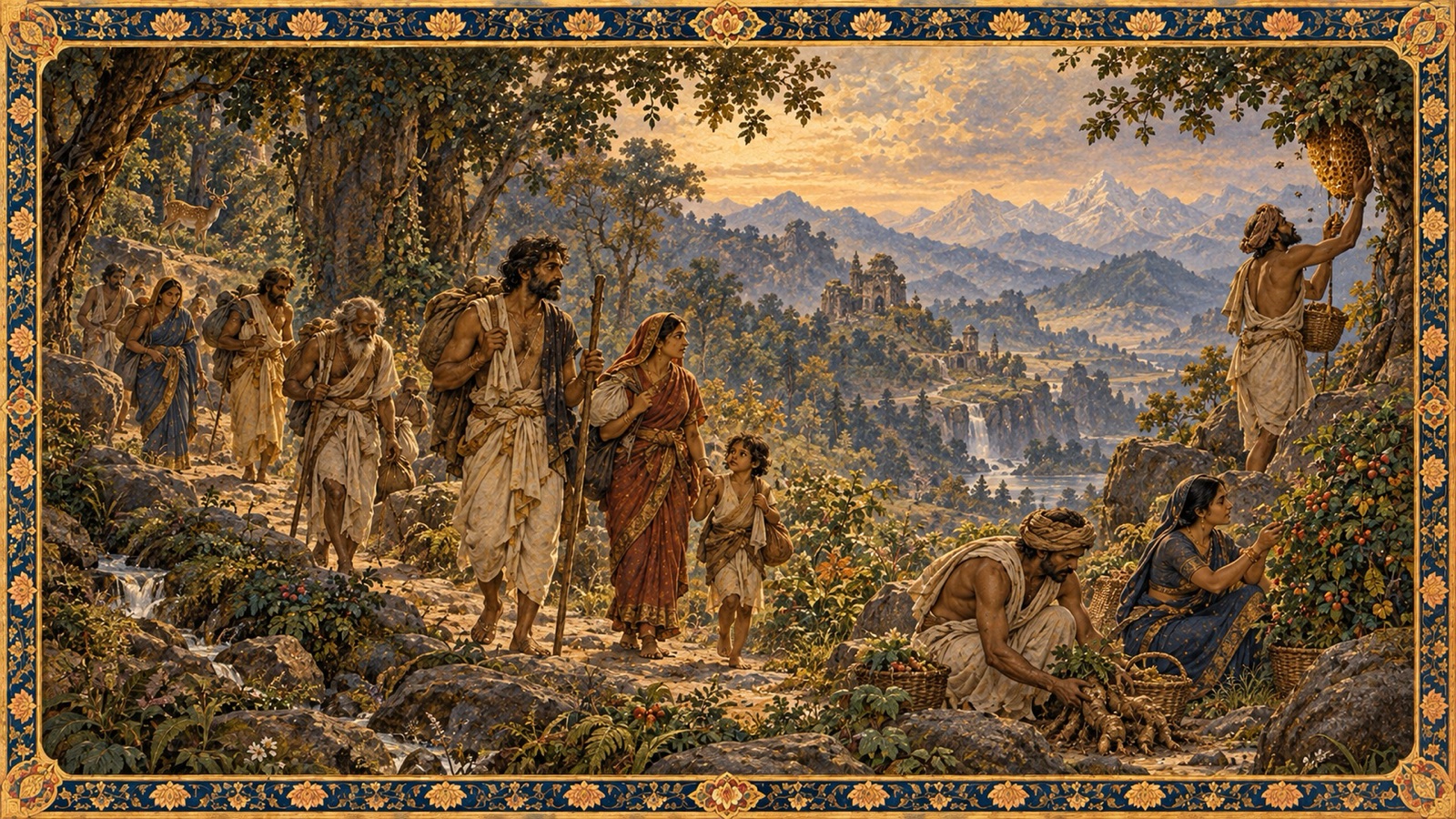
As the age sinks lower, Sukadeva says, the strongest among all classes will simply seize power and rule. Robbed of their wealth and even their families by greedy, merciless rulers who behave like bandits, ordinary people will flee to the mountains and forests, living on leaves, roots, wild honey, and fruit. Oppressed by famine and crushing taxation, tormented by hunger, thirst, and anxiety, human beings will grow short-lived — their span reduced to twenty or thirty years — and stunted in body. The very order of the Vedas, the graded harmony of the varnas and ashramas, will be all but lost; rulers will become thieves, and the higher qualities of humanity will nearly vanish from the earth.
The Advent of Kalki
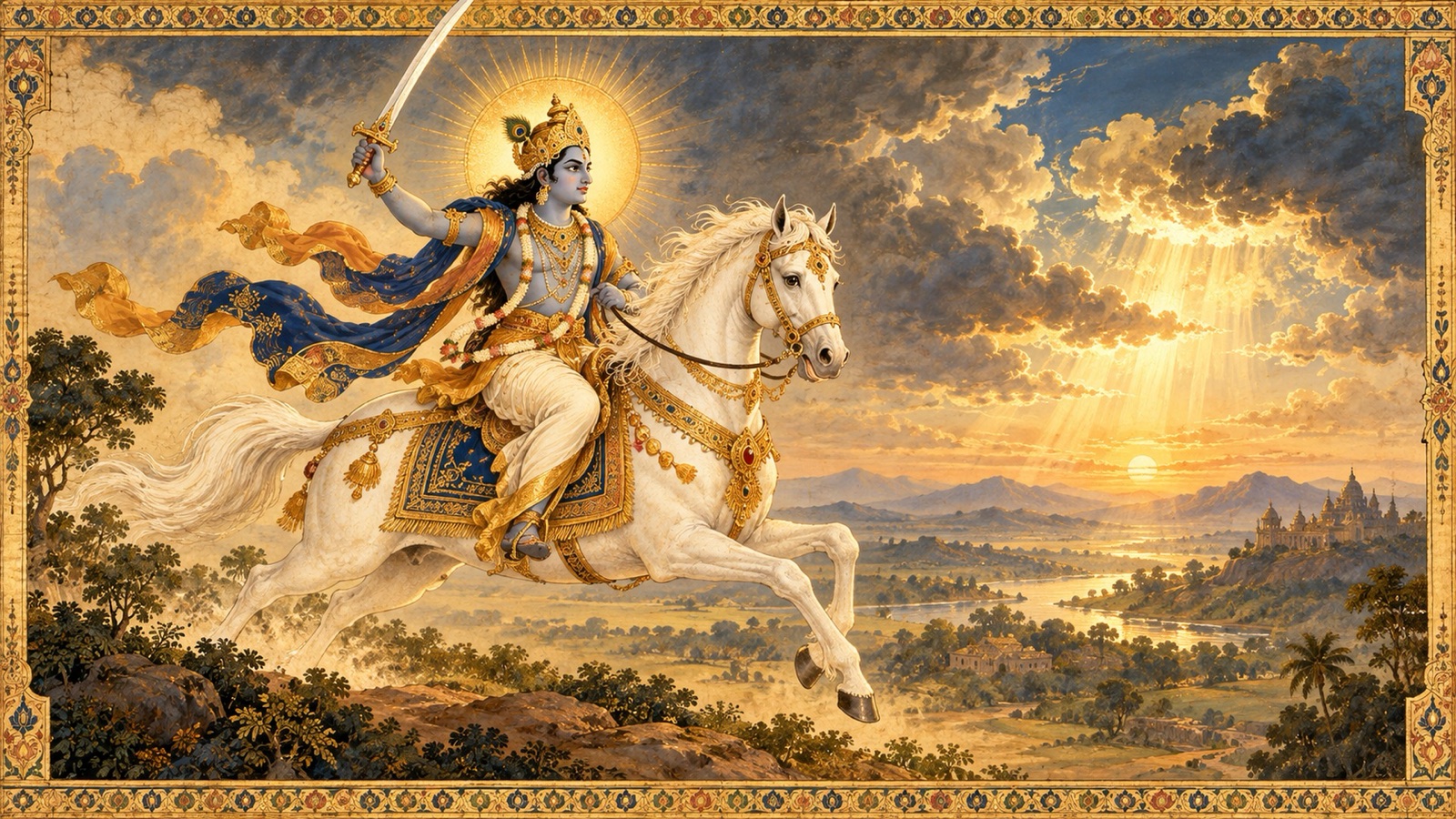
It is precisely when the age has sunk to its darkest that Sukadeva’s tone lifts, for he now reveals the great promise that redeems the whole prophecy. When the career of Kali is nearly run, the Lord — the Soul of the universe, adored by all creation — will Himself descend in a form of pure goodness to protect the righteous and restore virtue. He will appear, Sukadeva says, under the name of Kalki, in the home of the great-souled Brahmana Vishnuyasha, foremost of the village of Shambhala.
शम्भलग्राममुख्यस्य ब्राह्मणस्य महात्मन: । भवने विष्णुयशस: कल्कि: प्रादुर्भविष्यति ॥ १८ ॥
śambhala-grāma-mukhyasya brāhmaṇasya mahātmanaḥ bhavane viṣṇuyaśasaḥ kalkiḥ prādurbhaviṣyati
Meaning: In the home of the great soul Vishnuyasha, the chief Brahmana of the village of Shambhala, the Lord Kalki will appear. (Canto 12, Chapter 2, verse 18)
Sukadeva describes the descent in vivid, glorious detail. Mounted upon a swift horse named Devadatta, wielding the eight mystic powers and endowed with matchless splendour and every virtue, the Lord of the universe will range across the earth, and with His sword He will destroy by the tens of millions the robbers who wear the mere disguise of kings.
अश्वमाशुगमारुह्य देवदत्तं जगत्पति: । असिनासाधुदमनमष्टैश्वर्यगुणान्वित: ॥ १९ ॥
aśvam āśu-gam āruhya devadattaṁ jagat-patiḥ asināsādhu-damanam aṣṭaiśvarya-guṇānvitaḥ
Meaning: Mounted upon the swift horse Devadatta, the Lord of the universe — subduer of the wicked, endowed with the eight mystic perfections and matchless splendour — will range across the earth. (Canto 12, Chapter 2, verse 19)
The Return of the Golden Age
Once the robber-kings are destroyed, Sukadeva says, the minds of the people of city and countryside will grow pure, refreshed as by a sacred breeze carrying the fragrance of the Lord’s own person. With Vasudeva present in their hearts, their descendants will grow strong once more, and a new race of Sattvika, virtuous disposition will be born. When Lord Hari, the guardian of Dharma, appears as Kalki, Satya-yuga — the golden age of truth — will prevail again upon the earth.
यदावतीर्णो भगवान् कल्किर्धर्मपतिर्हरि: । कृतं भविष्यति तदा प्रजासूतिश्च सात्त्विकी ॥ २३ ॥
yadāvatīrṇo bhagavān kalkir dharma-patir hariḥ kṛtaṁ bhaviṣyati tadā prajā-sūtiś ca sāttvikī
Meaning: When the Lord Hari, the protector of Dharma, descends as Kalki, Satya-yuga will begin again, and the offspring of the people will be of a virtuous, Sattvika nature. (Canto 12, Chapter 2, verse 23)
The Reckoning of the Ages
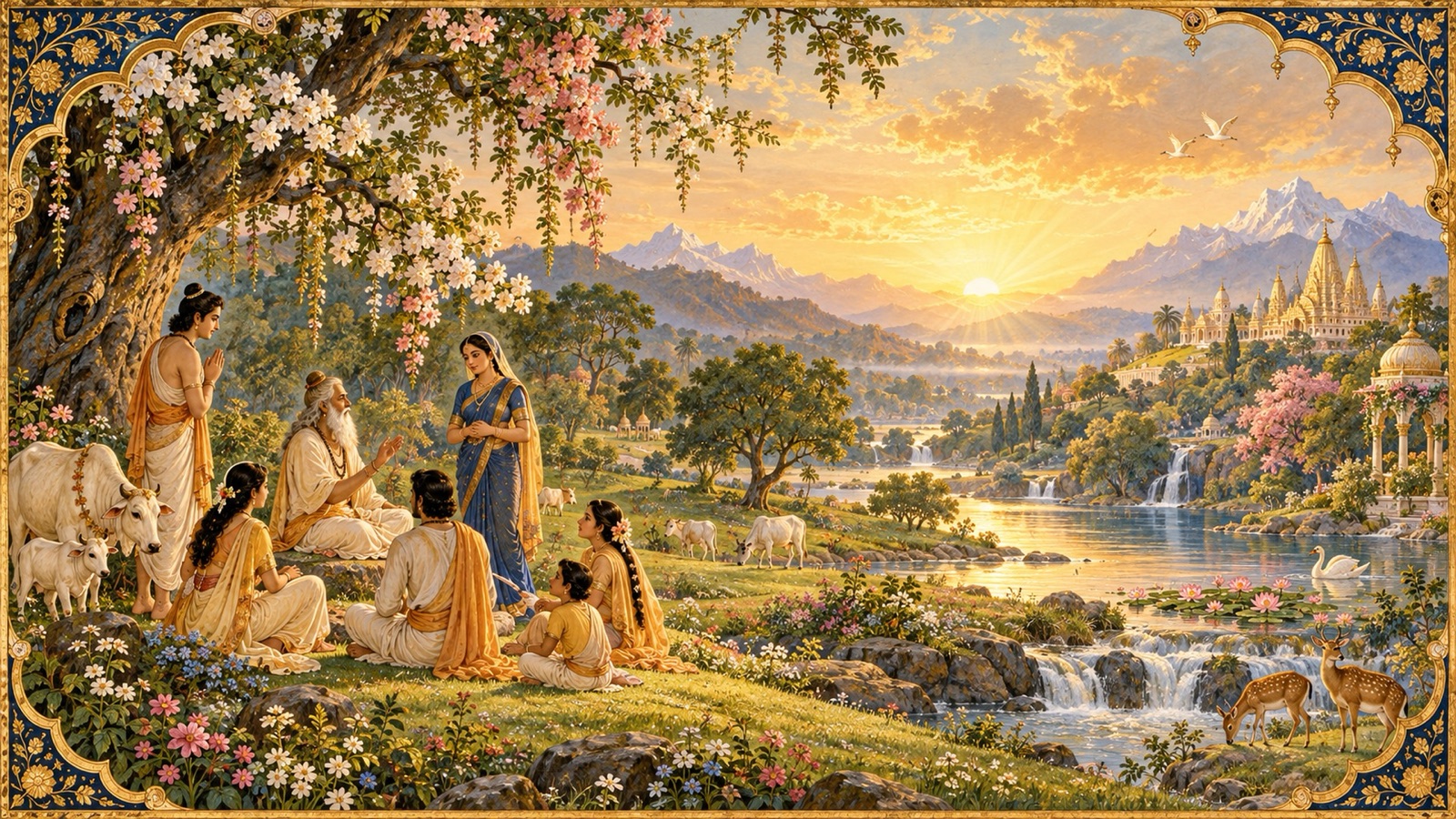
Sukadeva closes the chapter by grounding this vast vision in the measured turning of the heavens. He tells Parikshit that he has now briefly named the kings of the solar and lunar dynasties — past, present, and yet to come. He gives the span from Parikshit’s own birth to the coronation of Nanda, and explains the movement of the seven stars of the Great Bear through the lunar mansions, by which the ages may be reckoned. Most solemnly, he tells the king that the very moment Lord Krishna returned to His heavenly abode, the age of Kali entered the world; so long as the Lord of Lakshmi had touched the earth with His feet, Kali could not prevail. And he offers, at the last, the deepest reassurance of all: at the end of the age, Krita-yuga — the age of truth — will dawn again, and the minds of men will once more reveal to them the true nature of the Self.
Principal Teachings of This Chapter
1. Decline comes gently, under the hand of Time. Sukadeva names no single villain for Kali’s darkness — only Time itself, quietly wearing away every virtue. This should make us watchful, not fearful, of the slow erosion of goodness within our own hearts (verse 1).
2. Beware the false measures of the age. Wealth mistaken for worth, force for justice, cleverness for wisdom, show for holiness — the marks of Kali are precisely the values we must consciously refuse to live by (verses 2-6).
3. The Lord never abandons the world. However dark the age grows, the descent of Kalki stands as an unbreakable promise: righteousness will be restored, and the golden age will return (verses 17-23).
4. Krishna’s presence is itself the shield against Kali. So long as the Lord touched the earth, Kali could not take hold — a quiet teaching that the surest protection against the age’s darkness is to keep the Lord present in one’s own heart (verses 30-33).
A Devotional Reflection
It is easy to read this chapter as a grim forecast and stop there. But Sukadeva does not offer it as despair; he offers it as clear sight. To know the marks of Kali — to recognize when we are tempted to measure a person by their wealth, to mistake loudness for truth or appearance for goodness — is already to be partly free of them. The sage is not asking us to flee the age but to live within it awake, refusing its false measures and keeping the fragrance of Vasudeva in the heart. And underneath the whole sober catalogue runs a current of hope that never breaks: the same Time that wears down every virtue is itself in the hands of the Lord, who has already promised to descend when the night is darkest. For the devotee, then, this chapter is not a prophecy of doom but an invitation — to be, even now, one of those pure-hearted souls in whom the golden age has quietly already begun.
A Daily Devotional Practice
Today, notice one of the “marks of Kali” as it arises in your own mind — a moment when you find yourself measuring someone by their wealth, their status, or their cleverness of speech. Gently set that measure aside, and instead see the soul before you as the dwelling place of the same Lord who has promised to descend for the good of all. Then, keeping His presence in your heart as your shield against the age, repeat slowly, a few times: “Om Namo Bhagavate Vasudevaya.” In this small act of refusing the age’s false measures, the light of Satya-yuga takes root, here and now, within you.
Conclusion
The second chapter of the Twelfth Canto is the Bhagavatam’s unflinching diagnosis of our age — and its luminous cure. Sukadeva Gosvami describes with piercing accuracy how the age of Kali erodes truth, mercy, and every human virtue, and how the world sinks under the weight of greed and cruelty; yet he frames this whole descent within the certainty of the Lord’s return as Kalki, who will cleanse the earth and restore the golden age of truth. The chapter’s power lies in this balance: it neither flatters the age nor despairs of it, but calls the listener to live awake within it, keeping the Lord in the heart as the one sure refuge no darkness can overcome. As Sukadeva reminds the dying king, the very hour Krishna departed, Kali began — and the very presence of the Lord in a single heart is enough to hold that darkness at bay.
May the divine wisdom of Srimad Bhagavatam awaken pure devotion within our hearts.
Om Namo Bhagavate Vasudevaya.
Jay Shree Madhav.
References and Attribution
- Primary edition: Gita Press, Śrīmad Bhāgavata Mahāpurāṇa (English, complete), Book Twelve, Discourse 2.
- Series: Srimad Bhagavatam Wisdom · Biswa Sanatan Dharma Seva Trust.
- Presented following the spiritual guidance and recommendation of Pandit Dr. Shri Kashinath Mishra.
This is an original, faithful retelling in the writer’s own words, with brief quoted verses shown in Devanāgarī and transliteration and their meanings given as summaries. It is not a reproduction of any single publisher’s continuous translation or commentary. No affiliation with or endorsement by any publisher is implied.
Jay Shree Madhav