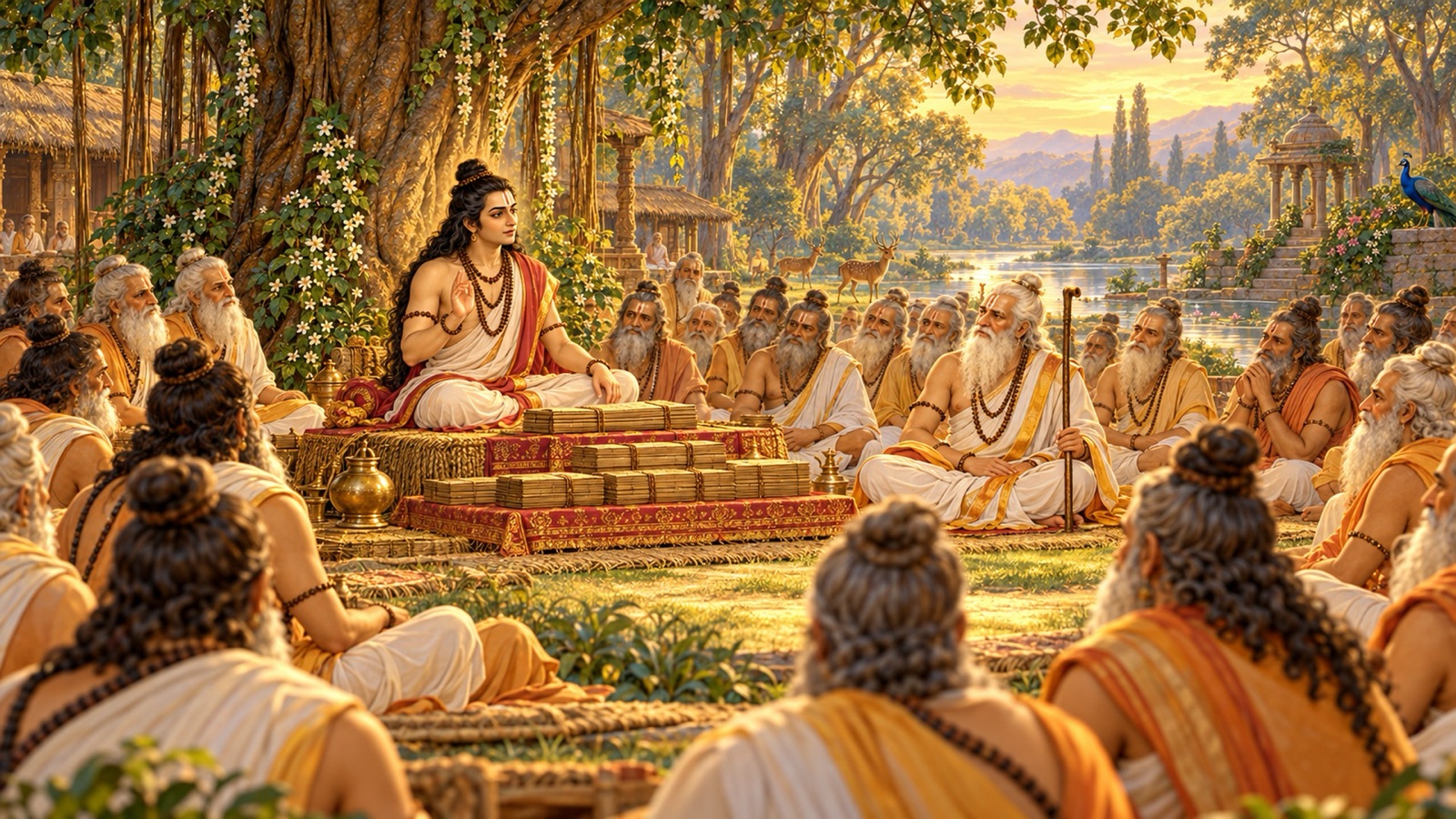
Seated before the assembled sages of Naimisharanya, Suta Gosvami looks back across the whole of the Srimad Bhagavatam — recalling, book by book, the sacred stream of stories he has narrated, and glorifying the sanctifying power of the Lord’s name.
Om Namo Bhagavate Vasudevaya.
Om Namo Bhagavate Vasudevaya.
Om Namo Bhagavate Vasudevaya.
Welcome to Srimad Bhagavatam Wisdom, a devotional journey through the sacred histories and teachings of the Srimad Bhagavat Mahapurana. As the great narration draws toward its close, Suta Gosvami pauses to look back over the whole of the Bhagavatam. In this twelfth chapter he gathers the entire work into a single retrospective sweep, touching every major thread already told — Pariksit’s story, Narada’s counsel, the Lord’s many descents, the lineages and saints who carried the tradition forward, and all that unfolded until the world itself dissolved and the king departed this life. He then turns to praise what makes the scripture itself sacred: the purifying power carried in the Lord’s name and deeds, and the specific merit earned by those who hear, study, or give away copies of this Purana — closing the chapter with heartfelt obeisance to Lord Vishnu and to Suka, the sage whose voice first carried this Purana to Pariksit. It is a chapter that gathers the whole scripture into a single grateful glance.
Chapter Information
- Scripture: Śrīmad Bhāgavata Mahāpurāṇa
- Canto: 12 (Book Twelve — the final Canto)
- Chapter: 12 (Discourse XII)
- Chapter title: A Synopsis of the Twelve Cantos of Srimad Bhagavatam
- Principal speaker: Suta Gosvami (Ugrashrava), narrating to the sages of Naimisharanya
- Principal listener: The sages of Naimisharanya, led by Saunaka
- Main setting: The forest hermitage of Naimisharanya
- Central subject: A book-by-book summary of the entire Srimad Bhagavatam, the glory of the Lord’s name and story, and the rewards of hearing, reading, and gifting the Purana
- Principal verse range: Canto 12, Chapter 12, verses 1–68
- Primary edition: Gita Press Śrīmad Bhāgavata Mahāpurāṇa
Suta’s Benediction
Suta begins again with a heartfelt salutation — to the exalted virtue of devotion to Sri Hari, and to Sri Krishna, the Maker of the universe — and, bowing once more to the Brahmanas, promises to expound the eternal verities discussed in the Bhagavatam.
सूत उवाच नमो धर्माय महते नम: कृष्णाय वेधसे । ब्रह्मणेभ्यो नमस्कृत्य धर्मान् वक्ष्ये सनातनान् ॥ १ ॥
sūta uvāca namo dharmāya mahate namaḥ kṛṣṇāya vedhase brahmaṇebhyo namaskṛtya dharmān vakṣye sanātanān
Meaning: Suta said: Salutations to the exalted virtue of devotion, salutations to Sri Krishna the Creator; and bowing to the Brahmanas, I shall now expound the eternal truths. (Canto 12, Chapter 12, verse 1)
He has narrated, he says, this wonderful story of Lord Vishnu — worth hearing for anyone in whom a trace of humanity remains — in which stand celebrated Sri Hari the dispeller of all sins, the transcendent Brahma who is the source and end of creation, spiritual enlightenment and the means of awakening it, and the discipline of devotion together with dispassion.
The Sweep of the Twelve Cantos
Suta then recalls the contents of the twelve Books in order. The First Canto told of the birth of Pariksit, the previous life of Narada, and the king’s vow to fast until death after a Brahmana’s curse, opening his dialogue with Suka. The Second taught the yogic ascent of the departing soul, the dialogue of Narada and Brahma, and the descents of the Lord. The Third recounted the conversations of Vidura with Uddhava and Maitreya, the evolution of creation from Prakriti, the slaying of Hiranyaksha by the divine Boar, and the descent of Lord Kapila with His teaching to Devahuti.
The Fourth and Fifth Cantos gave the progeny of the lords of creation, the destruction of Daksha’s sacrifice, the narratives of Dhruva and Prithu, the story of Priyavrata, Rishabha and Bharata, and the description of the earth, the spheres, and the subterranean worlds. The Sixth and Seventh told the story of Ajamila, the birth and fall of Vritra, Hiranyakashipu and Hiranyaksha, and the great narrative of the devotee Prahlada.
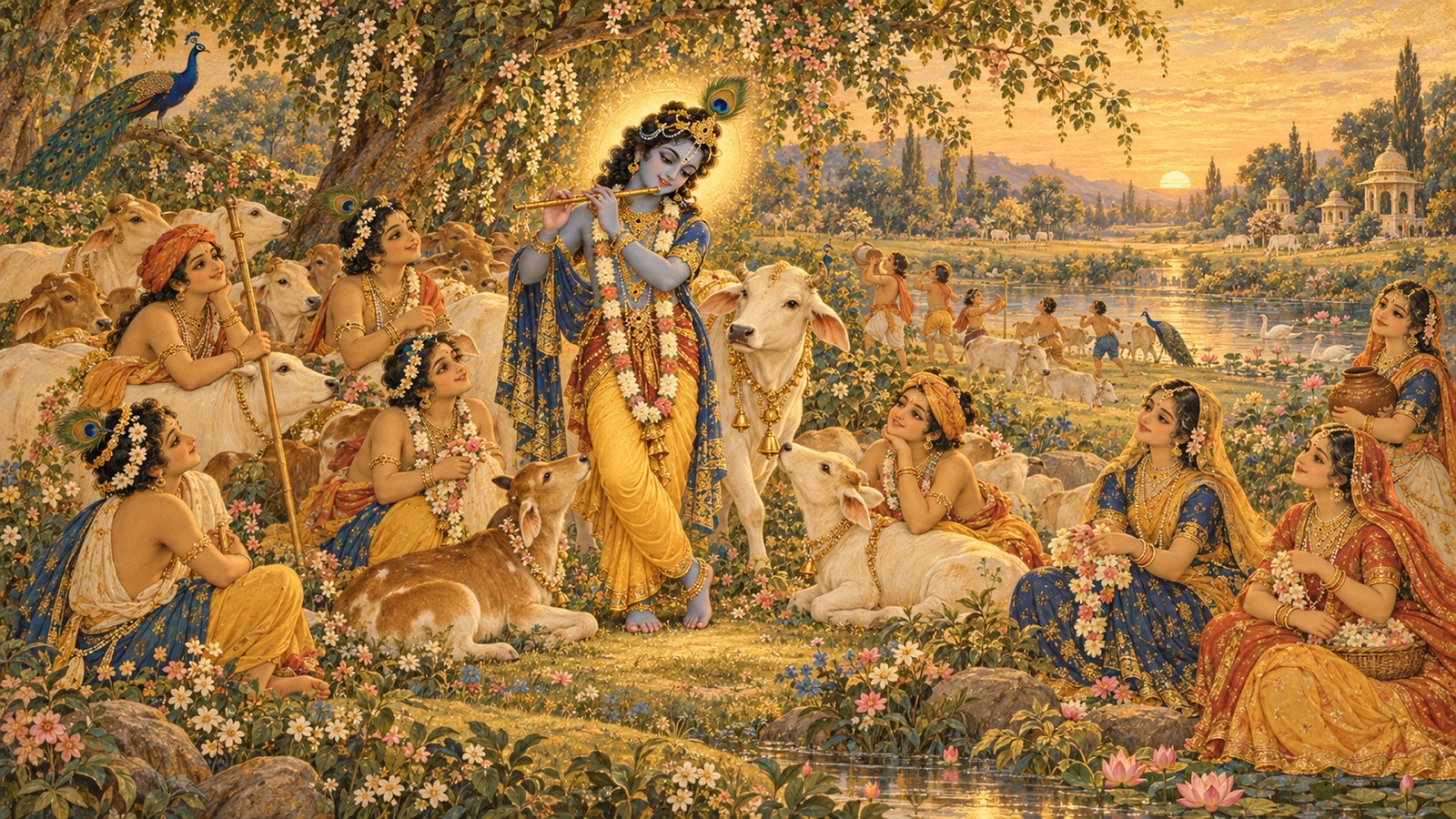
The Eighth and Ninth recounted the Manvantaras, the deliverance of the king of elephants, the churning of the ocean of milk, the war of the gods and demons, and the dynasties of kings — the solar and lunar lines, and the sanctifying story of Lord Sri Rama. The Tenth Canto, the heart of the Bhagavatam, recounted the descent of the Lord as Sri Krishna — His appearance in the house of Vasudeva, His childhood in Gokula, the slaying of Putana and many demons, the subduing of Kaliya, the lifting of Mount Govardhana, and His countless pastimes, down to the relief of the earth’s burden through the sons of Pandu. The Eleventh Canto told how the Lord withdrew His own dynasty, the great dialogue of Uddhava and Sri Krishna teaching the whole of Self-knowledge, and the Lord’s concealing of His mortal semblance. And the Twelfth, the present Book, tells of the age of Kali, the passing of King Pariksit, the branches of the Vedas, the story of Markandeya, and the glory of the Lord’s form and of the Sun-god.
The Glory of the Lord’s Name
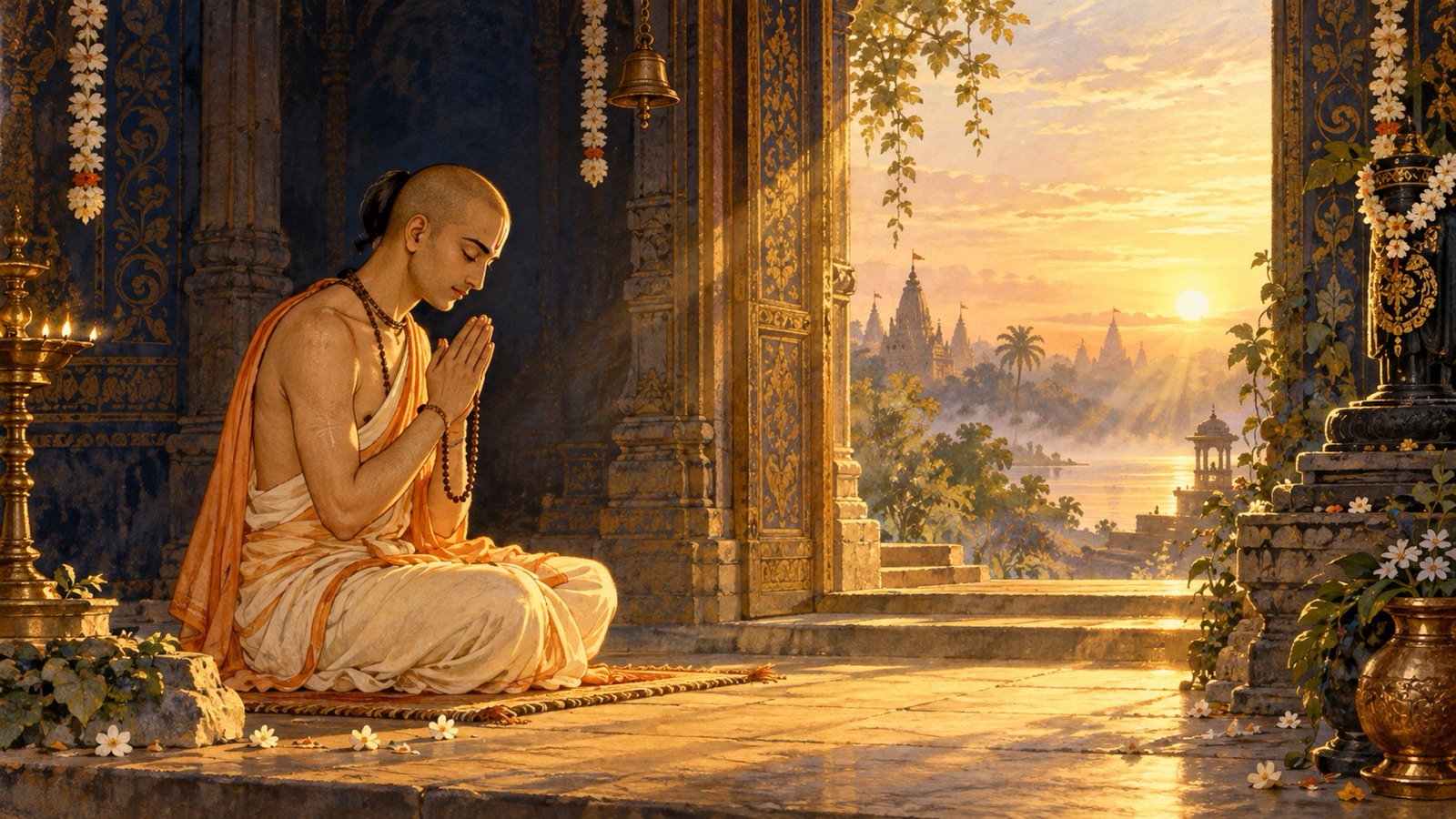
Having summed up the whole scripture, Suta turns to the sanctifying power of the Lord’s name and story. Even a person who cries out “Hail to Hari!” involuntarily — when he stumbles, falls, is in pain, or sneezes — is absolved of all sin.
इति चोक्तं द्विजश्रेष्ठा यत्पृष्टोऽहमिहास्मि व: । लीलावतारकर्माणि कीर्तितानीह सर्वश: ॥ ४६ ॥
iti coktaṁ dvija-śreṣṭhā yat pṛṣṭo ’ham ihāsmi vaḥ līlāvatāra-karmāṇi kīrtitānīha sarvaśaḥ
Meaning: Thus, O best of the twice-born, I have told you all that you asked of me; and the deeds of the Lord’s playful descents have here been fully glorified. (Canto 12, Chapter 12, verse 46)
Entering the mind of those who chant His name or hear His glory, Suta says, the infinite Lord puts an end to all their misfortune, as the sun dispels darkness. That speech alone is truly blessed and sacred through which the glory of Lord Vishnu is sung; and that composition, though faulty in diction, which bears the names of the Lord, wipes out the sins of the people. Devotion to the Lord is the crown of all wisdom and action; ceaseless thought of the lotus-feet of Sri Krishna ends all evils, purifies the intellect, and awakens spiritual enlightenment and dispassion.
The Rewards of the Bhagavata
Suta then declares the blessings of the Purana. He who repeats or reverently hears it purifies his very soul; he who listens to it on the eleventh or twelfth day of a fortnight enjoys long life; and one who reads it at Pushkara, Mathura, or Dwaraka, abstaining from food, is freed from the fear of rebirth. Gods, sages, and forefathers confer desired boons on the one who recites or hears it. A Brahmana who studies it attains true insight, a Kshatriya sovereignty, a Vaishya prosperity, and a Shudra is absolved of sin; and every devout hearer bids fair to attain the highest goal.
कलिमलसंहतिकालनोऽखिलेशो हरिरितरत्र न गीयते ह्यभीक्ष्णम् । इह तु पुनर्भगवानशेषमूर्ति: परिपठितोऽनुपदं कथाप्रसङ्गै: ॥ ६६ ॥
kali-mala-saṁhati-kālano ’khileśo harir itaratra na gīyate hy abhīkṣṇam iha tu punar bhagavān aśeṣa-mūrtiḥ paripaṭhito ’nu-padaṁ kathā-prasaṅgaiḥ
Meaning: Sri Hari, the Lord of all, who destroys the accumulated impurities of the age of Kali, is not sung so constantly elsewhere; but in this work the Lord, appearing in all forms, stands celebrated at every step through relevant episodes. (Canto 12, Chapter 12, verse 66)
Salutation to Vishnu and Suka
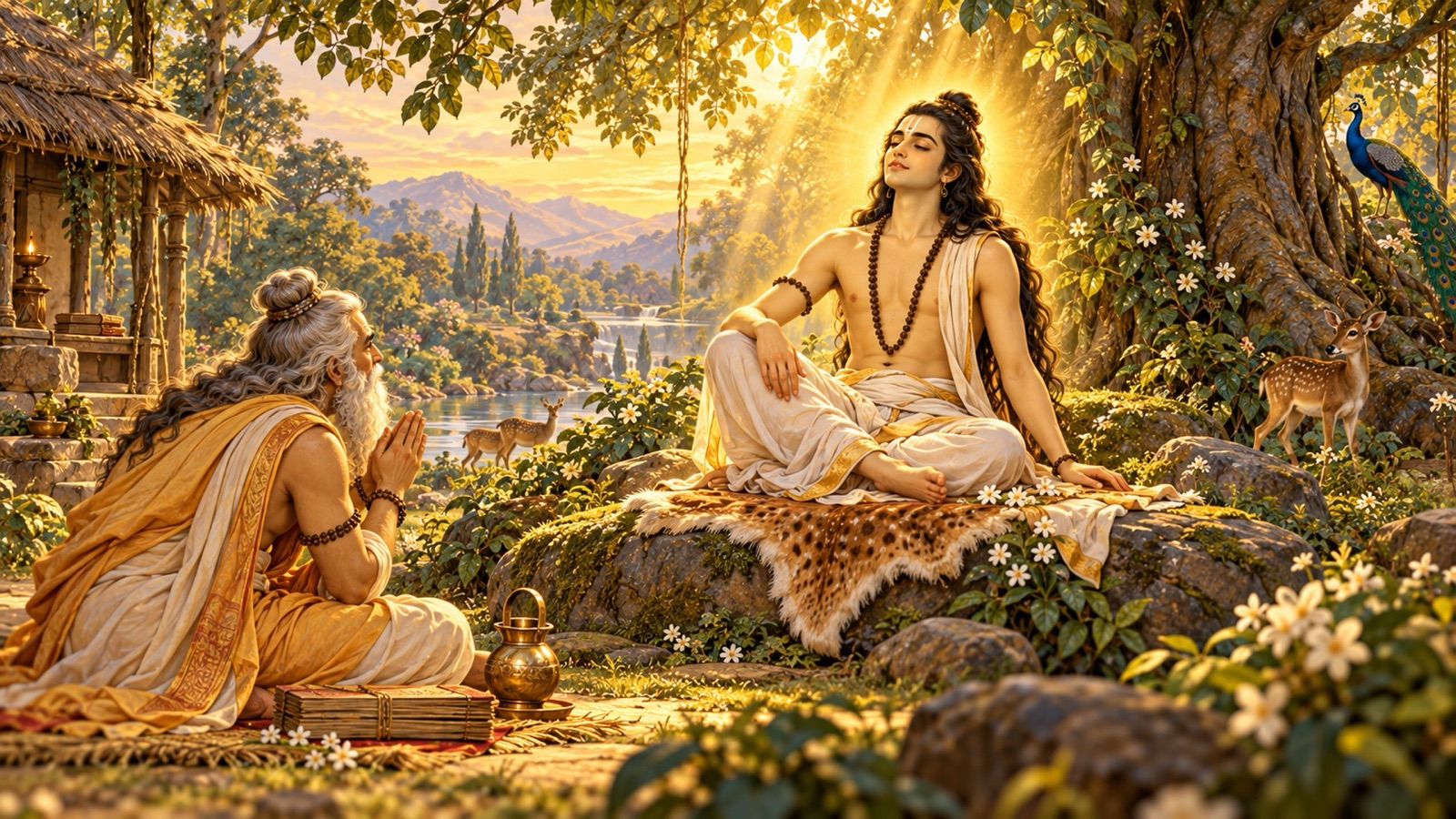
Suta closes the chapter with reverent salutations — bowing to the birthless, infinite Lord Vishnu, whose glory is hardly known even to Brahma, Indra, and Shiva, and who has evolved in His own Self an abode in the form of the animate and inanimate creation. And he bows, at last, to the sage Suka, the son of Vyasa, whose mind, though full in the bliss of the Self, was drawn by the charming stories of the Lord to reveal this Bhagavata-Purana for the good of all.
उपचितनवशक्तिभि: स्व आत्म- न्युपरचितस्थिरजङ्गमालयाय । भगवत उपलब्धिमात्रधाम्ने सुरऋषभाय नम: सनातनाय ॥ ६८ ॥
upacita-nava-śaktibhiḥ sva ātmany uparacita-sthira-jaṅgamālayāya bhagavata upalabdhi-mātra-dhamne sura-ṛṣabhāya namaḥ sanātanāya
Meaning: Salutations to the eternal Lord, foremost of the gods, whose true nature is pure consciousness, and who has evolved within His own Self — through His strengthened nine potencies — an abode in the form of the moving and unmoving creation. (Canto 12, Chapter 12, verse 68)
Principal Teachings of This Chapter
1. The whole Bhagavatam is a single stream of devotion. From Pariksit to Krishna to the final dissolution, every Canto turns upon one theme — the glory of Sri Hari and the awakening of pure devotion (verses 5-44).
2. The Lord’s name sanctifies even when uttered without intent. So great is its power that a cry of “Hari!” in distress, or by accident, absolves the one who speaks it — how much more when chanted with love (verses 46-47).
3. Speech and thought find their fulfilment in the Lord. That word alone is blessed which sings His glory, and ceaseless remembrance of His feet purifies the heart and awakens wisdom and dispassion (verses 48-54).
4. The Bhagavata is the Lord present in every line. Unlike other works, this Purana celebrates the Lord “at every step,” so that to read it is to keep company with Him continually (verse 66).
A Devotional Reflection
There is something deeply moving in a teacher pausing, near the end, to gather up everything he has said. Suta’s synopsis is not a dry table of contents; it is the grateful recollection of one who has lived inside these stories and wants us to see them whole. Behind the long procession of kings and sages and demons, one figure moves through every book — Sri Hari, descending, teaching, protecting, playing. And Suta’s tenderest point is also his simplest: that the power of these stories does not depend on our worthiness. A man who merely stumbles and cries “Hari!” is touched by grace; a composition clumsy in language but bearing the Lord’s name still purifies those who hear it. This is the great generosity of the Bhagavatam — that it meets us wherever we are, and that even a single sincere utterance of the holy name opens the door. To hold this whole scripture in one glance, as Suta does here, is to see that its thousands of verses are really one long invitation to remember the Lord.
A Daily Devotional Practice
Today, take Suta’s synopsis to heart by holding the whole Bhagavatam in a single grateful thought — the one story of the Lord that runs through all twelve Cantos. Then honour the chapter’s central teaching about the holy name: let the name of the Lord rise to your lips not only in worship but in the small moments of the day — at a stumble, a sigh, a moment of relief — so that “Hari” becomes the natural cry of your heart. If you can, read or hear even a few verses of the Bhagavatam, remembering that the Lord is present “at every step” within it. Close by chanting “Om Namo Bhagavate Vasudevaya” a fixed number of times, offering gratitude for the whole sacred stream of this Purana.
Conclusion
The twelfth chapter of the Twelfth Canto is the Bhagavatam looking lovingly upon itself. Suta Gosvami recalls, book by book, the entire sweep of the scripture — from the birth of Pariksit and the descents of the Lord, through the great devotees and dynasties and the endless pastimes of Sri Krishna, to the dissolution of the world and the passing of the saintly king. He then glorifies the sanctifying power of the Lord’s name and story, declares the rich blessings of hearing, reading, and gifting the Purana, and offers reverent salutations to Lord Vishnu and to Suka, who first revealed the Bhagavatam. Beneath its summary lies a single luminous truth: that all these stories are one story, the glory of Sri Hari, and that to remember Him — even by a single word — is the whole purpose of the sacred text.
May the divine wisdom of Srimad Bhagavatam awaken pure devotion within our hearts.
Om Namo Bhagavate Vasudevaya.
Jay Shree Madhav.
References and Attribution
- Primary edition: Gita Press, Śrīmad Bhāgavata Mahāpurāṇa (English, complete), Book Twelve, Discourse 12.
- Series: Srimad Bhagavatam Wisdom · Biswa Sanatan Dharma Seva Trust.
- Presented following the spiritual guidance and recommendation of Pandit Dr. Shri Kashinath Mishra.
This is an original, faithful retelling in the writer’s own words, with brief quoted verses shown in Devanāgarī and transliteration and their meanings given as summaries. It is not a reproduction of any single publisher’s continuous translation or commentary. No affiliation with or endorsement by any publisher is implied.
Jay Shree Madhav