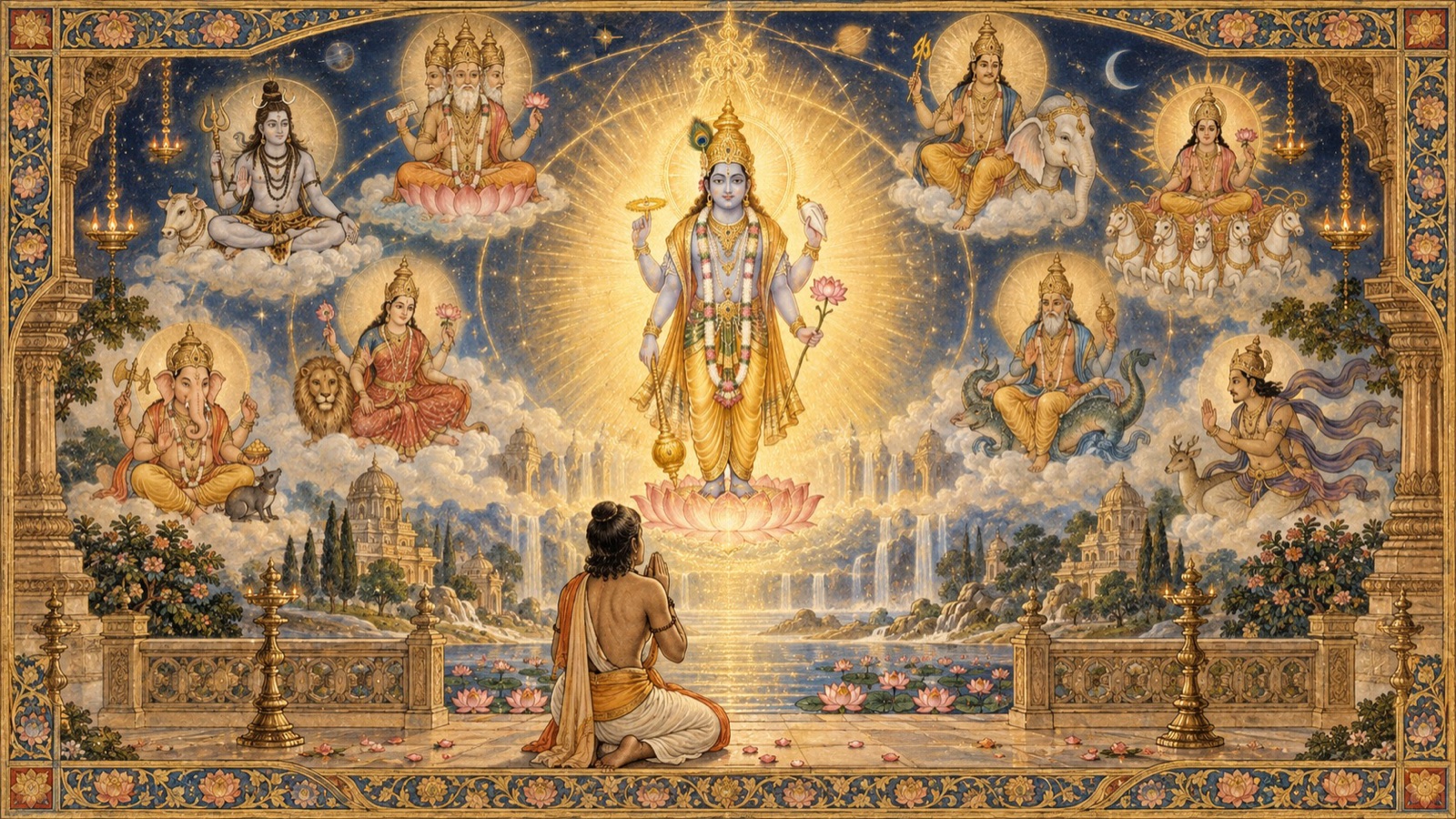
A ring of demigods surrounds a radiant assembly, while a single devotee turns past them all toward the Supreme Person — the chapter’s central teaching in one image.
Om Namo Bhagavate Vasudevaya.
Om Namo Bhagavate Vasudevaya.
Om Namo Bhagavate Vasudevaya.
Welcome to Srimad Bhagavatam Wisdom, a devotional journey through the sacred histories and teachings of the Srimad Bhagavat Mahapurana. Sukadeva Goswami now brings his long answer to King Parikshit’s original question to its close. Having taught, across the first two chapters, meditation on the Lord’s cosmic form and His intimate four-armed form in the heart, Sukadeva turns briefly to something almost like an index: which deity should be approached for which worldly desire. But the catalogue exists only to be set aside. Its entire purpose is to make one thing unmistakably clear — that whatever a person wants, or does not want, the wise soul worships the Supreme Person Himself. From there the chapter’s frame quietly shifts. The sage Saunaka, listening at Naimisharanya, asks the narrator Suta to continue Parikshit’s story, and what follows is among the most stirring passages in the entire Bhagavatam on the value of simply hearing, chanting, and remembering the Lord.
Chapter Information
- Scripture: Śrīmad Bhāgavata Mahāpurāṇa
- Canto: 2 (Book Two)
- Chapter: 3 (Discourse 3)
- Chapter title: Many deities worshipped for many worldly desires, and devotion to the Lord shown to surpass them all
- Principal speaker: Sri Suka (Sukadeva Gosvami) for verses 1–12, concluding his discourse to Parikshit; then Saunaka and Suta Gosvami in the outer narrative frame for verses 13–25
- Principal listener: King Parikshit (verses 1–12); the sage Saunaka and the assembly of sages at Naimisharanya (verses 13–25)
- Main setting: the bank of the Ganga, where Parikshit sits fasting in his final days; and, in the outer frame, the forest hermitage of Naimisharanya where Suta Gosvami is narrating the whole Bhagavatam
- Central subject: a catalogue of deities traditionally worshipped for specific worldly desires; the teaching that devotion to the Supreme Person is superior to and underlies all such worship; and a sequence of verses glorifying the hearing, chanting, and remembering of the Lord’s names and stories
- Principal verse range: Canto 2, Chapter 3, verses 1–25
- Primary edition: Gita Press Śrīmad Bhāgavata Mahāpurāṇa
Sukadeva Closes His Answer
The chapter opens with a single, quiet sentence that ties off everything taught so far. “I have thus told you all you asked me,” Sukadeva says to Parikshit, “viz., what should men who are thoughtful among human beings do, when their end has arrived.” It is easy to read past this line, but it matters: it confirms that the meditation on the cosmic form (Chapter One) and the meditation on the Lord’s personal form together with the yogic technique of leaving the body (Chapter Two) were, together, Sukadeva’s complete answer to Parikshit’s dying question. What follows in this chapter is something new — not instruction for the moment of death, but a wider survey of worship as it is practised by human beings in general, and where that worship ultimately points.
A Catalogue of Desires and Their Deities
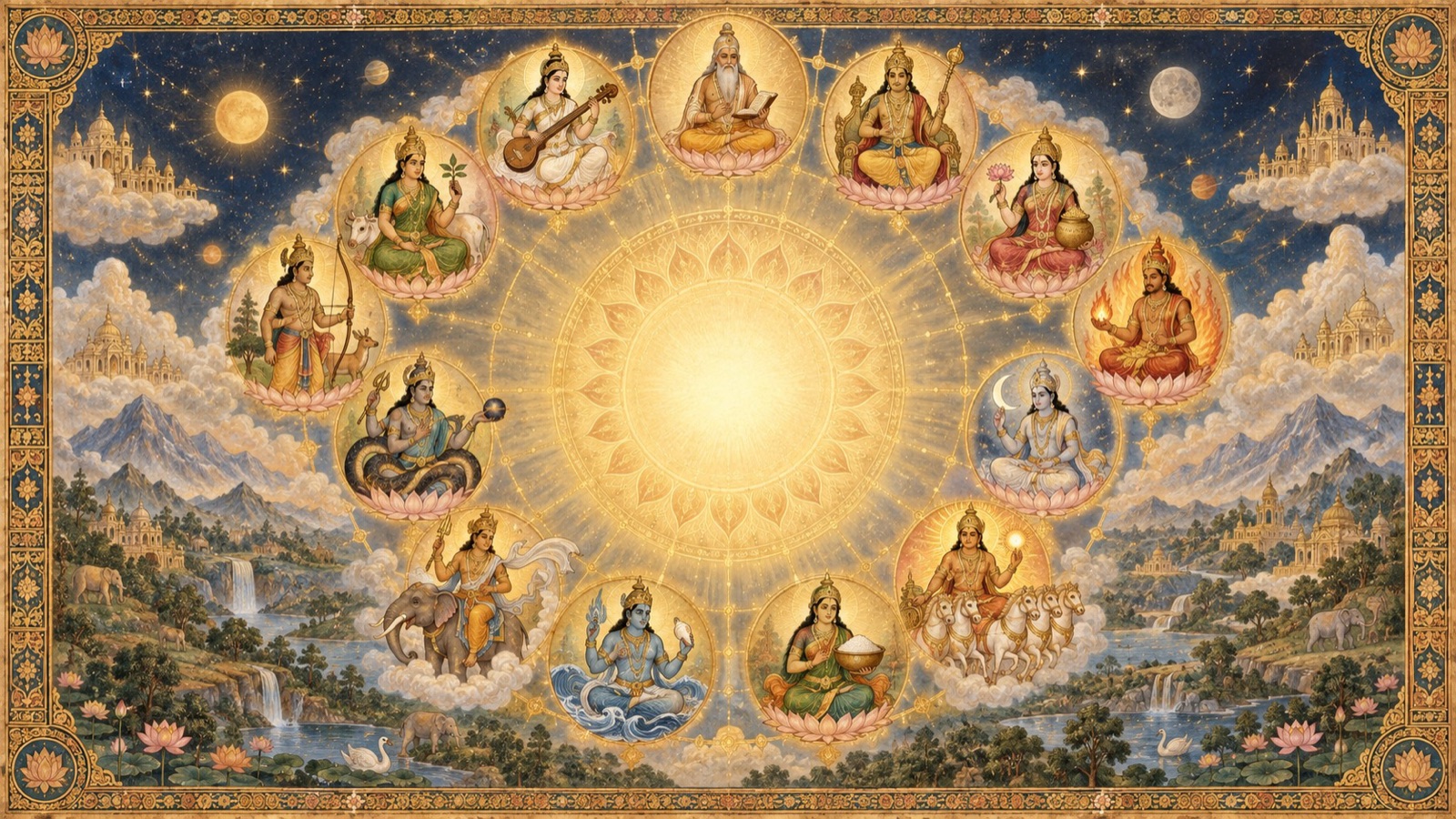
What follows is one of the most systematically structured passages in the early Bhagavatam — a rapid, almost rhythmic listing of desires paired with the deities traditionally worshipped to fulfil them. A seeker of pre-eminence in sacred knowledge should worship the sage Brihaspati, preceptor of the gods; one who seeks keenness of the senses should worship Indra; a seeker of progeny should propitiate the Prajapatis. The seeker of prosperity should worship the divine Maya — the Lord’s own potency, the Goddess presiding over Prakriti — while the seeker of indefatigable energy should adore the god of fire. A seeker of wealth should worship the Vasus; one who aspires to greater power should worship the Rudras.
The list continues, each verse gathering several pairings at once. A seeker of food should worship Aditi, mother of the gods; one who seeks heaven should adore her sons, the twelve Adityas. A seeker of sovereignty should worship the Vishvedevas; a ruler who wants the allegiance of his subjects should worship the Sadhyas. One who desires long life should worship the twin Ashvins, physicians of the gods; one who desires a strong body should worship the goddess Earth; one who wants stability of position should adore Earth and Dyauh together, the two mothers of the world. A seeker of personal charm should worship the Gandharvas; one who wants a lovely wife should adore the celestial nymph Urvashi; one who seeks lordship over all should worship Brahma himself.
A seeker of renown should worship Lord Vishnu in His aspect as the deity presiding over sacrifice; a seeker of treasures should adore Varuna, lord of the waters. One who wants to acquire learning should worship Lord Shiva; one who desires conjugal happiness should adore Goddess Uma, so devoted to her Lord. He who aspires to a pious life should worship Lord Vishnu of excellent renown; he who wants to propagate his lineage should adore the Pitris, the ancestral manes. A seeker of protection should worship the Yakshas; a seeker of bodily vigour should adore the Maruts, the wind-gods. He who seeks a kingdom should worship the ruling gods of a whole Manvantara; he who — for whatever dark purpose — wishes to employ malevolent spells should adore Nirriti, presiding over destruction. And the seeker of ordinary sense-gratification should worship Soma, the moon-god.
Then, at the very end of the list, Sukadeva places something different in kind: “he who longs for the cessation of all desires should adore the Lord who transcends Prakriti or Matter.” The entire catalogue, verse by verse, has been building toward this single quiet turn.
The Pivot: Worship the Supreme Person
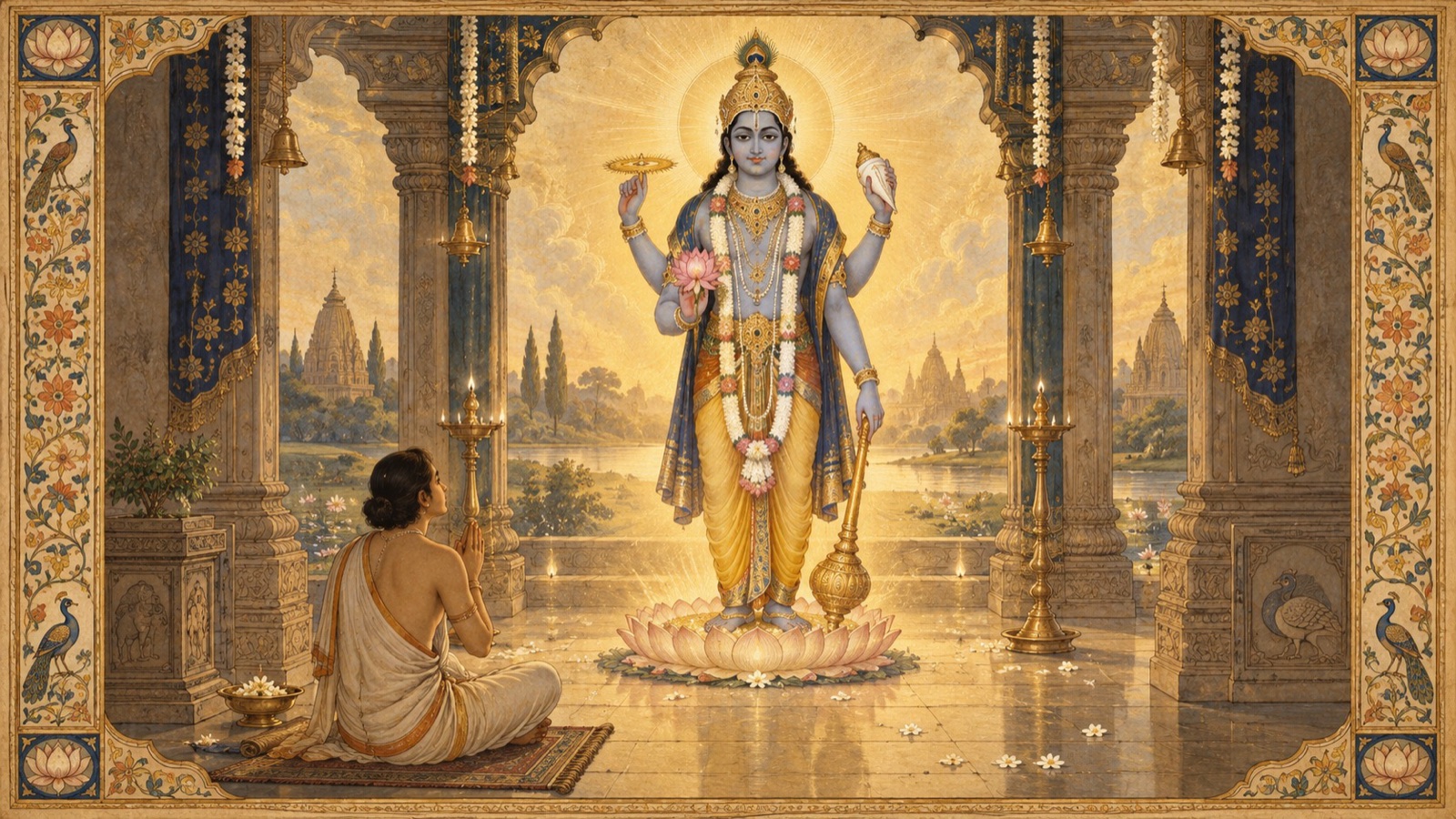
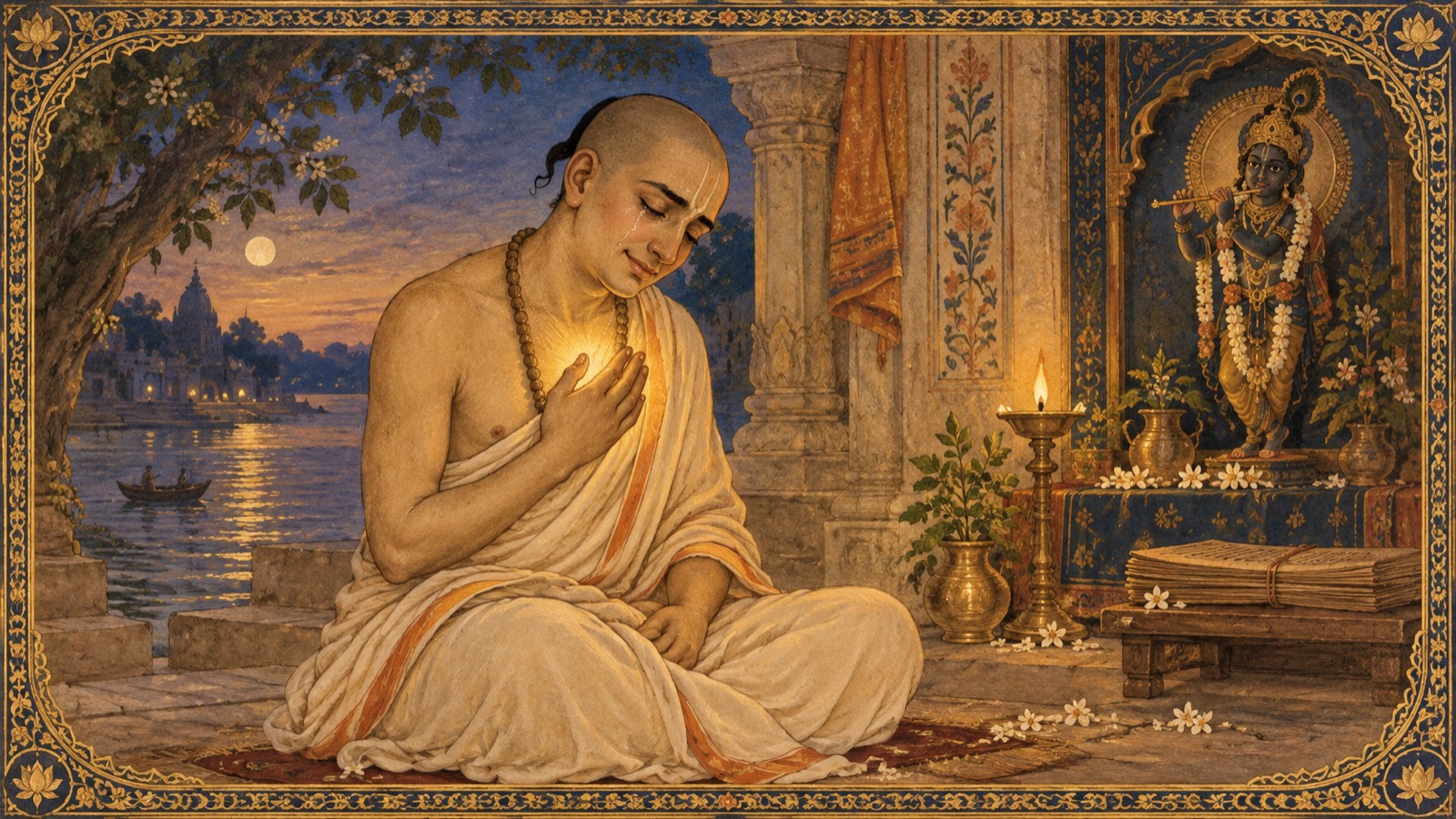
Verse ten is the chapter’s thematic centre, and Sukadeva states it without qualification.
अकामः सर्वकामो वा मोक्षकाम उदारधीः । तीव्रेण भक्तियोगेन यजेत पुरुषं परम् ॥ १० ॥
akāmaḥ sarva-kāmo vā mokṣa-kāma udāra-dhīḥ tīvreṇa bhakti-yogena yajeta puruṣaṁ param
Meaning: A wise man, however — whether he has no desire at all, or is actuated by every sort of desire, or seeks liberation itself — should worship the Supreme Person with intense devotion. (Canto 2, Chapter 3, verse 10)
Sukadeva does not say that worshipping the various deities is wrong. What he says is that the highest good — for those who worship Indra, Brihaspati, or any of the gods named above — is ultimately found only by developing unswerving devotion to the Lord Himself, and that this devotion ripens specifically through the fellowship of His devotees. It is in the company of such devotees, hearing discourses on Sri Hari, that spiritual enlightenment dawns — the restless waves of passion settle, the heart is purified and filled with joy, and a natural aversion arises for the pleasures of sense alongside a growing love for devotion, “which is an esteemed road to final beatitude.” Sukadeva ends this section with a rhetorical question rather than a command: having once tasted the joy of listening to such discourses on Sri Hari, who would ever willingly stop?
Saunaka Asks for More
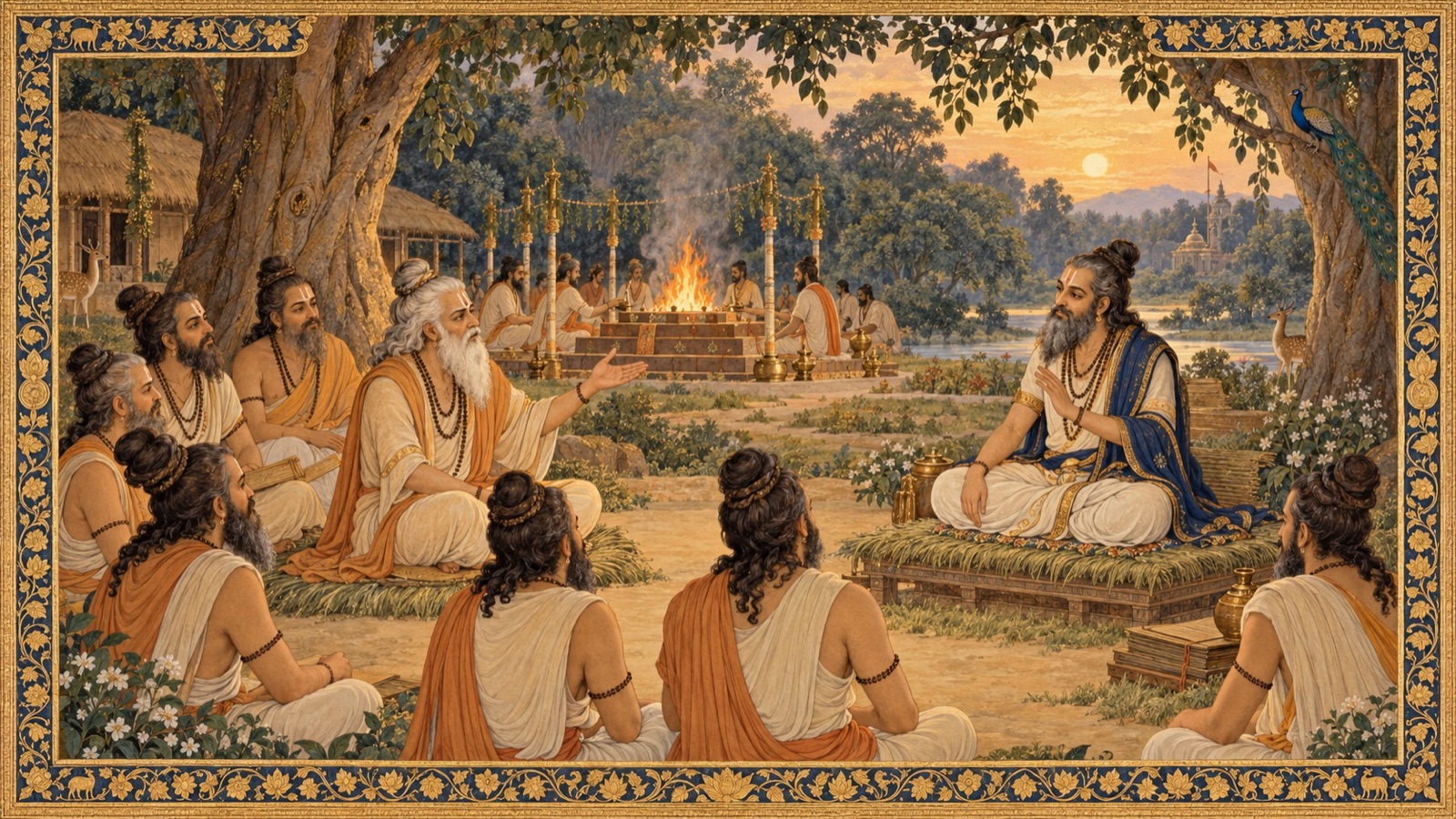
At this point the narrative frame gently shifts. Everything so far in this chapter has been part of Sukadeva’s speech to the dying Parikshit on the bank of the Ganga. But the entire Bhagavatam is itself being narrated a second time — by Suta Gosvami, to the sage Saunaka and the assembled sages performing a long sacrifice in the forest of Naimisharanya. It is this outer audience that now speaks. Saunaka asks: on hearing these words of Suka, what else did King Parikshit — foremost of the Bharatas — go on to ask the son of Vyasa, who was both a seer and learned in the Vedas? And, Saunaka adds, please tell us, for in an assembly of holy men there ought always to be talk that leads, eventually, to discourse on Sri Hari.
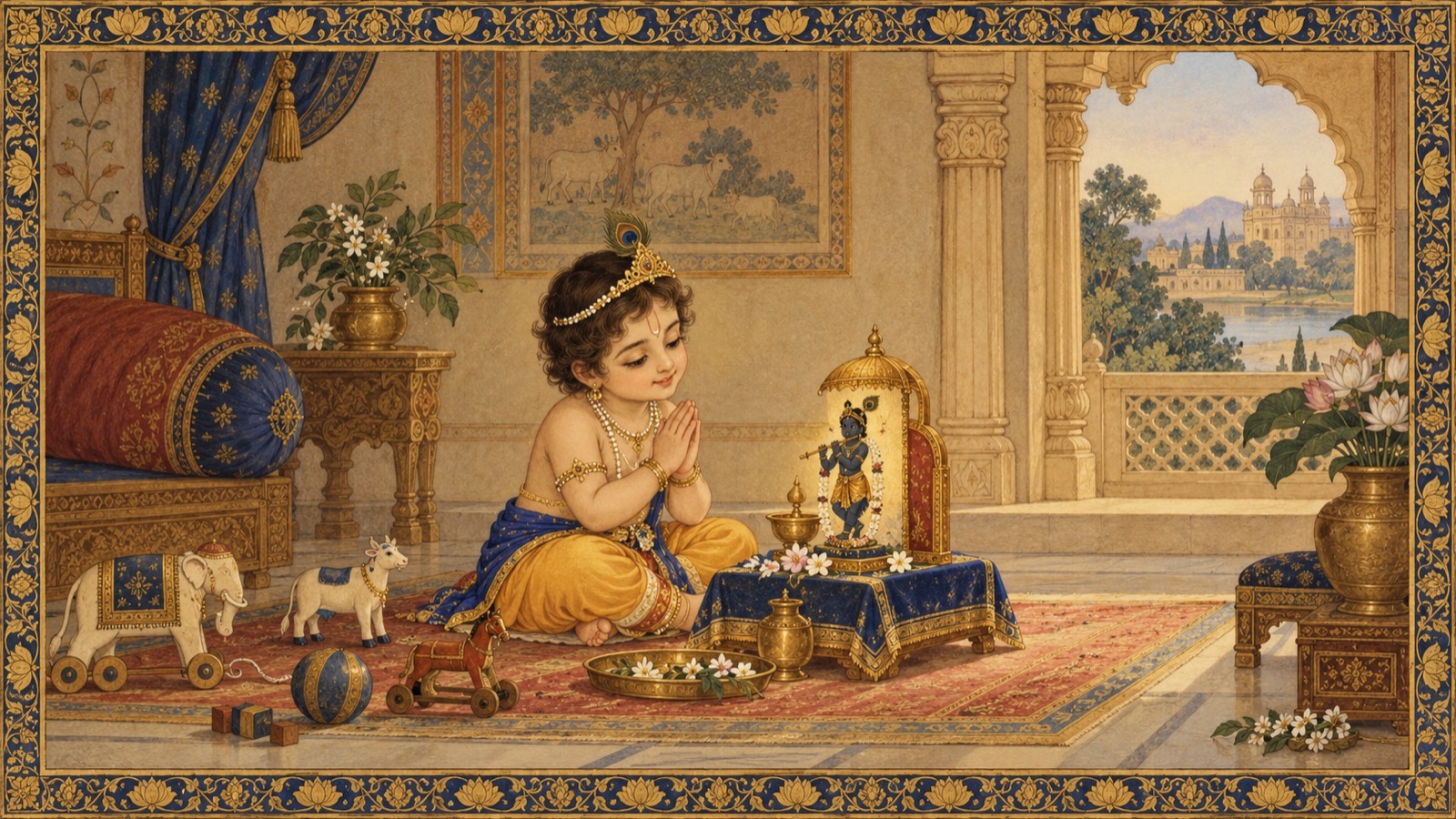
Before Suta answers, though, the Bhagavatam lingers for a moment on why this conversation between Parikshit and Sukadeva was so fitting in the first place. Parikshit, we are told, was from his very childhood a great devotee of the Lord — even his childhood games included, as one of his sports, the worship of Sri Krishna. And Sukadeva himself is described as exclusively devoted to Lord Vasudeva. It is only natural, the Bhagavatam observes, that where two such souls meet, their conversation turns to the glories of the Lord.
Why Hearing the Lord’s Stories Is Not Optional
What follows next is one of the most direct and uncompromising passages anywhere in the Bhagavatam — a sequence of verses that measures a human life not by what it accomplishes, but by whether it has been spent in remembrance of the Lord. The rising and setting sun, Suta now tells the sages, steals away the life of every human being in vain, except for one who spends even a single moment discussing the Lord of excellent fame. Then come the comparisons that give this passage its force: do trees not live? Do a blacksmith’s bellows not breathe? Do beasts not eat and reproduce? Mere biological continuance, the verses insist, is not what makes a human life worth having lived.
A human being who has never heard the story of Sri Krishna, the Bhagavatam says plainly, is no better than a dog, a swine, a camel, or a donkey. Ears that never hear of the Lord’s marvellous deeds are mere holes, serving no real purpose; a tongue that never recounts His stories is no better than a frog’s. A head, however crowned or turbaned, that never bows before Lord Mukunda, the Bestower of Liberation, is only a burden to carry. Hands, however adorned with gold, that never offer worship to Sri Hari are as good as a dead man’s. Eyes that never gaze upon the forms of Lord Vishnu are as useless as the eye-markings on a peacock’s tail feathers — beautiful, perhaps, but blind to their true purpose. Feet that never travel to places sacred to Sri Hari are no different from the roots of a tree, rooted in place and going nowhere that matters.
The passage grows still more pointed. A person who has never bathed in the dust raised by the feet of the Lord’s devotees is, the Bhagavatam says, dead though still living; one who has never known the fragrance of Tulasi leaves offered at Lord Vishnu’s feet is a breathing corpse. And then comes the verse that gives this whole sequence its emotional centre.
तदश्मसारं हृदयं बतेदं यद् गृह्यमाणैर्हरिनामधेयैः । न विक्रियेताथ यदा विकारो नेत्रे जलं गात्ररुहेषु हर्षः ॥ २४ ॥
tad aśma-sāraṁ hṛdayaṁ batedaṁ yad gṛhyamāṇair hari-nāma-dheyaiḥ na vikriyetātha yadā vikāro netre jalaṁ gātra-ruheṣu harṣaḥ
Meaning: A heart which does not melt when Sri Hari’s names are being uttered — either by oneself or by others — is hard as stone. And when the heart does melt, tears rush to the eyes and the hair stands on end. (Canto 2, Chapter 3, verse 24)
Read together, these verses are not meant to shame the listener so much as to startle — to insist that hearing, chanting, and being moved by the Lord’s names are not decorative additions to a good life but its very substance. Where Chapters One and Two taught elaborate techniques of meditation and yogic discipline for the rare, advanced practitioner, this closing sequence returns to something anyone can do in any moment: listen, and let the heart respond.
The Chapter’s Final Word — and What Comes Next
The chapter closes gently rather than with a flourish. Saunaka, having heard all this, tells Suta that his words are most agreeable to the mind, and asks him to now relate what Sukadeva told Parikshit in reply to the king’s next question. With that request placed, and not yet answered, the colophon arrives: “Thus ends the third discourse,” it reads, “in Book Two of the great and glorious Bhagavata-Purana, otherwise known as the Paramahamsa-Samhita.” The king’s next question — and Sukadeva’s expansive answer describing the creation of the universe — belongs to the following chapter, Discourse Four, which lies beyond the scope of this one.
Principal Teachings of This Chapter
1. Sukadeva’s answer to Parikshit’s dying question is now complete. The meditations on the cosmic and personal forms of the Lord, taught across Chapters One and Two, together formed his full reply on the duty of a thoughtful man facing death (verse 1).
2. Many deities are worshipped for many desires — and that is not wrong. The Bhagavatam names nearly thirty specific worldly aims, each paired with the deity traditionally approached for it, without condemning any of them (verses 2–9).
3. Yet the wise worship the Supreme Person directly. Whether desireless, full of desire, or seeking liberation itself, the person of broader intelligence worships the Lord with intense devotion — the highest good, even for worshippers of other gods, is found only in devotion to Him (verse 10).
4. Devotion ripens through the company of devotees. It is specifically in such fellowship, hearing discourses on Sri Hari, that the heart is purified, passion subsides, and an irreversible love for devotion takes root (verses 11–12).
5. A life without hearing of the Lord is compared to mere animal existence. Trees live, bellows breathe, beasts eat and reproduce — but a human being who never hears, speaks, or remembers the Lord’s glories has, in this teaching, wasted the very thing that makes human life distinct (verses 17–23).
6. The truest sign of devotion is a heart that responds. Tears in the eyes and hair standing on end when hearing the Lord’s names are not affectation; their absence, the Bhagavatam says plainly, marks a heart as hard as stone (verse 24).
A Devotional Reflection
There is something almost startling about how this chapter moves. It begins in the register of a careful reference manual — desire after desire, deity after deity, laid out with the calm precision of a teacher covering necessary ground. And then, without warning, it turns and will not let the listener look away: is your life more than a tree’s, more than a bellows’, more than a beast’s? The question is not asked to condemn ordinary human striving for knowledge, progeny, wealth, or long life — the chapter has just spent nine verses honouring exactly those pursuits and the deities associated with them. It is asked to make sure that, underneath all such striving, something else has not been forgotten: that the heart itself is capable of melting, of responding, of being moved to tears by a name. Sukadeva’s teaching here is not a rejection of the world’s many altars. It is an insistence that behind every altar stands one Lord, and that no desire, however small, is finally answered until the heart turns toward Him.
A Daily Devotional Practice
Today, take a few quiet minutes to notice your own heart as this chapter describes it. Chant or softly speak the Lord’s holy name — “Om Namo Bhagavate Vasudevaya” — slowly, without hurry, and simply pay attention to whatever stirs. You need not force any particular feeling. The chapter’s teaching is not that a certain performance is required, only that the heart is meant to be reachable — soft enough to be moved by the sound of His name, the way this chapter says it should be. Let that quiet attentiveness be your offering today.
Conclusion
The third chapter of the Second Canto completes a long arc that began with Parikshit’s question about the duty of a soul facing death, and then, having answered that question fully, it widens its gaze to something universal — the countless desires that draw human beings toward countless deities, and the one devotion that underlies and surpasses them all. Sukadeva neither dismisses the many forms of worship named here nor allows them to be mistaken for the final goal. Every desire, the chapter insists, finds its truest fulfilment only in the Supreme Person; and the surest sign that this devotion has taken root is not a technique mastered or a ritual performed correctly, but a heart that can still be moved — to tears, to trembling, to joy — simply by hearing His name. The chapter closes not with an answer but with a request for more, leaving Saunaka, Suta, and the reader alike leaning forward toward what Sukadeva will say next.
May the divine wisdom of Srimad Bhagavatam awaken pure devotion within our hearts.
Om Namo Bhagavate Vasudevaya.
Jay Shree Madhav.
References and Attribution
- Primary edition: Gita Press, Śrīmad Bhāgavata Mahāpurāṇa (English, complete), Book Two, Discourse 3, pages 95–98.
- Series: Srimad Bhagavatam Wisdom · Biswa Sanatan Dharma Seva Trust.
- Presented following the spiritual guidance and recommendation of Pandit Dr. Shri Kashinath Mishra.
This is an original, faithful retelling in the writer’s own words, with brief quoted verses shown in Devanāgarī and transliteration and their meanings given as summaries. It is not a reproduction of any single publisher’s continuous translation or commentary. No affiliation with or endorsement by any publisher is implied.
Jay Shree Madhav