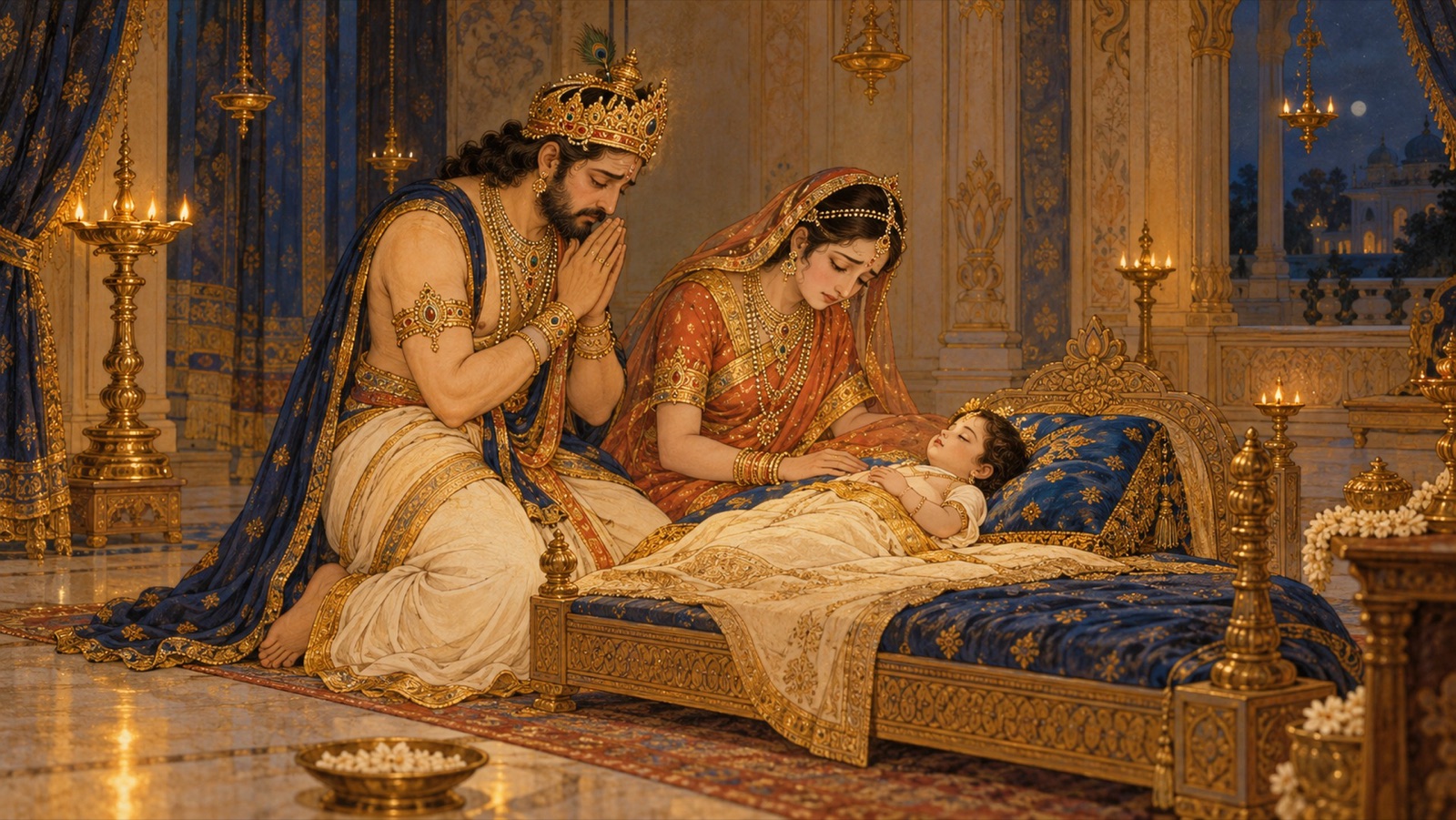
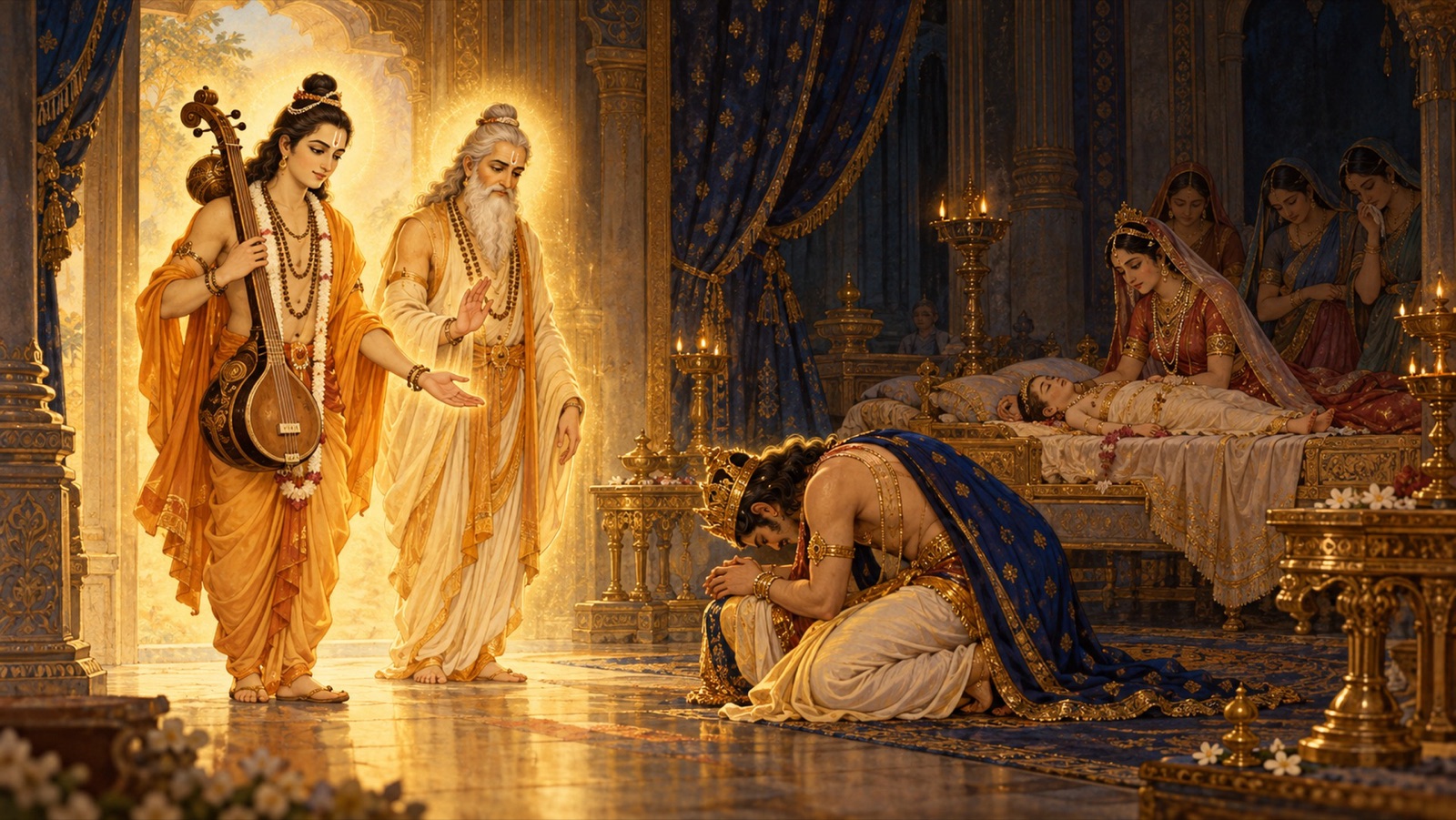
The long-awaited child of King Citraketu is suddenly taken by death, and the emperor who ruled the whole earth is left weeping helplessly beside the little body with his grief-stricken queen — a sorrow the Lord will soon turn into the doorway of wisdom.
Om Namo Bhagavate Vasudevaya.
Om Namo Bhagavate Vasudevaya.
Om Namo Bhagavate Vasudevaya.
Welcome to Srimad Bhagavatam Wisdom, a devotional journey through the sacred histories and teachings of the Srimad Bhagavat Mahapurana. The fourteenth chapter of the Sixth Canto opens a new and tender story. Wondering how pure devotion could arise in a demon like Vritra, King Parikshit is told the earlier life of that soul — the tale of King Citraketu, a mighty emperor whose single longing for a son is granted, only for the child to be snatched away by death, plunging the king into a grief that will become the ground of his awakening.
Chapter Information
- Scripture: Śrīmad Bhāgavata Mahāpurāṇa
- Canto: 6 (Book Six)
- Chapter: 14 (Discourse 14)
- Chapter title: The Lamentation of King Citraketu
- Principal speaker: Sukadeva Gosvami, narrating to King Parikshit; the sage Angira and the royal couple within the account
- Principal listener: King Parikshit; the sages of Naimisharanya at the outer frame
- Main setting: The kingdom of Surasena and the palace of King Citraketu
- Central subject: The granting of Citraketu’s longed-for son and the king’s lamentation at the child’s death
- Principal verse range: Canto 6, Chapter 14, verses 1–61
- Primary edition: Gita Press Śrīmad Bhāgavata Mahāpurāṇa
Parikshit’s Wonder
King Parikshit was filled with wonder. How, he asked, could unflinching devotion to the almighty Narayana arise in the heart of the sinful Vritra, whose nature had been ruled by passion and darkness? Devotion to the feet of Lord Vishnu does not easily appear even in the gods, whose intellect is pure, nor in sages whose minds are untainted. Among the countless living beings only a few practise virtue; among those, few seek liberation; and among thousands who seek it, scarcely one attains perfection. Rarest of all, Parikshit said, is the soul who is serene and wholly devoted to Narayana (verses 1-5).
मुक्तानामपि सिद्धानां नारायणपरायण: । सुदुर्लभ: प्रशान्तात्मा कोटिष्वपि महामुने ॥ ५ ॥
muktānām api siddhānāṁ nārāyaṇa-parāyaṇaḥ su-durlabhaḥ praśāntātmā koṭiṣv api mahā-mune
Meaning: O great sage, even among tens of millions of liberated and perfected souls, one who is fully at peace and devoted entirely to Lord Narayana is exceedingly rare. (Canto 6, Chapter 14, verse 5)
In answer, Sukadeva welcomed the question and began the ancient legend he had heard from Vedavyasa, Narada and Devala — the story of King Citraketu (verses 6-9).
The Childless Emperor
In the land of Surasena, Sukadeva said, there reigned an emperor named Citraketu, to whom the earth yielded every desire. He had a crore of wives, yet, able though he was, obtained no child by any of them. For all his beauty, generosity, youth, noble birth, learning and universal sovereignty, one sorrow hollowed out his heart: he was issueless, and none of his wealth or queens or the empire of the whole earth could gladden him (verses 10-13).
आसीद्राजा सार्वभौम: शूरसेनेषु वै नृप । चित्रकेतुरिति ख्यातो यस्यासीत्कामधुङ्मही ॥ १० ॥
āsīd rājā sārvabhaumaḥ śūraseneṣu vai nṛpa citraketur iti khyāto yasyāsīt kāmadhuṅ mahī
Meaning: There was a sovereign emperor in the land of Surasena, O king, renowned by the name of Citraketu, for whom the earth itself was like a wish-fulfilling cow. (Canto 6, Chapter 14, verse 10)
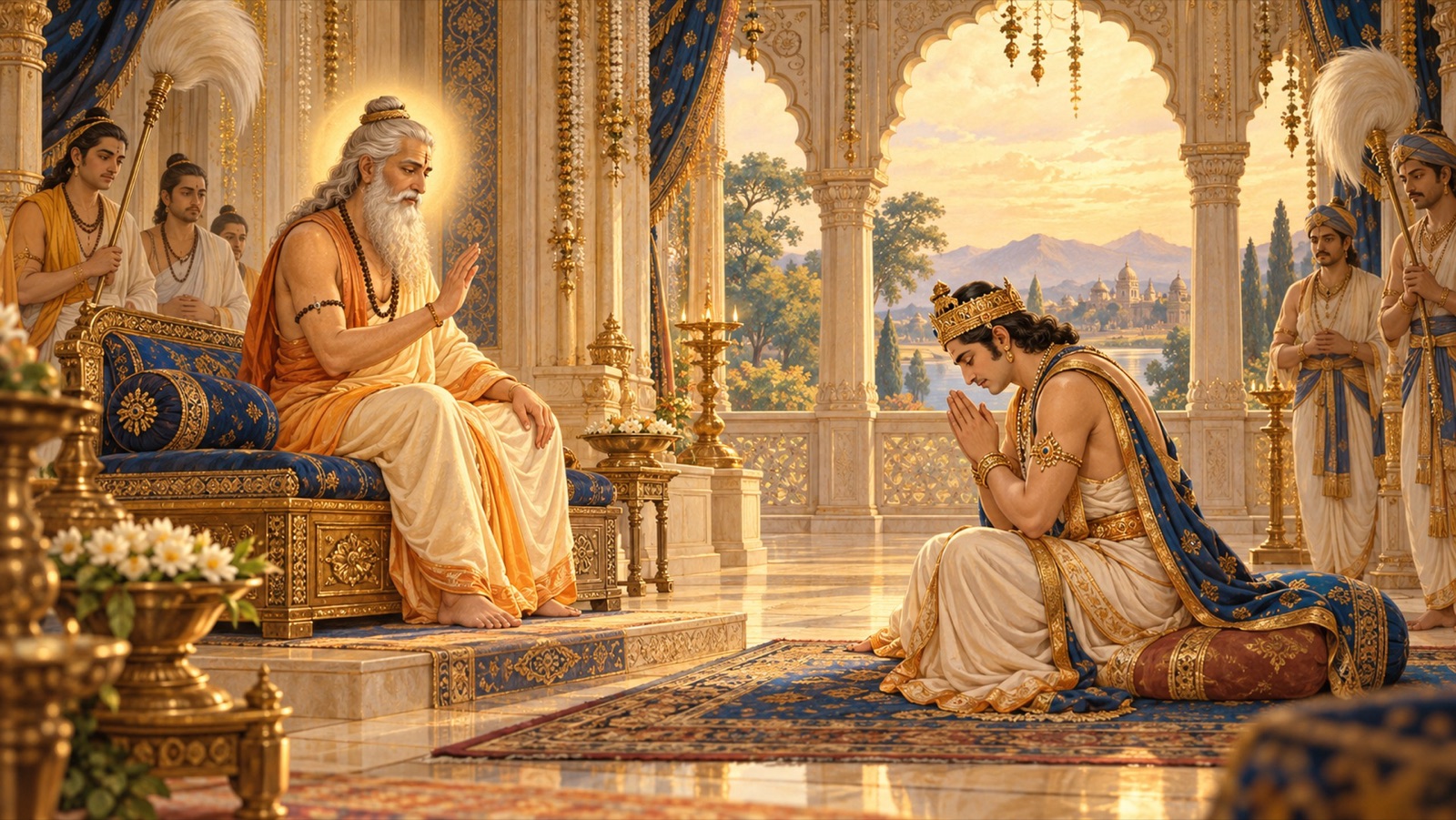
One day the glorious sage Angira came to the king’s house in the course of his wanderings. Citraketu honoured him with every ceremony and sat beside him with a collected mind. The sage, perceiving the king’s hidden sorrow, observed that his face was discoloured with anxiety and that he had not attained the object of his desire. Bowed low with modesty, Citraketu confessed that neither sovereignty nor the riches of the whole earth brought him any joy, issueless as he was, and begged the sage to grant him a son by whom he might cross the dark region that awaits those who die without offspring (verses 14-26).
The Boon and the Birth
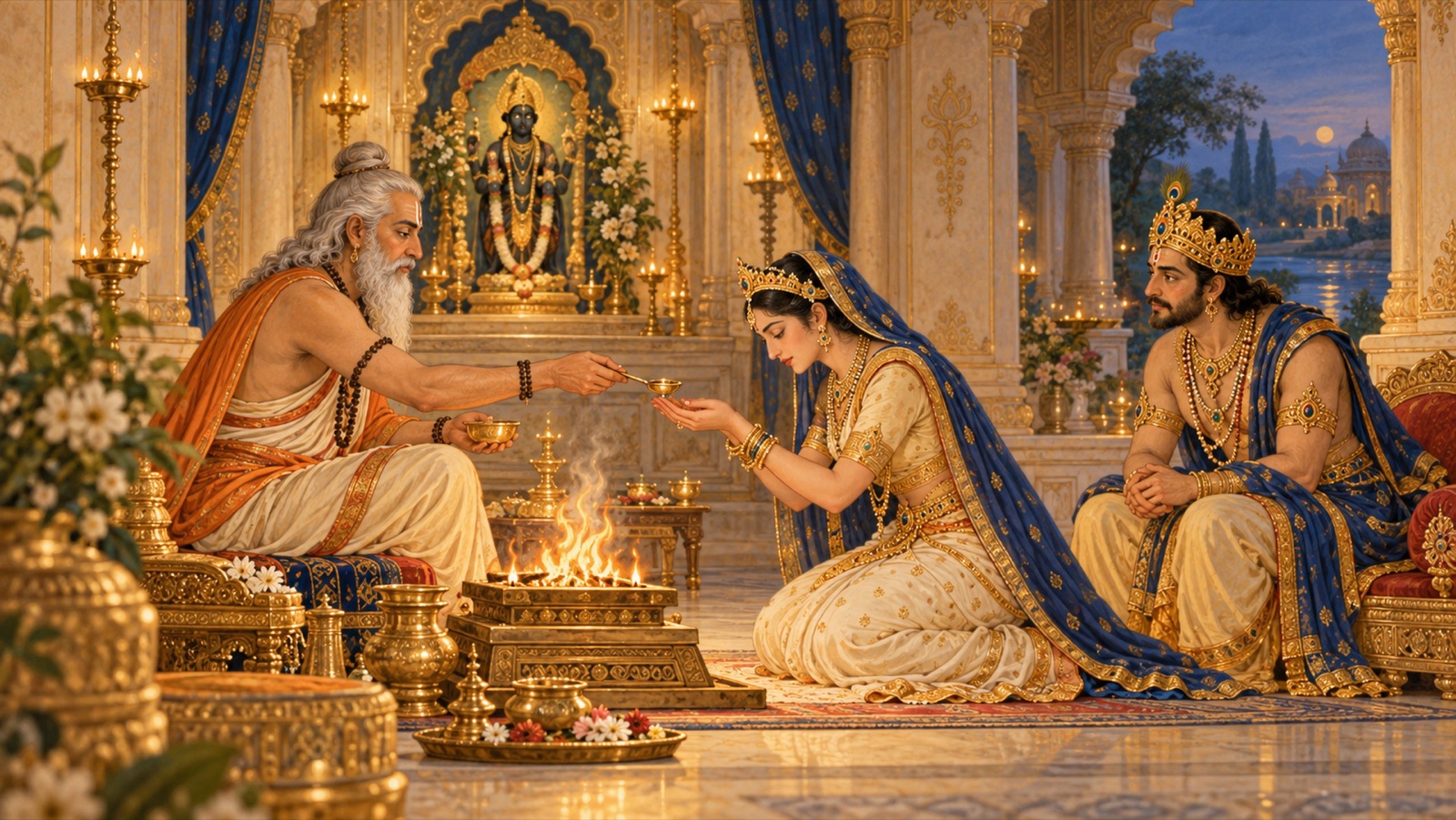
Moved to compassion, Angira prepared a sacred oblation and offered it to the god Tvashta, then gave the remnant of that offering to Kritadyuti, the eldest and foremost of the king’s queens. But the sage’s blessing carried within it a quiet warning (verses 27-28).
अथाह नृपतिं राजन् भवितैकस्तवात्मज: । हर्षशोकप्रदस्तुभ्यमिति ब्रह्मसुतो ययौ ॥ २९ ॥
athāha nṛpatiṁ rājan bhavitaikas tavātmajaḥ harṣa-śoka-pradas tubhyam iti brahma-suto yayau
Meaning: The son of Brahma then said to the king: One son will be born to you who will bring you both joy and sorrow — and saying this, the sage departed. (Canto 6, Chapter 14, verse 29)
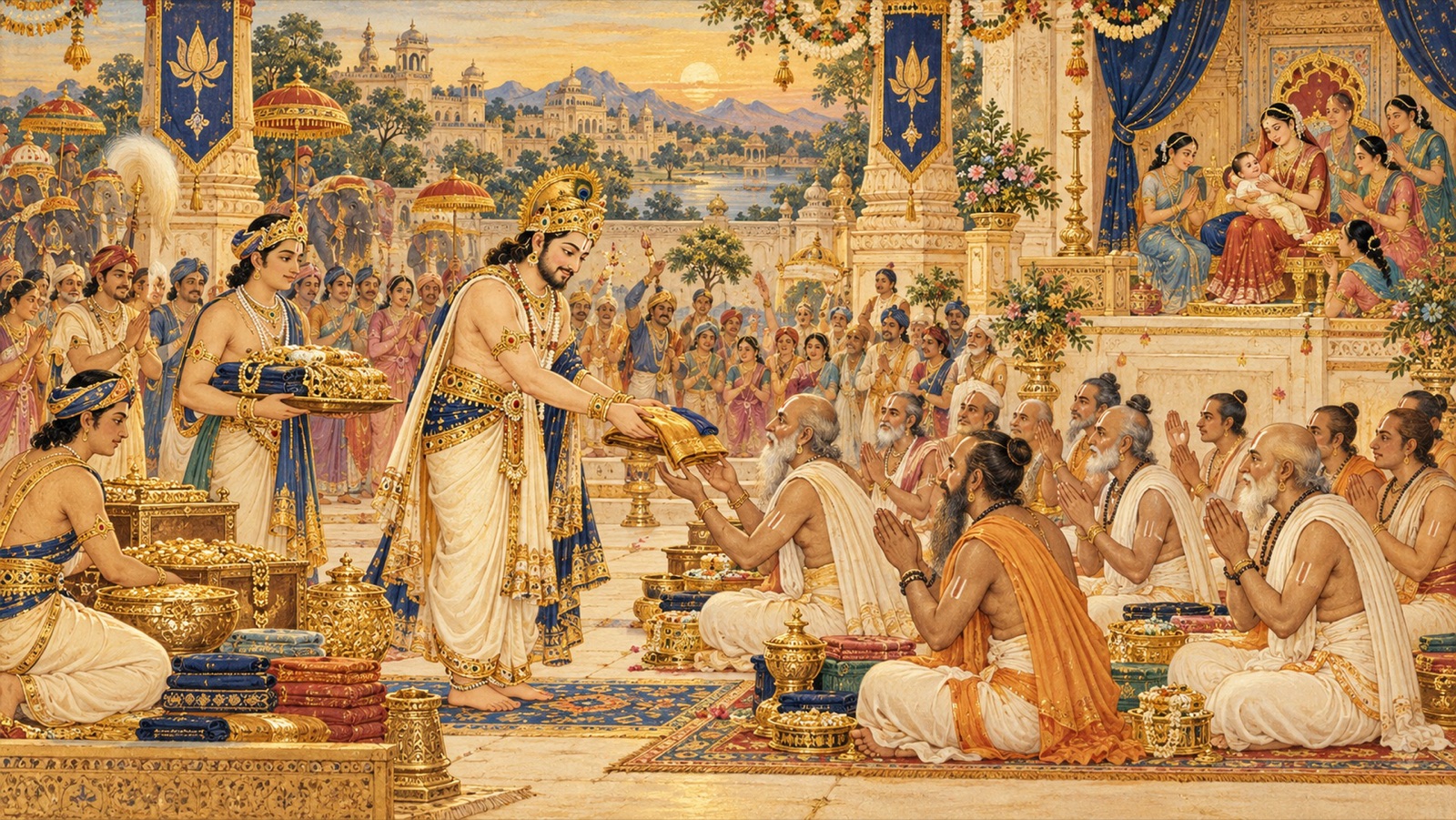
In due course Kritadyuti conceived, and the embryo grew day by day like the moon in the bright fortnight. A son was born, to the supreme delight of all the people of Surasena. The overjoyed king, purified by his bath, had the Brahmanas pronounce benedictions and the sacred birth-rites performed, and he gave them gold and silver, garments and ornaments, villages, horses, elephants and sixty million cows. Like a cloud raining down its bounty, he gratified every desire of his subjects, and his love for the long-awaited child grew greater day by day (verses 30-36).
Joy Turns to Grief
Yet the very blessing carried its shadow. As the king’s affection for the child and its mother deepened, the other queens — barren and overlooked — were consumed by jealousy and self-reproach. Burning with envy at their co-wife’s fortune, these cruel-hearted women lost their good sense and secretly administered poison to the infant. Kritadyuti, knowing nothing of the crime, thought her child was sleeping; but when the nurse went to wake him, she found that life had left the little body, and she cried out and fell senseless to the ground (verses 37-46).
Hearing the nurse’s wail, the queen rushed in, saw her only son a victim of sudden death, and fainted with her hair and garments flung in disorder. The whole palace, men and women alike, came weeping; even the guilty queens shed false tears. The king, hearing that his son had died, came stumbling and fell unconscious beside the child, his throat choked with grief so that he could not speak. Then the virtuous queen wailed aloud in many voices, bathing her breast with tears, enhancing the sorrow of all who stood near (verses 47-53).
The Queen’s Lament
In her anguish the queen cried out against fate itself, reproaching the creator for taking a child while its elders still lived, and begging her little son not to forsake his helpless mother and his grief-stricken father. “Arise, darling,” she wept, “your playmates are calling you; you have slept so long — eat something, and take away our sorrow.” But no sweet words came in answer. Along with her, the emperor Citraketu too wailed at the top of his voice, and while the royal couple mourned, everyone around them wept and the whole court seemed lifeless. Knowing the king to have lost all composure in despair, the sage Angira now appeared once more at the scene, and with him came the divine sage Narada (verses 54-61).
Principal Teachings of This Chapter
1. Pure devotion to the Lord is the rarest of all attainments. Even among millions of liberated souls, Parikshit observes, one wholly devoted to Narayana is hard to find — which makes Vritra’s devotion so wonderful (verse 5).
2. Worldly fullness cannot fill an empty heart. Citraketu rules the entire earth, yet a single unfulfilled longing robs all his splendour of joy (verses 12-13).
3. The thing we crave most carries both joy and grief. The sage’s blessing foretells it plainly: the longed-for son will bring delight and sorrow alike, as every object of deep attachment must (verse 29).
4. Attachment ripens into suffering. The king’s mounting love for the child, and the queens’ jealousy, together prepare the tragedy — showing how desire and envy breed sorrow (verses 36-43).
5. Grief can be the threshold of grace. At the depth of the royal couple’s despair, the sages Angira and Narada arrive — a sign that the Lord’s mercy draws near precisely when worldly hope has failed (verse 61).
A Devotional Reflection
This chapter is almost unbearably human. A great king who lacks nothing the world can offer is undone by one empty cradle, and when at last the cradle is filled, his joy only deepens the wound that is coming. The sage warns him in advance — this son will bring you joy and sorrow — and so he does, for that is the nature of everything we clasp too tightly. The Bhagavata does not look away from the king’s agony or the queen’s heartbroken pleading; it lets the grief be fully grief. And yet it frames the whole tragedy with a question about devotion and ends it with the quiet arrival of two saints. That is the hidden mercy of the chapter: that our deepest losses are not the end of the story but often its true beginning, the moment when the soul, emptied of every lesser consolation, becomes ready to hear of the Lord. Citraketu’s sorrow is real, but it is also the door through which wisdom will walk in. When our own hearts are broken by what we could not keep, we may trust that the same mercy is drawing near to us.
A Daily Devotional Practice
Today, hold gently before the Lord one thing or person you love and fear to lose. Without denying your love, offer it into His keeping, acknowledging that all we cherish is lent to us and belongs to Him. If you carry an old grief, do not hide it; speak of it honestly to the Lord as the queen spoke her sorrow aloud, and ask Him to make even that loss a doorway to deeper trust. Then take His holy name quietly, resting your attachments in His care.
Conclusion
The fourteenth chapter of the Sixth Canto tells of an emperor who had everything but the one thing he craved, received it, and lost it to death. The sage’s blessing had foretold that the longed-for son would bring both joy and sorrow, and so the king’s rising happiness turns to a lament that breaks the heart of all who hear it. Yet at the very bottom of that despair, the saints Angira and Narada appear — the mercy of the Lord arriving when every worldly hope has failed. As the Canto moves next to the consoling of Citraketu, we carry with us the chapter’s tender truth: that grief, fully felt and offered up, can become the threshold of grace.
May the divine wisdom of Srimad Bhagavatam awaken pure devotion within our hearts.
Om Namo Bhagavate Vasudevaya.
Jay Shree Madhav.
References and Attribution
- Primary edition: Gita Press, Śrīmad Bhāgavata Mahāpurāṇa (English, complete), Book Six, Discourse 14.
- Series: Srimad Bhagavatam Wisdom · Biswa Sanatan Dharma Seva Trust.
- Presented following the spiritual guidance and recommendation of Pandit Dr. Shri Kashinath Mishra.
This is an original, faithful retelling in the writer’s own words, with brief quoted verses shown in Devanāgarī and transliteration and their meanings given as summaries. It is not a reproduction of any single publisher’s continuous translation or commentary. No affiliation with or endorsement by any publisher is implied.
Jay Shree Madhav