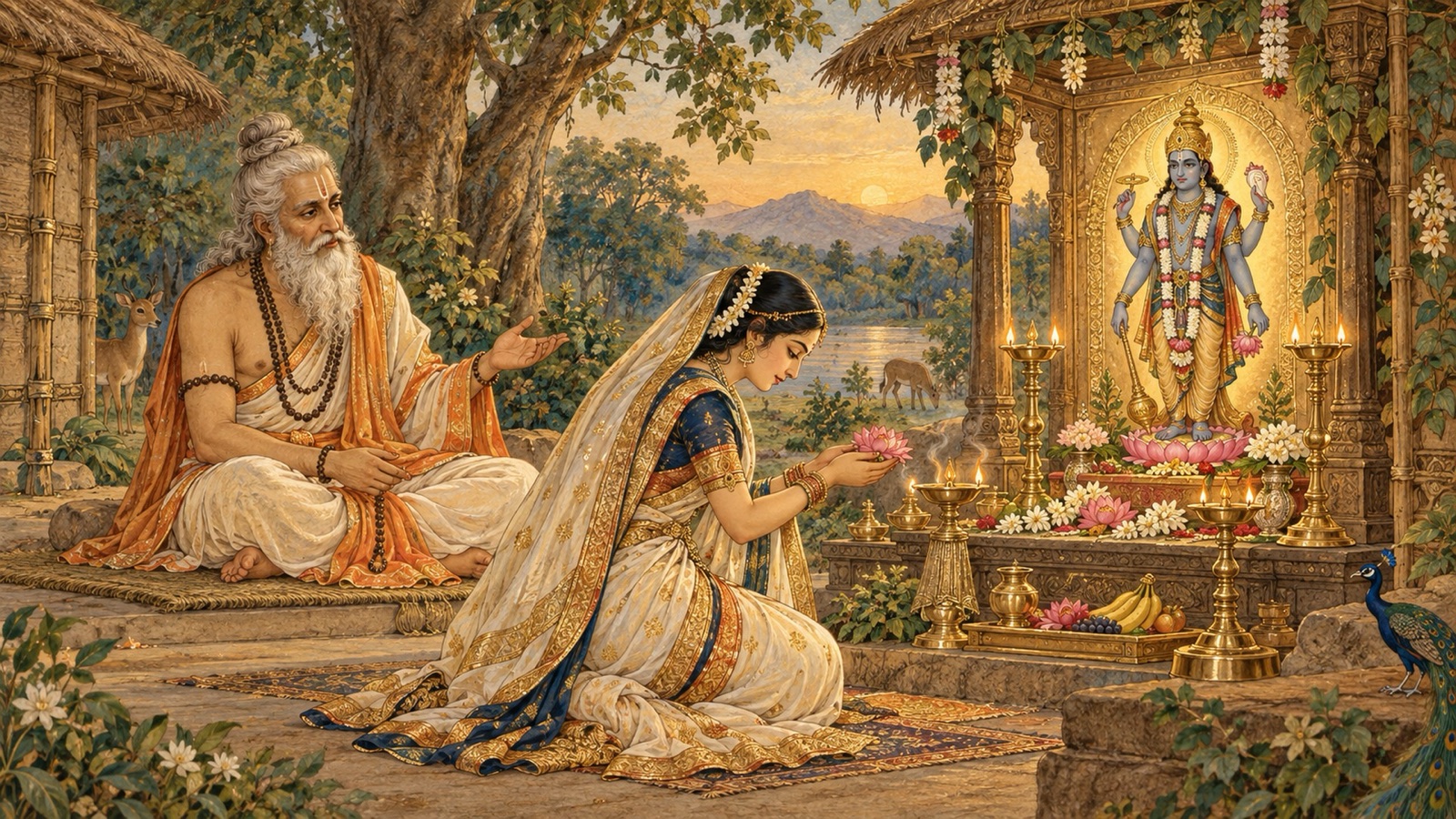
Bereft of heaven and grieving for her exiled sons, Aditi, the mother of the gods, receives from the sage Kashyapa a sacred vow of pure devotion — the Payovrata — by which the Supreme Lord Himself may be drawn near.
Om Namo Bhagavate Vasudevaya.
Om Namo Bhagavate Vasudevaya.
Om Namo Bhagavate Vasudevaya.
Welcome back to Srimad Bhagavatam Wisdom, a devotional journey through the sacred histories and teachings of the Srimad Bhagavat Mahapurana. This sixteenth discourse of the Eighth Canto turns from the fall of heaven to a grieving mother’s heart, and to the sacred vow of devotion her husband Kashyapa teaches her in reply.
Chapter Information
- Scripture: Śrīmad Bhāgavata Mahāpurāṇa
- Canto: 8 (Book Eight)
- Chapter: 16 (Discourse 16)
- Chapter title: Aditi and the Sacred Payovrata Vow
- Principal speaker: Sukadeva Gosvami, narrating to King Parikshit — with the words of Kashyapa and Aditi
- Principal listener: King Parikshit
- Main setting: The hermitage of the sage Kashyapa
- Central subject: Aditi’s grief at the exile of the gods; Kashyapa’s counsel to worship Lord Vasudeva; the teaching of the Payovrata vow and the promise of its fruit
- Principal verse range: Canto 8, Chapter 16, verses 1–62
- Primary edition: Gita Press Śrīmad Bhāgavata Mahāpurāṇa
Context From the Previous Chapter
In the fifteenth discourse, Bali, revived and empowered by his preceptors the Bhrgus, marched upon heaven; the gods withdrew on Brihaspati’s counsel, and Bali conquered all three worlds. This chapter takes up the plight of those exiled gods through the sorrow of their mother, Aditi, and the sacred remedy her husband gives her.
Aditi’s Distress
When her sons vanished from the three worlds and the demons occupied their thrones, the mother of the gods was left alone in her grief, feeling as forlorn as a woman with no one to shield her.
श्रीशुक उवाच एवं पुत्रेषु नष्टेषु देवमातादितिस्तदा । हृते त्रिविष्टपे दैत्यै: पर्यतप्यदनाथवत् ॥ १ ॥
śrī-śuka uvāca evaṁ putreṣu naṣṭeṣu deva-mātāditis tadā hṛte tri-viṣṭape daityaiḥ paryatapyad anāthavat
Meaning: Sukadeva said: When her sons had thus disappeared and heaven had been seized by the demons, Aditi, the mother of the gods, grieved as though she were utterly without protection. (Canto 8, Chapter 16, verse 1)
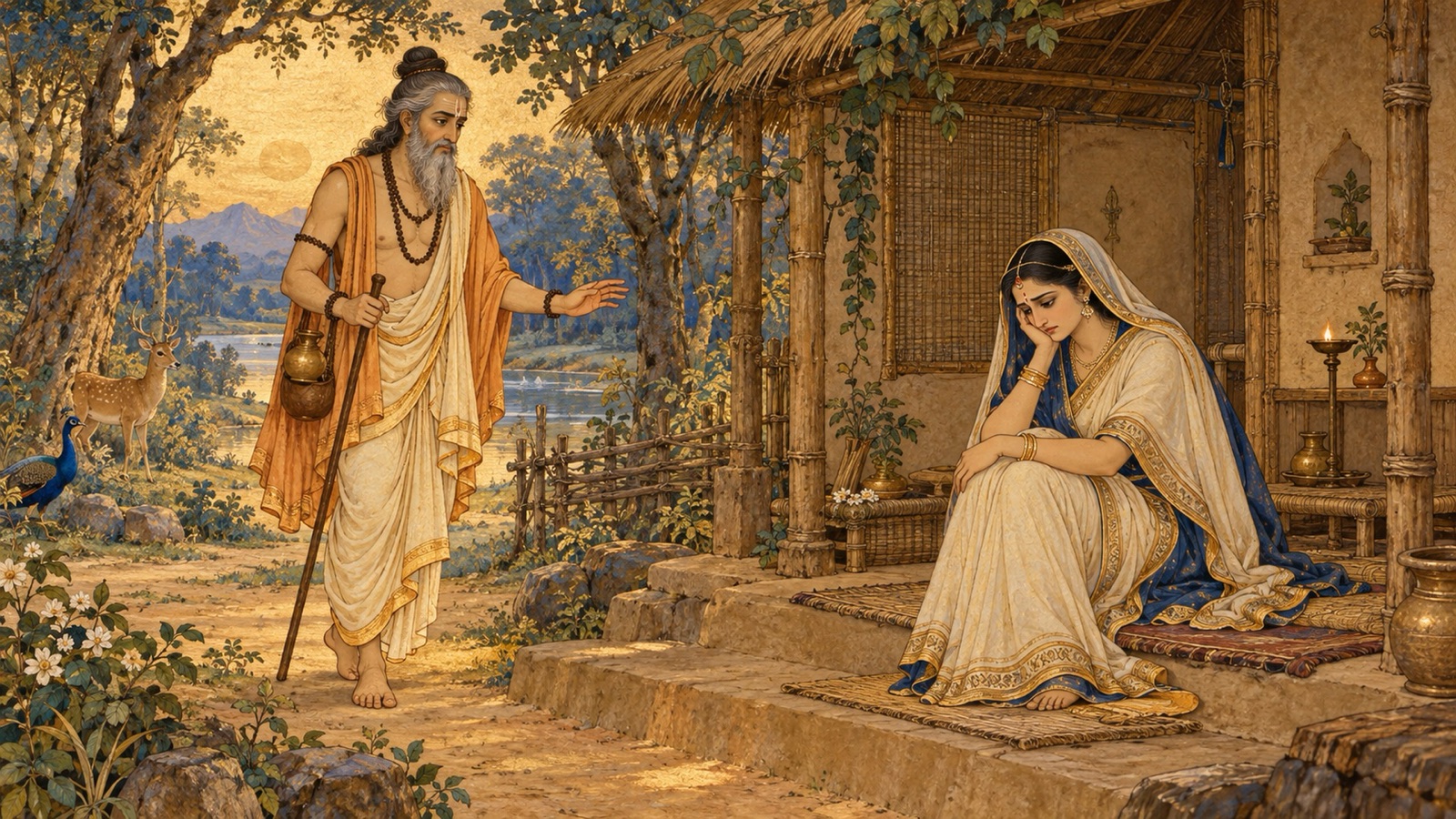
Into this sorrow came her husband. After a long absence in deep meditation, the sage Kashyapa returned to her hermitage and found it cheerless and joyless.
Kashyapa’s Inquiry and Aditi’s Lament
Kindly received by his wife, Kashyapa asked after the welfare of the sacred fires, the Brahmanas, the guests, and the household duties, gently perceiving that her mind was not at ease. Aditi assured him that all was well with the Brahmanas and the sacred observances, but then opened her heart. Every soul, she acknowledged, is bound by ties of affection — and she confessed her own distress: their fortune, splendour, glory, and very home had been usurped by the mighty demons, and she, exiled by the foes, was plunged in an ocean of misery. She entreated the wise sage, by his sound judgment, to find a way for the gods to retrieve what they had lost.
Kashyapa Recommends the Worship of Vasudeva
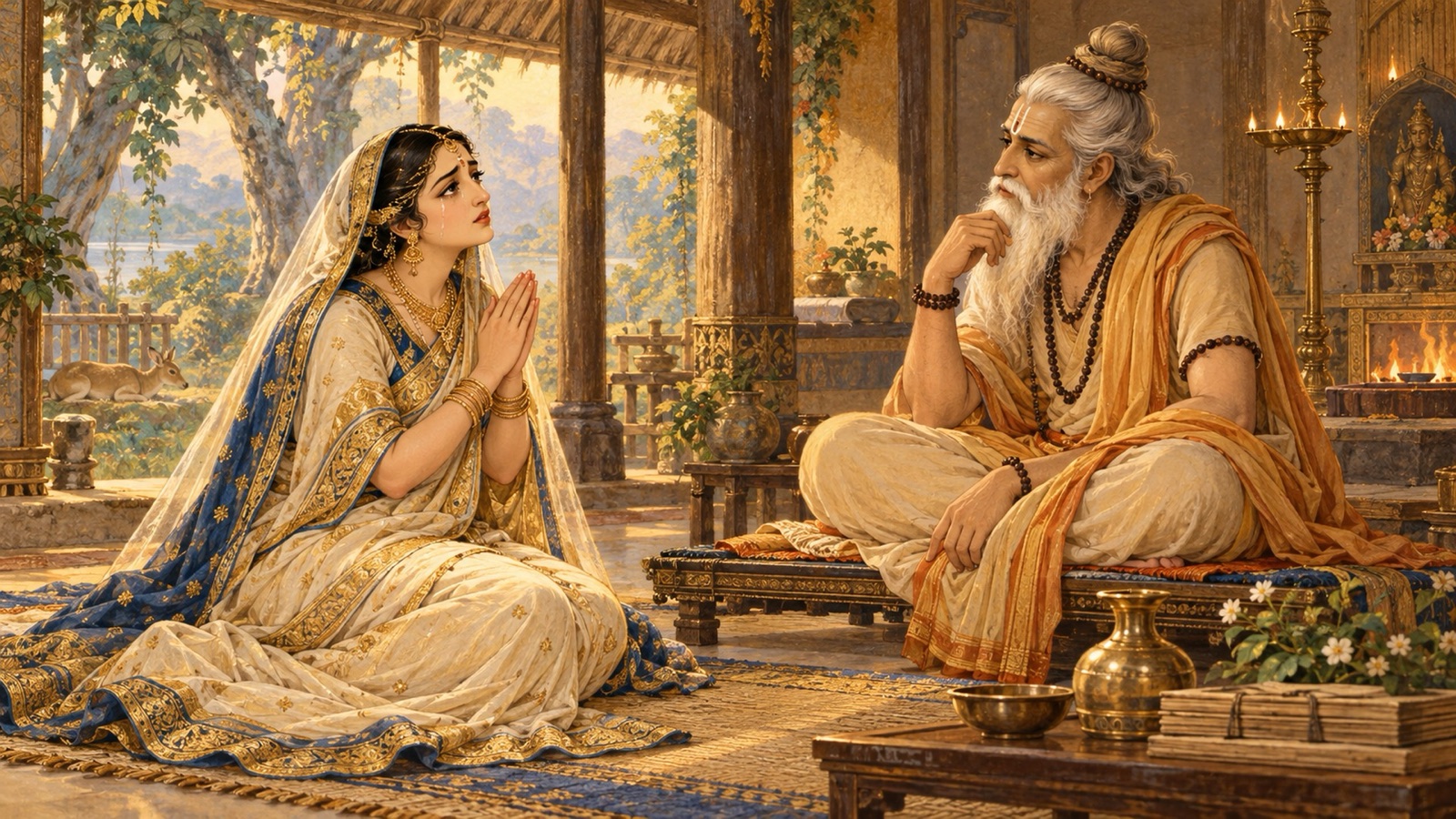
Kashyapa’s first response is not a plan of action but a gentle, knowing smile.
श्रीशुक उवाच एवमभ्यर्थितोऽदित्या कस्तामाह स्मयन्निव । अहो मायाबलं विष्णो: स्नेहबद्धमिदं जगत् ॥ १८ ॥
śrī-śuka uvāca evam abhyarthito ‘dityā kas tām āha smayann iva aho māyā-balaṁ viṣṇoḥ sneha-baddham idaṁ jagat
Meaning: Sukadeva said: Thus entreated by Aditi, Kashyapa spoke with a slight smile: “Alas, how powerful is the illusory potency of Lord Vishnu, by which this whole world is bound by affection for one’s children!” (Canto 8, Chapter 16, verse 18)
He then reminds her of the deeper truth beneath every such bond.
क्व देहो भौतिकोऽनात्मा क्व चात्मा प्रकृते: पर: । कस्य के पतिपुत्राद्या मोह एव हि कारणम् ॥ १९ ॥
kva deho bhautiko ‘nātmā kva cātmā prakṛteḥ paraḥ kasya ke pati-putrādyā moha eva hi kāraṇam
Meaning: Where is this material body, a temporary combination of the elements, and where is the eternal spirit soul, transcendental to matter? Only out of bewilderment do we call another our husband, wife, or son. (Canto 8, Chapter 16, verse 19)
This is Kashyapa’s true gift to Aditi, offered before any practical remedy at all. Her grief is real, and he does not dismiss it — but its deepest root, he shows her, lies not in the loss of heaven but in mistaking the temporary body, and the bonds of husband, wife, and son built upon it, for the eternal self. The same bewilderment that makes a mother identify wholly with her children’s fortunes is what has plunged Aditi into an ocean of sorrow. He does not ask her to feel less; he asks her to see more truly, so that her longing for her exiled sons can be lifted into a longing for the one relationship that never ends — the soul’s bond with Vasudeva. Only a husband himself established in this knowledge could counsel his grieving wife with such tenderness, refusing to let her sorrow harden into despair.
Only then does Kashyapa turn to the practical remedy. Rather than proposing a strategy of war or alliance, he points her to the Supreme Lord as the true and lasting remedy.
उपतिष्ठस्व पुरुषं भगवन्तं जनार्दनम् । सर्वभूतगुहावासं वासुदेवं जगद्गुरुम् ॥ २० ॥
upatiṣṭhasva puruṣaṁ bhagavantaṁ janārdanam sarva-bhūta-guhā-vāsaṁ vāsudevaṁ jagad-gurum
Meaning: Worship the Supreme Person, the Lord Janardana — Vasudeva, who dwells in the hearts of all beings and is the Preceptor of the universe. (Canto 8, Chapter 16, verse 20)
That very Lord, Kashyapa assures her, is quickly pleased by devotion and is affectionate to His devotees; worship offered to Him is never fruitless. When Aditi asks by what method she should wait upon the Ruler of the universe so that He may accomplish her heart’s desire, Kashyapa prepares to disclose to her a sacred vow.
The Payovrata Vow
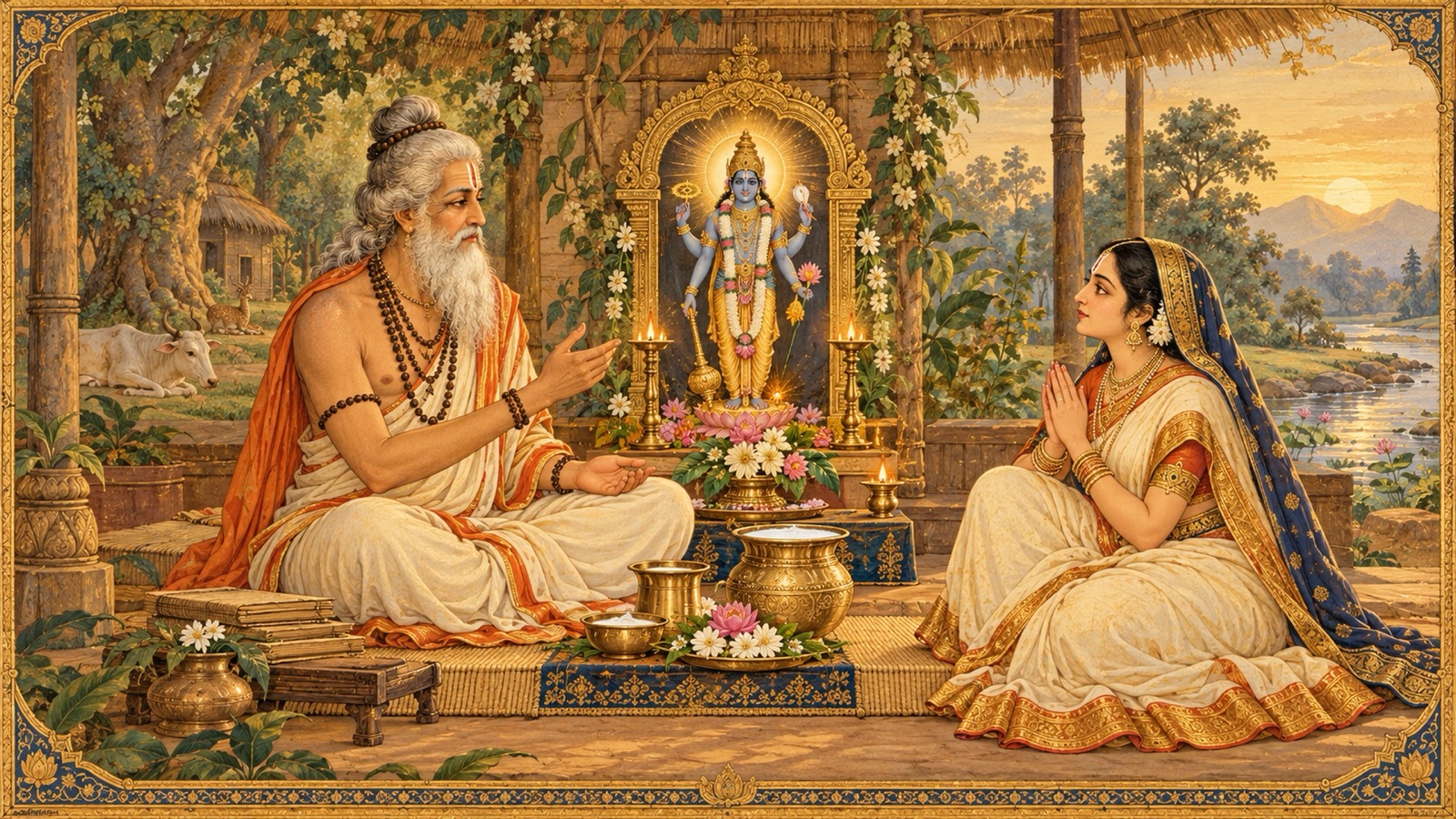
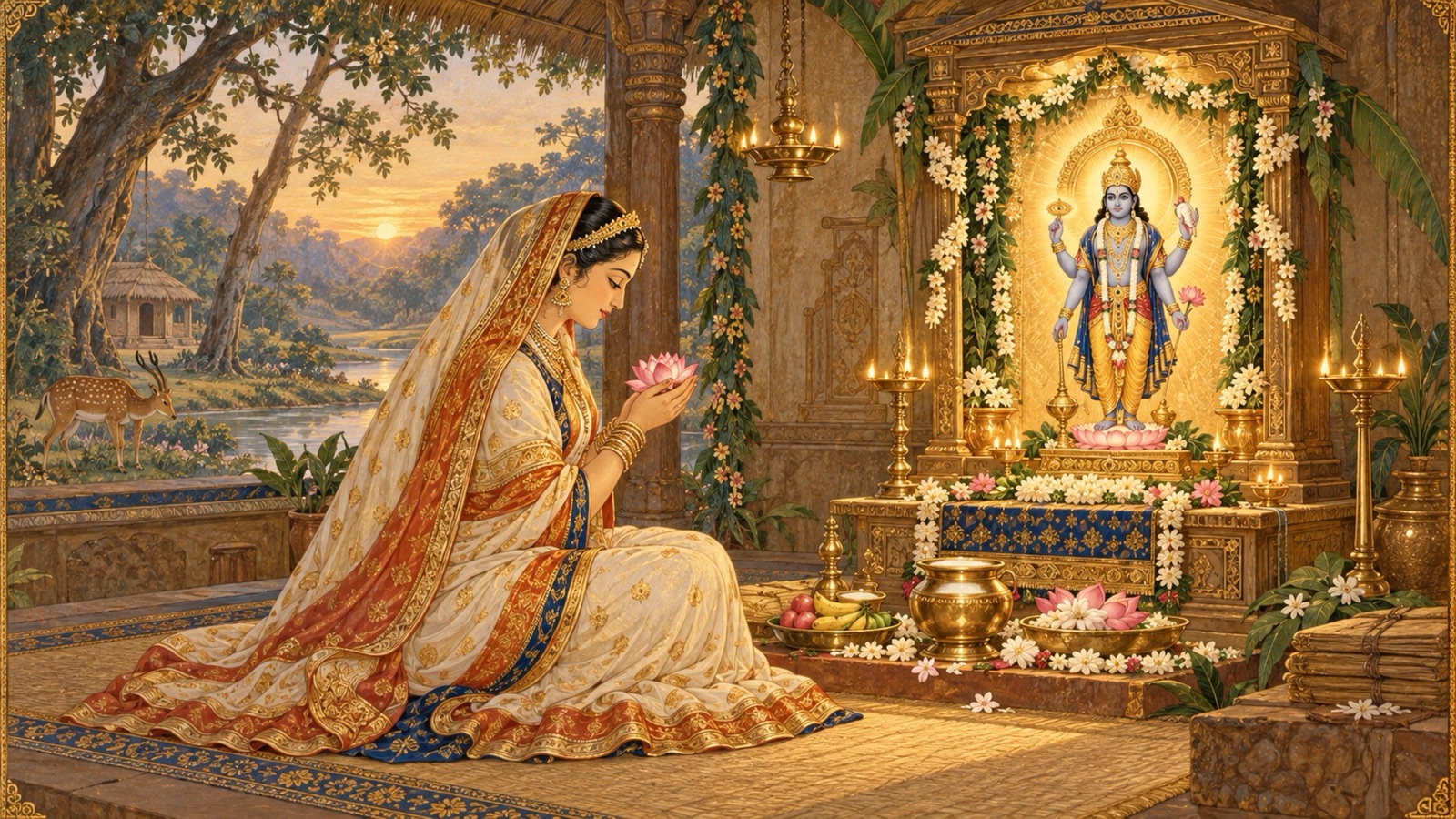
Kashyapa teaches her the vow known as Payovrata, undertaken to propitiate Lord Kesava. Full of supreme devotion and subsisting on milk alone, the worshipper is to adore the lotus-eyed Lord Vishnu for twelve days during the bright fortnight of the month of Phalguna.
फाल्गुनस्यामले पक्षे द्वादशाहं पयोव्रतम् । अर्चयेदरविन्दाक्षं भक्त्या परमयान्वित: ॥ २५ ॥
phālgunasyāmale pakṣe dvādaśāhaṁ payo-vratam arcayed aravindākṣaṁ bhaktyā paramayānvitaḥ
Meaning: During the bright fortnight of the month of Phalguna, one should observe the Payovrata for twelve days, worshipping the lotus-eyed Lord with supreme devotion. (Canto 8, Chapter 16, verse 25)
He describes the observance in loving detail: bathing, worshipping the Lord’s image with sandal-paste and flowers, invoking Him with sacred mantras and heartfelt prayers of praise, offering food and then distributing it, muttering the Lord’s mantra, and feeding Brahmanas with rice boiled in milk. Throughout the twelve days the devotee is to observe strict continence, sleep on the ground, bathe thrice daily, remain harmless to all beings, avoid unholy talk and every luxury, and give in charity free from all niggardliness, entertaining even the destitute, the blind, and the miserable. On the thirteenth day the Deity is bathed anew with five sacred substances and worshipped with even greater splendor while the Purusha-sukta hymn is chanted; the teacher and priests who guide the rite are honoured with cloth, ornaments, and cows, and the sanctified food is then shared with everyone present without exception, down to the very lowest among them, for the Lord is equally present in every heart (verses 50–56). It is a vow woven entirely of devotion, self-restraint, and generosity.
The Fruit of the Vow
Kashyapa concludes by exalting the vow he has given. The Payovrata, he says, is a universal sacrifice yielding the fruit of all sacrifices, the quintessence of all austerities, and supremely dear to the Lord. Indeed, that alone is a true vow, gift, austerity, or sacrifice by which Lord Vishnu is pleased. And so he gives Aditi his loving assurance.
तस्मादेतद्व्रतं भद्रे प्रयता श्रद्धयाचर । भगवान्परितुष्टस्ते वरानाशु विधास्यति ॥ ६२ ॥
tasmād etad vrataṁ bhadre prayatā śraddhayācara bhagavān parituṣṭas te varān āśu vidhāsyati
Meaning: Therefore, O blessed lady, observe this vow with self-restraint and faith; well pleased with you, the Lord will speedily grant all the objects of your desire. (Canto 8, Chapter 16, verse 62)
With these words the way forward is opened — not through the strength of the gods, but through the devotion of a mother. The next chapter will show how faithfully Aditi keeps this vow, and how the Lord Himself responds.
Principal Teachings of This Chapter
1. In distress, turn first to the Lord. Kashyapa does not counsel Aditi to seek help from armies or allies, but to worship the Supreme Lord. Our first refuge in trouble should be God Himself (verse 20).
2. Grief is often rooted in forgetting who we are. Before offering any practical remedy, Kashyapa reminds Aditi that the body and its relationships — husband, wife, son — are temporary, and that we call another “ours” only through the bewilderment of identifying with the body. Real consolation begins with this seeing (verse 19).
3. Devotion to the Lord is never fruitless. Kashyapa assures Aditi that worship of Vasudeva is quickly pleasing to Him and always bears fruit. Sincere devotion is never wasted effort (verses 20-21).
4. True worship unites devotion, self-restraint, and charity. The Payovrata weaves together adoration of the Lord, purity and discipline of life, and generosity to all — even the destitute. Real devotion overflows into how we live and how we treat others (verses 48-56).
5. The greatest sacrifice is the one that pleases the Lord. Kashyapa calls the Payovrata the essence of all austerities, for that alone is true worship by which Vishnu is gratified. What matters is not the outward scale but the loving heart behind it (verses 60-61).
6. God responds to sincere, humble devotion. The remedy for the gods’ great loss is not power but the humble vow of a devoted mother. The Lord is drawn near by love, not compelled by force (verse 62).
A Devotional Reflection
There is something deeply moving in the shape of this chapter. The gods have lost everything — their heaven, their glory, their home — and we might expect the remedy to match the scale of the loss: a mightier army, a cleverer strategy, a more powerful weapon. Instead, the answer given to their grieving mother is astonishingly gentle. Drink only milk. Rise early and bathe. Worship the Lord with flowers and a loving heart. Feed the hungry, harm no one, speak no unkind word, give freely even to the poorest. In other words, the way to recover the greatest of fortunes is through the smallest and humblest of daily disciplines, offered with sincere love. This is the Bhagavata’s quiet wisdom: that the door to God does not open to force but to devotion, and that the most ordinary acts — a simple diet, a daily worship, a kindness to a stranger — become, when offered with faith, the very means by which heaven itself is restored. Aditi’s remedy is our remedy too. Whatever we have lost, the path back begins not with grasping but with a humble, loving turning of the heart toward the Lord.
A Daily Devotional Practice
Today, take one small, humble discipline and offer it to the Lord as Aditi was taught to offer her vow — a simple meal eaten with gratitude, a few minutes of quiet worship, an act of kindness to someone in need. As you do it, repeat softly “Om Namo Bhagavate Vasudevaya,” remembering that the Lord is drawn near not by grand gestures but by sincere, loving devotion. Let even the smallest act, done with faith, become a step on the path that restores what has been lost.
Conclusion
Aditi’s sixteenth discourse closes not with a battle plan but with a husband’s tenderness. Before any practical remedy, Kashyapa first frees his grieving wife from the deeper sorrow of mistaking body for self, and only then gives her the Payovrata — twelve days of milk, self-restraint, and open-handed charity — as the sure means of drawing near the one refuge that never fails. He calls it the greatest of all sacrifices and promises that the Lord, once pleased, swiftly fulfills every rightful desire. In the next chapter, Aditi keeps this vow with perfect faith, and the Supreme Lord Himself comes to her door.
May the divine wisdom of Srimad Bhagavatam awaken pure devotion within our hearts.
Om Namo Bhagavate Vasudevaya.
Jay Shree Madhav.
References and Attribution
- Primary edition: Gita Press, Śrīmad Bhāgavata Mahāpurāṇa (English, complete), Book Eight, Discourse 16, pages 800–806.
- Series: Srimad Bhagavatam Wisdom · Biswa Sanatan Dharma Seva Trust.
- Presented following the spiritual guidance and recommendation of Pandit Dr. Shri Kashinath Mishra.
This is an original, faithful retelling in the writer’s own words, with brief quoted verses shown in Devanāgarī and transliteration and their meanings given as summaries. It is not a reproduction of any single publisher’s continuous translation or commentary. No affiliation with or endorsement by any publisher is implied.
Jay Shree Madhav