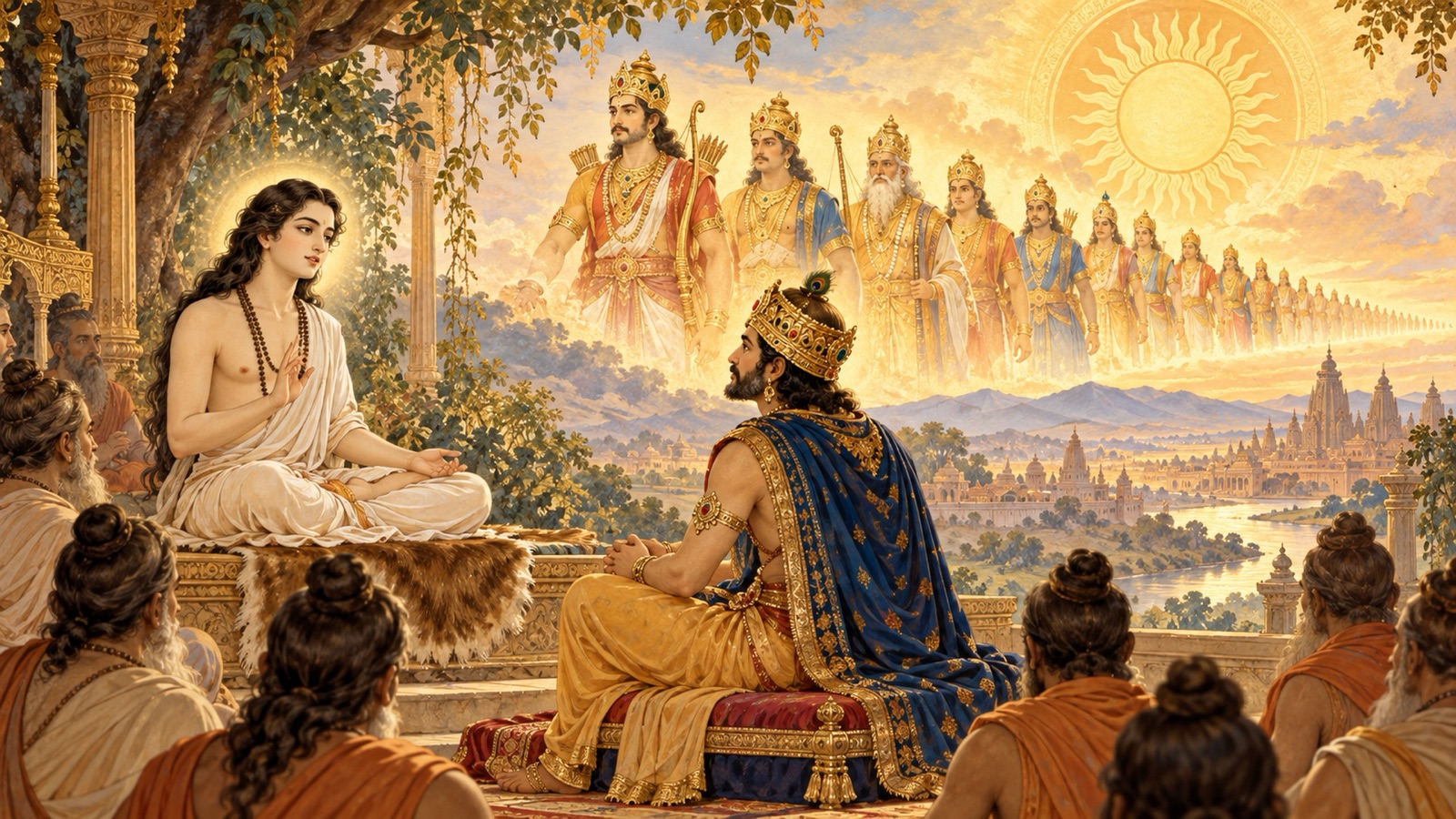
From the throne of Ayodhya the long line of the solar dynasty flows onward through the sons of Kusa — sages, yogis and warriors — as Sukadeva recounts to King Parikshit the kings who came, and the kings yet to come.
Om Namo Bhagavate Vasudevaya.
Om Namo Bhagavate Vasudevaya.
Om Namo Bhagavate Vasudevaya.
Welcome to Srimad Bhagavatam Wisdom, a devotional journey through the sacred histories and teachings of the Srimad Bhagavat Mahapurana. This twelfth chapter of Book Nine is a genealogy — the roll of kings descended from Kusa, the son of Lord Ramachandra, carrying the solar dynasty of Ikshvaku onward after the Lord’s own reign. Sukadeva recites for King Parikshit the names of these kings, past and future, and among the long line certain figures shine out: Hiranyanabha, a great teacher of yoga; Maru, perfected in yoga, who abides even now at Kalapagrama and will one day revive the solar dynasty; and Brihadbala, who fell in the great war of the Mahabharata. The chapter closes by naming Sumitra as the last of the line in the age of Kali. Though it is a list of names, it carries a quiet teaching: that dynasties rise and pass, yet the sacred seed is preserved, and the wisdom of the Self, handed down from teacher to disciple, outlasts every throne.
Chapter Information
- Scripture: Śrīmad Bhāgavata Mahāpurāṇa
- Canto: 9 (Book Nine)
- Chapter: 12 (Discourse 12)
- Chapter title: The Dynasty of Kusa, the Son of Lord Ramachandra
- Principal speaker: Sukadeva Gosvami, narrating to King Parikshit — the whole related by Suta Gosvami to the sage Saunaka and the assembly of sages at Naimisaranya
- Principal listener: King Parikshit
- Main setting: The solar dynasty of Ikshvaku, in the line descending from Kusa, son of Lord Ramachandra
- Central subject: The genealogy of the kings descended from Kusa, including the yoga-teacher Hiranyanabha, the yogi Maru of Kalapagrama, and Brihadbala, down to Sumitra, the last of the line
- Principal verse range: Canto 9, Chapter 12, verses 1–16
- Primary edition: Gita Press Śrīmad Bhāgavata Mahāpurāṇa
The Line of Kusa
Sukadeva resumed the account of the solar dynasty. Kusa’s son was Atithi; from him came Nishadha, and then Nabha; then Pundarika, whose son was Kshemadhanva; and from him came Devanika, Aniha, Pariyatra, Balasthala, and Vajranabha, who was said to have emanated from a ray of the sun-god.
श्रीशुक उवाच कुशस्य चातिथिस्तस्मान्निषधस्तत्सुतो नभ: । पुण्डरीकोऽथ तत्पुत्र: क्षेमधन्वाभवत्तत: ॥ १ ॥
śrī-śuka uvāca kuśasya cātithis tasmān niṣadhas tat-suto nabhaḥ puṇḍarīko ’tha tat-putraḥ kṣemadhanvābhavat tataḥ
Meaning: Sukadeva said: Kusa’s son was Atithi, and from him came Nishadha, whose son was Nabha; then came Pundarika, whose son was Kshemadhanva. (Canto 9, Chapter 12, verse 1)
Hiranyanabha, the Teacher of Yoga
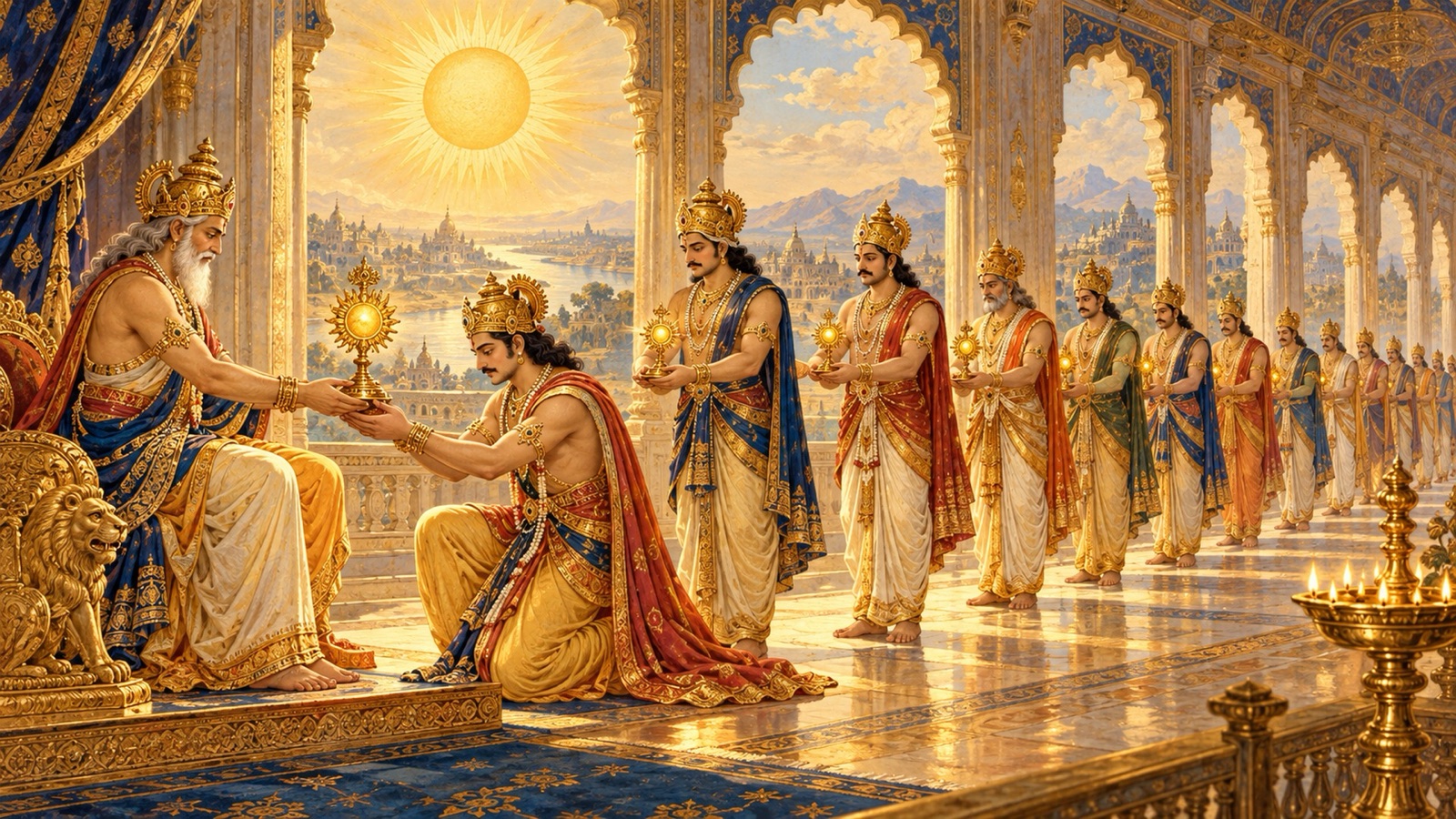
From Vajranabha came Khagana, and from him Vidhriti; and from Vidhriti sprang Hiranyanabha, a master of yoga and a pupil of the sage Jaimini. From this Hiranyanabha the great sage Yajnavalkya of Kosala received the spiritual yoga of the Self — the yoga of great elevation that cuts the knot of ignorance in the heart.
सगणस्तत्सुतस्तस्माद् विधृतिश्चाभवत् सुत: । ततो हिरण्यनाभोऽभूद् योगाचार्यस्तु जैमिने: ॥ ३ ॥ शिष्य: कौशल्य आध्यात्मं याज्ञवल्क्योऽध्यगाद् यत: । योगं महोदयम् ऋषिर्हृदयग्रन्थिभेदकम् ॥ ४ ॥
sagaṇas tat-sutas tasmād vidhṛtiś cābhavat sutaḥ tato hiraṇyanābho ’bhūd yogācāryas tu jaimineḥ śiṣyaḥ kauśalya ādhyātmaṁ yājñavalkyo ’dhyagād yataḥ yogaṁ mahodayam ṛṣir hṛdaya-granthi-bhedakam
Meaning: His son was Khagana, and from him came Vidhriti; from Vidhriti came Hiranyanabha, a teacher of yoga and a pupil of Jaimini. From him the sage Yajnavalkya of Kosala learned the spiritual yoga of great elevation, which cuts asunder the knot of ignorance in the heart. (Canto 9, Chapter 12, verses 3-4)
Maru of Kalapagrama
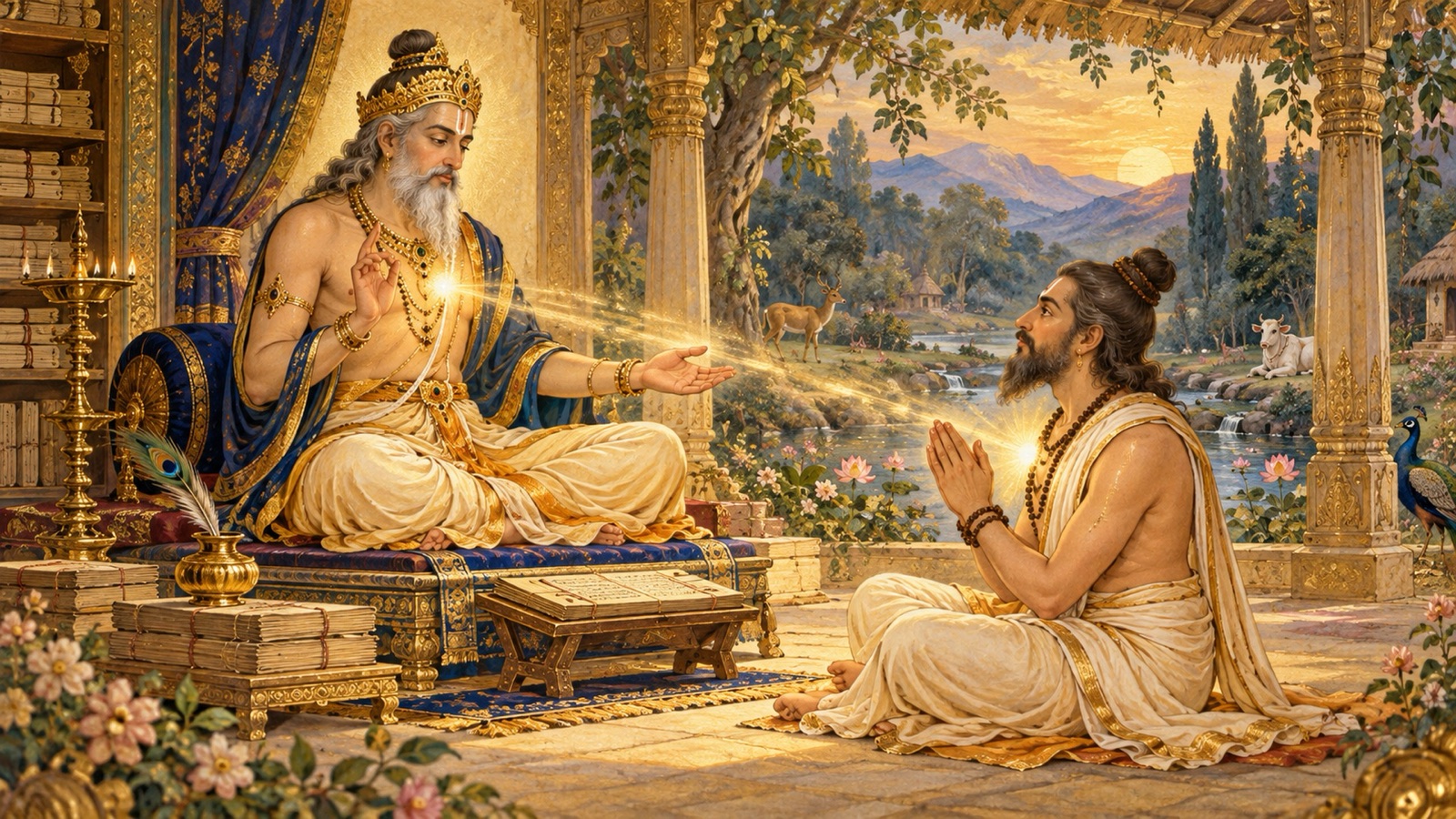
From Hiranyanabha came Pushpa, then Dhruvasandhi, Sudarsana, Agnivarna, Sighra, and then Maru. Perfected through yoga, Maru abides even now, the scripture tells, at Kalapagrama — and it is he who, at the end of the age of Kali, when the solar dynasty has become extinct, will revive it once more.
सोऽसावास्ते योगसिद्ध: कलापग्राममास्थित: । कलेरन्ते सूर्यवंशं नष्टं भावयिता पुन: ॥ ६ ॥
so ’sāv āste yoga-siddhaḥ kalāpa-grāmam āsthitaḥ kaler ante sūrya-vaṁśaṁ naṣṭaṁ bhāvayitā punaḥ
Meaning: He, perfected in yoga, abides at the village of Kalapa; and at the end of Kali he will revive the solar dynasty when it has become extinct. (Canto 9, Chapter 12, verse 6)
Brihadbala and the Kings to Come
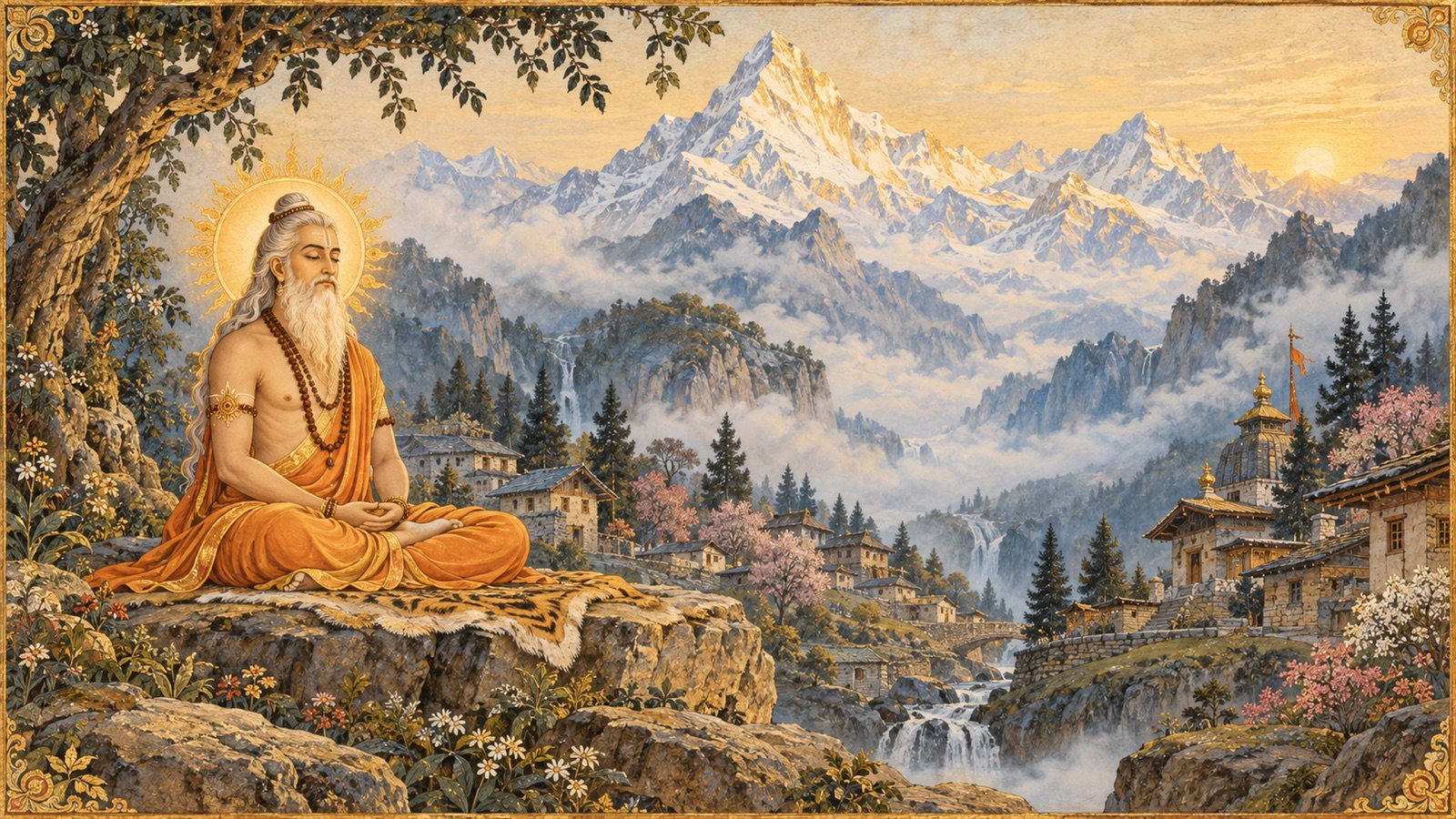
From Maru came Prasusruta, then Sandhi, Amarshana, Mahaswan, and Visvabahu; from him came Prasenajit, then Takshaka, and then Brihadbala — who was slain in battle, Sukadeva told Parikshit, by Parikshit’s own father, Abhimanyu, in the great war.
तत: प्रसेनजित् तस्मात् तक्षको भविता पुन: । ततो बृहद्बलो यस्तु पित्रा ते समरे हत: ॥ ८ ॥
tataḥ prasenajit tasmāt takṣako bhavitā punaḥ tato bṛhadbalo yas tu pitrā te samare hataḥ
Meaning: From him came Prasenajit, then Takshaka, and then Brihadbala, who was slain in battle, O King, by your father. (Canto 9, Chapter 12, verse 8)
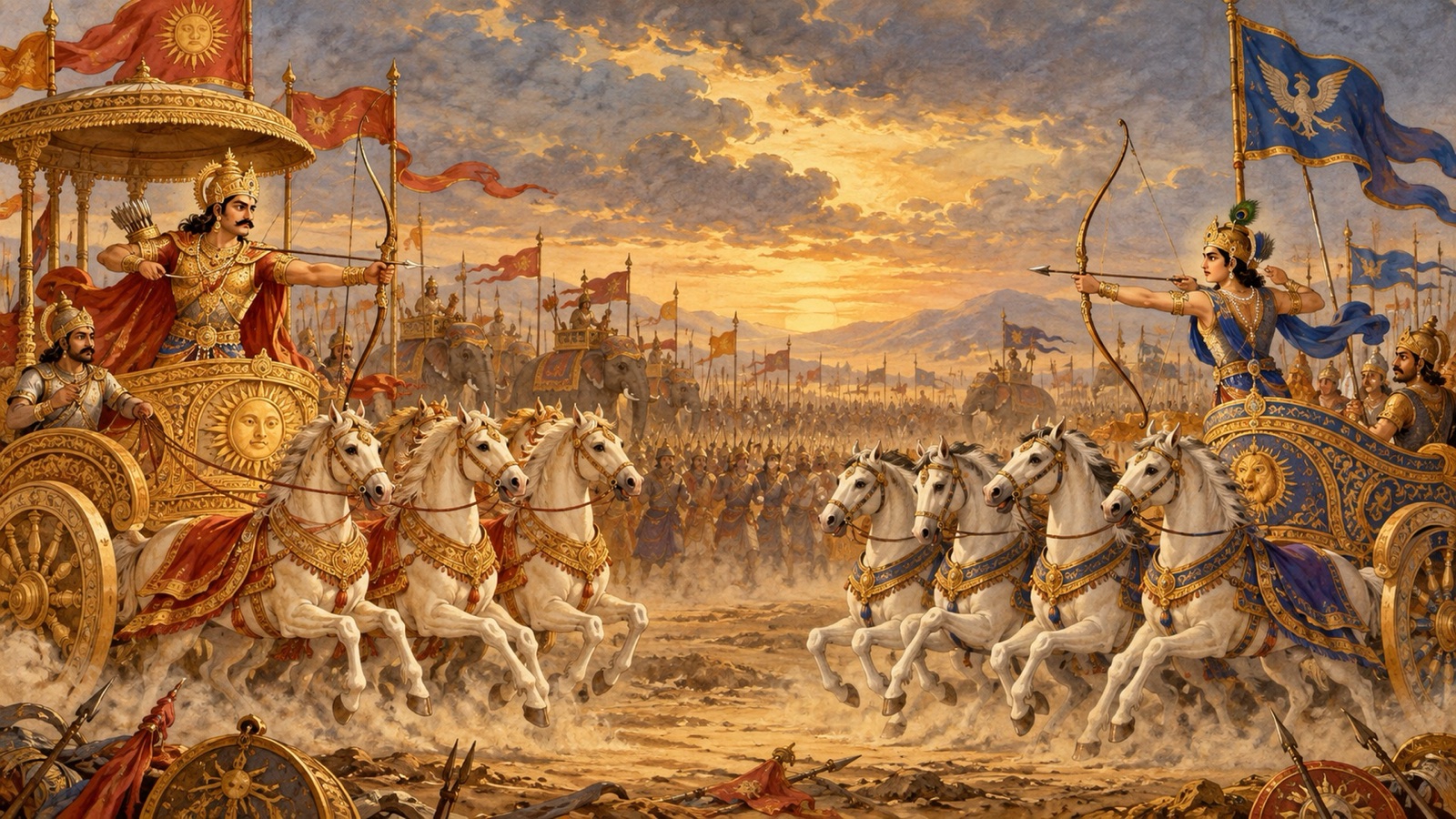
Sukadeva then named the kings yet to come in this line: Brihadrana, Urukriya, Vatsavriddha, Prativyoma, Bhanu, the general Divaka, the valiant Sahadeva, Brihadaswa, Bhanuman, Pratikaswa, Supratika, Marudeva, Sunakshatra, Pushkara, Antariksha, Sutapa, Amitrajit, Brihadraja, Barhi, Kritanjaya, Rananjaya, Sanjaya, Sakya, Suddhoda, Langala, Prasenajit, Kshudraka, Ranaka, Suratha, and at last Sumitra — with whom the line would end.
इक्ष्वाकूणामयं वंश: सुमित्रान्तो भविष्यति । यतस्तं प्राप्य राजानं संस्थां प्राप्स्यति वै कलौ ॥ १६ ॥
ikṣvākūṇām ayaṁ vaṁśaḥ sumitrānto bhaviṣyati yatas taṁ prāpya rājānaṁ saṁsthāṁ prāpsyati vai kalau
Meaning: This dynasty of the Ikshvakus will end with Sumitra; for on reaching that king the line will come to its close in the age of Kali. (Canto 9, Chapter 12, verse 16)
Principal Teachings of This Chapter
1. The sacred line endures across ages. From Kusa, son of Lord Rama, the solar dynasty flows on through many generations — a reminder that the Lord’s work in the world is carried forward through those who come after (verses 1-2).
2. True kingship can be joined to true wisdom. Hiranyanabha is both a king’s descendant and a master of yoga who teaches even the great Yajnavalkya. Worldly position and spiritual attainment are not opposed; the highest souls hold both (verses 3-4).
3. The Lord preserves a seed through every darkness. Maru, perfected in yoga, is kept at Kalapagrama to revive the solar dynasty when it has vanished. However complete a decline may seem, the sacred is never wholly lost (verses 5-6).
4. Even great kings bow to time. Brihadbala, mighty as he was, fell in battle; the line itself ends with Sumitra. Every earthly power is subject to the turning of the ages, and only the Lord is eternal (verses 8, 16).
5. What is truly passed down is wisdom, not merely a throne. The one thing in this chapter that “cuts the knot of ignorance” is the yoga of the Self, handed from Hiranyanabha to Yajnavalkya. Names and kingdoms fade; the teaching that liberates the heart endures (verses 3-4).
A Devotional Reflection
A chapter of names can seem, at first, like a dry list — and yet the Bhagavatam never records a lineage without a reason. Here the long roll of the solar kings, running from Kusa all the way to Sumitra, quietly teaches us the shape of time itself: how greatness is handed down, how it flowers in a sage like Hiranyanabha or a warrior like Brihadbala, and how at last even the most glorious dynasty comes to its close. Against this backdrop of rise and fall, two figures stand apart. One is Maru, who does not vanish with his age but waits, perfected in yoga, as a living seed to renew the line when it is gone — a picture of the sacred that no darkness can finally extinguish. The other is the yoga of the Self, the one possession in this chapter that outlasts every throne, passed from teacher to disciple down the centuries. The Bhagavatam gently reminds us that we, too, are links in a chain far longer than our own lives; and that the only inheritance truly worth passing on, and truly worth receiving, is the wisdom that cuts the knot of ignorance in the heart and unites us with the Lord.
A Daily Devotional Practice
Today, in the spirit of the wisdom handed down from Hiranyanabha to Yajnavalkya, honour the sacred knowledge you have received. Call to mind one teacher, elder or scripture that first turned your heart toward God, and offer a moment of gratitude for that gift. Then pass it on, however simply — share one true and gentle spiritual thought with someone younger or in need, or read a line of scripture aloud in your home — remembering that wisdom lives only as it is handed forward. As you do, repeat gently, “Om Namo Bhagavate Vasudevaya,” and pray that the knot of ignorance in your own heart be loosened, so that what you receive and what you give may both draw you nearer to the eternal Lord who outlasts every age.
Conclusion
The twelfth chapter of Book Nine follows the solar dynasty of Ikshvaku from Kusa, the son of Lord Ramachandra, down to its final king in the age of Kali. It reads as a bare genealogy, yet the Bhagavatam intends more: names and thrones pass away, but the yoga of the Self — the wisdom Hiranyanabha gave to Yajnavalkya, which cuts the knot of ignorance in the heart — outlasts every dynasty, and Maru’s silent vigil at Kalapagrama shows that even in the darkest hour of Kali the sacred seed is never lost. May we treasure that one inheritance above all others, and pass it on with a devoted heart.
May the divine wisdom of Srimad Bhagavatam awaken pure devotion within our hearts.
Om Namo Bhagavate Vasudevaya.
Jay Shree Madhav.
References and Attribution
- Primary edition: Gita Press, Śrīmad Bhāgavata Mahāpurāṇa (English, complete), Book Nine, Discourse 12, pages 52–54.
- Series: Srimad Bhagavatam Wisdom · Biswa Sanatan Dharma Seva Trust.
- Presented following the spiritual guidance and recommendation of Pandit Dr. Shri Kashinath Mishra.
This is an original, faithful retelling in the writer’s own words, with brief quoted verses shown in Devanāgarī and transliteration and their meanings given as summaries. It is not a reproduction of any single publisher’s continuous translation or commentary. No affiliation with or endorsement by any publisher is implied.
Jay Shree Madhav