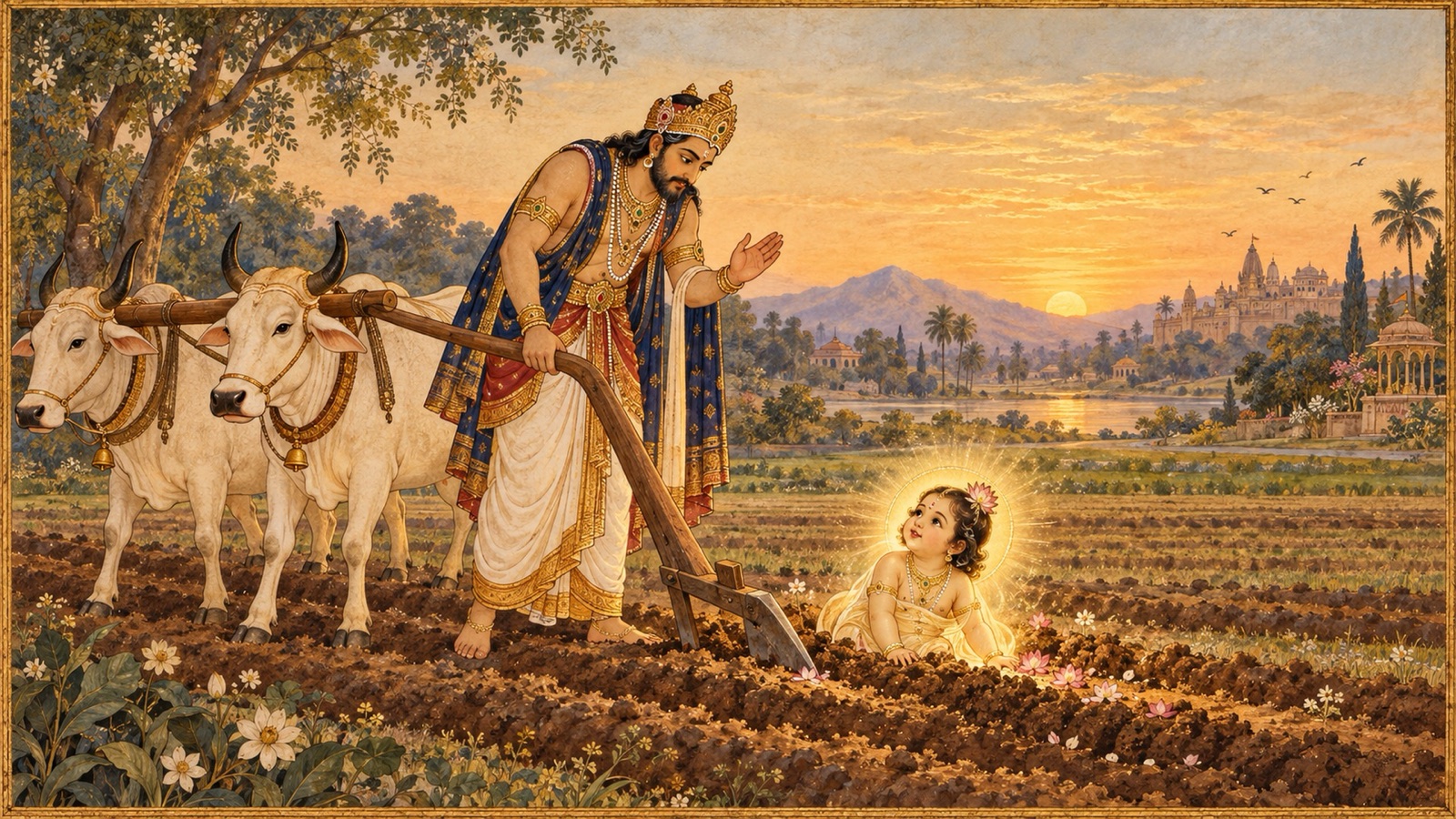
As King Siradhvaja Janaka tills the soil in readiness for a sacrifice, the divine child Sita rises from the tip of his ploughshare — the goddess of fortune appearing in the line of the sages of Mithila.
Om Namo Bhagavate Vasudevaya.
Om Namo Bhagavate Vasudevaya.
Om Namo Bhagavate Vasudevaya.
Welcome to Srimad Bhagavatam Wisdom, a devotional journey through the sacred histories and teachings of the Srimad Bhagavat Mahapurana. This thirteenth chapter of Book Nine follows King Nimi’s fateful curse with his preceptor Vasishtha into the line of sage-kings of Mithila that sprang from him — a chapter about the fleeting nature of the body, the freedom of the soul, and the union of kingship with the highest wisdom.
Chapter Information
- Scripture: Śrīmad Bhāgavata Mahāpurāṇa
- Canto: 9 (Book Nine)
- Chapter: 13 (Discourse 13)
- Chapter title: The Dynasty of Maharaja Nimi
- Principal speaker: Sukadeva Gosvami, narrating to King Parikshit — the whole related by Suta Gosvami to the sage Saunaka and the assembly of sages at Naimisaranya
- Principal listener: King Parikshit
- Main setting: The kingdom of Mithila (Videha), founded in the line of Maharaja Nimi, son of Ikshvaku
- Central subject: The mutual curse of Nimi and Vasishtha, Nimi’s choice to remain bodiless, the birth of Janaka and the founding of Mithila, and the line of the sage-kings of Videha
- Principal verse range: Canto 9, Chapter 13, verses 1–27
- Primary edition: Gita Press Śrīmad Bhāgavata Mahāpurāṇa
The Curse of Nimi and Vasishtha
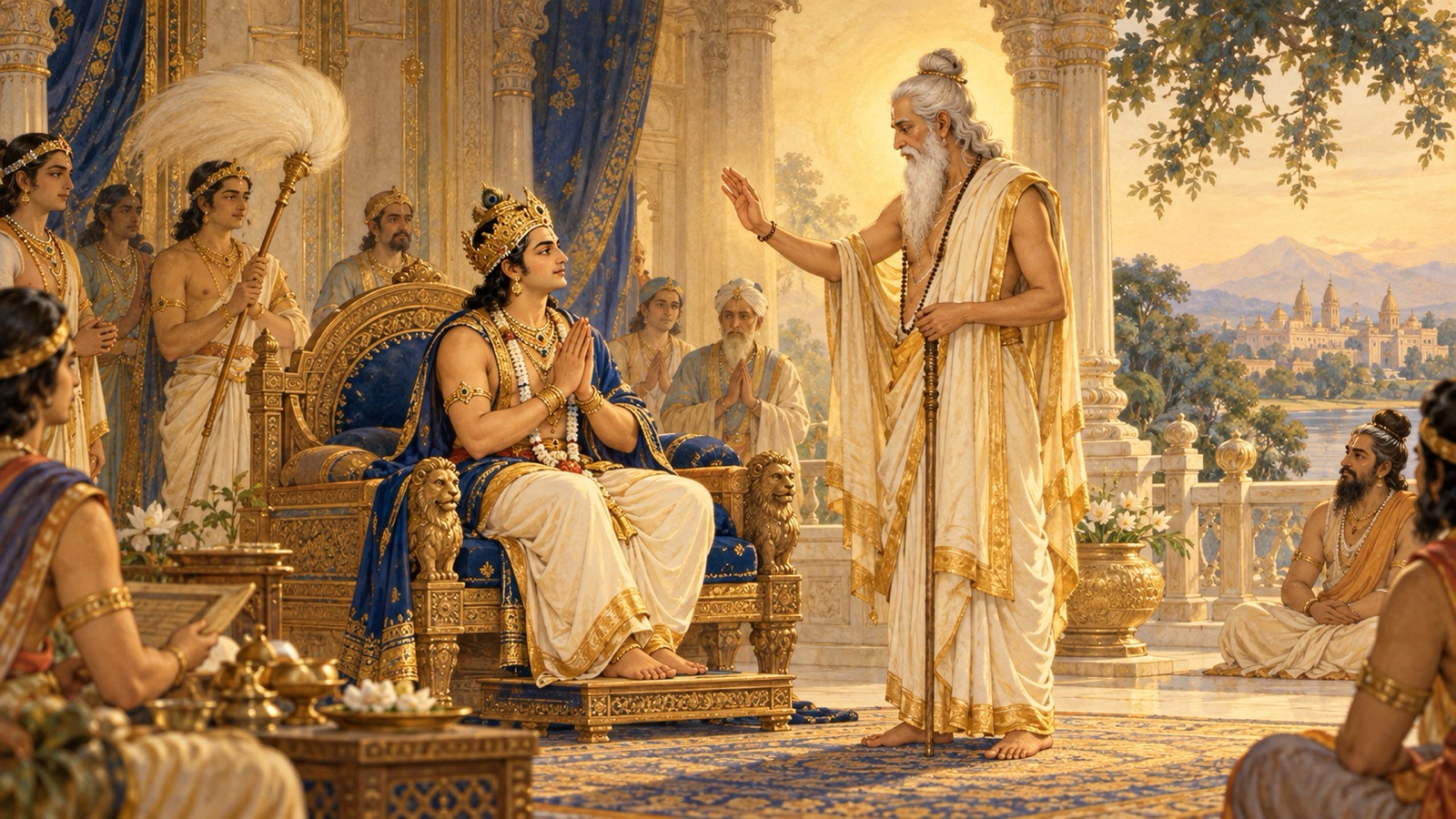
Sukadeva began the account of the line of Nimi. King Nimi, son of Ikshvaku, undertook a great sacrifice and invited the sage Vasishtha to be his chief priest. But Vasishtha replied that he had already been engaged by Indra for his sacrifice and asked Nimi to wait until he returned. Nimi kept silent, and the sage departed to perform Indra’s rite. Reflecting that life is fleeting, the thoughtful Nimi did not wait, but proceeded with the sacrifice through other priests. Returning and finding that his disciple had begun without him, Vasishtha cursed the king, saying, “Let the body of Nimi, who thinks himself learned, fall!”
शिष्यव्यतिक्रमं वीक्ष्य तं निर्वर्त्यागतो गुरु: । अशपत् पतताद् देहो निमे: पण्डितमानिन: ॥ ४ ॥
śiṣya-vyatikramaṁ vīkṣya taṁ nirvartyāgato guruḥ aśapat patatād deho nimeḥ paṇḍita-māninaḥ
Meaning: Seeing the transgression of his disciple on returning, the preceptor cursed him: “Let the body of Nimi, who considers himself learned, fall.” (Canto 9, Chapter 13, verse 4)
Nimi, well-versed in spiritual knowledge, pronounced a counter-curse upon his preceptor, whom he felt had acted wrongly: “Let your body too fall, for through greed you have failed to know what is right.”
निमि: प्रतिददौ शापं गुरवेऽधर्मवर्तिने । तवापि पतताद् देहो लोभाद्धर्ममजानत: ॥ ५ ॥
nimiḥ pratidadau śāpaṁ gurave ’dharma-vartine tavāpi patatād deho lobhād dharmam ajānataḥ
Meaning: Nimi returned the curse upon his preceptor, whom he saw as acting unrighteously: “Let your body too fall, for out of greed you have failed to know what is right.” (Canto 9, Chapter 13, verse 5)
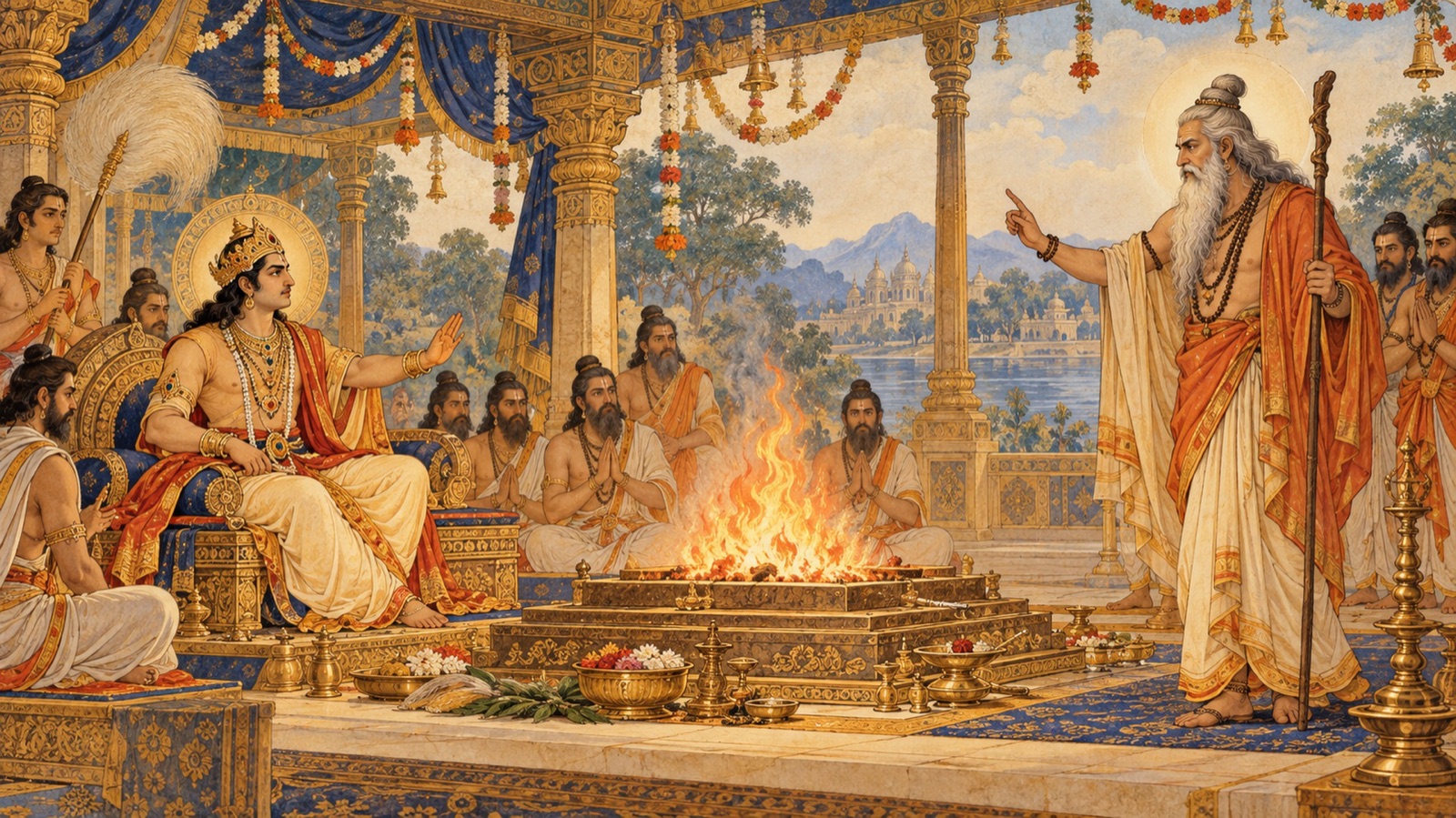
With these words Nimi gave up his body; and Vasishtha too passed away, to be reborn later of the gods Mitra and Varuna through the celestial nymph Urvasi.
Nimi’s Choice to Remain Bodiless
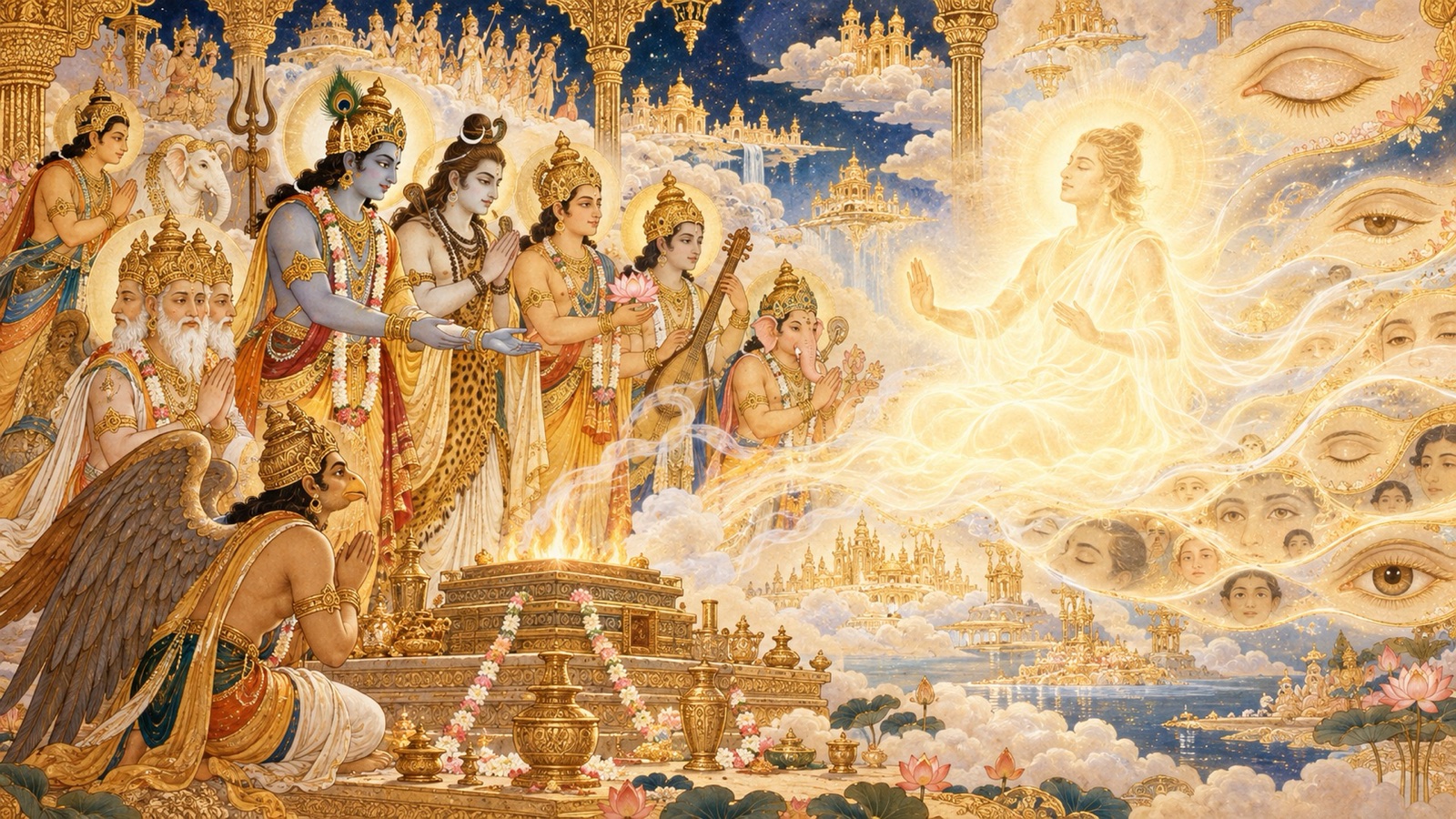
The sages who had been conducting Nimi’s sacrifice preserved his body and, at the sacrifice’s end, prayed to the assembled gods to restore him to life. When the gods consented, the spirit of Nimi spoke aloud, asking not to be bound in a body again. Some seekers, he explained, refuse to take up any body at all because they dread one day having to give it up again; but sages whose minds are absorbed in Sri Hari are untouched by that dread, and gladly worship His lotus feet.
यस्य योगं न वाञ्छन्ति वियोगभयकातरा: । भजन्ति चरणाम्भोजं मुनयो हरिमेधस: ॥ ९ ॥
yasya yogaṁ na vāñchanti viyoga-bhaya-kātarāḥ bhajanti caraṇāmbhojaṁ munayo hari-medhasaḥ
Meaning: Those who dread one day losing a body again refuse to take one at all; but sages whose minds are absorbed in Hari worship His lotus feet without any such fear. (Canto 9, Chapter 13, verse 9)
He had no wish, he said, for a body that brings suffering, grief and fear, and which death pursues everywhere, as it pursues a fish through water.
देहं नावरुरुत्सेऽहं दु:खशोकभयावहम् । सर्वत्रास्य यतो मृत्युर्मत्स्यानामुदके यथा ॥ १० ॥
dehaṁ nāvarurutse ’haṁ duḥkha-śoka-bhayāvaham sarvatrāsya yato mṛtyur matsyānām udake yathā
Meaning: I do not wish to take up again a body, which brings suffering, grief and fear, and in which death threatens the living being everywhere, as it pursues fish in the water. (Canto 9, Chapter 13, verse 10)
Here lies the chapter’s deepest teaching. Nimi is not refusing a body out of the same dread that makes the impersonalist shun all embodiment; his reluctance is not fear of the body but fear of forgetting the Lord within it. A soul absorbed in Hari’s service does not calculate what kind of body it wears — it feels no aversion to matter and no craving for liberation as an escape. What Nimi truly asks for, then, is not freedom from form but freedom within form: an existence so wholly given to remembering the Lord that no body, gross or subtle, could ever bind it (verses 9–10).
The gods granted his wish: he would dwell, bodiless, at will in the eyes of all embodied beings, marked by the opening and closing of their eyelids — abiding ever in the contemplation of the Self.
देवा ऊचु: विदेह उष्यतां कामं लोचनेषु शरीरिणाम् । उन्मेषणनिमेषाभ्यां लक्षितोऽध्यात्मसंस्थित: ॥ ११ ॥
devā ūcuḥ videha uṣyatāṁ kāmaṁ locaneṣu śarīriṇām unmeṣaṇa-nimeṣābhyāṁ lakṣito ’dhyātma-saṁsthitaḥ
Meaning: The gods said: May you, bodiless, dwell as you wish in the eyes of all embodied beings, recognized by the opening and closing of their eyelids, ever established in the Self. (Canto 9, Chapter 13, verse 11)
The Birth of Janaka and the Founding of Mithila
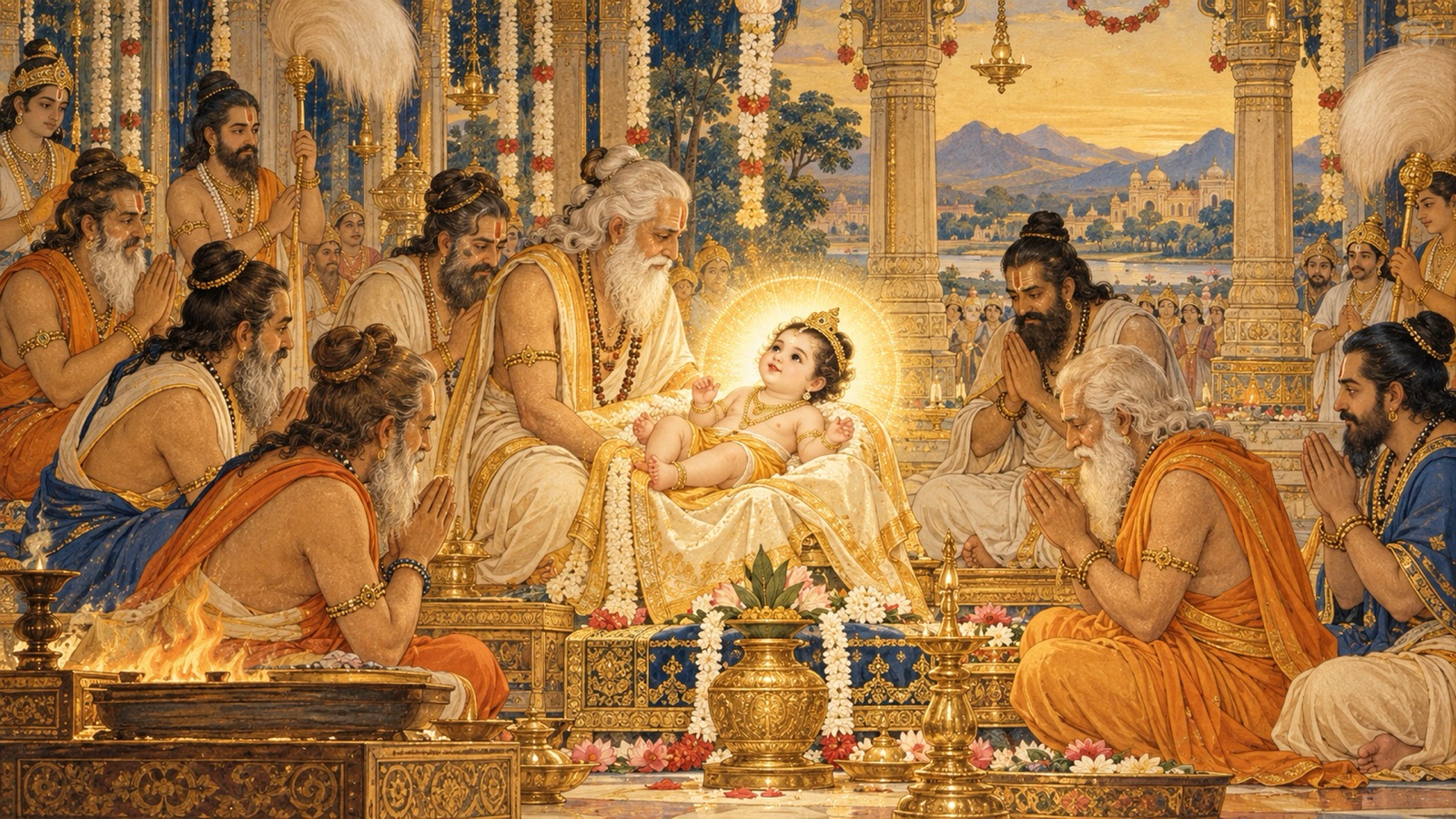
Seeing the danger of anarchy for a people left without a king, the great sages churned the body of Nimi, and from it a son was born. Because he came from that churning he was called Janaka; because he was born in the line of the bodiless Nimi (Videha) he was called Vaideha; and because he built the city of Mithila, he was known as Mithila.
जन्मना जनक: सोऽभूद् वैदेहस्तु विदेहज: । मिथिलो मथनाज्जातो मिथिला येन निर्मिता ॥ १३ ॥
janmanā janakaḥ so ’bhūd vaidehas tu videhajaḥ mithilo mathanāj jāto mithilā yena nirmitā
Meaning: By his birth he became known as Janaka; as born in the line of the bodiless Videha, he was called Vaideha; and because he was produced from the churning and built Mithila, he was known as Mithila. (Canto 9, Chapter 13, verse 13)
The Appearance of Sita and the Sage-Kings of Mithila
From Janaka descended a long line of kings — Udavasu, Nandivardhana, Suketu, Devarata, and many more. Among them was Siradhvaja, so named because, while he was ploughing the earth to prepare the ground for a sacrifice, the divine Sita appeared from the tip of his ploughshare.
तत: शीरध्वजो जज्ञे यज्ञार्थं कर्षतो महीम् । सीता शीराग्रतो जाता तस्मात् शीरध्वज: स्मृत: ॥ १८ ॥
tataḥ śīradhvajo jajñe yajñārthaṁ karṣato mahīm sītā śīrāgrato jātā tasmāt śīradhvajaḥ smṛtaḥ
Meaning: Then came Siradhvaja; while he was ploughing the earth for a sacrifice, Sita appeared from the front of his plough, and for that reason he is remembered as Siradhvaja, “he of the plough-banner.” (Canto 9, Chapter 13, verse 18)
The line continued through Kusadhvaja, Dharmadhvaja and his sons Kritadhvaja and Mitadhvaja; from Kritadhvaja came Kesidhvaja, well-versed in the science of the Self, and from Mitadhvaja came Khandikya, proficient in the science of rituals. Through many more kings — down to Bahulaswa, Kriti and Mahavasi — the line of Mithila flowed on. And Sukadeva declared that all these kings of Mithila were masters of the knowledge of the Self, who, by the grace of great yogis such as Yajnavalkya, remained free of the pairs of opposites — joy and sorrow, gain and loss — even while living as householders.
एते वै मैथिला राजन्नात्मविद्याविशारदा: । योगेश्वरप्रसादेन द्वन्द्वैर्मुक्ता गृहेष्वपि ॥ २७ ॥
ete vai maithilā rājann ātma-vidyā-viśāradāḥ yogeśvara-prasādena dvandvair muktā gṛheṣv api
Meaning: All these kings of Mithila, O King, were masters of the knowledge of the Self; by the grace of the lords of yoga they remained free from the pairs of opposites even in household life. (Canto 9, Chapter 13, verse 27)
Principal Teachings of This Chapter
1. Even a small pride can bring a great fall. Both Nimi and Vasishtha were exalted souls, yet each saw a fault in the other and cursed; both lost their bodies. The chapter warns how easily even the wise can stumble through pride or haste (verses 4-5).
2. The body is fleeting, and the soul is free. Given the chance to live again, Nimi refuses, seeing the body as a house of suffering pursued everywhere by death. His choice points beyond the body to the deathless Self (verses 9-10).
3. Not fear, but love, refuses the body. Unlike those who shun embodiment out of dread of one day losing it again, Nimi’s refusal is single-minded devotion: his only wish is to serve Sri Hari, in whatever body he holds or none at all (verses 9-10).
4. The divine appears in unexpected places. From the churning of a body comes Janaka; from the furrow of a plough comes Sita. Grace breaks in where we least expect it, and the sacred can arise from the humblest ground (verses 13, 18).
5. Wisdom and worldly life can go together. The kings of Mithila ruled as householders yet remained knowers of the Self, untouched by joy and sorrow. One need not flee the world to be free; one need only know the Self (verse 27).
A Devotional Reflection
The strange and beautiful heart of this chapter is a king who, when offered his life back, gently declines it. Nimi has seen through the body — not with bitterness, but with the clear eyes of a sage — and knows it for a fragile house that suffering and death haunt at every door. And so, rather than clutch at another lifetime, he asks only to abide in the Self, and the gods grant him a home in the very blinking of our eyes. There is something wonderfully tender in that image: that the memory of a soul who refused to fear death lives on in the smallest, most constant motion of every living creature. Around this quiet center the chapter arranges its wonders — a son churned into being so a people would not be left leaderless, the goddess Sita rising from a furrow of ploughed earth, a whole dynasty of kings who ruled and married and raised families yet never lost their grip on the Self. The Bhagavatam seems to tell us that liberation is not somewhere far away, reserved for those who abandon the world, but available even in a palace, even behind a plough, even in the ordinary opening and closing of our eyes — if only, like the kings of Mithila, we keep our hearts fixed on the deathless Lord within.
A Daily Devotional Practice
Today, take the gentle teaching hidden in the blinking of the eyes. Several times through the day — whenever you notice yourself blink — let it be a tiny bell of remembrance, calling to mind the bodiless Nimi and the deathless Self within you, and silently offer the words, “Om Namo Bhagavate Vasudevaya.” Then, in the spirit of the sage-kings of Mithila, meet the day’s ups and downs — a gain and a loss, a praise and a slight — with the same steady heart, remembering that you are not this fragile body but the soul that dwells within it and belongs to the Lord. Let a single day lived with this quiet equanimity be your practice, proving to yourself that the peace of the sages is possible even in the midst of an ordinary, householder’s life.
Conclusion
The thirteenth chapter of Book Nine leaves us with Maharaja Nimi’s quiet refusal of a body he no longer needed, and with a whole dynasty of Mithila’s sage-kings who ruled, married and raised families without ever losing sight of the Self within. Their freedom was never a matter of where they stood — palace or forest, plough or throne — but of whom their hearts served. May we, like them, learn that liberation is not found by fleeing the body or the world, but by keeping our love fixed on the Lord within whatever circumstance He gives us.
May the divine wisdom of Srimad Bhagavatam awaken pure devotion within our hearts.
Om Namo Bhagavate Vasudevaya.
Jay Shree Madhav.
References and Attribution
- Primary edition: Gita Press, Śrīmad Bhāgavata Mahāpurāṇa (English, complete), Book Nine, Discourse 13, pages 54–58.
- Series: Srimad Bhagavatam Wisdom · Biswa Sanatan Dharma Seva Trust.
- Presented following the spiritual guidance and recommendation of Pandit Dr. Shri Kashinath Mishra.
This is an original, faithful retelling in the writer’s own words, with brief quoted verses shown in Devanāgarī and transliteration and their meanings given as summaries. It is not a reproduction of any single publisher’s continuous translation or commentary. No affiliation with or endorsement by any publisher is implied.
Jay Shree Madhav