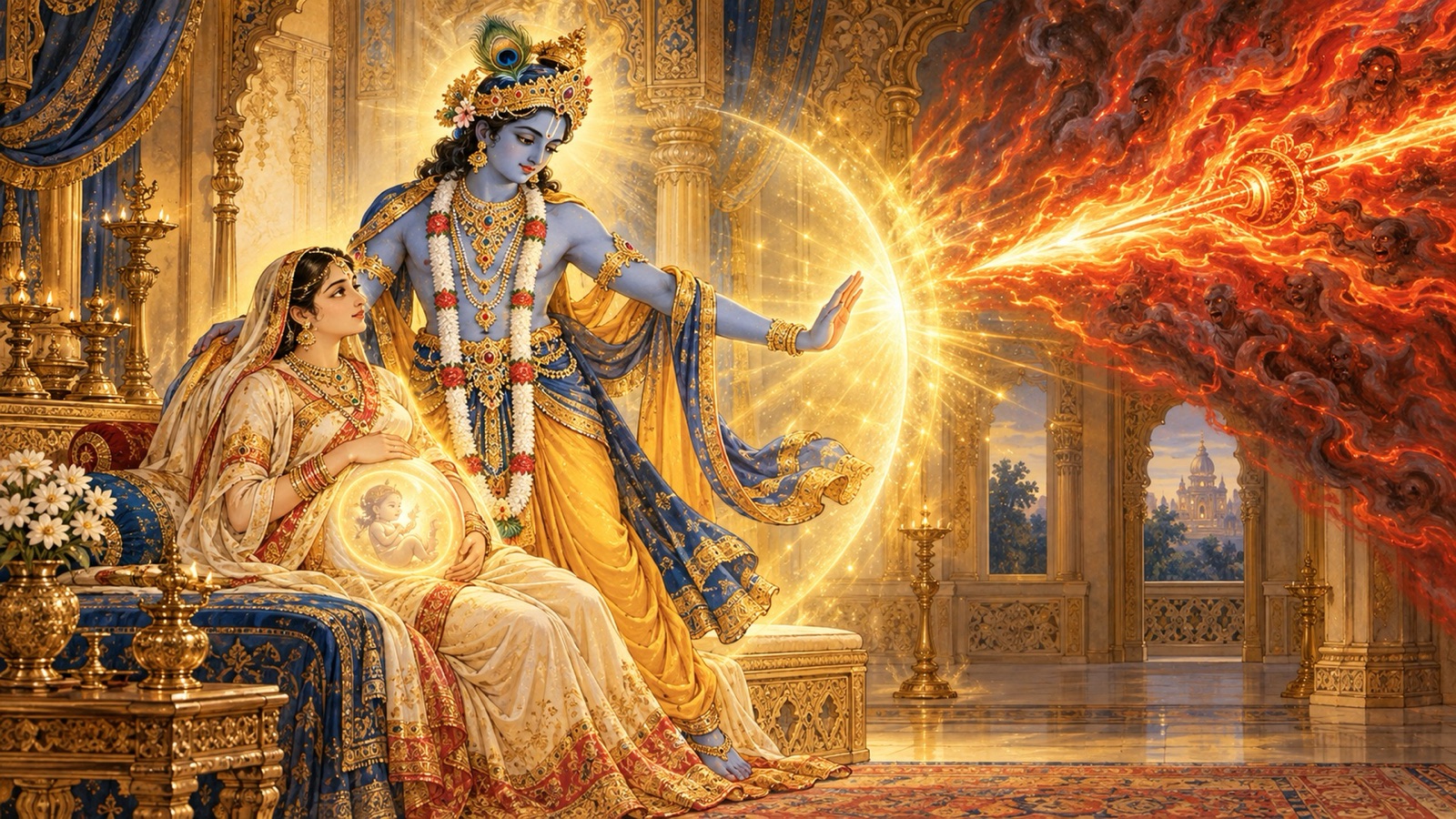
When the blazing brahmastra of Ashwatthama threatens the last heir of the Kurus in his mother’s womb, it is by the power of Lord Krishna alone that the unborn Parikshit is rescued alive from death.
Om Namo Bhagavate Vasudevaya.
Om Namo Bhagavate Vasudevaya.
Om Namo Bhagavate Vasudevaya.
Welcome to Srimad Bhagavatam Wisdom, a devotional journey through the sacred histories and teachings of the Srimad Bhagavat Mahapurana. This twenty-second chapter of Book Nine traces the great lines descended from Ajamidha — the Panchalas, the Kurus, and the kings of Magadha — the very lineage that flowers into the heroes of the Mahabharata. Sukadeva relates for King Parikshit the line of Kuru, lord of Kurukshetra; the story of Devapi, who retired to Kalapagrama and will one day revive the lunar dynasty; the advent of Bhishma, the great self-controlled devotee; and the birth of Krishna-Dvaipayana Vyasa, a ray of Sri Hari, who preserved the Vedas and gave the world this very Bhagavata. It tells of Vichitravirya, of Dhritarashtra and Pandu, of the five Pandavas and their sons, and of how the unborn Parikshit himself was rescued by the power of Lord Krishna. It is a chapter about the great river of a dynasty, the divine souls who appear within it, and the Lord who preserves both the Vedas and His devotees.
Chapter Information
- Scripture: Śrīmad Bhāgavata Mahāpurāṇa
- Canto: 9 (Book Nine)
- Chapter: 22 (Discourse 22)
- Chapter title: The Descendants of Ajamidha
- Principal speaker: Sukadeva Gosvami, narrating to King Parikshit — the whole related by Suta Gosvami to the sage Saunaka and the assembly of sages at Naimisaranya
- Principal listener: King Parikshit
- Main setting: The lines of the Panchalas, the Kurus and the kings of Magadha, in the lunar dynasty
- Central subject: The descendants of Ajamidha down to the Pandavas and King Parikshit, including Devapi, Bhishma, Vyasa, and the kings yet to come
- Principal verse range: Canto 9, Chapter 22, verses 1–49
- Primary edition: Gita Press Śrīmad Bhāgavata Mahāpurāṇa
The Panchalas and the Kuru Line
Sukadeva resumed. From Divodasa came Mitreyu, and from that line Somaka, whose youngest son Prishata was the father of Drupada, whose children were Dhrishtadyumna and the others, and Draupadi. These were the Panchalas. A separate branch runs through Rksa, another of Ajamidha’s sons: his successor married the sun-god’s own daughter, and their union gave the line its most famous name-bearer, the founding lord of Kurukshetra itself.
योऽजमीढसुतो ह्यन्य ऋक्ष: संवरणस्तत: । तपत्यां सूर्यकन्यायां कुरुक्षेत्रपति: कुरु: ॥ ४ ॥
yo ’jamīḍha-suto hy anya ṛkṣaḥ saṁvaraṇas tataḥ tapatyāṁ sūrya-kanyāyāṁ kurukṣetra-patiḥ kuruḥ
Meaning: From another son of Ajamidha, Rksa, came Samvarana, and from him, through Tapati the daughter of the sun-god, came Kuru, the lord of Kurukshetra. (Canto 9, Chapter 22, verse 4)
Devapi at Kalapagrama
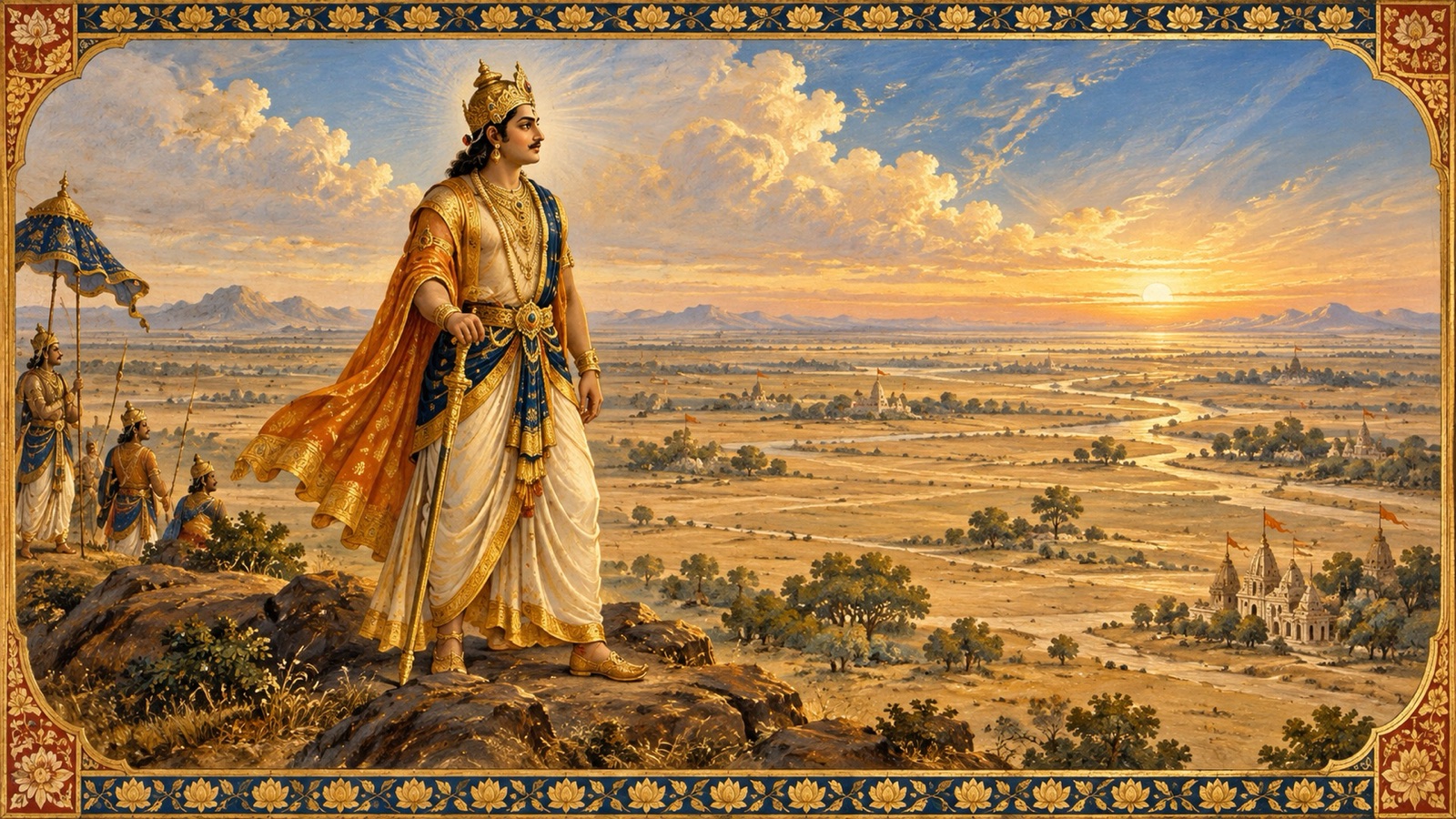
The line continued through many kings down to Pratipa, whose sons were Devapi, Santanu and Bahlika. Devapi renounced his claim to the throne; and, led away from the path of the Vedas, he took to yoga and settled at Kalapagrama.
एवमुक्तो द्विजैर्ज्येष्ठं छन्दयामास सोऽब्रवीत् । तन्मन्त्रिप्रहितैर्विप्रैर्वेदाद् विभ्रंशितो गिरा ॥ १६ ॥ वेदवादातिवादान् वै तदा देवो ववर्ष ह । देवापिर्योगमास्थाय कलापग्राममाश्रित: ॥ १७ ॥
evam ukto dvijair jyeṣṭhaṁ chandayām āsa so ’bravīt tan-mantri-prahitair viprair vedād vibhraṁśito girā veda-vādātivādān vai tadā devo vavarṣa ha devāpir yogam āsthāya kalāpa-grāmam āśritaḥ
Meaning: Urged by the brahmanas, Santanu offered the throne to his elder brother; but Devapi, led away from the Vedas by the words of brahmanas sent by the minister, spoke against the Vedic teaching — whereupon the god of rain sent showers. Devapi then took to yoga and settled at Kalapagrama. (Canto 9, Chapter 22, verses 16-17)
There, Sukadeva said, Devapi abides still; and when the lunar dynasty becomes extinct in the age of Kali, he will revive it at the dawn of the following Satya-yuga.
Bhishma, the Great Devotee
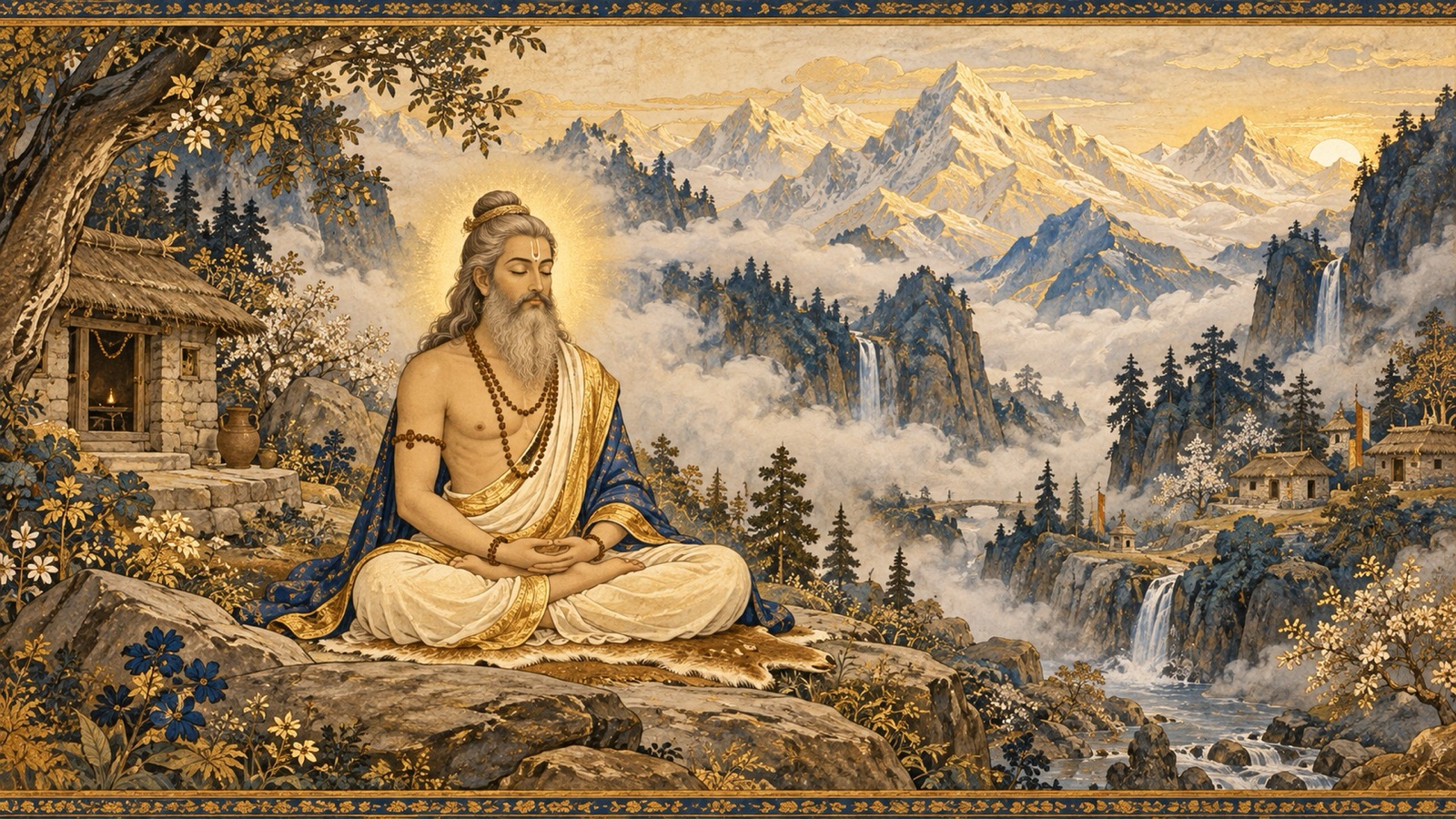
Santanu in time ascended the throne, and the son born to him and the river-goddess Ganga would grow to tower over the entire dynasty in wisdom, vow, and unwavering devotion to the Lord.
सोमवंशे कलौ नष्टे कृतादौ स्थापयिष्यति । बाह्लीकात्सोमदत्तोऽभूद् भूरिर्भूरिश्रवास्तत: ॥ १८ ॥ शलश्च शान्तनोरासीद् गङ्गायां भीष्म आत्मवान् । सर्वधर्मविदां श्रेष्ठो महाभागवत: कवि: ॥ १९ ॥
soma-vaṁśe kalau naṣṭe kṛtādau sthāpayiṣyati bāhlīkāt somadatto ’bhūd bhūrir bhūriśravās tataḥ śalaś ca śāntanor āsīd gaṅgāyāṁ bhīṣma ātmavān sarva-dharma-vidāṁ śreṣṭho mahā-bhāgavataḥ kaviḥ
Meaning: (Devapi) will re-establish the lunar dynasty when it becomes extinct in Kali. From Bahlika came Somadatta, and from him Bhuri, Bhurisrava and Sala. And Santanu’s son by the goddess Ganga was Bhishma — self-controlled, foremost among the knowers of dharma, a great devotee of the Lord, and enlightened. (Canto 9, Chapter 22, verses 18-19)
Vyasa, a Ray of Sri Hari
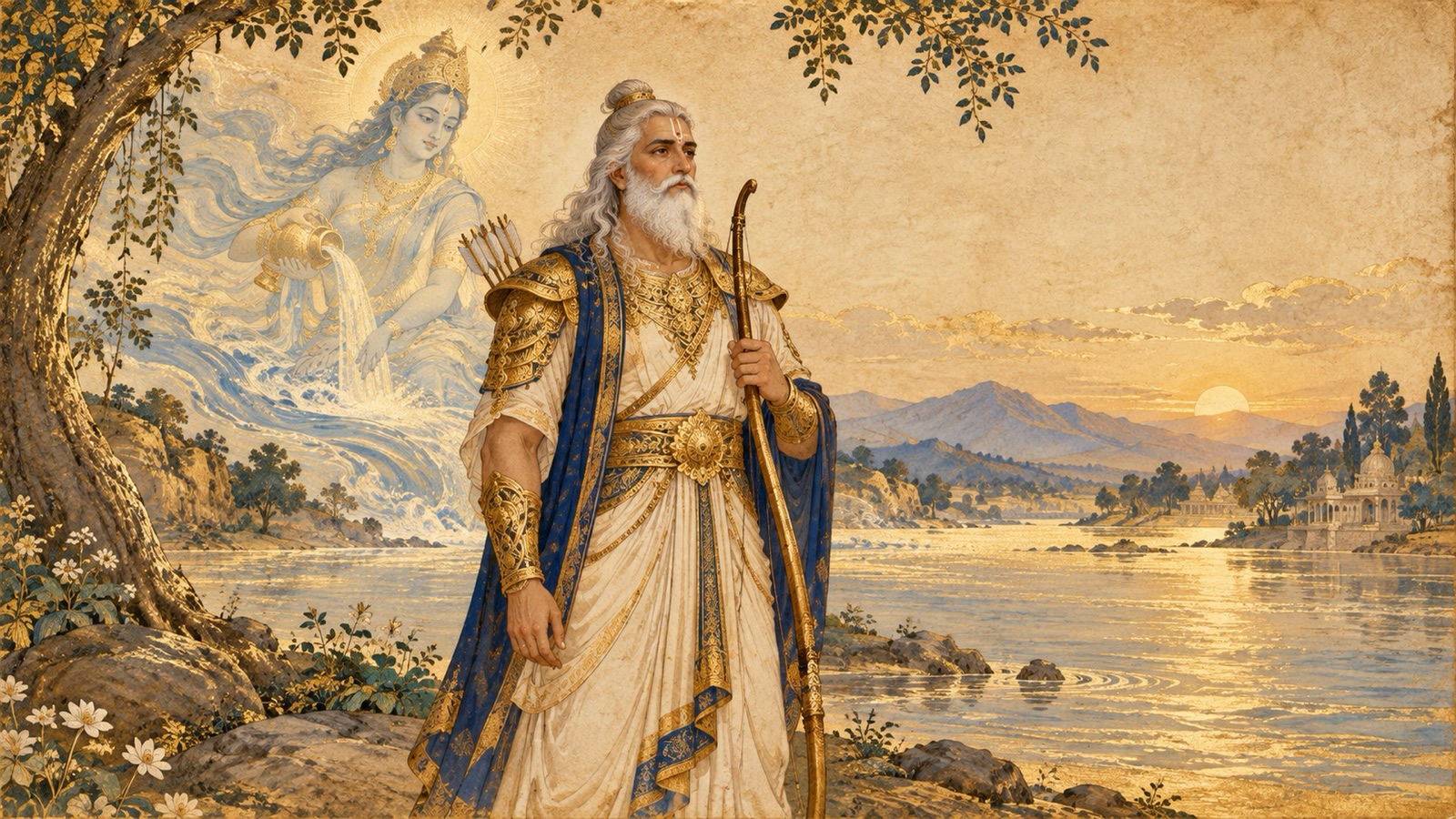
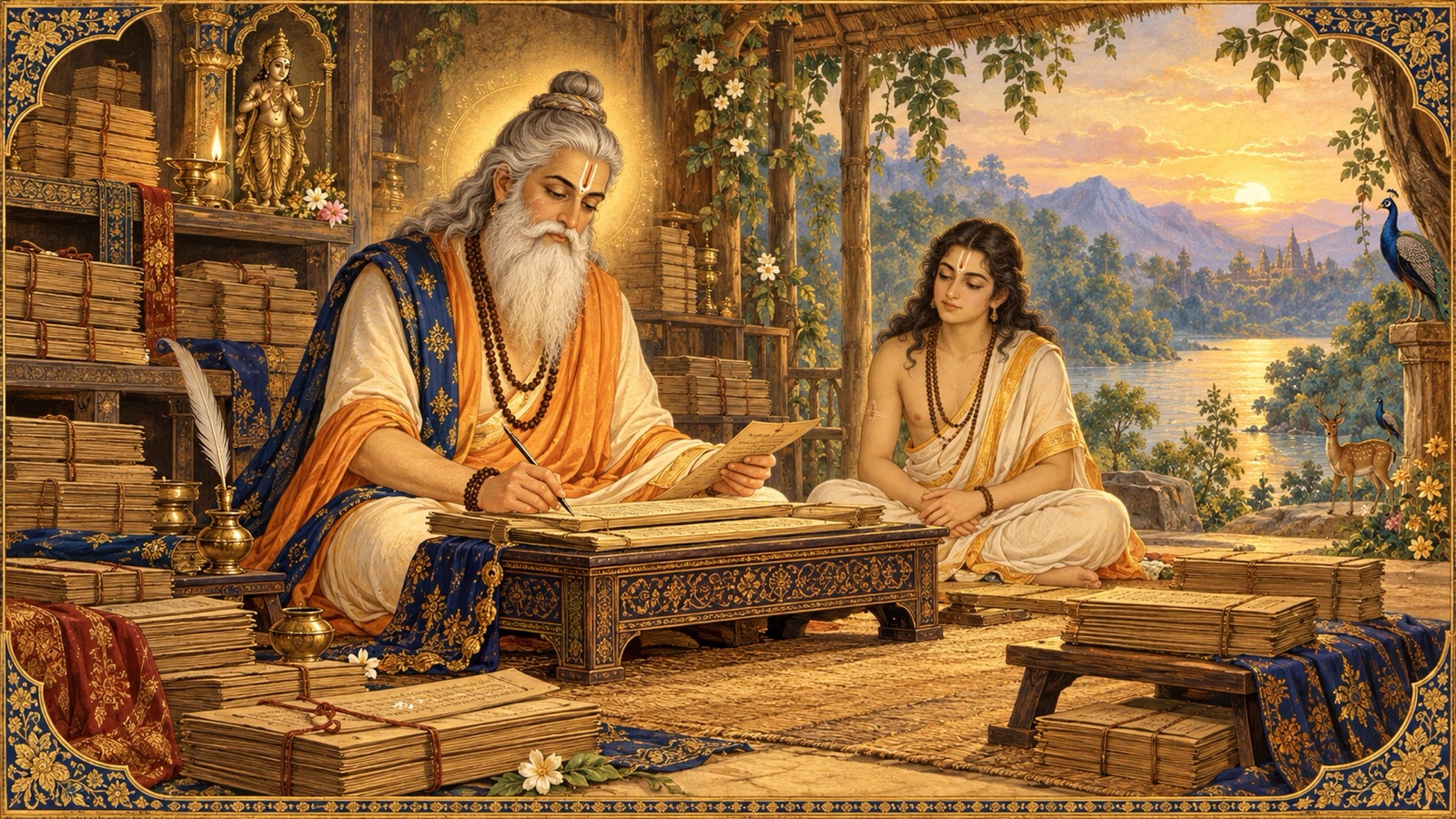
Through Satyavati, Santanu had two sons, Chitrangada and Vichitravirya. But before her marriage, through the sage Parashara, Satyavati had borne a ray of Sri Hari Himself in the person of the sage Krishna-Dvaipayana — Vyasa — the protector of the Vedas, from whom Sukadeva himself received the Bhagavata.
विचित्रवीर्यश्चावरजो नाम्ना चित्राङ्गदो हत: । यस्यां पराशरात् साक्षादवतीर्णो हरे: कला ॥ २१ ॥ वेदगुप्तो मुनि: कृष्णो यतोऽहमिदमध्यगाम् । हित्वा स्वशिष्यान् पैलादीन्भगवान् बादरायण: ॥ २२ ॥
vicitravīryaś cāvarajo nāmnā citrāṅgado hataḥ yasyāṁ parāśarāt sākṣād avatīrṇo hareḥ kalā veda-gupto muniḥ kṛṣṇo yato ’ham idam adhyagām hitvā sva-śiṣyān pailādīn bhagavān bādarāyaṇaḥ
Meaning: Chitrangada was slain, and Vichitravirya was his younger brother. Through Satyavati, by the sage Parashara, a ray of Sri Hari descended as the sage Krishna (Krishna-Dvaipayana), the protector of the Vedas, from whom I learned this Bhagavata; for the divine Badarayana taught this supreme secret to me, his son, in preference to his own pupils, Paila and the rest. (Canto 9, Chapter 22, verses 21-22)
The Pandavas and Their Sons
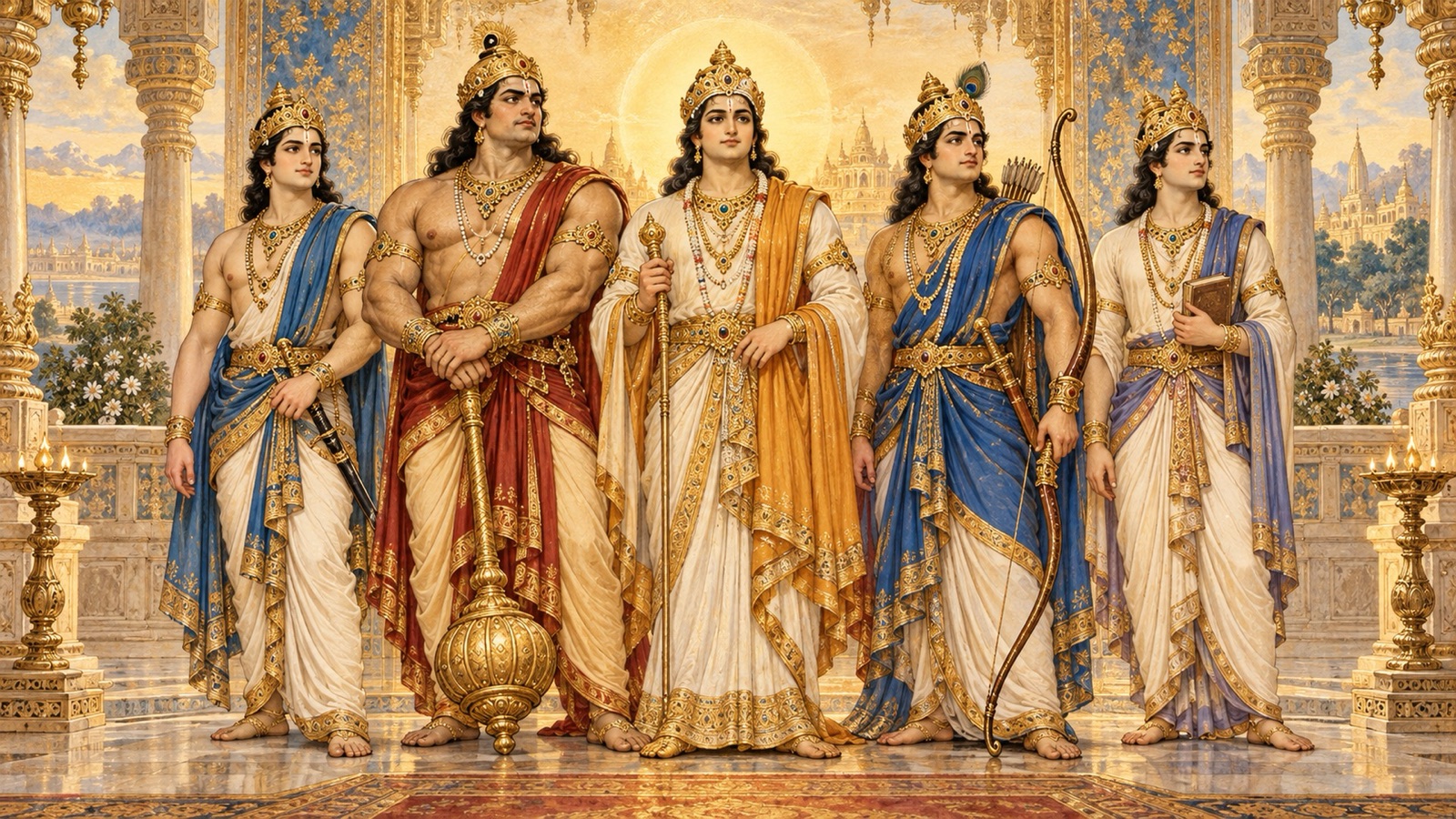
Vyasa, at his mother’s bidding, begot Dhritarashtra, Pandu and Vidura. Dhritarashtra had a hundred sons, Duryodhana the eldest, and a daughter, Duhshala. Pandu, prevented by a curse, obtained through his wife Kunti three mighty sons — Yudhishthira, Bhima and Arjuna, from Dharma, Vayu and Indra — and through Madri, Nakula and Sahadeva from the Ashwini gods; and through Draupadi the five Pandavas each had a son.
शापान्मैथुनरुद्धस्य पाण्डो: कुन्त्यां महारथा: । जाता धर्मानिलेन्द्रेभ्यो युधिष्ठिरमुखास्त्रय: ॥ २७ ॥ नकुल: सहदेवश्च माद्रयां नासत्यदस्रयो: । द्रौपद्यां पञ्च पञ्चभ्य: पुत्रास्ते पितरोऽभवन् ॥ २८ ॥
śāpān maithuna-ruddhasya pāṇḍoḥ kuntyāṁ mahā-rathāḥ jātā dharmānilendrebhyo yudhiṣṭhira-mukhās trayaḥ nakulaḥ sahadevaś ca mādryāṁ nāsatya-dasrayoḥ draupadyāṁ pañca pañcabhyaḥ putrās te pitaro ’bhavan
Meaning: Through Pandu’s wife Kunti, three great warriors — Yudhishthira, Bhima and Arjuna — were born from Dharma, Vayu and Indra; and through Madri, Nakula and Sahadeva from the two Ashwini gods; and through Draupadi, the five Pandavas each fathered a son. (Canto 9, Chapter 22, verses 27-28)
Parikshit Saved by Krishna, and the Kings to Come
From Arjuna’s son Abhimanyu, through Uttara, was born King Parikshit himself. When all the Kurus had perished and the unborn Parikshit was threatened by the blazing brahmastra of Ashwatthama, it was by the power of Lord Krishna that he was rescued alive from death.
परिक्षीणेषु कुरुषु द्रौणेर्ब्रह्मास्त्रतेजसा । त्वं च कृष्णानुभावेन सजीवो मोचितोऽन्तकात् ॥ ३४ ॥
parikṣīṇeṣu kuruṣu drauṇer brahmāstra-tejasā tvaṁ ca kṛṣṇānubhāvena sajīvo mocito ’ntakāt
Meaning: When the Kurus had all perished and you were threatened by the fiery brahmastra of Ashwatthama, the son of Drona, you too, by the power of Krishna, were rescued alive from death. (Canto 9, Chapter 22, verse 34)
Sukadeva then named Parikshit’s own sons, Janamejaya and the rest, and foretold the kings yet to come in the line of Puru down to Kshemaka, with whom the line would end in the age of Kali, before turning to the future kings of Magadha.
Principal Teachings of This Chapter
1. The Lord’s plan flows through a great river of generations. From Ajamidha spring the Panchalas, the Kurus and the kings of Magadha — the vast lineage in which the Lord’s own descent and the great events of the age would unfold (verses 1-4).
2. The Lord preserves a seed through every age. As Maru of the solar line waits at Kalapagrama, so does Devapi of the lunar line, kept to revive his dynasty when it is gone. The sacred is never wholly lost (verses 16-18).
3. Great devotees appear within the world’s affairs. Bhishma, a man of perfect self-control and a great devotee, and Vyasa, a ray of Sri Hari who preserved the Vedas, shine within the dynasty as reminders that the Lord sends His own into the midst of history (verses 19-22).
4. The Lord Himself protects His devotees. Parikshit, the last heir of the Kurus, is saved in the womb by the power of Krishna. The Lord guards those who are His, even from the deadliest of weapons (verse 34).
5. Even the greatest dynasties end; only the Lord endures. The line of Puru, esteemed by gods and sages, will come to its close in the age of Kali. Every earthly lineage is subject to time, and only the Lord is eternal (verses 44-45).
A Devotional Reflection
This chapter is, on its surface, a dense roll of names — but within it move some of the most luminous figures in all of scripture, and through it runs a single golden thread: the Lord’s constant presence within the unfolding of history. Here is Vyasa, a ray of Sri Hari, who preserved the eternal Vedas and gave the world this very Bhagavata; here is Bhishma, whose self-control and devotion make him one of the great souls of the age; here is Devapi, hidden away in yoga to renew his dynasty when its time comes round again. And here, most tenderly of all, is Parikshit — the very king who is listening to this account — saved as an unborn child from a weapon that had destroyed everyone else, by the power of Krishna alone. There is something deeply moving in the thought that the listener’s own life, and the very existence of this conversation, rests entirely on the Lord’s protecting grace. The Bhagavatam reminds us that we too are each a link in a lineage the Lord has ordained, that great souls appear among us to preserve what is sacred, and that our own lives, like Parikshit’s, are held moment by moment in the Lord’s protecting hands. Dynasties rise and fall, but the Lord who guards His devotees and preserves His word is eternal, and to take shelter in Him is to be, like Parikshit, rescued alive from death itself.
A Daily Devotional Practice
Today, in the spirit of Parikshit saved in the womb, take shelter in the Lord’s protecting grace. Call to mind one time in your own life when you were spared some danger or difficulty, and recognize in it, as Parikshit did, the hidden hand of the Lord; offer Him your gratitude with the prayer, “Om Namo Bhagavate Vasudevaya.” Then honour, as this chapter does, the great souls and the sacred scripture that have come down to you through the generations: read or hear a little of the Bhagavata that Vyasa preserved for us, and give thanks for the unbroken chain of teachers who carried it to your own day. Let gratitude for the Lord’s protection and for His preserved word be your practice, remembering that you too are held, moment by moment, in His care.
Conclusion
This chapter has carried us down an entire branch of the family tree, generation after generation, until the names stop being mere genealogy and become living testimony: a dynasty is not just blood and succession but the stage on which the Lord quietly places His own — a hidden yogi waiting out the ages, a self-mastered devotee born into a royal house, a sage who gives eternity a scripture, and finally an unborn heir rescued at the very last breath of a dying line. Across every one of these threads the same truth shines: history is never abandoned to chance, for the Lord Himself walks within it, keeping what is sacred and shielding what is His, even when death itself has already closed in.
May the divine wisdom of Srimad Bhagavatam awaken pure devotion within our hearts.
Om Namo Bhagavate Vasudevaya.
Jay Shree Madhav.
References and Attribution
- Primary edition: Gita Press, Śrīmad Bhāgavata Mahāpurāṇa (English, complete), Book Nine, Discourse 22, pages 92–98.
- Series: Srimad Bhagavatam Wisdom · Biswa Sanatan Dharma Seva Trust.
- Presented following the spiritual guidance and recommendation of Pandit Dr. Shri Kashinath Mishra.
This is an original, faithful retelling in the writer’s own words, with brief quoted verses shown in Devanāgarī and transliteration and their meanings given as summaries. It is not a reproduction of any single publisher’s continuous translation or commentary. No affiliation with or endorsement by any publisher is implied.
Jay Shree Madhav