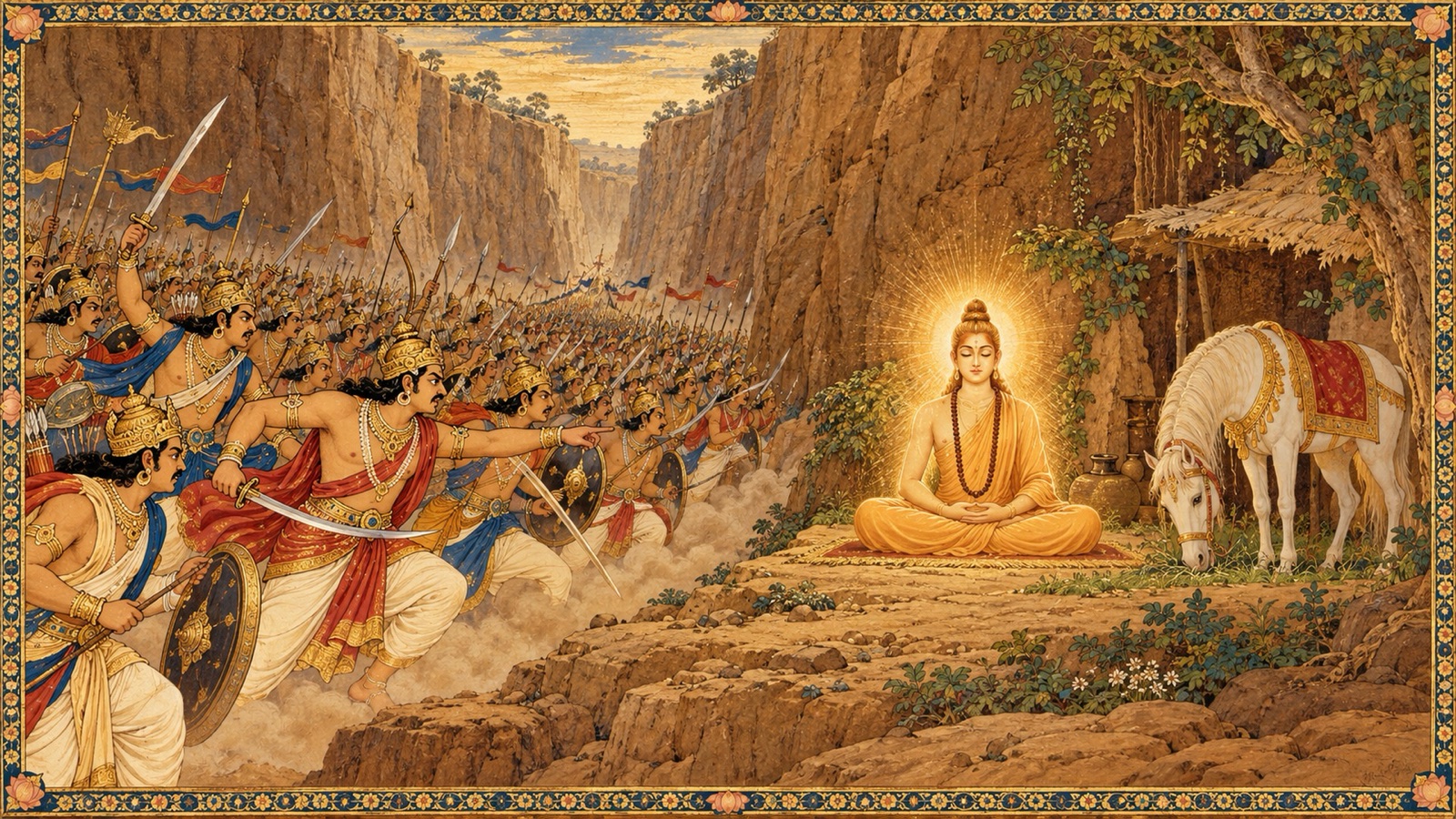
Having dug through the whole earth in search of their father’s sacrificial horse, the sixty thousand sons of Sagara find it grazing beside the meditating sage Kapila — and rush at him with uplifted weapons, mistaking the Lord for a thief.
Om Namo Bhagavate Vasudevaya.
Om Namo Bhagavate Vasudevaya.
Om Namo Bhagavate Vasudevaya.
Welcome to Srimad Bhagavatam Wisdom, a devotional journey through the sacred histories and teachings of the Srimad Bhagavat Mahapurana. This eighth chapter of Book Nine tells the celebrated story of Emperor Sagara — a king born with poison yet destined for greatness, whose very name the ocean would bear. Sukadeva relates for King Parikshit how Sagara’s sixty thousand proud sons, digging through the earth in search of a lost sacrificial horse, offended the divine sage Kapila and were reduced to ashes in an instant. Yet the chapter is careful to teach that it was not the sage’s anger that consumed them, for Lord Kapila is beyond all anger; it was their own offence. It closes with the humble prayer of Prince Amsuman, who recovers the horse, and with Sagara himself renouncing all and attaining the supreme goal. It is a chapter about pride and humility, and about the Lord who is pure goodness itself.
Chapter Information
- Scripture: Śrīmad Bhāgavata Mahāpurāṇa
- Canto: 9 (Book Nine)
- Chapter: 8 (Discourse 8)
- Chapter title: Sagara’s Sons and the Sage Kapila
- Principal speaker: Sukadeva Gosvami, narrating to King Parikshit — the whole related by Suta Gosvami to the sage Saunaka and the assembly of sages at Naimisaranya
- Principal listener: King Parikshit
- Main setting: The kingdom of the solar dynasty; the earth dug open in search of the horse; the hermitage of the sage Kapila
- Central subject: The birth and reign of Emperor Sagara, the destruction of his sixty thousand sons for offending the sage Kapila, the recovery of the sacrificial horse by Prince Amsuman, and Sagara’s final liberation
- Principal verse range: Canto 9, Chapter 8, verses 1–31
- Primary edition: Gita Press Śrīmad Bhāgavata Mahāpurāṇa
The Birth of Sagara
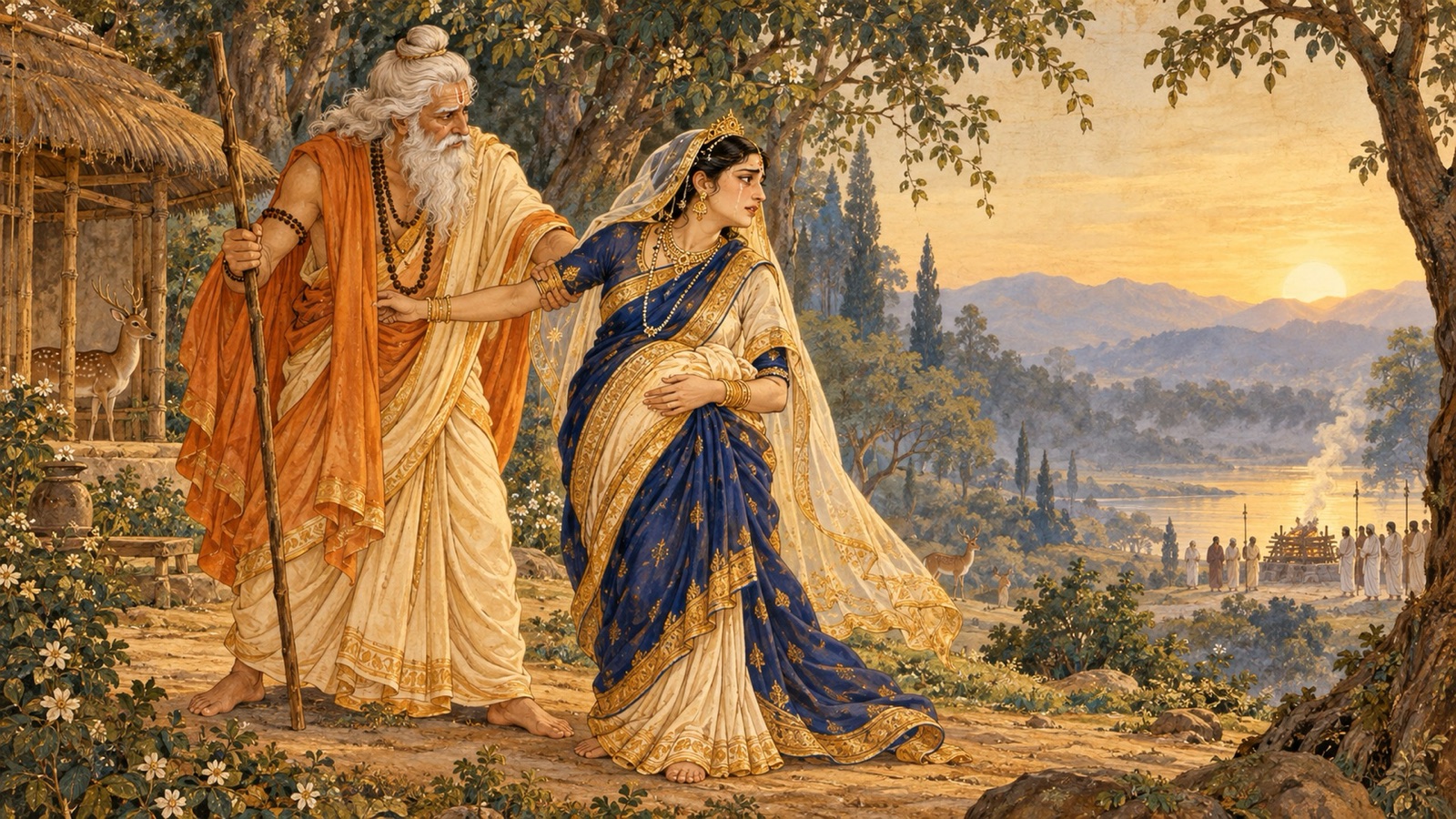
Sukadeva continued the line: from Rohita came Harita, and from Harita, Campa, who built the city of Campa; then Sudeva, Vijaya, Bharuka, Vrka, and Bahuka. When Bahuka’s kingdom was seized by his enemies, he retired to the forest with his wife. When the aged king died there, his queen prepared to follow him upon the pyre, but the sage Aurva, knowing she was with child, stopped her.
वृद्धं तं पञ्चतां प्राप्तं महिष्यनुमरिष्यती । और्वेण जानतात्मानं प्रजावन्तं निवारिता ॥ ३ ॥
vṛddhaṁ taṁ pañcatāṁ prāptaṁ mahiṣy anumariṣyatī aurveṇa jānatātmānaṁ prajāvantaṁ nivāritā
Meaning: When the aged king had passed away and the queen was about to follow him in death, she was stopped by the sage Aurva, who knew that she was carrying a child. (Canto 9, Chapter 8, verse 3)
Her jealous co-wives, learning of her pregnancy, mixed poison into her food; but no harm came to her. Instead a renowned son was born together with that poison, and for this reason he was named Sagara — “one born with poison.” He became a mighty universal monarch, and it was his sons who would one day dig out the great ocean, which took his name.
आज्ञायास्यै सपत्नीभिर्गरो दत्तोऽन्धसा सह । सह तेनैव सञ्जात: सगराख्यो महायशा: । सगरश्चक्रवर्त्यासीत् सागरो यत्सुतै: कृत: ॥ ४ ॥
ājñāyāsyai sapatnībhir garo datto ’ndhasā saha saha tenaiva sañjātaḥ sagarākhyo mahā-yaśāḥ sagaraś cakravarty āsīt sāgaro yat-sutaiḥ kṛtaḥ
Meaning: Her co-wives, learning of her condition, administered poison to her with her food; but a highly renowned son was born along with that very poison and was therefore named Sagara. He became a universal monarch, and it was by his sons that the ocean (Sagara) was dug out. (Canto 9, Chapter 8, verse 4)
The Conquests and the Sacrifice
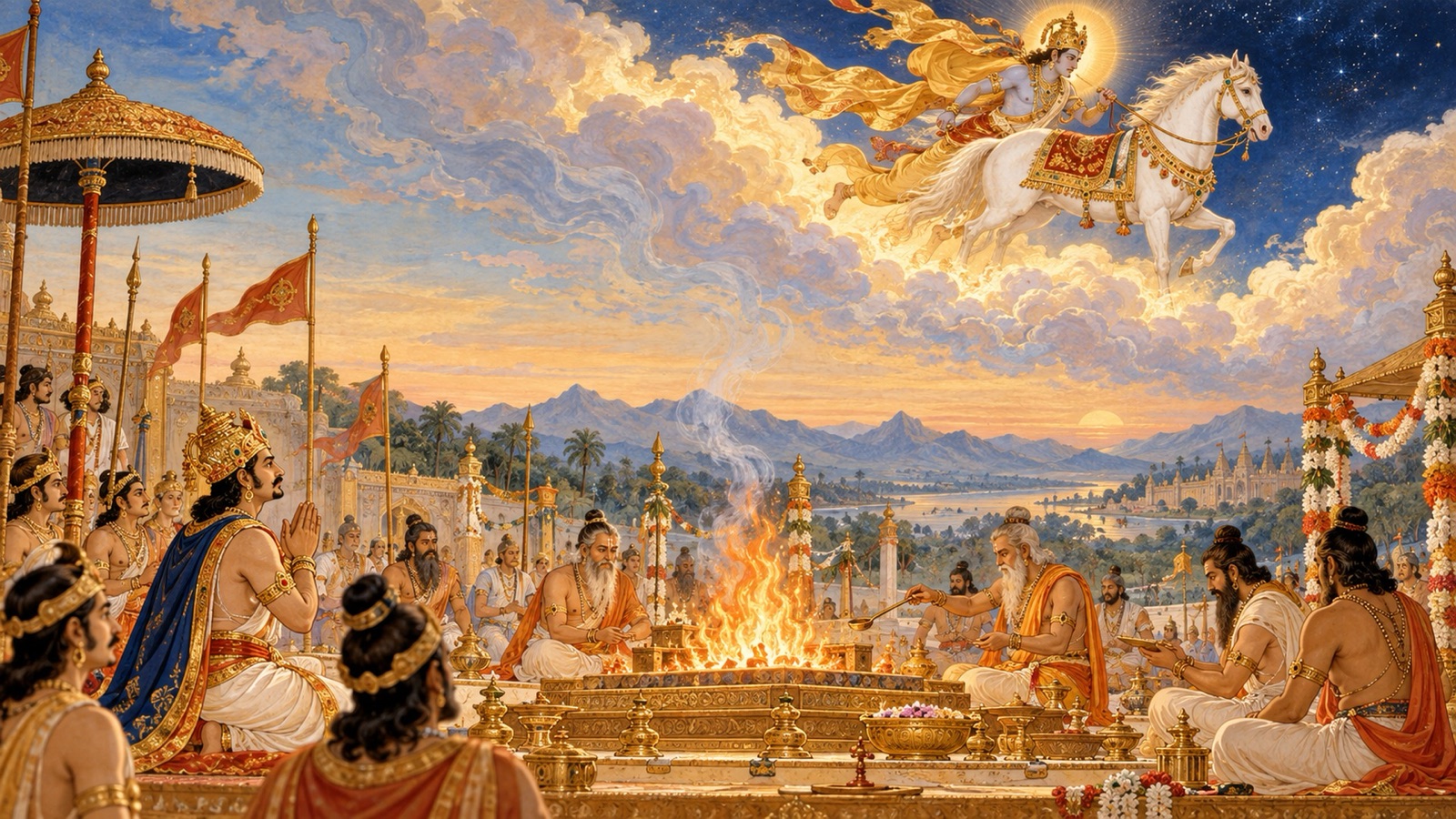
By the counsel of his preceptor Aurva, Sagara conquered but did not slay the Talajanghas, Yavanas, Sakas, Haihayas and Barbaras; instead he had them disfigured in various ways and let them live. Then, following the path shown by Aurva, he propitiated Lord Sri Hari — the Self of all, manifest as all the Vedas and the gods — through many horse sacrifices. But as the consecrated horse ranged free before the rite, Indra, the lord of heaven, stole it away.
सोऽश्वमेधैरयजत सर्ववेदसुरात्मकम् । और्वोपदिष्टयोगेन हरिमात्मानमीश्वरम् । तस्योत्सृष्टं पशुं यज्ञे जहाराश्वं पुरन्दर: ॥ ७ ॥
so ’śvamedhair ayajata sarva-veda-surātmakam aurvopadiṣṭa-yogena harim ātmānam īśvaram tasyotsṛṣṭaṁ paśuṁ yajñe jahārāśvaṁ purandaraḥ
Meaning: By the method shown by Aurva, Sagara worshipped through horse sacrifices Lord Hari, the Self and Ruler, who is all the Vedas and gods; but Indra (Purandara) stole away the horse that had been released for his sacrifice. (Canto 9, Chapter 8, verses 7-8)
The Sixty Thousand Sons and the Sage Kapila
Commanded by their father to find the horse, the sixty thousand proud sons of Sagara’s queen Sumati dug open the earth on every side in their search.
सुमत्यास्तनया दृप्ता: पितुरादेशकारिण: । हयमन्वेषमाणास्ते समन्तान्न्यखनन् महीम् ॥ ८ ॥
sumatyās tanayā dṛptāḥ pitur ādeśa-kāriṇaḥ hayam anveṣamāṇās te samantān nyakhanan mahīm
Meaning: The proud sons of Sumati, carrying out their father’s command, dug up the earth on all sides in search of the horse. (Canto 9, Chapter 8, verse 9)
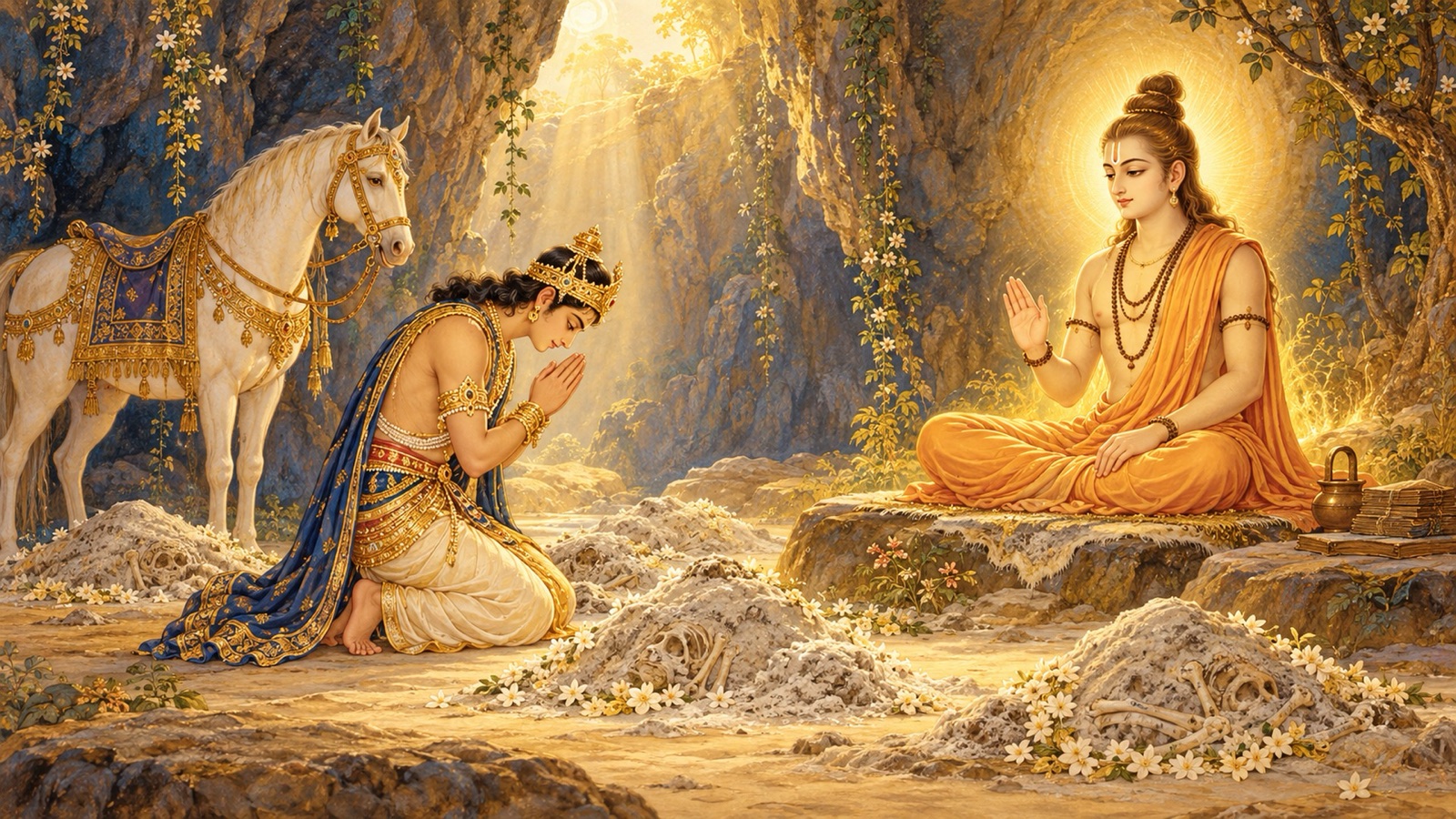
Digging in the north-easterly direction, they at last found the horse grazing beside the divine sage Kapila, who sat with his eyes closed in meditation. Mistaking the Lord for the thief, they rushed at him with weapons raised, crying, “Here is the wicked one who stole the horse — kill him!” At that moment the sage opened his eyes. Their good sense already stolen away by Indra, and undone by the grave offence they had committed against so exalted a soul, the sons of Sagara were reduced to ashes in an instant — burnt not by the sage, but by the fire of their own bodies.
स्वशरीराग्निना तावन्महेन्द्रहृतचेतस: । महद्व्यतिक्रमहता भस्मसादभवन् क्षणात् ॥ ११ ॥
sva-śarīrāgninā tāvan mahendra-hṛta-cetasaḥ mahad-vyatikrama-hatā bhasmasād abhavan kṣaṇāt
Meaning: Their minds stolen away by mighty Indra, and struck down by their great offence, they were reduced to ashes in a moment by the fire of their own bodies. (Canto 9, Chapter 8, verse 12)
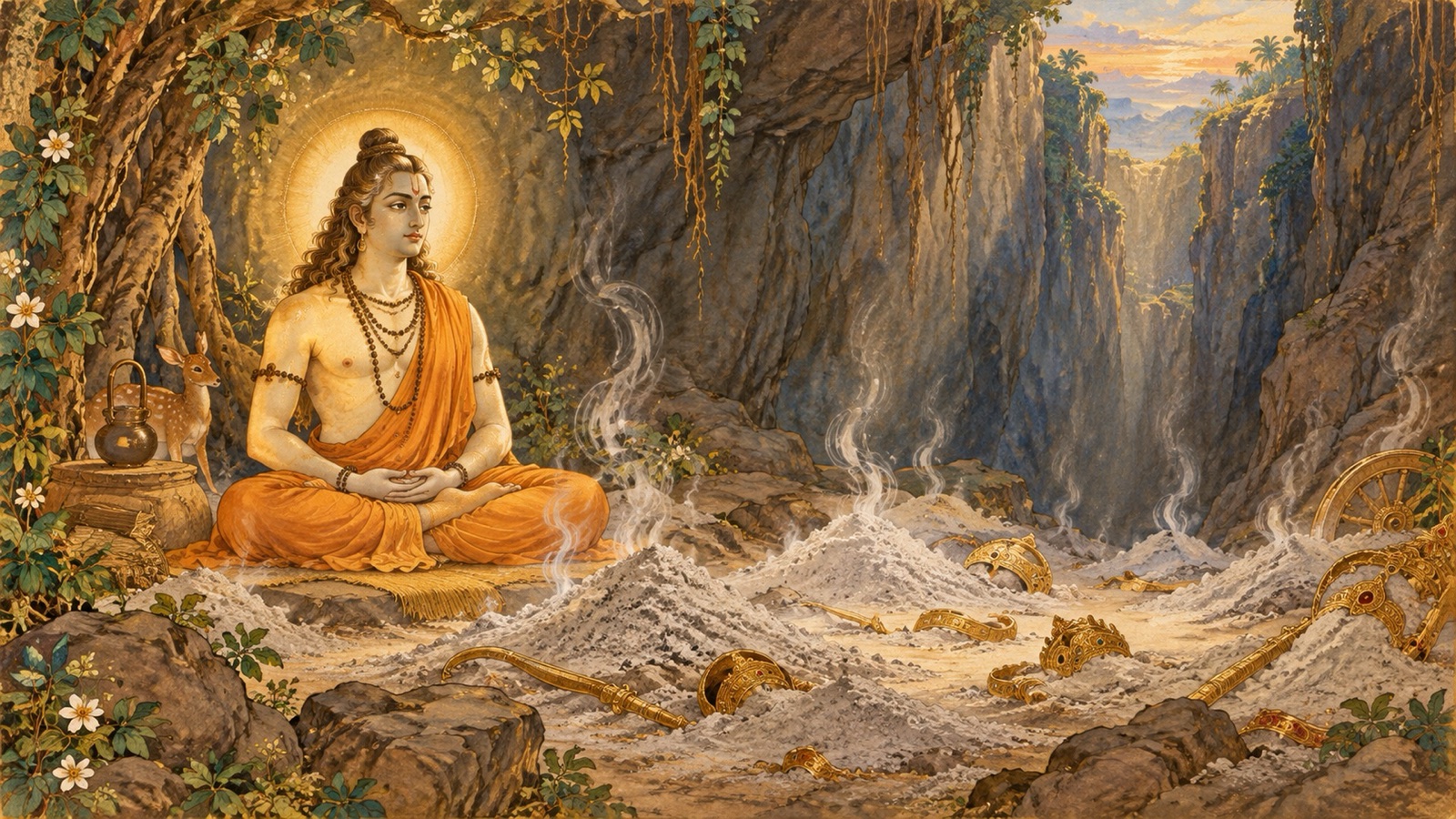
Sukadeva was careful to correct any wrong impression: it is not right to say that the sons of Sagara were burnt by the anger of the sage. How could the darkness of anger ever be imagined in Lord Kapila, who is the very abode of pure goodness, whose person purifies the whole universe, and who launched into this world the saving vessel of Sankhya wisdom by which seekers cross the ocean of worldly existence? To imagine anger in him would be as absurd as imagining that the earth’s dust could cling to the untouched sky.
Here the Bhagavatam teaches something sharper than a caution against pride. An offence against a great soul — a mahad-vyatikrama — is not a debt the offended one collects, for a soul as pure as Kapila carries no wish to harm anyone; it is the offence itself that ignites, consuming the offender from within, needing no curse from the sage to do its work (verses 11-12). This is also why, once the horse is found, Kapila will say that nothing but the sacred Ganga can free the sons from what they have done (verses 28-29): the wound of insulting the pure cannot be closed by wealth, ritual or ordinary penance, but only by the rarest and most sanctifying grace. To wrong a soul who wishes no one ill is therefore graver, not lighter — its penalty falls due at once, and only holiness of the highest order can lift it.
The Prayer of Amsuman
Sagara had another son, Asamanjasa, born of his wife Kesini. A yogi in a former life who had fallen through bad association, Asamanjasa behaved so waywardly that his father exiled him — though he later revealed his hidden power by restoring to life the children he had seemed to drown. His son was Amsuman, devoted to his grandfather. Commanded by Sagara, Amsuman followed the path his uncles had dug and found the horse near the heaps of ashes, and there beheld Lord Vishnu in the form of the sage Kapila. With joined palms and a collected mind, he offered a beautiful prayer.
अंशुमानुवाच न पश्यति त्वां परमात्मनोऽजनो न बुध्यतेऽद्यापि समाधियुक्तिभि: । कुतोऽपरे तस्य मन:शरीरधी- विसर्गसृष्टा वयमप्रकाशा: ॥ २१ ॥
aṁśumān uvāca na paśyati tvāṁ param ātmano ’jano na budhyate ’dyāpi samādhi-yuktibhiḥ kuto ’pare tasya manaḥ-śarīra-dhī- visarga-sṛṣṭā vayam aprakāśāḥ
Meaning: Amsuman said: Even the unborn Brahma cannot to this day perceive You, who are higher than himself, through meditation or reasoning; how then can other beings, created by his mind, body and intellect — and least of all we, who are without the light of wisdom — ever know You? (Canto 9, Chapter 8, verse 21)
Amsuman continued that the Lord dwells within the heart of every living being, yet the soul, its vision covered by the three modes of material nature, perceives only the workings of matter and never the Lord seated so near (verse 22). Even the sages who have risen above these modes — the four Kumaras among them — can hold Him in thought, he said, but how could one still bound, like himself, ever do so (verse 23)? He praised the Lord’s transcendental name and form, altogether untouched by matter though assumed to instruct the world, as in the Bhagavad Gita, and confessed that souls bewildered by lust, greed and envy cling to home and family while he himself, simply by beholding the Lord, had already been freed of every such desire (verses 24-26).
The Horse Recovered and the King Liberated
Pleased with the prince’s humble praise, Lord Kapila blessed him and said, “Take away this horse, dear child, for it is your grandfather’s sacrificial animal. And these forefathers of yours, lying here reduced to ashes, can be redeemed by nothing but the water of the holy Ganga.”
श्रीभगवानुवाच अश्वोऽयं नीयतां वत्स पितामहपशुस्तव । इमे च पितरो दग्धा गङ्गाम्भोऽर्हन्ति नेतरत् ॥ २८ ॥
śrī-bhagavān uvāca aśvo ’yaṁ nīyatāṁ vatsa pitāmaha-paśus tava ime ca pitaro dagdhā gaṅgāmbho ’rhanti netarat
Meaning: The glorious Lord said: Take away this horse, dear child; it is your grandfather’s sacrificial animal. And these forefathers of yours, who lie burnt, can be redeemed only by the water of the Ganga, and by nothing else. (Canto 9, Chapter 8, verse 29)
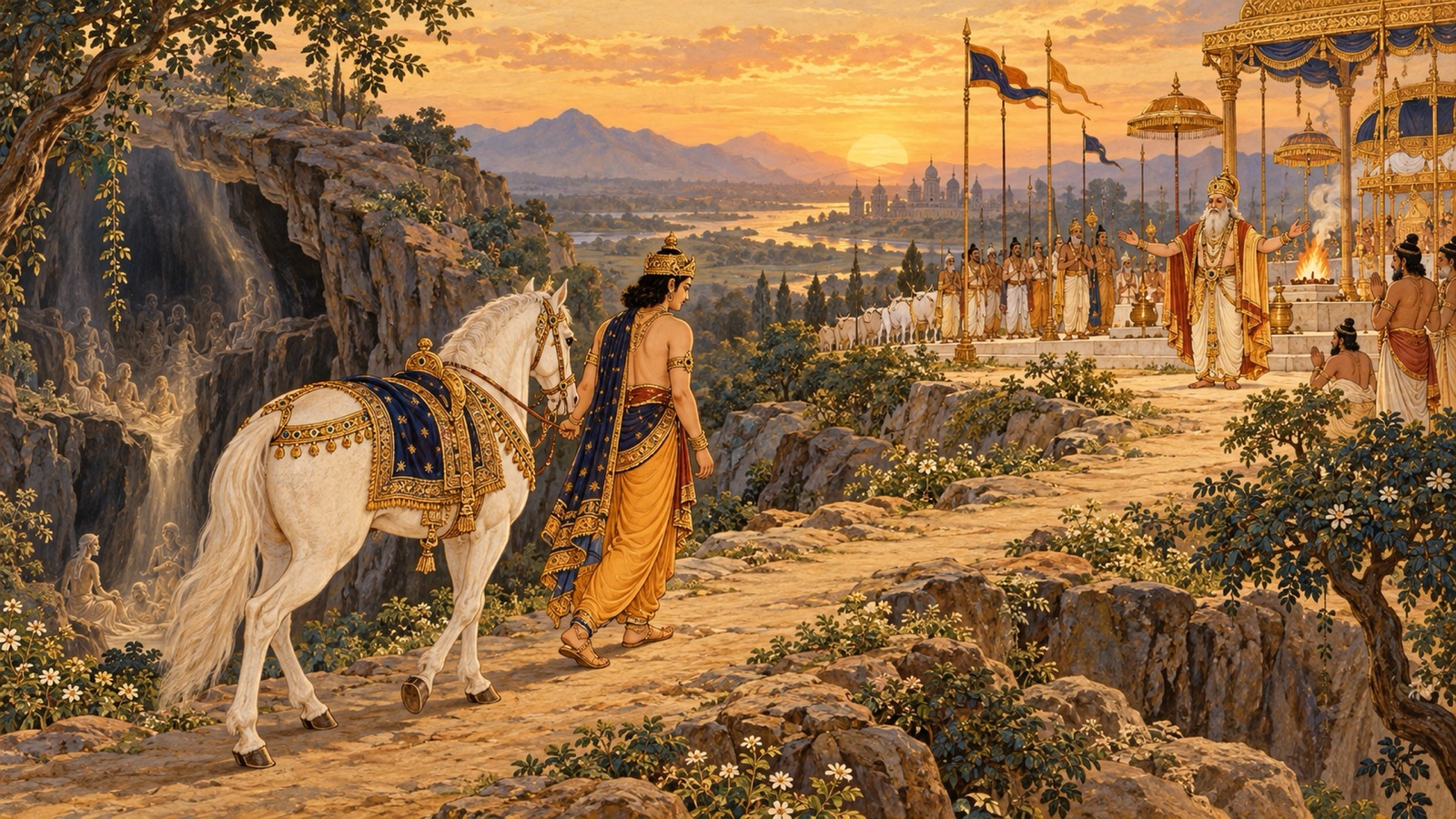
Circumambulating the Lord and bowing low, Amsuman brought the horse back, and with it Emperor Sagara completed the long-delayed sacrifice. Then, entrusting the kingdom to Amsuman, Sagara — free of all craving and released from every bondage — attained the supreme goal by the path his preceptor Aurva had shown.
राज्यमंशुमते न्यस्य नि:स्पृहो मुक्तबन्धन: । और्वोपदिष्टमार्गेण लेभे गतिमनुत्तमाम् ॥ ३० ॥
rājyam aṁśumate nyasya niḥspṛho mukta-bandhanaḥ aurvopadiṣṭa-mārgeṇa lebhe gatim anuttamām
Meaning: Entrusting the kingdom to Amsuman, Sagara — free from craving and released from bondage — attained the supreme goal by the path taught by the sage Aurva. (Canto 9, Chapter 8, verse 31)
Principal Teachings of This Chapter
1. The Lord brings good even out of poison. Sagara is born with the very poison meant to destroy him, yet becomes a glorious emperor — a sign that no calamity can thwart the destiny the Lord ordains (verses 3-4).
2. Pride blinds even the mighty. Sagara’s sixty thousand sons are strong enough to dig through the earth, yet their pride and haste lead them to insult a saint and to ruin (verses 11-12).
3. The Lord is pure goodness, beyond anger. Sukadeva insists that Kapila did not burn the sons in wrath; the fault and the fire were their own. To attribute anger to the all-pure Lord is like imagining dust clinging to the open sky (verses 12-14).
4. Humility opens what pride destroys. Where the proud sons met instant ruin, the humble Amsuman meets grace at the very same place, before the very same form. His prayer teaches that no embodied being — not the unborn Brahma, not the four Kumaras freed from matter’s modes, nor any soul wrapped in mind and body — can grasp the Lord by cleverness or striving; only surrender opens the eye of understanding, for the Lord seated in every heart is hidden from us by nothing but our own attachment to lust, greed and illusion. Because Amsuman comes not to prove himself but to confess his ignorance, he receives Kapila’s blessing, the recovered horse, and the promise that the Ganga alone can redeem what pride had burned away (verses 21-29).
5. True kingship ends in renunciation. Having fulfilled his duty, Sagara lays aside kingdom and craving alike and attains the highest goal — the pattern of a life well lived and rightly surrendered (verses 30-31).
A Devotional Reflection
This chapter sets two ways of approaching the divine side by side. The sixty thousand sons of Sagara come to the sage Kapila armed and shouting, certain of their own righteousness, seeing only a thief where the Lord Himself sat in meditation — and their pride reduces them, in a single moment, to ash. Their nephew Amsuman comes to the very same place, sees the very same sage, but bows with folded hands and a humbled heart, confessing that even Brahma cannot comprehend the Lord — and he receives blessing, the horse, and the promise of his forefathers’ redemption. The difference is not strength or lineage; both are sons of the same great house. The difference is humility. The Bhagavatam gently reminds us that we approach God every day, and how we approach Him matters: the proud, however powerful, are undone by their own fire, while the humble, however small, are lifted up. And in Sukadeva’s tender insistence that Kapila felt no anger at all, we glimpse the truth that the Lord is never our adversary — pure goodness itself, He waits only for a bowed head and an honest heart.
A Daily Devotional Practice
Today, in the spirit of Prince Amsuman, practise humility before the Lord. Choose one moment when you would normally assert yourself — an argument you could win, a correction you could make, a credit you could claim — and instead gently step back, offering that small surrender to God with the prayer, “Om Namo Bhagavate Vasudevaya.” Remember that the same divine presence dwells in every soul you meet, as Kapila sat unseen among the ashes; treat each person with the reverence you would give a saint. Let a bowed head and a soft word be your worship today, trusting that the Lord who is pure goodness draws near to the humble.
Conclusion
The eighth chapter of Book Nine tells how Emperor Sagara, born with poison yet raised to greatness, gave his name to the ocean and to one of the scripture’s most sobering lessons. His sixty thousand sons, digging through the earth in proud haste, insulted the divine sage Kapila and were consumed by the fire of their own offence — though the Bhagavatam takes care to teach that the all-pure Lord felt no anger at all. Where their pride brought ruin, the humility of Prince Amsuman brought grace: his prayer recovered the sacrificial horse and won the promise that the holy Ganga would one day redeem his ancestors. And Sagara himself, his duty done, renounced all and reached the supreme goal. The chapter leaves us with a truth as gentle as it is grave — that before the Lord who is goodness itself, it is not our strength but our humility that saves us.
May the divine wisdom of Srimad Bhagavatam awaken pure devotion within our hearts.
Om Namo Bhagavate Vasudevaya.
Jay Shree Madhav.
References and Attribution
- Primary edition: Gita Press, Śrīmad Bhāgavata Mahāpurāṇa (English, complete), Book Nine, Discourse 8, pages 31–34.
- Series: Srimad Bhagavatam Wisdom · Biswa Sanatan Dharma Seva Trust.
- Presented following the spiritual guidance and recommendation of Pandit Dr. Shri Kashinath Mishra.
This is an original, faithful retelling in the writer’s own words, with brief quoted verses shown in Devanāgarī and transliteration and their meanings given as summaries. It is not a reproduction of any single publisher’s continuous translation or commentary. No affiliation with or endorsement by any publisher is implied.
Jay Shree Madhav